Loading...
Cao Cao vs Jiang Wei
Cao Cao leads by 24.0 pts · 2 figures compared
…
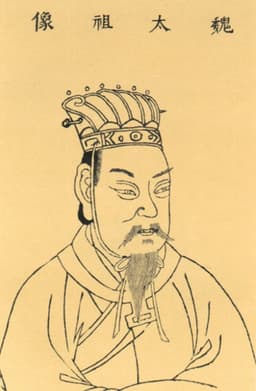
Cao Cao
General · Ancient
77.5Total

Jiang Wei
General · Ancient
53.5Total
Basic Information
Born
155
202
Died
220
264
Era
Ancient
Ancient
Nationality
China
China
Occupation
General
General
Civilization
Eastern
Eastern
Score Comparison
Military (10%)
88.0
70.0
Political (20%)
59.0
35.1
Influence (20%)
82.0
55.7
Legacy (20%)
83.0
50.0
Leadership (15%)
64.4
54.2
Strategy (15%)
89.4
66.3
TOTAL
77.5
53.5
Cao Cao — Complete Timeline
190 AD
Formation of the Coalition against Dong ZhuoPolitical Action
Cao Cao joined a coalition of regional warlords led by Yuan Shao to overthrow the tyrannical chancellor Dong Zhuo, who had seized control of the Han court. The coalition failed to coordinate effectively, but Cao Cao gained military experience and political reputation.
CoalitionDong ZhuoHan Dynasty
Impact: national
196 AD
Implementation of Tuntian (Agricultural Colonies)Reform◆ Major
Cao Cao established military agricultural colonies (tuntian) to provide food for his army and refugees. Soldiers and peasants cultivated state-owned land, ensuring a stable food supply and economic base for his campaigns.
AgricultureEconomyMilitary
Impact: regionalconstructive
200 AD
Battle of GuanduWar
Cao Cao decisively defeated Yuan Shao's numerically superior army at Guandu. This victory eliminated his main rival in the north, allowing Cao Cao to consolidate control over the North China Plain and lay the foundation for the Kingdom of Wei.
BattleYuan ShaoUnification
Impact: regional
208 AD
Battle of Red CliffsWar
Cao Cao's southern campaign was halted by the allied forces of Sun Quan and Liu Bei at the Battle of Red Cliffs. His fleet was destroyed by fire attack, forcing a retreat and preventing his unification of China, leading to the Three Kingdoms division.
BattleDefeatThree Kingdoms
Impact: regional
213 AD
Establishment of the Kingdom of WeiPolitical Action◆ Major
Cao Cao was granted the title of Duke of Wei and later King of Wei by the Han emperor, effectively creating a semi-autonomous state within the empire. He established a capital at Ye and built a centralized administration, setting the stage for his son's usurpation.
WeiStatehoodHan Dynasty
Impact: national
Jiang Wei — Complete Timeline
234 AD
Became successor to Zhuge LiangPolitical Action◆ Major
After Zhuge Liang's death, Jiang Wei was appointed as the commander of Shu Han's military forces, tasked with continuing the Northern Expeditions against Wei. He was given command of the remaining troops.
Shu HanZhuge LiangSuccession
Impact: nationalconstructive
238 AD
Led the first Northern ExpeditionWar
Jiang Wei launched his first major campaign against Wei, attacking the Wei-held territories of Longxi and Nan'an. The campaign achieved limited gains but failed to capture key cities.
Northern ExpeditionsShu HanMilitary Campaign
Impact: regional
Conducted eleven Northern ExpeditionsWar◆ Major
Over the course of his career, Jiang Wei launched eleven separate campaigns against Wei, each with varying degrees of success. These campaigns drained Shu Han's resources and manpower without achieving a decisive breakthrough.
Northern ExpeditionsShu HanMilitary Strategy
Impact: nationaldestructive
255 AD
Defeated by Deng Ai at the Battle of TaoxiWar◆ Major
Jiang Wei's forces were decisively defeated by Deng Ai at Taoxi. The defeat forced Jiang Wei to retreat and weakened Shu Han's military position.
Northern ExpeditionsDeng AiBattle
Impact: regionaldestructive
263 AD
Surrendered to Deng Ai after the fall of ShuPolitical Action
After Deng Ai's surprise attack on Chengdu, Jiang Wei surrendered to the Wei general. He later attempted to restore Shu by conspiring with Zhong Hui, but the plot failed and he was killed.
Shu HanFall of ShuSurrender
Impact: nationaltragic
Expert Analysis
Origins
Cao Cao (155-220 CE) was born in Qiao County (modern Bozhou, Anhui) to a family of officials; his father was an adoptive son of a eunuch. Despite this stigma, he received a classical education and showed early talent for politics and poetry. He began his career as a district magistrate, gaining a reputation for strict law enforcement.
Jiang Wei (202-264 CE) was born in Tianshui (modern Gansu) into a minor official family. His father died early, and he was raised by his mother. He served as a minor officer in Wei before defecting to Shu Han in 228 CE after being suspected of treason. Zhuge Liang recognized his talent and made him a protégé.
Rise to Power
Cao Cao rose during the collapse of the Han dynasty. In 190 CE, he joined the coalition against Dong Zhuo but soon built his own army. His decisive victory over Yuan Shao at the Battle of Guandu in 200 CE eliminated his main rival, securing control over northern China. By 208 CE, he held the title of Chancellor and effectively ruled the Han court.
Jiang Wei's rise came through his association with Zhuge Liang. After Zhuge Liang's death in 234 CE, Jiang Wei inherited command of Shu's armies. He was appointed General of the Guards and later Grand Marshal. Unlike Cao Cao, he did not build his own power base but relied on the legacy of his mentor.
Leadership & Governance
Cao Cao implemented the tuntian system (agricultural colonies) to feed his army and refugees, stabilizing agriculture in war-torn regions. He also promoted talent based on merit, issuing decrees to recruit officials regardless of background. His governance was pragmatic, using both harsh punishment and rewards to maintain order.
Jiang Wei focused almost exclusively on military campaigns. He launched eleven northern expeditions against Wei from 240 to 262 CE, draining Shu's resources. His leadership score of 54.2 reflects his inability to manage domestic affairs or secure consistent support from the Shu court. He lacked Cao Cao's political acumen, scoring 35.1 compared to Cao's 59.0.
Triumph & Tragedy
Cao Cao's greatest triumph was unifying northern China, ending decades of warfare. His military score of 88.0 and strategy score of 89.4 reflect his success at Guandu and other campaigns. However, his defeat at the Battle of Red Cliffs in 208 CE prevented him from conquering the south, leading to the Three Kingdoms division. He also faced rebellions and assassination attempts.
Jiang Wei's triumphs include several tactical victories during his northern expeditions, such as capturing some territory in 247 CE. However, his overall strategic failure is evident: none of the eleven expeditions achieved lasting gains. His greatest tragedy was the fall of Shu in 263 CE. After surrendering to Deng Ai, he attempted a final plot to restore Shu by inciting Zhong Hui's rebellion, but it failed, leading to his death.
Character & Destiny
Cao Cao was known for his cunning, decisiveness, and ruthlessness. He famously said, "I would rather betray the world than have the world betray me." His character allowed him to seize power but also made him enemies. His leadership score of 64.4 indicates a balance between charisma and fear.
Jiang Wei was loyal and persistent but overestimated his abilities. He continued Zhuge Liang's strategy without adapting to changing circumstances. His total score of 53.5 reflects his limitations as a strategist. He was more of a loyal executor than an independent leader.
Legacy
Cao Cao's legacy is monumental. He established the Kingdom of Wei, which became the dominant state of the Three Kingdoms. His tuntian system influenced later dynasties. He is also remembered as a poet, with works like "The Short Song Style" still studied. His influence score of 82.0 and legacy score of 83.0 confirm his lasting impact.
Jiang Wei's legacy is mixed. He is often criticized for exhausting Shu's resources. However, his loyalty to Shu Han is praised. He is remembered primarily as Zhuge Liang's successor, not as an independent figure. His legacy score of 50.0 reflects his limited long-term impact.
Conclusion
Cao Cao had a far greater impact on Chinese history. His military score (88.0 vs 70.0), political score (59.0 vs 35.1), and total score (77.5 vs 53.5) all show his superiority. While Jiang Wei was a competent general, he lacked the strategic vision and political skills to match Cao Cao. Cao Cao unified the north and shaped the Three Kingdoms period, whereas Jiang Wei's campaigns only accelerated Shu's decline. The historical verdict is clear: Cao Cao was the greater figure.
Rankings
🥇
Cao CaoLeader
Mil: 88.0Pol: 59.0Inf: 82.0
77.5
🥈
Jiang Wei
Mil: 70.0Pol: 35.1Inf: 55.7
53.5
+24.0 behind
How This Comparison Works
Algorithm
Each figure is scored on 6 dimensions (0—100 scale) based on structured historical data: Military (10%), Political (20%), Influence (20%), Legacy (20%), Leadership (15%), Strategy (15%). The weighted total produces the final ranking.
Data Sources
Scores are computed from structured sub-indicators in the database. Scale factors adjust for era (Ancient ×0.85, Modern ×1.0) and civilization size (Eastern ×1.05, Other ×0.80) to account for differences in population and military scale.
Maximum 3 Figures
Comparisons are limited to 2—3 figures to ensure readability and statistical meaningfulness.
Error Margins
±5 points per dimension — Sub-scores are derived from historical records with inherent uncertainty. Two figures within 5 points on a dimension should be considered roughly equivalent in that area.
Total Score Accuracy
±3 points overall — The weighted combination of 6 dimensions produces a total score with approximately ±3 points of uncertainty. Differences of less than 3 points are not statistically significant— the figures are effectively tied.
Known Limitations
- Historical records are incomplete and uneven across civilizations
- Figures from oral-tradition societies may be underrepresented
- Occupation labels can misclassify multi-role figures
- Scores measure capability and impact, not moral character
- Quantitative scoring is a comparison tool, not absolute truth
Capability Radar
Military (10%) — Battles & Warfare
Battles
95
65
Win Rate
88
40
Expansion
92
30
Political (20%) — Governance & Reform
Reform
88
50
Diplomacy
82
45
Economy
86
40
Influence (20%) — Cultural & Global Reach
Cultural
85
55
Global
75
30
Legacy (20%) — Historical Impact
Historical
92
60
Longevity
90
55
Leadership (15%) — Power & Stability
Tenure
85
60
Stability
78
35
Strategy (15%) — Tactics & Innovation
Strategy
96
60
Tactics
97
70
Reform
90
55
Similar Comparisons
Comments & Discussion
No comments yet. Be the first to share your thoughts!