Loading...
Carl von Clausewitz vs Claude Auchinleck
Carl von Clausewitz leads by 6.1 pts · 2 figures compared
…
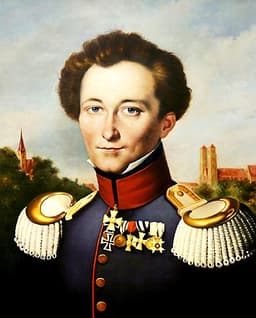
Carl von Clausewitz
General · Modern
61.3Total
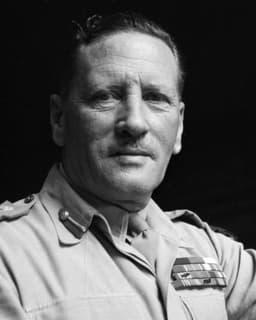
Claude Auchinleck
General · Modern
55.2Total
Basic Information
Born
1780
1884
Died
1831
1981
Era
Modern
Modern
Nationality
Prussia
United Kingdom
Occupation
General
General
Civilization
Western
Western
Score Comparison
Military (10%)
46.7
72.5
Political (20%)
32.2
39.4
Influence (20%)
85.0
61.0
Legacy (20%)
71.4
50.0
Leadership (15%)
40.4
54.2
Strategy (15%)
66.3
61.2
TOTAL
61.3
55.2
Carl von Clausewitz — Complete Timeline
1806 AD
Battle of Jena-AuerstedtWar◆ Major
Clausewitz served as aide-de-camp to Prince August of Prussia during the disastrous double battle against Napoleon. The Prussian army was shattered, leading to the collapse of the Prussian state and Clausewitz's capture. This defeat profoundly shaped his later theories on war and the need for a strong state.
Napoleonic WarsPrussian DefeatMilitary Theory
Impact: nationaltragic
1812 AD
Joined the Russian ArmyPolitical Action◆ Major
Refusing to serve Napoleon after Prussia's forced alliance, Clausewitz joined the Russian Imperial Army. He participated in the 1812 campaign, including the Battle of Borodino, and witnessed the French army's catastrophic retreat from Moscow. This experience provided firsthand insight into the nature of war and the role of chance and friction.
Napoleonic WarsRussian CampaignExile
Impact: regional
Convention of TauroggenPolitical Action
As a Prussian officer in Russian service, Clausewitz helped negotiate the Convention of Tauroggen, a secret agreement between Prussian General Yorck and Russia. This neutralized the Prussian corps allied with Napoleon, effectively breaking the Franco-Prussian alliance and sparking the Prussian War of Liberation.
War of LiberationDiplomacyPrussian Independence
Impact: regionalconstructive
1832 AD
Publication of On WarCultural
Clausewitz's unfinished magnum opus, Vom Kriege (On War), was published posthumously by his wife Marie von Br
Military TheoryPhilosophyClassic Text
Impact: globalconstructive
Claude Auchinleck — Complete Timeline
1941 AD
Appointed Commander-in-Chief of India CommandOther◆ Major
Auchinleck was appointed Commander-in-Chief of the Indian Army in January 1941. He oversaw the expansion and training of Indian forces for service in the Middle East, East Africa, and Southeast Asia, building a multi-ethnic army that grew to over two million men.
World War IIIndia
Impact: national
Appointed Commander-in-Chief of Middle East CommandOther◆ Major
Auchinleck replaced Archibald Wavell as Commander-in-Chief of Middle East Command in July 1941. He assumed command of British forces in North Africa, Iraq, and Persia during a critical period when German forces under Rommel were threatening Egypt and the Suez Canal.
World War IINorth Africa
Impact: national
Launched Operation CrusaderOther◆ Major
Auchinleck launched Operation Crusader on November 18, 1941, an offensive to relieve the besieged garrison at Tobruk. After heavy tank battles at Sidi Rezegh, British forces relieved Tobruk on December 10, forcing Rommel to retreat to El Agheila and lifting the 242-day siege.
World War IINorth AfricaVictory
Impact: nationalconstructive
1942 AD
Defeated at the First Battle of El AlameinOther◆ Major
Auchinleck personally took command of the Eighth Army in June 1942 after the fall of Tobruk. He halted Rommel's advance at the First Battle of El Alamein in July 1942, preventing the Axis from reaching Alexandria and the Suez Canal, but failed to destroy the German forces.
World War IINorth AfricaStalemate
Impact: national
Relieved of Command and Replaced by MontgomeryOther◆ Major
Auchinleck was relieved of command in August 1942 by Prime Minister Churchill, who lost confidence in his leadership. He was replaced by General Harold Alexander as Commander-in-Chief and Bernard Montgomery as commander of the Eighth Army, a decision that remains controversial among historians.
World War IINorth AfricaDismissal
Impact: nationaldestructive
1943 AD
Appointed Commander-in-Chief of India Command (Second Term)Other◆ Major
Auchinleck returned as Commander-in-Chief of the Indian Army in June 1943, a position he held until 1947. He oversaw the Burma Campaign, the defense against the Japanese invasion of India, and the post-war demobilization and partition of the Indian Army between India and Pakistan.
World War IIIndiaPartition
Impact: national
Expert Analysis
Origins
Carl von Clausewitz was born on June 1, 1780, in Burg bei Magdeburg, Prussia, into a modest middle-class family. His father was a retired lieutenant who struggled financially, which limited Clausewitz's early opportunities. He entered the Prussian army at age 12 as a cadet, gaining practical military experience in the Rhine campaigns against Revolutionary France. Despite his humble origins, Clausewitz educated himself in philosophy and military history, later attending the Berlin War Academy, where he studied under Gerhard von Scharnhorst. This exposure to reformist ideas shaped his intellectual development.
Claude Auchinleck was born on June 21, 1884, in Aldershot, England, to a military family; his father was a colonel in the Royal Artillery. He attended Wellington College and the Royal Military Academy Sandhurst, commissioning into the Indian Army in 1904. Auchinleck's early career was spent in India, where he mastered Urdu and gained deep knowledge of Indian culture. He served in World War I in Mesopotamia and Palestine, earning a reputation for competence and bravery. His formative experiences were practical, rooted in colonial warfare and staff work.
Rise to Power
Clausewitz's rise was intellectual rather than hierarchical. After Prussia's defeat at Jena-Auerstedt in 1806, where he served as aide-de-camp to Prince August, he was captured and spent time in France. This humiliation fueled his reformist zeal. In 1812, refusing to serve Napoleon after Prussia's forced alliance, Clausewitz joined the Russian army, participating in the 1812 campaign. His key turning point was the Convention of Tauroggen in December 1812, where he helped negotiate the defection of Prussian General Yorck's corps from the French. This act of insubordination paved the way for Prussia's liberation but left Clausewitz in a politically ambiguous position. After the war, he became director of the Prussian War Academy and devoted himself to writing, culminating in his unfinished masterpiece, 'On War'.
Auchinleck's rise came through practical command. In 1941, he was appointed Commander-in-Chief of India Command, overseeing the expansion of Indian forces. His major promotion came in July 1941 when he replaced Archibald Wavell as Commander-in-Chief of Middle East Command. He assumed control of British forces in North Africa, inheriting a dire situation after Rommel's advances. Auchinleck launched Operation Crusader in November 1941, relieving Tobruk and pushing back Axis forces. However, his success was short-lived; Rommel counterattacked in 1942, leading to the fall of Tobruk and a crisis that forced Auchinleck to personally take command of the Eighth Army.
Leadership & Governance
Clausewitz never commanded large forces; his leadership was theoretical. He advocated for the 'trinity' of war: passion, chance, and reason, emphasizing the political nature of conflict. His governance approach was analytical, focusing on the interplay between policy and military action. He scored 40.4 in leadership, reflecting his lack of command experience, but 66.3 in strategy due to his conceptual depth. In contrast, Auchinleck scored 54.2 in leadership and 61.2 in strategy, showing practical competence. Auchinleck was a hands-on commander, known for his calm demeanor and ability to inspire Indian troops. He reorganized the Eighth Army and improved logistics, but his command style was cautious, often criticized for lacking the aggressive drive of his successor Montgomery.
Triumph & Tragedy
Clausewitz's triumph was his intellectual contribution. His 85.0 influence score reflects how 'On War' became foundational for military theory worldwide. He introduced concepts like 'friction,' 'the fog of war,' and the idea that war is a continuation of politics. His tragedy was dying of cholera in 1831 before completing his work, leaving it for his wife to publish. He never saw his ideas implemented on a grand scale.
Auchinleck's triumph was Operation Crusader, which temporarily relieved Tobruk and inflicted heavy losses on Rommel. His personal leadership at First El Alamein in July 1942 halted Rommel's advance, preventing a breakthrough to the Nile. However, his tragedy was being relieved of command in August 1942 by Churchill, who lost confidence after the fall of Tobruk. Auchinleck's strategic caution and inability to decisively defeat Rommel led to his replacement by Montgomery, who later achieved a decisive victory at Second El Alamein. Auchinleck's legacy was overshadowed, though many historians now credit him with laying the groundwork for Montgomery's success.
Character & Destiny
Clausewitz was introspective, philosophical, and deeply influenced by the Enlightenment and German Idealism. His character drove him to synthesize military experience into a coherent theory. He was not a charismatic leader but a meticulous analyst. His destiny was to be remembered as the preeminent military philosopher, shaping generations of strategists.
Auchinleck was known as 'The Auk,' a quiet, professional soldier with integrity but limited political acumen. He clashed with Churchill over strategy and resources, and his refusal to make aggressive promises cost him Churchill's support. His character—cautious, methodical, and loyal—led to his downfall in the political arena. After relief, he returned to India as Commander-in-Chief, overseeing the partition and independence of India and Pakistan, a role he performed with distinction. His destiny was to be a capable commander who failed to secure the top post in the decisive theater.
Legacy
Clausewitz's legacy is immense: his 71.4 legacy score reflects his enduring influence on military doctrine from the 19th century to the present. 'On War' is studied at military academies worldwide, and his concepts are applied beyond warfare to business and politics. He changed how we think about conflict, emphasizing its political and moral dimensions.
Auchinleck's legacy is more mixed. His 50.0 legacy score indicates he is remembered as a capable but not exceptional commander. He is credited with stabilizing the North African campaign and mentoring Indian officers. After the war, he oversaw the division of the Indian Army during partition, a delicate task that earned respect. However, he is often overshadowed by Montgomery and Rommel. His impact is specific to the context of British imperial defense and the Indian Army.
Conclusion
Clausewitz had greater impact than Auchinleck. With a total score of 61.3 vs. 55.2, Clausewitz's influence transcends his era, shaping military theory for two centuries. Auchinleck's practical contributions were significant but limited to a specific theater and time. Clausewitz's ideas continue to be debated and applied, while Auchinleck's battlefield successes were ephemeral. The philosopher-soldier's conceptual legacy outweighs the commander's operational achievements. Therefore, Clausewitz is the more consequential figure in history.
Rankings
🥇
Carl von ClausewitzLeader
Mil: 46.7Pol: 32.2Inf: 85.0
61.3
🥈
Claude Auchinleck
Mil: 72.5Pol: 39.4Inf: 61.0
55.2
+6.1 behind
How This Comparison Works
Algorithm
Each figure is scored on 6 dimensions (0—100 scale) based on structured historical data: Military (10%), Political (20%), Influence (20%), Legacy (20%), Leadership (15%), Strategy (15%). The weighted total produces the final ranking.
Data Sources
Scores are computed from structured sub-indicators in the database. Scale factors adjust for era (Ancient ×0.85, Modern ×1.0) and civilization size (Eastern ×1.05, Other ×0.80) to account for differences in population and military scale.
Maximum 3 Figures
Comparisons are limited to 2—3 figures to ensure readability and statistical meaningfulness.
Error Margins
±5 points per dimension — Sub-scores are derived from historical records with inherent uncertainty. Two figures within 5 points on a dimension should be considered roughly equivalent in that area.
Total Score Accuracy
±3 points overall — The weighted combination of 6 dimensions produces a total score with approximately ±3 points of uncertainty. Differences of less than 3 points are not statistically significant— the figures are effectively tied.
Known Limitations
- Historical records are incomplete and uneven across civilizations
- Figures from oral-tradition societies may be underrepresented
- Occupation labels can misclassify multi-role figures
- Scores measure capability and impact, not moral character
- Quantitative scoring is a comparison tool, not absolute truth
Capability Radar
Military (10%) — Battles & Warfare
Battles
30
65
Win Rate
35
55
Expansion
20
50
Political (20%) — Governance & Reform
Reform
15
20
Diplomacy
25
40
Economy
10
15
Influence (20%) — Cultural & Global Reach
Cultural
85
30
Global
85
45
Legacy (20%) — Historical Impact
Historical
90
55
Longevity
90
40
Leadership (15%) — Power & Stability
Tenure
20
30
Stability
15
25
Strategy (15%) — Tactics & Innovation
Strategy
85
75
Tactics
60
70
Reform
70
60
Similar Comparisons
Comments & Discussion
No comments yet. Be the first to share your thoughts!