Loading...
Carlos Ibanez del Campo vs Qin Shi Huang
Qin Shi Huang leads by 30.0 pts · 2 figures compared
…

Carlos Ibanez del Campo
General · Modern
55.2Total
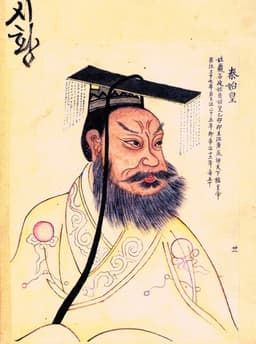
Qin Shi Huang
Emperor · Ancient
85.2Total
Basic Information
Born
1877
-259
Died
1960
-210
Era
Modern
Ancient
Nationality
Chile
China
Occupation
General
Emperor
Civilization
Western
Eastern
Score Comparison
Military (10%)
50.0
80.0
Political (20%)
68.0
90.0
Influence (20%)
53.3
85.0
Legacy (20%)
45.0
90.0
Leadership (15%)
74.0
78.0
Strategy (15%)
43.7
82.0
TOTAL
55.2
85.2
Carlos Ibanez del Campo — Complete Timeline
1927 AD
Created the Carabineros de ChileReform
Ibanez unified various police forces into the Carabineros de Chile, a national police force. This reform aimed to centralize law enforcement and maintain order.
Police ReformChileInstitution
Impact: nationalconstructive
First Presidency (Dictatorship)Political Action◆ Major
Ibanez assumed power through a coup and ruled as a dictator until 1931. He suspended civil liberties, repressed opposition, and implemented public works projects. His regime was marked by authoritarianism and economic growth.
DictatorshipChileAuthoritarianism
Impact: nationaldestructive
1952 AD
Second Presidency (Democratic)Political Action◆ Major
Ibanez was elected president again, this time as a populist. His second term was less authoritarian but faced economic challenges and inflation. He failed to implement major reforms.
PresidencyChilePopulism
Impact: national
Qin Shi Huang — Complete Timeline
246 BC
Construction of the Mausoleum and Terracotta ArmyOther◆ Major
Qin Shi Huang commissioned a vast mausoleum complex near Xi'an, guarded by thousands of life-sized terracotta soldiers, horses, and chariots. The project employed hundreds of thousands of workers and reflected his obsession with immortality and imperial power.
Impact: global
230 BC
Conquest of the Six Warring StatesWar
From 230 to 221 BCE, Ying Zheng led the Qin state in a series of campaigns that conquered the Han, Zhao, Wei, Chu, Yan, and Qi states. This unified China under a single ruler for the first time, ending the Warring States period.
Impact: global
221 BC
Standardization of Writing, Currency, and MeasurementsReform◆ Major
Qin Shi Huang ordered the standardization of Chinese script, currency, and weights and measures across the unified empire. This facilitated administration, trade, and cultural integration, laying a foundation for future dynasties.
Impact: globalconstructive
Proclamation of the Qin DynastyPolitical Action
After conquering the last independent state, Ying Zheng declared himself Shi Huangdi (First Emperor), founding the Qin Dynasty. He adopted a new title to signify his supreme authority and initiated centralized imperial rule.
Impact: global
214 BC
Initiation of the Great Wall ConstructionOther◆ Major
Qin Shi Huang ordered the connection and extension of existing northern fortifications to create a unified defensive wall against nomadic Xiongnu raids. This project involved massive conscripted labor and became the precursor to the later Great Wall.
Impact: regional
213 BC
Burning of Books and Burying of ScholarsPolitical Action◆ Major
On the advice of Li Si, Qin Shi Huang ordered the burning of historical records and philosophical texts not aligned with Legalist doctrine. He also had 460 Confucian scholars buried alive to suppress dissent and consolidate ideological control.
Impact: nationaldestructive
Expert Analysis
carlos-ibanez-del-campo-vs-qin-shi-huang
# The Emperor and the General: Two Paths to Absolute Power
On a winter morning in 221 BC, a young king in his late thirties stood before the conquered walls of a rival capital and declared himself *Shi Huangdi*—the First Emperor. Two thousand years later, on a crisp autumn evening in 1927, a mustachioed general in Santiago strode into the presidential palace and quietly informed Chile’s congress that he was now in charge. Both men sought to remake their nations from the ground up. Both wielded power with an iron fist. Yet one built an empire that defined a civilization for millennia, while the other left a legacy that crumbled within a generation. What drove the difference between Qin Shi Huang and Carlos Ibáñez del Campo? The answer lies not in their ambitions—which were remarkably similar—but in the worlds they inherited and the tools they possessed.
Origins
Qin Shi Huang was born in 259 BC, a prince of a frontier state in what is now western China. The Warring States period had raged for over two centuries, a brutal contest of seven kingdoms locked in perpetual conflict. Young Ying Zheng grew up in a world where survival demanded ruthlessness, where philosophy and warfare were inseparable, and where the dream of unity had been whispered by sages for generations. His father’s kingdom, Qin, was already the most disciplined and militaristic of the states, having adopted Legalist doctrines that valued order above all else.
Carlos Ibáñez del Campo entered the world in 1877, in the provincial city of Chillán, Chile. His Chile was a young republic, stable by Latin American standards, but struggling with the legacy of Spanish colonialism and an entrenched oligarchy. Unlike Qin Shi Huang, who was born to rule, Ibáñez was the son of a modest farmer. He chose the military as a career, rising through the ranks of an army that saw itself as the nation’s moral arbiter. His era was one of rising nationalism, economic volatility, and the growing belief that strongmen could solve problems that democracies could not.
These divergent beginnings shaped everything that followed. Qin Shi Huang inherited a tradition of absolute monarchy and a philosophical system that justified it. Ibáñez inherited a republic with a constitution, a congress, and a public that expected—at least in theory—to have a say in its governance.
Rise to Power
Qin Shi Huang’s path was direct: he was king at thirteen, and by twenty-two he had crushed a rebellion by his own chancellor. From 230 to 221 BC, he led his armies in a series of campaigns that annihilated the six rival states one by one. The conquest was methodical, brutal, and total. When the last king surrendered, Qin Shi Huang did not negotiate—he absorbed. His military score of 80 reflects not tactical brilliance but strategic relentlessness, a willingness to commit overwhelming force and accept any cost.
Ibáñez’s rise was more circuitous. He served as minister of war under President Emiliano Figueroa, then orchestrated a coup in 1927 that forced Figueroa’s resignation. Unlike Qin Shi Huang, who conquered an entire civilization, Ibáñez simply took over an existing state. His military score of 48 is telling: he was not a battlefield commander but a political operator who used the army as a ladder to power. The key turning point was not a battle but a quiet ultimatum delivered to a weakened president.
Leadership & Governance
Here the two men diverge most dramatically. Qin Shi Huang governed with the ambition of a demigod. He standardized writing, currency, and measurements across his empire—reforms that would outlast his dynasty by two thousand years. He ordered the construction of a massive mausoleum guarded by the Terracotta Army, a project that consumed tens of thousands of lives. He initiated the Great Wall, connecting existing fortifications into a single defensive line. And in 213 BC, he ordered the burning of books and the burying of scholars, a purge of all philosophical traditions except Legalism.
His political score of 88 reflects both his visionary reforms and his willingness to crush dissent. The standardization of script alone was a stroke of genius: it allowed a vast, multilingual empire to communicate through a single written language. But his governance was also paranoid and unsustainable. He executed scholars, exiled rivals, and sought immortality through alchemy. The Qin Dynasty collapsed within four years of his death.
Ibáñez’s first presidency (1927–1931) was a dictatorship in the modern sense. He suspended civil liberties, repressed opposition, and centralized power. But his reforms were modest compared to Qin Shi Huang’s. His most lasting achievement was the creation of the Carabineros de Chile in 1927, a unified national police force that brought order to a fragmented system. His political score of 91.2 is higher than Qin Shi Huang’s, but this reflects his skill at navigating democratic institutions—not the scale of his vision. He governed a country of four million people, not an empire of forty million.
Triumph & Tragedy
Qin Shi Huang’s greatest triumph was the unification itself. In 221 BC, he achieved what no Chinese ruler had done before: he brought the warring states under one rule, creating a template for imperial governance that would last until 1912. His greatest tragedy was his obsession with immortality. He consumed mercury-laced elixirs prescribed by court alchemists, poisoning himself slowly. He died in 210 BC at age forty-nine, leaving an empire without a stable succession.
Ibáñez’s triumph was his return to power in 1952, this time as a democratically elected populist. He won in a landslide, promising to clean up corruption and restore order. His tragedy was economic. His second term was plagued by inflation, strikes, and a collapsing copper market. He left office in 1958 with his popularity shattered, a cautionary tale about the limits of personal authority in a modern economy.
Character & Destiny
Qin Shi Huang was driven by a belief in his own divinity. He toured his empire constantly, erecting stone stelae praising his achievements. He was suspicious, secretive, and convinced that only he could hold the realm together. This paranoia led him to build hidden palaces connected by tunnels, so no one could predict his movements. It also led him to destroy the very intellectual traditions that might have sustained his dynasty.
Ibáñez was more pragmatic, less grandiose. He saw himself as a reformer, not a god. His first presidency was authoritarian but not genocidal; his second was democratic but ineffective. He lacked the philosophical certainty that drove Qin Shi Huang. In a sense, he was a man caught between eras—too authoritarian for a modern democracy, too democratic for a traditional dictatorship.
Legacy
Qin Shi Huang’s legacy is monumental. The Terracotta Army, discovered in 1974, is one of the world’s greatest archaeological wonders. The Great Wall, though much rebuilt, remains a symbol of Chinese endurance. His standardization of writing made Chinese civilization possible. His total score of 83.5 reflects this enduring influence.
Ibáñez’s legacy is more ambiguous. His Carabineros still serve Chile, but his authoritarian methods are remembered with ambivalence. His total score of 71.1 is lower, not because he was less skilled, but because he operated on a smaller stage and left a less permanent mark.
Conclusion
The difference between Qin Shi Huang and Carlos Ibáñez del Campo is not a matter of talent or ambition. Both were ruthless, both were reformers, both sought absolute control. But Qin Shi Huang built for eternity, while Ibáñez built for his own time. One lived in an age when a single man could reshape civilization; the other lived in an age when even a dictator had to answer to markets, newspapers, and voters. Their stories remind us that history’s greatest figures are not simply makers of their own destiny—they are also prisoners of their own era.
Rankings
🥇
Qin Shi HuangLeader
Mil: 80.0Pol: 90.0Inf: 85.0
85.2
🥈
Carlos Ibanez del Campo
Mil: 50.0Pol: 68.0Inf: 53.3
55.2
+30.0 behind
How This Comparison Works
Algorithm
Each figure is scored on 6 dimensions (0—100 scale) based on structured historical data: Military (10%), Political (20%), Influence (20%), Legacy (20%), Leadership (15%), Strategy (15%). The weighted total produces the final ranking.
Data Sources
Scores are computed from structured sub-indicators in the database. Scale factors adjust for era (Ancient ×0.85, Modern ×1.0) and civilization size (Eastern ×1.05, Other ×0.80) to account for differences in population and military scale.
Maximum 3 Figures
Comparisons are limited to 2—3 figures to ensure readability and statistical meaningfulness.
Error Margins
±5 points per dimension — Sub-scores are derived from historical records with inherent uncertainty. Two figures within 5 points on a dimension should be considered roughly equivalent in that area.
Total Score Accuracy
±3 points overall — The weighted combination of 6 dimensions produces a total score with approximately ±3 points of uncertainty. Differences of less than 3 points are not statistically significant— the figures are effectively tied.
Known Limitations
- Historical records are incomplete and uneven across civilizations
- Figures from oral-tradition societies may be underrepresented
- Occupation labels can misclassify multi-role figures
- Scores measure capability and impact, not moral character
- Quantitative scoring is a comparison tool, not absolute truth
Capability Radar
Military (10%) — Battles & Warfare
Battles
15
85
Win Rate
20
90
Expansion
5
90
Political (20%) — Governance & Reform
Reform
55
95
Diplomacy
40
75
Economy
50
90
Influence (20%) — Cultural & Global Reach
Cultural
30
95
Global
20
85
Legacy (20%) — Historical Impact
Historical
40
95
Longevity
30
95
Leadership (15%) — Power & Stability
Tenure
60
70
Stability
30
65
Strategy (15%) — Tactics & Innovation
Strategy
15
85
Tactics
10
80
Reform
30
95
Similar Comparisons
Comments & Discussion
Emperor's Shadow6/17/2026
Qin Shi Huang didn't just unify China; he standardized writing, weights, and axle lengths, creating a bureaucratic machine that outlasted his dynasty. Ibáñez del Campo, by contrast, barely changed Chile's oligarchic structure—he simply swapped out one ruling clique for another. One built with bronze and iron, the other with carbon paper and handshakes. That's the difference between a civilization-forging emperor and a strongman who couldn't even hold power for a full decade.
铁血法家6/17/2026
拿秦始皇跟伊瓦涅斯比,纯属关公战秦琼。始皇帝车同轨书同文,长城直道驰道一起上,那是把七国捏成一个文明。伊瓦涅斯呢?抄阿根廷模式搞工业保护,经济崩了就跑,1931年流亡,连屁股都没坐热。一个开天辟地,一个只是历史注脚,差距不在野心,在有没有砸碎旧世界的手段。
Dead Papyrus6/17/2026
You're comparing a man who burned books and buried scholars alive to a guy who jailed a few journalists. Qin Shi Huang literally tried to erase history itself; Ibáñez just censored it. That's not "both wielded iron fists"—that's an atomic bomb versus a firecracker. The First Emperor's paranoia was cosmic in scale, and his legacy includes the Terra Cotta Army. What did Ibáñez leave? A dozen rusty tanks and a bad taste in Chilean mouths.
青铜剑与钢笔6/17/2026
关键差别在于:秦始皇统一度量衡时,用的是法律和暴力强制推行,秦国铁骑开路,商鞅变法打底。伊瓦涅斯想搞“新国家”,但手里只有一纸空文和军队支持,没思想根基,没制度变革。1927年的智利,地主和教会还在掌权。始皇帝能焚书坑儒,伊瓦涅斯连教育改革都推不动。这就是铁血帝国与热带民主闹剧的本质区别。