Loading...
This comparison has not been analyzed yet.
One-time AI generation (~1 minute). Scores and timeline are already available below.
Carlos Salinas de Gortari vs Harry S. Truman
Harry S. Truman leads by 8.8 pts · 2 figures compared
…

Carlos Salinas de Gortari
Politician · Modern
54.9Total
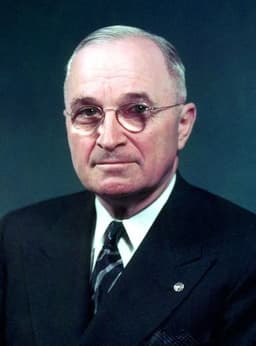
Harry S. Truman
Politician · Modern
63.7Total
Basic Information
Born
1948
1884
Died
—
1972
Era
Modern
Modern
Nationality
Mexico
United States
Occupation
Politician
Politician
Civilization
Western
Western
Score Comparison
Military (10%)
49.9
30.0
Political (20%)
70.0
55.0
Influence (20%)
60.0
68.0
Legacy (20%)
49.2
72.0
Leadership (15%)
53.2
79.8
Strategy (15%)
40.9
55.0
TOTAL
54.9
63.7
Carlos Salinas de Gortari — Complete Timeline
1990 AD
Privatization of state-owned enterprisesReform◆ Major
Salinas privatized hundreds of state-owned companies, including the telephone monopoly Telmex, banks, and steel mills. The sales raised revenue but were criticized for lack of transparency and for concentrating wealth among a few billionaires.
PrivatizationEconomic ReformWealth Concentration
Impact: national
1992 AD
Signing of the North American Free Trade Agreement (NAFTA)Political Action
President Carlos Salinas de Gortari negotiated and signed NAFTA with the United States and Canada, creating a free trade zone. The agreement, effective in 1994, aimed to boost investment and exports but also led to job losses in agriculture and manufacturing.
NAFTATradeGlobalization
Impact: global
1994 AD
Zapatista uprising in ChiapasWar◆ Major
On January 1, 1994, the Zapatista Army of National Liberation (EZLN) launched an armed rebellion in Chiapas, protesting NAFTA and indigenous marginalization. The uprising exposed deep social inequalities and challenged Salinas's narrative of modernization.
ZapatistaRebellionIndigenous Rights
Impact: nationaltragic
1995 AD
Exile after corruption allegationsPolitical Action◆ Major
After leaving office, Salinas faced corruption allegations and went into self-imposed exile in Ireland. His brother Ra
CorruptionExileScandal
Impact: nationaldestructive
Harry S. Truman — Complete Timeline
1945 AD
Ordered atomic bombings of Hiroshima and NagasakiWar
Truman authorized the use of atomic bombs against Japan. Hiroshima was bombed on August 6, Nagasaki on August 9. Japan surrendered on August 15, ending World War II. The bombings caused massive civilian casualties and initiated the nuclear age.
World War IINuclear WeaponsJapan
Impact: globaldestructive
1947 AD
Announced the Truman DoctrinePolitical Action◆ Major
Truman declared that the United States would provide political, military, and economic assistance to all democratic nations under threat from authoritarian forces. This policy was first applied to Greece and Turkey, marking the start of the Cold War containment strategy.
Cold WarContainmentForeign Policy
Impact: globalconstructive
1948 AD
Desegregated the U.S. armed forcesReform◆ Major
Truman issued Executive Order 9981, mandating equality of treatment and opportunity for all persons in the armed services regardless of race. This order began the process of racial integration in the U.S. military, a major step in the civil rights movement.
Civil RightsMilitaryDesegregation
Impact: nationalprogressive
Signed the Marshall Plan into lawPolitical Action◆ Major
Truman signed the Economic Cooperation Act, implementing the Marshall Plan. This program provided over $12 billion in economic aid to rebuild Western European economies after World War II, stabilizing the region and countering Soviet influence.
Cold WarEconomic AidEurope
Impact: globalconstructive
1950 AD
Ordered U.S. intervention in the Korean WarWar◆ Major
After North Korea invaded South Korea, Truman committed U.S. forces under a United Nations mandate. The war lasted until 1953, ended in an armistice, and solidified the division of Korea. It also led to the militarization of the Cold War.
Korean WarCold WarMilitary Intervention
Impact: global
This comparison has not been analyzed yet.
One-time AI generation (~1 minute). Scores and timeline are already available below.
Rankings
🥇
Harry S. TrumanLeader
Mil: 30.0Pol: 55.0Inf: 68.0
63.7
🥈
Carlos Salinas de Gortari
Mil: 49.9Pol: 70.0Inf: 60.0
54.9
+8.8 behind
How This Comparison Works
Algorithm
Each figure is scored on 6 dimensions (0—100 scale) based on structured historical data: Military (10%), Political (20%), Influence (20%), Legacy (20%), Leadership (15%), Strategy (15%). The weighted total produces the final ranking.
Data Sources
Scores are computed from structured sub-indicators in the database. Scale factors adjust for era (Ancient ×0.85, Modern ×1.0) and civilization size (Eastern ×1.05, Other ×0.80) to account for differences in population and military scale.
Maximum 3 Figures
Comparisons are limited to 2—3 figures to ensure readability and statistical meaningfulness.
Error Margins
±5 points per dimension — Sub-scores are derived from historical records with inherent uncertainty. Two figures within 5 points on a dimension should be considered roughly equivalent in that area.
Total Score Accuracy
±3 points overall — The weighted combination of 6 dimensions produces a total score with approximately ±3 points of uncertainty. Differences of less than 3 points are not statistically significant— the figures are effectively tied.
Known Limitations
- Historical records are incomplete and uneven across civilizations
- Figures from oral-tradition societies may be underrepresented
- Occupation labels can misclassify multi-role figures
- Scores measure capability and impact, not moral character
- Quantitative scoring is a comparison tool, not absolute truth
Capability Radar
Military (10%) — Battles & Warfare
Battles
31
0
Win Rate
30
0
Expansion
34
0
Political (20%) — Governance & Reform
Reform
75
65
Diplomacy
70
75
Economy
75
60
Influence (20%) — Cultural & Global Reach
Cultural
45
55
Global
55
80
Legacy (20%) — Historical Impact
Historical
55
80
Longevity
40
70
Leadership (15%) — Power & Stability
Tenure
60
70
Stability
40
60
Strategy (15%) — Tactics & Innovation
Strategy
36
70
Tactics
41
0
Reform
41
60
Similar Comparisons
Comments & Discussion
No comments yet. Be the first to share your thoughts!