Loading...
This comparison has not been analyzed yet.
One-time AI generation (~1 minute). Scores and timeline are already available below.
Casimir III the Great vs Emperor Go-Shirakawa
Casimir III the Great leads by 7.2 pts · 2 figures compared
…
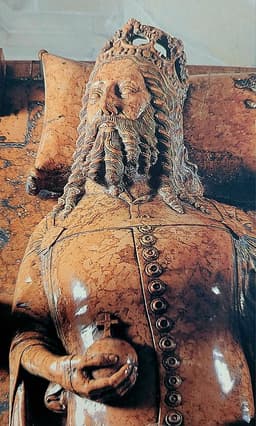
Casimir III the Great
Emperor · Medieval
60.2Total
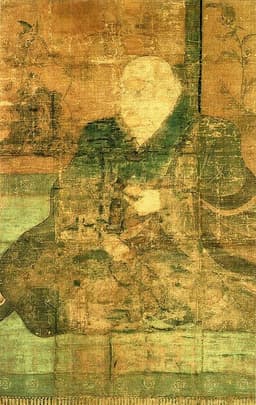
Emperor Go-Shirakawa
Emperor · Medieval
53.0Total
Basic Information
Born
1310
1127
Died
1370
1192
Era
Medieval
Medieval
Nationality
Poland
Japan
Occupation
Emperor
Emperor
Civilization
Western
Eastern
Score Comparison
Military (10%)
40.0
20.0
Political (20%)
70.3
68.0
Influence (20%)
56.7
62.0
Legacy (20%)
55.0
52.0
Leadership (15%)
78.0
65.0
Strategy (15%)
60.0
25.0
TOTAL
60.2
53.0
Casimir III the Great — Complete Timeline
1333 AD
Construction of Wawel CastleCultural
Casimir III initiated the reconstruction of Wawel Castle in Krakow in Gothic style, replacing earlier Romanesque structures. The castle became the royal residence and a symbol of Polish statehood, embodying the king's building program that left Poland 'in stone'.
ArchitectureRoyal PatronageCultural Heritage
Impact: nationalconstructive
1340 AD
Annexation of Red RutheniaWar◆ Major
Following the death of Boles
ExpansionTerritorial GainEastern Europe
Impact: regionalconstructive
1343 AD
Peace of KaliszPolitical Action◆ Major
Casimir III signed the Peace of Kalisz with the Teutonic Order, renouncing Polish claims to Pomerelia and Che
Teutonic OrderDiplomacyTerritorial Settlement
Impact: nationalconstructive
1347 AD
Codification of LawsReform◆ Major
Casimir III issued the Statutes of Wi
Legal ReformAdministrationJustice
Impact: nationalprogressive
1364 AD
Foundation of the University of KrakowCultural
Casimir III established the University of Krakow (later Jagiellonian University), the second university in Central Europe after Prague. The institution became a major center of learning, though it declined after Casimir's death until revived in the 15th century.
EducationRenaissanceCulture
Impact: regionalprogressive
Congress of KrakowPolitical Action◆ Major
Casimir III hosted the Congress of Krakow, a meeting of European monarchs including Holy Roman Emperor Charles IV, King Louis I of Hungary, and King Valdemar IV of Denmark. The congress discussed peace and cooperation, enhancing Poland's prestige.
DiplomacyInternational RelationsPrestige
Impact: regionalconstructive
Emperor Go-Shirakawa — Complete Timeline
1086 AD
Compilation of the 'Goshui Wakashu' poetry anthologyCultural
Go-Shirakawa ordered the compilation of the Goshui Wakashu, an imperial anthology of waka poetry. This collection preserved Heian-era poetic traditions and influenced Japanese literary culture for centuries.
LiteratureWaka PoetryHeian Period
Impact: nationalconstructive
1156 AD
Role in the Hogen RebellionWar
Go-Shirakawa, as emperor, defeated the forces of retired Emperor Sutoku in the Hogen Rebellion. This victory secured his throne and involved samurai clans like the Minamoto and Taira, marking the first major military intervention by samurai in imperial politics.
Hogen RebellionSamuraiImperial Politics
Impact: national
1180 AD
Leadership during the Genpei WarWar
As cloistered emperor, Go-Shirakawa managed the Genpei War between the Minamoto and Taira clans. He shifted support between factions, ultimately backing Minamoto no Yoritomo, whose victory led to the establishment of the Kamakura shogunate and samurai rule.
Genpei WarKamakura ShogunateSamurai
Impact: national
1185 AD
Establishment of the Kamakura shogunatePolitical Action
Go-Shirakawa formally recognized Minamoto no Yoritomo as shogun, legitimizing the Kamakura shogunate. This act transferred military and political power from the imperial court to the samurai class, fundamentally altering Japan's governance structure.
Kamakura ShogunateSamurai GovernmentFeudal Japan
Impact: national
This comparison has not been analyzed yet.
One-time AI generation (~1 minute). Scores and timeline are already available below.
Rankings
🥇
Casimir III the GreatLeader
Mil: 40.0Pol: 70.3Inf: 56.7
60.2
🥈
Emperor Go-Shirakawa
Mil: 20.0Pol: 68.0Inf: 62.0
53.0
+7.2 behind
How This Comparison Works
Algorithm
Each figure is scored on 6 dimensions (0—100 scale) based on structured historical data: Military (10%), Political (20%), Influence (20%), Legacy (20%), Leadership (15%), Strategy (15%). The weighted total produces the final ranking.
Data Sources
Scores are computed from structured sub-indicators in the database. Scale factors adjust for era (Ancient ×0.85, Modern ×1.0) and civilization size (Eastern ×1.05, Other ×0.80) to account for differences in population and military scale.
Maximum 3 Figures
Comparisons are limited to 2—3 figures to ensure readability and statistical meaningfulness.
Error Margins
±5 points per dimension — Sub-scores are derived from historical records with inherent uncertainty. Two figures within 5 points on a dimension should be considered roughly equivalent in that area.
Total Score Accuracy
±3 points overall — The weighted combination of 6 dimensions produces a total score with approximately ±3 points of uncertainty. Differences of less than 3 points are not statistically significant— the figures are effectively tied.
Known Limitations
- Historical records are incomplete and uneven across civilizations
- Figures from oral-tradition societies may be underrepresented
- Occupation labels can misclassify multi-role figures
- Scores measure capability and impact, not moral character
- Quantitative scoring is a comparison tool, not absolute truth
Capability Radar
Military (10%) — Battles & Warfare
Battles
30
5
Win Rate
35
5
Expansion
45
5
Political (20%) — Governance & Reform
Reform
90
65
Diplomacy
80
75
Economy
85
40
Influence (20%) — Cultural & Global Reach
Cultural
70
60
Global
55
50
Legacy (20%) — Historical Impact
Historical
75
70
Longevity
70
65
Leadership (15%) — Power & Stability
Tenure
85
70
Stability
75
30
Strategy (15%) — Tactics & Innovation
Strategy
40
15
Tactics
25
10
Reform
60
10
Similar Comparisons
Comments & Discussion
No comments yet. Be the first to share your thoughts!