Loading...
Cezayirli Gazi Hasan vs Qin Shi Huang
Qin Shi Huang leads by 31.8 pts · 2 figures compared
…

Cezayirli Gazi Hasan
General · Modern
53.4Total
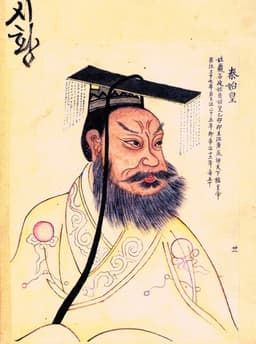
Qin Shi Huang
Emperor · Ancient
85.2Total
Basic Information
Born
1713
-259
Died
1790
-210
Era
Modern
Ancient
Nationality
Ottoman Empire
China
Occupation
General
Emperor
Civilization
Middle Eastern
Eastern
Score Comparison
Military (10%)
70.0
80.0
Political (20%)
45.0
90.0
Influence (20%)
57.2
85.0
Legacy (20%)
50.0
90.0
Leadership (15%)
48.8
78.0
Strategy (15%)
55.0
82.0
TOTAL
53.4
85.2
Cezayirli Gazi Hasan — Complete Timeline
1770 AD
Battle of Chesma (1770)War◆ Major
Cezayirli Gazi Hasan commanded the Ottoman fleet at the Battle of Chesma against the Russian navy. The battle ended in a catastrophic Ottoman defeat, with most of the fleet destroyed by Russian fireships in the Aegean Sea.
Naval BattleRusso-Turkish WarDefeat
Impact: regionaldestructive
Crocodile CompanionCultural
Cezayirli Gazi Hasan was known for keeping a pet crocodile, which he allegedly brought from Egypt. The crocodile became a symbol of his eccentricity and was often mentioned in contemporary accounts, adding to his legendary status.
EccentricityLegendPersonal Life
1789 AD
Grand Vizier AppointmentPolitical Action
Cezayirli Gazi Hasan was appointed grand vizier by Sultan Selim III. His tenure was brief but focused on naval reforms and strengthening the Ottoman fleet, drawing on his experience as an admiral.
AppointmentNaval ReformAdministration
Impact: nationalconstructive
Qin Shi Huang — Complete Timeline
246 BC
Construction of the Mausoleum and Terracotta ArmyOther◆ Major
Qin Shi Huang commissioned a vast mausoleum complex near Xi'an, guarded by thousands of life-sized terracotta soldiers, horses, and chariots. The project employed hundreds of thousands of workers and reflected his obsession with immortality and imperial power.
Impact: global
230 BC
Conquest of the Six Warring StatesWar
From 230 to 221 BCE, Ying Zheng led the Qin state in a series of campaigns that conquered the Han, Zhao, Wei, Chu, Yan, and Qi states. This unified China under a single ruler for the first time, ending the Warring States period.
Impact: global
221 BC
Standardization of Writing, Currency, and MeasurementsReform◆ Major
Qin Shi Huang ordered the standardization of Chinese script, currency, and weights and measures across the unified empire. This facilitated administration, trade, and cultural integration, laying a foundation for future dynasties.
Impact: globalconstructive
Proclamation of the Qin DynastyPolitical Action
After conquering the last independent state, Ying Zheng declared himself Shi Huangdi (First Emperor), founding the Qin Dynasty. He adopted a new title to signify his supreme authority and initiated centralized imperial rule.
Impact: global
214 BC
Initiation of the Great Wall ConstructionOther◆ Major
Qin Shi Huang ordered the connection and extension of existing northern fortifications to create a unified defensive wall against nomadic Xiongnu raids. This project involved massive conscripted labor and became the precursor to the later Great Wall.
Impact: regional
213 BC
Burning of Books and Burying of ScholarsPolitical Action◆ Major
On the advice of Li Si, Qin Shi Huang ordered the burning of historical records and philosophical texts not aligned with Legalist doctrine. He also had 460 Confucian scholars buried alive to suppress dissent and consolidate ideological control.
Impact: nationaldestructive
Expert Analysis
cezayirli-gazi-hasan-vs-qin-shi-huang
# The First Emperor and the Crocodile Admiral
On a sun-scorched deck in 1770, an Ottoman admiral watched his fleet burn in Chesma Bay. Cezayirli Gazi Hasan Pasha, a former slave who had risen through the ranks, survived the inferno that destroyed the Ottoman navy. Three decades earlier and half a world away, a young king named Ying Zheng had watched his own armies march across the plains of China, swallowing rival states one by one. One man would unify a civilization and build an army of clay; the other would tame a crocodile and try to save an empire in decline. What separates a figure who reshapes history from one who merely survives it?
Origins
Qin Shi Huang entered the world in 259 BC as a prince of the Qin state, one of seven warring kingdoms locked in centuries of brutal conflict. His father was a king, his mother a former concubine. The boy grew up surrounded by Legalist philosophers who taught that human nature was inherently selfish and that only harsh laws could create order. He learned that strength was the only virtue and that mercy was weakness.
Cezayirli Gazi Hasan was born around 1713 in Algeria, then an Ottoman province. His origins remain obscure—he was likely a slave or a poor boy who joined the corsair fleets raiding Mediterranean shipping. Unlike the Chinese emperor, he clawed his way up through sheer competence, learning navigation, naval warfare, and the art of survival in a world where defeat meant death or chains.
The difference in their origins is not merely one of class but of worldview. Qin Shi Huang inherited a throne and a philosophy that demanded absolute control. Hasan Pasha inherited nothing but the sea and the knowledge that adaptability meant survival.
Rise to Power
Between 230 and 221 BC, Ying Zheng unleashed his generals on the six remaining kingdoms. The campaigns were methodical, brutal, and complete. He conquered Han first, then Zhao, Wei, Chu, Yan, and finally Qi. When the last king surrendered in 221 BC, Ying Zheng proclaimed himself Shi Huangdi—the First Emperor—and declared the beginning of a new age.
Cezayirli Gazi Hasan's rise was less dramatic but no less remarkable. He commanded the Ottoman fleet at the Battle of Chesma in 1770 against the Russian navy. The battle ended in catastrophe—the Russians used fireships to destroy the Ottoman fleet in the harbor. Hasan Pasha was one of the few senior commanders to escape. Rather than being executed or exiled, he was promoted. The Ottoman system, in its desperation, valued survivors who learned from defeat.
Leadership & Governance
Qin Shi Huang governed through terror and standardization. He ordered the standardization of writing, currency, and weights and measures across his empire—reforms that would outlast his dynasty by two millennia. He connected existing fortifications into what would become the Great Wall. But he also ordered the burning of books and the burying of scholars alive in 213 BC, believing that history should begin with him.
Hasan Pasha governed through patronage and pragmatism. As grand vizier from 1789, appointed by Sultan Selim III, he focused on naval reforms and military modernization. His crocodile companion—a real animal he kept from his time in Egypt—became a symbol of his exotic background and his ability to tame the untamable. But his reforms were too little, too late. The Ottoman Empire was already in decline, and Hasan Pasha could only slow the bleeding, not stop it.
Triumph & Tragedy
Qin Shi Huang's greatest triumph was unification itself—an achievement so complete that "China" became synonymous with the territory he first brought together. His greatest tragedy was his obsession with immortality. He consumed mercury pills prescribed by alchemists, which likely hastened his death in 210 BC at age 49. His dynasty collapsed within three years of his death.
Hasan Pasha's greatest moment was surviving Chesma and rebuilding the navy. His tragedy was that his reforms came during a losing war against Russia and Austria. He died in 1790, possibly assassinated, his crocodile outliving him as a curiosity in the imperial menagerie.
Character & Destiny
Qin Shi Huang believed he could command the universe. He built a mausoleum guarded by thousands of life-sized terracotta soldiers, complete with rivers of mercury simulating the waterways of his empire. His paranoia and megalomania drove him to greatness and to madness.
Hasan Pasha believed in survival. He kept a crocodile because it reminded him of where he came from and what he had overcome. His pragmatism made him effective but never great. He could reform a navy but not an empire.
Legacy
Qin Shi Huang's legacy is the foundation of Chinese civilization. The standardized script he imposed is still used today. The Great Wall he began still stands. His terracotta army, discovered in 1974, is one of the world's greatest archaeological wonders. His political score of 88 and influence of 82 reflect a man who reshaped history itself.
Hasan Pasha's legacy is more modest. His military score of 67.5 and strategy of 59.7 reflect a competent commander who lost his greatest battle. His political score of 89.5 shows a skilled survivor in a dying system. Today, he is remembered mainly in Turkey and Algeria, a footnote in the long decline of the Ottoman Empire.
Conclusion
The First Emperor built an empire of stone, bronze, and clay that would last in spirit for two thousand years. The Crocodile Admiral tried to patch a leaking ship with reforms and crocodile skins. Both men faced the same fundamental question: how does a leader shape fate? Qin Shi Huang answered by trying to crush time itself. Hasan Pasha answered by learning to swim in its currents. Their different outcomes were not accidents of fortune but reflections of character, era, and the terrifying truth that some men are born to build worlds, while others are born only to survive their destruction.
Rankings
🥇
Qin Shi HuangLeader
Mil: 80.0Pol: 90.0Inf: 85.0
85.2
🥈
Cezayirli Gazi Hasan
Mil: 70.0Pol: 45.0Inf: 57.2
53.4
+31.8 behind
How This Comparison Works
Algorithm
Each figure is scored on 6 dimensions (0—100 scale) based on structured historical data: Military (10%), Political (20%), Influence (20%), Legacy (20%), Leadership (15%), Strategy (15%). The weighted total produces the final ranking.
Data Sources
Scores are computed from structured sub-indicators in the database. Scale factors adjust for era (Ancient ×0.85, Modern ×1.0) and civilization size (Eastern ×1.05, Other ×0.80) to account for differences in population and military scale.
Maximum 3 Figures
Comparisons are limited to 2—3 figures to ensure readability and statistical meaningfulness.
Error Margins
±5 points per dimension — Sub-scores are derived from historical records with inherent uncertainty. Two figures within 5 points on a dimension should be considered roughly equivalent in that area.
Total Score Accuracy
±3 points overall — The weighted combination of 6 dimensions produces a total score with approximately ±3 points of uncertainty. Differences of less than 3 points are not statistically significant— the figures are effectively tied.
Known Limitations
- Historical records are incomplete and uneven across civilizations
- Figures from oral-tradition societies may be underrepresented
- Occupation labels can misclassify multi-role figures
- Scores measure capability and impact, not moral character
- Quantitative scoring is a comparison tool, not absolute truth
Capability Radar
Military (10%) — Battles & Warfare
Battles
65
85
Win Rate
60
90
Expansion
50
90
Political (20%) — Governance & Reform
Reform
55
95
Diplomacy
60
75
Economy
50
90
Influence (20%) — Cultural & Global Reach
Cultural
40
95
Global
35
85
Legacy (20%) — Historical Impact
Historical
50
95
Longevity
40
95
Leadership (15%) — Power & Stability
Tenure
60
70
Stability
45
65
Strategy (15%) — Tactics & Innovation
Strategy
65
85
Tactics
70
80
Reform
55
95
Similar Comparisons
Comments & Discussion
HistoricSkeptic6/17/2026
秦始皇至少统一了度量衡和文字,哈桑帕夏做了什么?1770年切什梅海战惨败后,他唯一的成就就是驯服一条鳄鱼当宠物。奥斯曼帝国需要的是舰队现代化,不是马戏团表演。用2000年后罗马尼亚宫殿的鳄鱼皮来证明他的伟大?太荒谬了。
LegalistEagle6/17/2026
秦始皇用法律铁腕整合了分裂的华夏文明,而哈桑只是帝国夕阳下的挣扎者。前者修建的驰道和长城改变了地理格局,后者连保护埃及海岸线都做不到。法家思想铸就了永恒的帝国架构,哈桑的战术胜利不过是风中残烛。
AdmiralTurtleSlayer6/17/2026
The crocodile-taming story proves Hasan was pure theater. Qin Shi Huang commanded armies that actually conquered six kingdoms—Hasan wrestled a reptile for Ottoman PR. Which legacy would you rather have: unifying China with iron discipline, or being remembered for a zoo exhibit?
QinClayCritic6/17/2026
Let's talk numbers. The Terracotta Army contains over 8,000 life-sized soldiers—each with unique facial features. That's insane craftsmanship for 210 BC. Hasan's naval reforms? His fleet still got obliterated at Chesma, losing 15 ships of the line. Show me one monument comparable to the Mausoleum complex.
CrocodileCommodore6/17/2026
You underestimate symbolic power. Hasan taming that Nile crocodile in front of the sultan reasserted Ottoman naval authority at a time of crushing defeat. Qin's clay army is impressive, sure, but static. Hasan's personal courage—surviving Chesma, fighting corsairs, reforming the fleet—that's active leadership, not memorialized dust.