Loading...
Chagatai Khan vs Mehmed II
Mehmed II leads by 12.1 pts · 2 figures compared
…
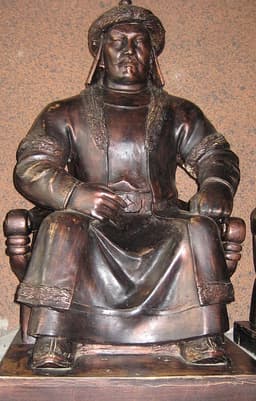
Chagatai Khan
Emperor · Medieval
54.7Total
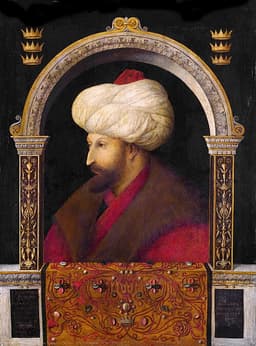
Mehmed II
Emperor · Medieval
66.8Total
Basic Information
Born
1183
1432
Died
1242
1481
Era
Medieval
Medieval
Nationality
Mongol Empire
Ottoman Empire
Occupation
Emperor
Emperor
Civilization
Eastern
Middle Eastern
Score Comparison
Military (10%)
55.0
77.5
Political (20%)
45.1
70.3
Influence (20%)
55.7
40.0
Legacy (20%)
45.8
75.0
Leadership (15%)
74.0
78.0
Strategy (15%)
60.0
80.3
TOTAL
54.7
66.8
Chagatai Khan — Complete Timeline
1221 AD
Conflict with JochiPolitical Action
Chagatai had a longstanding rivalry with his brother Jochi, questioning Jochi's legitimacy as Genghis's son. This conflict caused tension within the Mongol royal family and influenced succession disputes after Genghis's death.
Mongol Family FeudSuccession
Impact: regionaldestructive
1227 AD
Enforcement of Yassa LawReform
Chagatai was known for strictly enforcing the Yassa, the Mongol legal code established by Genghis Khan. He imposed harsh punishments for violations, maintaining order in his khanate and preserving Mongol traditions.
Mongol LawYassa
Impact: regional
Appointed as Ruler of the Chagatai KhanatePolitical Action◆ Major
Following Genghis Khan's death, Chagatai was granted the Central Asian territories of the Mongol Empire, forming the Chagatai Khanate. He ruled from his capital at Almaligh, overseeing the region's administration and military.
Mongol EmpireSuccessionChagatai Khanate
Impact: regional
Mehmed II — Complete Timeline
1453 AD
Siege of ConstantinopleWar
Mehmed II led the Ottoman army in a 53-day siege of Constantinople, the capital of the Byzantine Empire. The city fell on May 29, 1453, after Ottoman forces breached the walls. This conquest ended the Byzantine Empire and established Constantinople as the Ottoman capital, later renamed Istanbul.
ConquestByzantine EmpireOttoman Expansion
Impact: global
1456 AD
Siege of BelgradeWar◆ Major
Mehmed II led a large Ottoman army to besiege Belgrade, a key Hungarian fortress. The siege was broken by a Christian relief force led by John Hunyadi. The Ottoman army suffered heavy losses and was forced to retreat. This defeat halted Ottoman expansion into Hungary for decades.
SiegeDefeatHungary
Impact: regional
1461 AD
Conquest of the Empire of TrebizondWar◆ Major
Mehmed II led a military campaign against the Empire of Trebizond, the last major Byzantine Greek successor state. After a siege of the capital, Emperor David Megas Komnenos surrendered. This conquest eliminated the final remnant of Byzantine authority in Anatolia.
ConquestAnatoliaByzantine Successor
Impact: regional
1478 AD
Codification of Ottoman Law (Kanunname)Reform◆ Major
Mehmed II issued the Kanunname, a comprehensive legal code that systematized Ottoman criminal, administrative, and land law. This code defined the powers of the sultan, the structure of the bureaucracy, and the rights of subjects. It provided a legal framework for the expanding empire.
Legal ReformOttoman LawAdministration
Impact: nationalconstructive
1480 AD
Invasion of OtrantoWar
Mehmed II ordered an Ottoman fleet to invade the Italian city of Otranto. Ottoman forces captured the city and massacred many inhabitants. This invasion established a temporary Ottoman foothold in Italy, causing alarm among Italian states. The occupation ended after Mehmed's death.
InvasionItalyOttoman Expansion
Impact: regionaldestructive
Expert Analysis
Origins
Chagatai Khan, born around 1185, was the second son of Genghis Khan and his wife Börte. His early life was shaped by the nomadic traditions of the Mongol steppe and the rigorous training under his father. He participated in Genghis's campaigns, including the invasion of the Khwarezmian Empire. Chagatai's legitimacy was unquestioned, unlike his brother Jochi, whose paternity was disputed. He received a traditional Mongol education focused on warfare and clan loyalty.
Mehmed II, born on March 30, 1432, in Edirne, was the son of Sultan Murad II and Hüma Hatun. He received a comprehensive education in Islamic sciences, philosophy, and military tactics. His early years were marked by political intrigue; his father abdicated twice, placing Mehmed on the throne at age 12, only to return after a Janissary revolt. This instability shaped Mehmed's cautious yet decisive character.
Rise to Power
Chagatai's rise was tied to his father's conquests. After Genghis's death in 1227, the empire was divided among his sons. Chagatai received the Central Asian territories, forming the Chagatai Khanate. He was confirmed as ruler at a kurultai in 1229. His power base included the steppes from the Altai Mountains to the Oxus River. He maintained authority through strict adherence to Mongol traditions and the Yassa code.
Mehmed II ascended the throne for the first time in 1444 after his father's abdication, but was forced to step down in 1446 due to Janissary pressure. He regained power in 1451 after Murad II's death. Immediately, he prepared for the conquest of Constantinople, securing alliances and building a massive fortress (Rumeli Hisarı) on the Bosphorus. His rise culminated in the successful siege of Constantinople in 1453, which elevated him to the status of a legendary conqueror.
Leadership & Governance
Chagatai Khan governed his khanate through traditional Mongol institutions. He enforced the Yassa law with severity, imposing harsh penalties for violations such as theft or adultery. His governance lacked administrative innovation; he relied on local elites and maintained a nomadic lifestyle. He had a military score of 55.0, reflecting his limited campaigns beyond consolidation. His leadership score of 74.0 indicates his effectiveness in maintaining unity among his followers.
Mehmed II, with a political score of 70.3, implemented sweeping reforms. He issued the Kanunname, a legal code that systematized Ottoman law, defining the rights of subjects and the powers of the sultan. He centralized authority by curbing the influence of the nobility and the Janissaries. He encouraged trade and rebuilt Constantinople as Istanbul, repopulating it with diverse communities. His leadership score of 78.0 reflects his ability to command loyalty and drive ambitious projects.
Triumph & Tragedy
Chagatai's greatest success was establishing the Chagatai Khanate, which endured for centuries and became a center of Mongol culture in Central Asia. However, his legacy was marred by his rivalry with Jochi, which fractured the Mongol Empire. His strict enforcement of the Yassa sometimes caused resentment among Muslim subjects, limiting his influence. He died in 1242, leaving a khanate that later fragmented.
Mehmed II's triumph was the capture of Constantinople in 1453, ending the Byzantine Empire and opening the Ottoman Empire to dominance in the Eastern Mediterranean. He also conquered the Empire of Trebizond in 1461 and expanded into the Balkans. His tragedy was the failure at Belgrade in 1456, where he was defeated by John Hunyadi. His invasion of Otranto in 1480 was a strategic overreach that ended with his death in 1481, leaving the Italian campaign unfinished.
Character & Destiny
Chagatai was known for his strict adherence to Mongol traditions and his loyalty to Genghis's legacy. His character was rigid, which limited his ability to adapt to the diverse cultures within his realm. This rigidity contributed to the khanate's eventual decline. Historical assessments note his role as a stabilizer but not an innovator.
Mehmed II was a complex figure: ruthless yet cultured, pragmatic yet visionary. He studied philosophy and science, and surrounded himself with scholars. His decision-making pattern combined careful planning with bold execution. He scored 80.3 in strategy, reflecting his ability to orchestrate complex campaigns. His character drove him to pursue conquest relentlessly, but also led to overextension.
Legacy
Chagatai Khan's legacy is the Chagatai Khanate, which became a conduit for Mongol influence in Central Asia. The Chagatai language and culture persisted for centuries. However, his impact on global history is limited compared to his father or brothers. His legacy score of 45.8 reflects this modest influence.
Mehmed II's legacy is immense. He transformed the Ottoman Empire into a centralized state with a codified legal system. The conquest of Constantinople reshaped world history, ending the Middle Ages in the East and establishing Ottoman dominance for centuries. His legacy score of 75.0 is supported by his enduring impact on law, culture, and geopolitics.
Conclusion
Mehmed II had a greater impact than Chagatai Khan. With a total score of 66.8 against Chagatai's 54.7, Mehmed's achievements in state-building and conquest reshaped the course of history. While Chagatai preserved Mongol traditions, Mehmed transformed an empire and captured the most coveted city of his time. The 12.1-point gap reflects the scale and durability of their contributions.
Rankings
🥇
Mehmed IILeader
Mil: 77.5Pol: 70.3Inf: 40.0
66.8
🥈
Chagatai Khan
Mil: 55.0Pol: 45.1Inf: 55.7
54.7
+12.1 behind
How This Comparison Works
Algorithm
Each figure is scored on 6 dimensions (0—100 scale) based on structured historical data: Military (10%), Political (20%), Influence (20%), Legacy (20%), Leadership (15%), Strategy (15%). The weighted total produces the final ranking.
Data Sources
Scores are computed from structured sub-indicators in the database. Scale factors adjust for era (Ancient ×0.85, Modern ×1.0) and civilization size (Eastern ×1.05, Other ×0.80) to account for differences in population and military scale.
Maximum 3 Figures
Comparisons are limited to 2—3 figures to ensure readability and statistical meaningfulness.
Error Margins
±5 points per dimension — Sub-scores are derived from historical records with inherent uncertainty. Two figures within 5 points on a dimension should be considered roughly equivalent in that area.
Total Score Accuracy
±3 points overall — The weighted combination of 6 dimensions produces a total score with approximately ±3 points of uncertainty. Differences of less than 3 points are not statistically significant— the figures are effectively tied.
Known Limitations
- Historical records are incomplete and uneven across civilizations
- Figures from oral-tradition societies may be underrepresented
- Occupation labels can misclassify multi-role figures
- Scores measure capability and impact, not moral character
- Quantitative scoring is a comparison tool, not absolute truth
Capability Radar
Military (10%) — Battles & Warfare
Battles
45
95
Win Rate
50
90
Expansion
50
95
Political (20%) — Governance & Reform
Reform
40
90
Diplomacy
45
85
Economy
40
80
Influence (20%) — Cultural & Global Reach
Cultural
35
85
Global
30
90
Legacy (20%) — Historical Impact
Historical
40
95
Longevity
35
90
Leadership (15%) — Power & Stability
Tenure
55
85
Stability
50
75
Strategy (15%) — Tactics & Innovation
Strategy
45
95
Tactics
40
95
Reform
30
85
Similar Comparisons
Comments & Discussion
No comments yet. Be the first to share your thoughts!