Loading...
Charlemagne vs Wu Zetian
Charlemagne leads by 1.0 pts · 2 figures compared
…
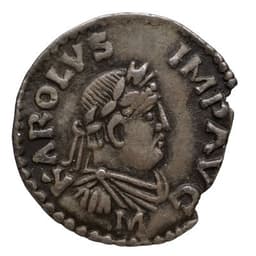
Charlemagne
Emperor · Medieval
71.0Total

Wu Zetian
Emperor · Medieval
70.0Total
Basic Information
Born
748
624
Died
814
705
Era
Medieval
Medieval
Nationality
Frankish Empire
China
Occupation
Emperor
Emperor
Civilization
Western
Eastern
Score Comparison
Military (10%)
80.0
60.0
Political (20%)
78.0
62.7
Influence (20%)
65.0
65.0
Legacy (20%)
65.0
80.0
Leadership (15%)
80.0
78.0
Strategy (15%)
68.0
66.3
TOTAL
71.0
70.0
Charlemagne — Complete Timeline
772 AD
Saxon WarsWar◆ Major
Charlemagne launched a series of campaigns against the Saxons lasting over three decades. He forcibly converted them to Christianity, incorporated their territory into the Frankish Empire, and ordered the execution of thousands at the Massacre of Verden in 782.
ConquestChristianizationWar
Impact: regionaldestructive
774 AD
Conquest of the Lombard KingdomWar◆ Major
Charlemagne answered Pope Adrian I's call for aid against the Lombards. He besieged and captured Pavia, deposed King Desiderius, and annexed the Lombard Kingdom into his domain, assuming the title 'King of the Lombards' and solidifying Frankish control over Italy.
ConquestItalyPapal Alliance
Impact: regional
779 AD
Capitulary of HerstalReform
Charlemagne issued a series of legal and administrative reforms at the assembly in Herstal. He standardized weights and measures, reformed the coinage system, and strengthened the authority of royal officials (missi dominici) to oversee local governance and justice.
Legal ReformAdministrationStandardization
Impact: nationalconstructive
780 AD
Carolingian Renaissance ReformsCultural◆ Major
Charlemagne initiated a program of educational and cultural revival, inviting scholars like Alcuin of York to his court. He standardized Latin script (Carolingian minuscule), established palace schools, and promoted the copying of classical texts, preserving ancient knowledge.
EducationCultural RevivalScript
Impact: globalprogressive
800 AD
Coronation as Holy Roman EmperorPolitical Action
Pope Leo III crowned Charlemagne as Emperor of the Romans in St. Peter's Basilica on Christmas Day. This act revived the Western Roman Empire, established a precedent for papal authority over imperial titles, and created a political entity that shaped medieval European politics.
CoronationHoly Roman EmpirePapacy
Impact: globalconstructive
Wu Zetian — Complete Timeline
655 AD
Became Empress ConsortPolitical Action◆ Major
Wu Zetian was elevated from concubine to empress consort of Emperor Gaozong of Tang in 655. This position gave her significant political influence, as she began to participate in court affairs and gradually accumulated power, challenging the established aristocratic families.
Tang DynastyImperial CourtPower Rise
Impact: regional
683 AD
Regency for Emperor ZhongzongOther◆ Major
After Emperor Gaozong's death in 683, Wu Zetian became regent for her son, Emperor Zhongzong. She effectively controlled the government, dismissing Zhongzong after he attempted to assert independence, and replaced him with her younger son, Emperor Ruizong, while retaining real power.
Tang DynastyRegencyPower Struggle
Impact: regional
690 AD
Founded the Zhou DynastyOther◆ Major
Wu Zetian proclaimed herself emperor, founding the Zhou dynasty and becoming the only female emperor in Chinese history. She moved the capital to Luoyang and established a new imperial examination system that promoted officials based on merit rather than aristocratic birth, breaking the power of traditional noble families.
Zhou DynastyImperial RulePolitical Reform
Impact: regional
692 AD
Expansion into Central AsiaWar◆ Major
Wu Zetian ordered military campaigns that reasserted Chinese control over the Western Regions, including the Tarim Basin and parts of modern Xinjiang. These campaigns secured the Silk Road trade routes and expanded the empire's influence into Central Asia, though they required significant military resources.
Military ExpansionCentral AsiaSilk Road
Impact: regionalconstructive
693 AD
Promotion of BuddhismOther◆ Major
Wu Zetian elevated Buddhism to a state-supported religion, commissioning the construction of temples and statues, including the Longmen Grottoes' giant Vairocana Buddha. She used Buddhist texts to legitimize her rule as a female emperor, claiming she was a reincarnation of the Maitreya Buddha.
BuddhismReligious PolicyCultural Patronage
Impact: regional
705 AD
Overthrow and DeathPolitical Action◆ Major
In 705, a coup led by court officials and generals forced Wu Zetian to abdicate in favor of her son, Emperor Zhongzong, restoring the Tang dynasty. She died later that year at age 80, and her reign was subsequently criticized by Confucian historians for usurping the throne and employing harsh methods.
Tang DynastyCoupAbdication
Impact: regionaldestructive
Expert Analysis
Wu Zetian vs Charlemagne
### The Throne and the Cross
On Christmas Day in the year 800, in the candlelit grandeur of St. Peter’s Basilica, Pope Leo III placed a golden crown upon the head of a tall, bearded Frankish king. The congregation erupted in acclamation: “To Charles, the most pious Augustus, crowned by God, great and peace-giving Emperor of the Romans!” Across the world, in the Forbidden City of Chang’an, a woman who had once been a lowly concubine sat on the Dragon Throne, ruling the largest empire on earth with an iron fist. Wu Zetian and Charlemagne never met, never corresponded, and operated in entirely separate worlds. Yet both seized a moment when the old order was crumbling and reshaped history in their own image. One built an empire through war and faith; the other through cunning and bureaucracy. One became the father of Europe; the other, the only female emperor in Chinese history. What drove them, and why did their paths diverge so dramatically?
### Origins
Wu Zetian was born in 624, the daughter of a wealthy timber merchant who had risen to minor officialdom. In Tang China, a woman’s place was strictly defined, yet her father’s ambition gave her an education rare for a girl. When she entered the palace as a teenage concubine of Emperor Taizong, she learned the brutal game of survival. After his death, she was sent to a Buddhist convent—a fate meant to erase her. But she had already caught the eye of his son, the future Emperor Gaozong. When he recalled her, she returned not as a meek nun but as a woman who understood that in the Tang court, favor was fleeting and power was everything.
Charlemagne’s origins were no less shaped by violence, but of a different kind. Born in 748 to the first king of the Carolingian dynasty, he was raised in a world where a king was a war leader first. His father, Pepin the Short, had seized the throne from the Merovingians with the blessing of the Pope. Charlemagne inherited a kingdom of Franks that was Christian, militaristic, and fractured. His education was practical—he could read Latin but never mastered writing it. He learned to command armies, to negotiate with bishops, and to see the Church not as a rival but as a tool.
### Rise to Power
Wu Zetian’s ascent was a masterpiece of patience and ruthlessness. After returning to court, she became Gaozong’s consort, then his empress, after engineering the downfall of his existing wife through accusations of sorcery. When Gaozong suffered a stroke in 660, she began ruling behind the curtain. She placed her sons on the throne, deposed them when they proved disobedient, and finally in 690, at the age of sixty-six, declared herself emperor—the only woman in Chinese history to do so. She founded her own Zhou dynasty, claiming the Mandate of Heaven through Buddhist prophecies that foretold a female ruler.
Charlemagne’s rise was more straightforward. Upon his father’s death in 768, he shared the kingdom with his brother Carloman. When Carloman died suddenly in 771, Charlemagne absorbed his lands. He then turned outward. In 774, he conquered the Lombard kingdom at the Pope’s request, cementing his role as protector of Christendom. Unlike Wu Zetian, who had to scheme and survive in a system that excluded her, Charlemagne could simply fight. His path was a campaign map, not a palace intrigue.
### Leadership & Governance
Wu Zetian ruled by intelligence and fear. She created a secret police network, encouraged citizens to denounce corrupt officials, and promoted men of talent regardless of birth. She expanded the civil service examination system, making it possible for commoners to rise to high office. Her court was a meritocracy where a peasant’s son could become a minister—if he proved loyal. She also launched military campaigns into Central Asia and Korea, pushing Tang borders to their greatest extent. Her political score of 80.0 reflects a ruler who understood that power required both control and innovation.
Charlemagne governed through a blend of personal authority and religious legitimacy. He issued legal reforms like the Capitulary of Herstal in 779, standardizing weights, measures, and laws across his realm. He initiated the Carolingian Renaissance in 780, inviting scholars like Alcuin of York to revive learning, standardize Latin, and copy ancient texts. He was a conqueror but also an administrator. His Saxon Wars, launched in 772 and lasting over three decades, were brutal campaigns of forced conversion and massacre. Yet he also built schools, reformed the Church, and created a system of missi dominici—royal agents who traveled the empire to enforce his will. His leadership score of 80.0 matches Wu Zetian’s, but his military score of 78.0 reflects a king who led armies personally, while Wu Zetian’s 62.0 suggests she relied more on generals.
### Triumph & Tragedy
Wu Zetian’s greatest triumph was surviving and ruling for fifteen years as emperor in a system designed to exclude her. She expanded the empire, reformed the bureaucracy, and left a legacy of capable officials. But her tragedy was that her dynasty ended with her. In 705, a coup forced her to abdicate in favor of her son, restoring the Tang. She died later that year, alone and powerless, her Zhou dynasty erased from official history for centuries.
Charlemagne’s triumph was his coronation in 800. By being crowned Emperor of the Romans, he revived the Western Roman Empire and created a political entity that would shape Europe for a millennium. His tragedy was that his empire did not outlive his grandsons. After his death in 814, his sons divided the realm, and within a generation, it fractured into warring kingdoms. Both built empires that crumbled after them—but Charlemagne’s idea of a unified Christian Europe endured.
### Character & Destiny
Wu Zetian was pragmatic, paranoid, and fiercely intelligent. She had to be. She survived by reading people, by knowing when to strike and when to wait. Her cruelty was legendary—she had rivals killed, sons exiled, and officials tortured. But she also understood that in a Confucian world that despised female rulers, she could not afford mercy. Her character shaped her decisions: she ruled through a network of informants because she trusted no one.
Charlemagne was energetic, devout, and ambitious. He was a warrior who loved hunting, swimming, and feasting. He was also a reformer who believed that education and faith could unite his realm. His character drove him to conquer, to convert, and to build. He saw himself as God’s instrument, and that conviction gave him a certainty that Wu Zetian, always looking over her shoulder, never had.
### Legacy
Wu Zetian’s legacy is complex. For centuries, Chinese historians dismissed her as a usurper and a tyrant. Today, she is recognized as a capable ruler who broke the ultimate glass ceiling. Her influence score of 70.9 and legacy score of 85.0 reflect a figure who remains controversial but unforgettable. She proved that a woman could rule China, even if the system quickly closed that door behind her.
Charlemagne’s legacy is foundational. He is called the “Father of Europe.” His Carolingian Renaissance preserved classical learning, his empire became the Holy Roman Empire, and his coronation established the precedent that only the Pope could crown an emperor. His legacy score of 80.0 and influence score of 65.0 suggest a man whose impact was structural rather than personal. He did not just rule; he created institutions that lasted.
### Conclusion
Wu Zetian and Charlemagne were both outsiders who remade their worlds. She was a woman in a man’s empire; he was a barbarian king who claimed the legacy of Rome. She ruled through bureaucracy and spies; he ruled through armies and bishops. She built a dynasty that vanished; he built an idea that endured. Their total scores are nearly identical—75.6 to 75.0—but their paths could not be more different. In the end, both understood that power is not given. It is taken, held, and shaped by the will of a single person. And history, for all its judgment, cannot look away.
Rankings
🥇
CharlemagneLeader
Mil: 80.0Pol: 78.0Inf: 65.0
71.0
🥈
Wu Zetian
Mil: 60.0Pol: 62.7Inf: 65.0
70.0
+1.0 behind
How This Comparison Works
Algorithm
Each figure is scored on 6 dimensions (0—100 scale) based on structured historical data: Military (10%), Political (20%), Influence (20%), Legacy (20%), Leadership (15%), Strategy (15%). The weighted total produces the final ranking.
Data Sources
Scores are computed from structured sub-indicators in the database. Scale factors adjust for era (Ancient ×0.85, Modern ×1.0) and civilization size (Eastern ×1.05, Other ×0.80) to account for differences in population and military scale.
Maximum 3 Figures
Comparisons are limited to 2—3 figures to ensure readability and statistical meaningfulness.
Error Margins
±5 points per dimension — Sub-scores are derived from historical records with inherent uncertainty. Two figures within 5 points on a dimension should be considered roughly equivalent in that area.
Total Score Accuracy
±3 points overall — The weighted combination of 6 dimensions produces a total score with approximately ±3 points of uncertainty. Differences of less than 3 points are not statistically significant— the figures are effectively tied.
Known Limitations
- Historical records are incomplete and uneven across civilizations
- Figures from oral-tradition societies may be underrepresented
- Occupation labels can misclassify multi-role figures
- Scores measure capability and impact, not moral character
- Quantitative scoring is a comparison tool, not absolute truth
Capability Radar
Military (10%) — Battles & Warfare
Battles
85
65
Win Rate
90
70
Expansion
88
75
Political (20%) — Governance & Reform
Reform
90
85
Diplomacy
80
80
Economy
75
85
Influence (20%) — Cultural & Global Reach
Cultural
85
85
Global
80
70
Legacy (20%) — Historical Impact
Historical
90
90
Longevity
85
85
Leadership (15%) — Power & Stability
Tenure
85
90
Stability
70
75
Strategy (15%) — Tactics & Innovation
Strategy
85
75
Tactics
75
60
Reform
80
80
Similar Comparisons
Comments & Discussion
No comments yet. Be the first to share your thoughts!