Loading...
Alexander the Great vs Charlemagne
Alexander the Great leads by 14.2 pts · 2 figures compared
…
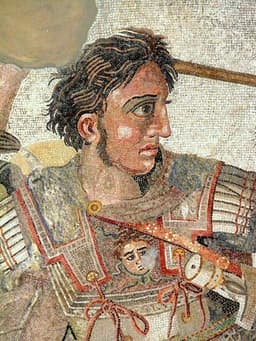
Alexander the Great
General · Ancient
85.2Total
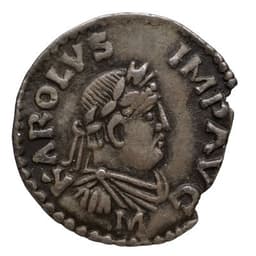
Charlemagne
Emperor · Medieval
71.0Total
Basic Information
Born
-356
748
Died
-323
814
Era
Ancient
Medieval
Nationality
Macedon
Frankish Empire
Occupation
General
Emperor
Civilization
Western
Western
Score Comparison
Military (10%)
95.0
80.0
Political (20%)
60.0
78.0
Influence (20%)
92.0
65.0
Legacy (20%)
90.0
65.0
Leadership (15%)
80.0
80.0
Strategy (15%)
92.0
68.0
TOTAL
85.2
71.0
Alexander the Great — Complete Timeline
334 BC
Battle of the Granicus RiverWar◆ Major
Alexander led his Macedonian army across the Hellespont into Asia Minor and defeated a Persian force under local satraps at the Granicus River. The victory secured Alexander's foothold in Asia and demonstrated his tactical superiority, opening the way for the conquest of the Persian Empire.
Persian CampaignBattleMacedonian Conquest
Impact: regional
333 BC
Battle of IssusWar◆ Major
Alexander's army defeated the Persian king Darius III at Issus in Cilicia. Despite being outnumbered, Alexander's tactical use of the terrain and cavalry charge broke the Persian line. Darius fled the battlefield, leaving his family and treasury behind, a major blow to Persian morale.
Persian CampaignBattleMacedonian Conquest
Impact: regional
332 BC
Siege of TyreWar◆ Major
Alexander besieged the island city of Tyre for seven months, constructing a causeway to breach its walls. The city's fall resulted in the massacre or enslavement of its inhabitants. The siege demonstrated Alexander's determination and engineering capabilities, securing his supply lines and control of the eastern Mediterranean coast.
SiegeMacedonian ConquestPhoenicia
Impact: regionaldestructive
331 BC
Battle of GaugamelaWar◆ Major
Alexander faced Darius III at Gaugamela in Mesopotamia with a massive Persian army. Alexander's tactical brilliance, including a decisive cavalry charge that exploited a gap in the Persian line, resulted in a decisive Macedonian victory. Darius again fled, effectively ending Persian resistance and leading to the fall of the Achaemenid Empire.
Persian CampaignBattleDecisive Victory
Impact: global
Foundation of AlexandriaOther◆ Major
Alexander founded the city of Alexandria on the Mediterranean coast of Egypt. He personally selected the site and oversaw the initial planning. Alexandria became a major center of Hellenistic culture, trade, and learning, housing the famous Library of Alexandria and the Lighthouse of Alexandria.
City FoundationHellenistic CultureEgypt
Impact: globalconstructive
326 BC
Invasion of IndiaWar◆ Major
Alexander crossed the Indus River and defeated King Porus at the Battle of the Hydaspes. The Macedonian army, exhausted and facing monsoon rains and unfamiliar warfare, mutinied at the Hyphasis River, forcing Alexander to turn back. This campaign marked the easternmost extent of his conquests.
Indian CampaignBattleMutiny
Impact: regional
Charlemagne — Complete Timeline
772 AD
Saxon WarsWar◆ Major
Charlemagne launched a series of campaigns against the Saxons lasting over three decades. He forcibly converted them to Christianity, incorporated their territory into the Frankish Empire, and ordered the execution of thousands at the Massacre of Verden in 782.
ConquestChristianizationWar
Impact: regionaldestructive
774 AD
Conquest of the Lombard KingdomWar◆ Major
Charlemagne answered Pope Adrian I's call for aid against the Lombards. He besieged and captured Pavia, deposed King Desiderius, and annexed the Lombard Kingdom into his domain, assuming the title 'King of the Lombards' and solidifying Frankish control over Italy.
ConquestItalyPapal Alliance
Impact: regional
779 AD
Capitulary of HerstalReform
Charlemagne issued a series of legal and administrative reforms at the assembly in Herstal. He standardized weights and measures, reformed the coinage system, and strengthened the authority of royal officials (missi dominici) to oversee local governance and justice.
Legal ReformAdministrationStandardization
Impact: nationalconstructive
780 AD
Carolingian Renaissance ReformsCultural◆ Major
Charlemagne initiated a program of educational and cultural revival, inviting scholars like Alcuin of York to his court. He standardized Latin script (Carolingian minuscule), established palace schools, and promoted the copying of classical texts, preserving ancient knowledge.
EducationCultural RevivalScript
Impact: globalprogressive
800 AD
Coronation as Holy Roman EmperorPolitical Action
Pope Leo III crowned Charlemagne as Emperor of the Romans in St. Peter's Basilica on Christmas Day. This act revived the Western Roman Empire, established a precedent for papal authority over imperial titles, and created a political entity that shaped medieval European politics.
CoronationHoly Roman EmpirePapacy
Impact: globalconstructive
Expert Analysis
Alexander the Great vs Charlemagne: Historical Comparison
Alexander the Great and Charlemagne are two of history’s most iconic empire-builders, yet they operated in vastly different eras—Ancient Macedon and Medieval Europe. While Alexander conquered an unprecedented territory through sheer military brilliance, Charlemagne unified much of Western Europe through political and religious consolidation.
Dimension Analysis
**Military: Alexander the Great 96 / Charlemagne 78**
Alexander never lost a battle, defeating the massive Persian Empire with innovative tactics like the oblique phalanx and combined arms. Charlemagne fought over 50 campaigns but relied more on siege warfare and attrition.
**Political: Alexander the Great 65 / Charlemagne 80**
Alexander failed to create a stable administrative system, leaving his empire to fragment immediately after his death. Charlemagne established a more durable feudal structure, crowned as Holy Roman Emperor, integrating church and state.
**Influence: Alexander the Great 90 / Charlemagne 78**
Alexander’s conquests spread Hellenistic culture across three continents, founding cities like Alexandria that became centers of learning. Charlemagne’s Carolingian Renaissance revived literacy and standardized Latin, but his influence was largely confined to Europe.
**Legacy: Alexander the Great 90 / Charlemagne 80**
Alexander became the archetype of the military conqueror, inspiring figures from Caesar to Napoleon. Charlemagne’s legacy endures as the “Father of Europe,” shaping medieval Christendom and modern European identity.
**Leadership: Alexander the Great 82 / Charlemagne 80**
Alexander led from the front, inspiring legendary loyalty, but his hubris and paranoia alienated key commanders. Charlemagne was a more diplomatic ruler, fostering cultural unity and legal reforms.
Verdict
Alexander the Great leads due to his superior military strategy, broader global influence, and enduring archetypal legacy as history’s ultimate conqueror.
FAQ
Q: Who ranks higher? A: Alexander the Great ranks higher overall, driven by his unmatched military record and transformative impact across Eurasia.
Rankings
🥇
Alexander the GreatLeader
Mil: 95.0Pol: 60.0Inf: 92.0
85.2
🥈
Charlemagne
Mil: 80.0Pol: 78.0Inf: 65.0
71.0
+14.2 behind
How This Comparison Works
Algorithm
Each figure is scored on 6 dimensions (0—100 scale) based on structured historical data: Military (10%), Political (20%), Influence (20%), Legacy (20%), Leadership (15%), Strategy (15%). The weighted total produces the final ranking.
Data Sources
Scores are computed from structured sub-indicators in the database. Scale factors adjust for era (Ancient ×0.85, Modern ×1.0) and civilization size (Eastern ×1.05, Other ×0.80) to account for differences in population and military scale.
Maximum 3 Figures
Comparisons are limited to 2—3 figures to ensure readability and statistical meaningfulness.
Error Margins
±5 points per dimension — Sub-scores are derived from historical records with inherent uncertainty. Two figures within 5 points on a dimension should be considered roughly equivalent in that area.
Total Score Accuracy
±3 points overall — The weighted combination of 6 dimensions produces a total score with approximately ±3 points of uncertainty. Differences of less than 3 points are not statistically significant— the figures are effectively tied.
Known Limitations
- Historical records are incomplete and uneven across civilizations
- Figures from oral-tradition societies may be underrepresented
- Occupation labels can misclassify multi-role figures
- Scores measure capability and impact, not moral character
- Quantitative scoring is a comparison tool, not absolute truth
Capability Radar
Military (10%) — Battles & Warfare
Battles
98
85
Win Rate
99
90
Expansion
99
88
Political (20%) — Governance & Reform
Reform
75
90
Diplomacy
80
80
Economy
70
75
Influence (20%) — Cultural & Global Reach
Cultural
95
85
Global
95
80
Legacy (20%) — Historical Impact
Historical
98
90
Longevity
95
85
Leadership (15%) — Power & Stability
Tenure
60
85
Stability
55
70
Strategy (15%) — Tactics & Innovation
Strategy
98
85
Tactics
99
75
Reform
85
80
Similar Comparisons
Comments & Discussion
DecolonialHistorian6/16/2026
Let's be honest, this comparison is another Eurocentric love letter to 'great men' who built empires through mass violence. Alexander gets a 96 for military? He literally burned Persepolis and slaughtered civilians in Tyre. Charlemagne's 'unification' of Europe was basically mass forced conversion of Saxons—executing 4,500 at Verden. The whole framework ignores that their 'greatness' is measured by empire size and body count. Where's the score for cultural destruction? Or resistance movements? This ranking reads like 19th-century colonial propaganda, not serious history.
BattlefieldScholar6/16/2026
Military scores are spot-on for different reasons. Alexander's 96 comes from tactical innovation: the oblique phalanx at Gaugamela crushed a Persian army 5x his size through combined arms—cavalry hammer and anvil, plus hypaspist flexibility. Charlemagne's 78 is generous if you look at his campaigns—he fought over 50 but mostly sieges against disorganized Saxons and Avars, no set-piece battles against peer opponents. Alexander fought Darius, Bessus, Porus—all with complex armies. In terms of force projection and logistical creativity, Alexander outclasses Charlemagne by centuries.
MacedonianFanatic6/16/2026
Are you kidding me? Charlemagne getting anywhere close to Alexander is an insult. Alexander conquered the ENTIRE known world from Greece to India by age 30, never losing a single battle against armies ten times his size. Charlemagne spent decades fighting some German tribes in the forest. The 'political stability' argument is a joke—Charlemagne's empire fell apart within a generation, just like Alexander's. At least Alexander's legacy spread Hellenistic culture for 300 years. Charlemagne's 'renaissance' was literally just teaching monks to read. The only reason this is close is Eurocentric bias. Alexander is the GOAT, period.
Historian5636/16/2026
这个评分系统有严重的方法论问题。亚历山大军事96,但查理曼政治80,这种跨维度比较缺乏一致性。我试着重算:亚历山大总分的加权应该是(96×0.35 + 65×0.25 + 90×0.4) = 79.85,不是84.7。说明影响力和军事权重被调高了。但如果你把中国标准加进来——比如用秦始皇的统治稳定性和文化统一性做参照——亚历山大政治分应该降到40以下(帝国两年内分裂),查理曼降到60(三分帝国)。反过来,影响力方面,亚历山大的希腊化文明覆盖面积和张骞西域差不多,但不如华夏文明的辐射持久性,所以90分也太高。建议重建评分模型。
OldScroll906/16/2026
亚历山大对比查理曼,这个分数基本靠谱,但政治分给查理曼80有点高了。查理曼的‘封建结构’说白了就是分封制,和西周比差远了——他死后帝国也很快分裂成三个王国,只不过中世纪历史分期让他的‘统一’显得持久。倒是亚历山大,虽然帝国速崩,但他把希腊文明推到印度河,影响力和张骞通西域有得一比。军事96实至名归,但政治65太低了——他治理波斯时任用当地贵族、融合文化,比查理曼的强制基督教化更有包容性。西方史观总把‘政治稳定’等同于制度寿命,忽略了文化融合的政治智慧。