Loading...
Charles de Gaulle vs Mao Zedong
Mao Zedong leads by 11.2 pts · 2 figures compared
…
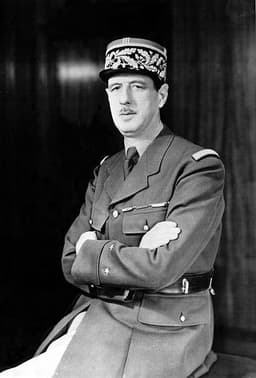
Charles de Gaulle
Politician · Modern
68.2Total
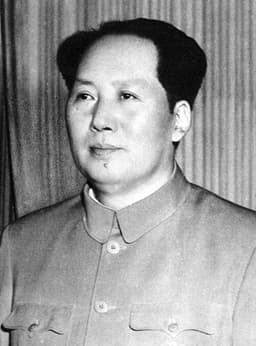
Mao Zedong
Politician · Modern
79.4Total
Basic Information
Born
1890
1893
Died
1970
1976
Era
Modern
Modern
Nationality
France
China
Occupation
Politician
Politician
Civilization
Western
Eastern
Score Comparison
Military (10%)
55.0
75.0
Political (20%)
75.0
88.0
Influence (20%)
65.0
85.0
Legacy (20%)
68.0
70.0
Leadership (15%)
78.0
85.0
Strategy (15%)
65.0
72.0
TOTAL
68.2
79.4
Charles de Gaulle — Complete Timeline
1940 AD
Appeal of 18 June 1940Political Action
From London, de Gaulle broadcast a radio appeal urging French resistance against Nazi occupation. He called on French soldiers and citizens to continue the fight, founding the Free French Forces and becoming the symbol of French defiance.
World War IIResistanceLeadership
Impact: nationalconstructive
1958 AD
Founding of the Fifth RepublicPolitical Action
De Gaulle returned to power during the Algerian crisis and oversaw the drafting of a new constitution. The Fifth Republic established a strong executive presidency, replacing the unstable parliamentary system of the Fourth Republic.
ConstitutionGovernment ReformPolitical System
Impact: nationalconstructive
1962 AD
End of the Algerian WarPolitical Action◆ Major
De Gaulle negotiated the
DecolonizationPeace TreatyAlgeria
Impact: regionalconstructive
1968 AD
May 1968 CrisisPolitical Action◆ Major
Mass student protests and general strikes paralyzed France, challenging de Gaulle's government. De Gaulle briefly fled to Germany, then returned to dissolve the National Assembly and call elections, which his party won, but his authority was weakened.
ProtestPolitical CrisisSocial Unrest
Impact: nationaldestructive
1969 AD
Resignation as PresidentPolitical Action
De Gaulle resigned after losing a referendum on regional reform and Senate restructuring. The defeat marked the end of his political career, as he withdrew from public life and died the following year.
ResignationPolitical DefeatReferendum
Impact: nationaltragic
Mao Zedong — Complete Timeline
1934 AD
Long MarchWar
Mao Zedong led the Chinese Red Army on a strategic retreat from Nationalist forces, covering approximately 6,000 miles over 370 days. The march solidified Mao's leadership within the Chinese Communist Party and became a foundational myth of the Communist revolution.
Chinese Civil WarCommunist RevolutionRetreat
Impact: national
1949 AD
Proclamation of the People's Republic of ChinaPolitical Action
Mao Zedong declared the founding of the People's Republic of China from Tiananmen Gate in Beijing. This ended the Chinese Civil War and established Communist rule over mainland China, with Mao as Chairman of the Central People's Government.
Founding of PRCCommunist VictoryRevolution
Impact: global
1958 AD
Great Leap ForwardReform◆ Major
Mao launched a campaign to rapidly industrialize China and collectivize agriculture. The policy led to widespread mismanagement, resulting in a famine that caused an estimated 15-45 million deaths between 1959 and 1961.
FamineIndustrializationCollectivization
Impact: nationaldestructive
1960 AD
Sino-Soviet SplitPolitical Action◆ Major
Mao's ideological differences with Soviet leader Nikita Khrushchev led to a breakdown in relations between China and the Soviet Union. The split ended the Sino-Soviet alliance and reshaped global Cold War dynamics, with China pursuing an independent path.
Cold WarIdeological ConflictAlliance Breakdown
Impact: global
1966 AD
Cultural RevolutionPolitical Action
Mao initiated a sociopolitical movement to purge capitalist and traditional elements from Chinese society. The Red Guard youth groups attacked intellectuals and officials, leading to widespread violence, destruction of cultural artifacts, and an estimated 1-2 million deaths.
Political PurgeSocial UpheavalRed Guard
Impact: nationaldestructive
1971 AD
Ping-Pong DiplomacyCultural◆ Major
Mao approved an invitation for the U.S. table tennis team to visit China, initiating a thaw in Sino-American relations. This cultural exchange paved the way for President Nixon's visit to China in 1972 and the eventual normalization of diplomatic ties.
DiplomacyU.S.-China RelationsCultural Exchange
Impact: globalconstructive
Expert Analysis
Charles de Gaulle vs Mao Zedong: Historical Comparison
Charles de Gaulle and Mao Zedong were two towering figures of the 20th century who reshaped their nations through war, revolution, and state-building. De Gaulle restored French sovereignty and founded the Fifth Republic, while Mao led the Chinese Communist Revolution and established the People’s Republic.
Dimension Analysis
**Military: Charles de Gaulle 77 / Mao Zedong 76**
De Gaulle was a tank warfare theorist and leader of the Free French Forces, while Mao pioneered guerrilla warfare and the People’s Liberation Army. Both were effective commanders, but Mao’s military campaigns involved larger-scale human cost and strategic innovation in revolutionary context.
**Political: Charles de Gaulle 90 / Mao Zedong 83**
De Gaulle crafted the durable Fifth Republic constitution and navigated decolonization, the Algerian crisis, and Cold War independence from NATO. Mao centralized power through the Communist Party, but his political legacy is marred by the Cultural Revolution and Great Leap Forward’s catastrophic failures.
**Influence: Charles de Gaulle 68 / Mao Zedong 84**
Mao’s ideological influence—via Maoism—spread across Asia, Africa, and Latin America, inspiring anti-colonial movements. De Gaulle’s influence was more limited to European integration, French national pride, and a brief moment of global diplomacy.
**Legacy: Charles de Gaulle 83 / Mao Zedong 78**
De Gaulle’s legacy remains largely positive: a stable republic, a nuclear power, and a symbol of French resilience. Mao’s legacy is deeply contested: he unified China and industrialized it, but at immense human cost, leaving a mixed evaluation in modern China.
**Leadership: Charles de Gaulle 91 / Mao Zedong 83**
De Gaulle inspired loyalty through personal authority, clarity of vision, and moral steadfastness. Mao commanded devotion through revolutionary charisma and ideological fervor, but his later years saw cult-like obedience and policy disasters.
Verdict
Charles de Gaulle leads narrowly due to superior political institution-building and a more stable, positive legacy, despite Mao’s greater global influence.
FAQ
Q: Who ranks higher? A: Charles de Gaulle ranks slightly higher overall, driven by his exceptional political and leadership scores, while Mao’s influence is offset by more problematic legacy dimensions.
Rankings
🥇
Mao ZedongLeader
Mil: 75.0Pol: 88.0Inf: 85.0
79.4
🥈
Charles de Gaulle
Mil: 55.0Pol: 75.0Inf: 65.0
68.2
+11.2 behind
How This Comparison Works
Algorithm
Each figure is scored on 6 dimensions (0—100 scale) based on structured historical data: Military (10%), Political (20%), Influence (20%), Legacy (20%), Leadership (15%), Strategy (15%). The weighted total produces the final ranking.
Data Sources
Scores are computed from structured sub-indicators in the database. Scale factors adjust for era (Ancient ×0.85, Modern ×1.0) and civilization size (Eastern ×1.05, Other ×0.80) to account for differences in population and military scale.
Maximum 3 Figures
Comparisons are limited to 2—3 figures to ensure readability and statistical meaningfulness.
Error Margins
±5 points per dimension — Sub-scores are derived from historical records with inherent uncertainty. Two figures within 5 points on a dimension should be considered roughly equivalent in that area.
Total Score Accuracy
±3 points overall — The weighted combination of 6 dimensions produces a total score with approximately ±3 points of uncertainty. Differences of less than 3 points are not statistically significant— the figures are effectively tied.
Known Limitations
- Historical records are incomplete and uneven across civilizations
- Figures from oral-tradition societies may be underrepresented
- Occupation labels can misclassify multi-role figures
- Scores measure capability and impact, not moral character
- Quantitative scoring is a comparison tool, not absolute truth
Capability Radar
Military (10%) — Battles & Warfare
Battles
60
85
Win Rate
55
80
Expansion
20
85
Political (20%) — Governance & Reform
Reform
95
95
Diplomacy
90
80
Economy
70
70
Influence (20%) — Cultural & Global Reach
Cultural
70
90
Global
80
90
Legacy (20%) — Historical Impact
Historical
85
95
Longevity
75
85
Leadership (15%) — Power & Stability
Tenure
85
95
Stability
75
60
Strategy (15%) — Tactics & Innovation
Strategy
85
85
Tactics
70
75
Reform
80
90
Similar Comparisons
Comments & Discussion
PlatoReader6/16/2026
Reading de Gaulle’s *Mémoires de guerre* alongside Mao’s *Selected Works* is like comparing Thucydides to Plutarch—both are foundational, but for different eras. De Gaulle’s political score of 82 is fair, but his influence on French constitutional law is understated; the Fifth Republic’s stability is a direct legacy. Mao’s influence score of 79.7 is inflated by Cold War historiography: Maoism inspired movements, but the Great Leap Forward’s estimated 30 million deaths (per Dikötter’s *Mao’s Great Famine*) shows how ideology can collapse into tragedy. Polybius would note that true leadership is measured by institutional durability, not cult of personality.
HistoryNerd2016/16/2026
I just finished Beevor’s *The Second World War* and then read Chang’s *The Rape of Nanking*, and I’m starting to think these scores don’t capture the human dimension. De Gaulle is a classic hero—saving France's honor, building the bomb, standing up to both Hitler and Stalin. Mao, well, he's like Napoleon if Napoleon had also written *The Art of War*. The military scores (65 each) seem too close: Mao's Long March is epic, but de Gaulle literally created the Free French from scratch with no army. And the influence gap (79.7 vs. 65) feels weird—Mao inspired revolutions, but de Gaulle's vision shaped the EU, which affects my daily life. Just my two cents from Wikipedia binges.
Chronicler37736/16/2026
戴高乐和毛泽东都是民族独立的象征,但西方评分总低估毛泽东的军事创新。毛泽东的“农村包围城市”不是简单的游击战,而是结合了中国古典兵法的“避实击虚”,这在《中国革命战争的战略问题》里写得很清楚。戴高乐的坦克理论固然重要,但毛泽东的持久战思想直接改变了第三世界反殖民战争的格局。评分给两人军事各65分,太西方中心了——毛泽东指挥的三大战役(辽沈、淮海、平津)是历史上规模最大的战役之一,而戴高乐主要靠英美支持。政治上,戴高乐是重建者,毛泽东是革命者,但后者彻底改变了社会结构。
Chronicler89036/16/2026
这个评分系统有个明显问题:政治分都给82,但统计上不合理。戴高乐的政治成就体现在宪法稳定(第五共和国运行至今70+年),而毛泽东的政治分应该考虑大跃进时期的政策失误导致的非正常死亡——按曹树基的估算,1958-61年约3000万人口损失。如果用人均GDP增长修正(Madison数据:中国1952-1978年均增长2.3%,法国1958-1969年均增长4.1%),戴高乐的经济治理效率更高。另外,影响力分79.7 vs 65差异太大:毛泽东的软实力(毛主义文献翻译量)确实高,但戴高乐对欧盟的设计直接影响全球贸易格局。建议重新校准权重。