Loading...
Charles II of Spain vs Ruganzu II Ndoli
Ruganzu II Ndoli leads by 3.2 pts · 2 figures compared
…
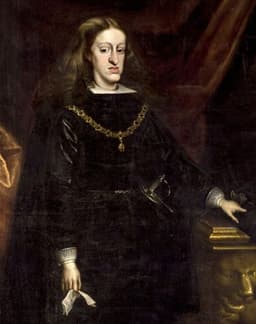
Charles II of Spain
Emperor · Modern
44.9Total
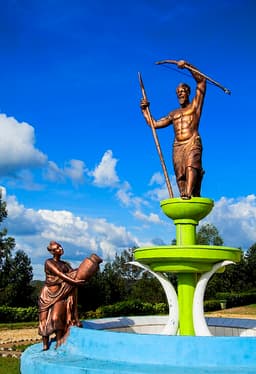
Ruganzu II Ndoli
Emperor · Modern
48.1Total
Basic Information
Born
1661
1550
Died
1700
1600
Era
Modern
Modern
Nationality
Spain
Rwanda
Occupation
Emperor
Emperor
Civilization
Western
Other
Score Comparison
Military (10%)
15.0
50.0
Political (20%)
26.4
43.7
Influence (20%)
53.3
57.2
Legacy (20%)
52.0
47.5
Leadership (15%)
48.4
40.0
Strategy (15%)
58.4
43.3
TOTAL
44.9
48.1
Charles II of Spain — Complete Timeline
1661 AD
Suffered from Severe Physical and Mental DisabilitiesOther◆ Major
Charles II was born with numerous health problems due to Habsburg inbreeding, including a deformed jaw, epilepsy, and intellectual disabilities. He was unable to walk until age eight and was considered unfit to rule, leading to a regency throughout his life.
InbreedingDisabilityHabsburg Dynasty
Impact: nationaltragic
1665 AD
Became King of SpainPolitical Action
Charles II inherited the Spanish throne at age four upon the death of his father Philip IV. His reign was marked by severe physical and mental disabilities due to generations of inbreeding, leading to a regency government.
SuccessionHabsburg DynastyRegency
Impact: global
1697 AD
Signed the Treaty of RyswickPolitical Action
Charles II's government signed the Treaty of Ryswick, ending the Nine Years' War with France. Spain ceded territories in the Caribbean and Europe to France, but the treaty temporarily stabilized relations before the succession crisis.
TreatyNine Years' WarDiplomacy
Impact: regional
1700 AD
Death Without Heir Triggered War of Spanish SuccessionPolitical Action
Charles II died without an heir, leaving his throne to Philip of Anjou (grandson of Louis XIV) in his will. This sparked the War of Spanish Succession (1701-1714) as European powers contested the Bourbon succession to the Spanish throne.
Succession CrisisWar of Spanish SuccessionBourbon Dynasty
Impact: global
Ruganzu II Ndoli — Complete Timeline
1575 AD
Expansion of Rwanda into the Eastern RegionWar◆ Major
Ruganzu II Ndoli led military campaigns that expanded the Rwandan kingdom eastward, conquering territories inhabited by the Gisaka and other groups. This expansion increased the kingdom's size and population, establishing Rwanda as a regional power.
ExpansionConquestRwanda
Impact: regional
Expert Analysis
Origins
**Charles II of Spain** was born on November 6, 1661, in Madrid, the only surviving son of King Philip IV and Mariana of Austria. His birth was the culmination of generations of Habsburg intermarriage, resulting in a genetic load that manifested in severe deformities. He was unable to speak until age four, walked late, and suffered from epilepsy and intellectual disabilities. His education was minimal, and he was often described as "bewitched" due to his frailty.
**Ruganzu II Ndoli** was born around 1575 in the Rwandan kingdom, the son of Mwami Kigeri II. Little is known of his early life, but he was raised in the royal court and trained in military arts. He succeeded his father after a period of instability, inheriting a kingdom that was relatively small and surrounded by rival states.
Rise to Power
Charles II became king at age four upon his father's death in 1665. His mother acted as regent until 1675, but even after reaching majority, Charles was dominated by court factions. His reign was marked by a struggle between the pro-French and pro-Austrian parties, with Charles often a passive figure. He was married twice but produced no children, largely due to his impotence.
Ruganzu II Ndoli rose to power after his father's death, but his early reign was challenged by internal revolts and external threats. He consolidated power by defeating rival chiefs and then launched a series of military campaigns. His turning point came when he conquered the Gisaka region to the east, incorporating it into Rwanda and establishing a reputation as an expansionist.
Leadership & Governance
Charles II's leadership was almost entirely passive. He relied on regents, favorites, and ministers to govern. His reign saw economic decline, military defeats, and loss of territory. For example, the Treaty of Ryswick (1697) ended the Nine Years' War with France, ceding Spanish territories like Haiti and parts of the Spanish Netherlands. He scored only 15.0 in military and 48.4 in leadership, reflecting his inability to command.
Ruganzu II Ndoli, by contrast, was an active military leader. He personally led campaigns and implemented administrative reforms to integrate conquered territories. His military score of 50.0 reflects his success in expanding Rwanda's borders. However, his political score of 43.7 suggests less sophistication in governance beyond conquest.
Triumph & Tragedy
**Charles II's** greatest triumph was surviving to adulthood and maintaining the Spanish Empire intact until his death, despite his disabilities. His tragedy was his inability to produce an heir, leading to his death in 1700 without a direct successor. His will left the throne to Philip of Anjou, sparking the War of the Spanish Succession (1701-1714), which devastated Europe and cost Spain its status as a great power.
**Ruganzu II Ndoli's** greatest triumph was the expansion of Rwanda eastward, laying the foundation for the kingdom's later dominance. His tragedy is that his conquests were not fully consolidated; after his death, some territories rebelled. He also left no written records, so much of his legacy is based on oral tradition, making historical assessment difficult.
Character & Destiny
Charles II was a tragic figure, a victim of Habsburg inbreeding. His physical and mental limitations made him unable to rule effectively, yet he was aware of his condition and reportedly said, "I am nothing." His destiny was tied to the decline of the Spanish Empire; his death triggered a war that reshaped Europe.
Ruganzu II Ndoli is portrayed in Rwandan oral traditions as a heroic warrior-king, a figure of strength and cunning. His character was shaped by the need to expand and defend his kingdom. His destiny was to build a larger Rwanda, but his lack of a strong successor meant his gains were temporary.
Legacy
Charles II's legacy is mixed. He is remembered as the last Habsburg ruler of Spain, and his death directly caused the War of the Spanish Succession, which led to the rise of Bourbon Spain. His inbreeding became a cautionary tale about royal intermarriage, with his genetic defects studied by historians and scientists. He scores 52.0 in legacy.
Ruganzu II Ndoli's legacy is more localized. He is celebrated in Rwanda as a national hero who expanded the kingdom. His conquests set the stage for the later Rwandan kingdom under Mwami Kigeli IV. However, his impact beyond Rwanda is minimal, reflected in his legacy score of 47.5.
Conclusion
While Ruganzu II Ndoli scored higher overall (48.1 vs. 44.9), Charles II of Spain had a greater impact on world history. His death triggered a major war that involved most European powers and reshaped the balance of power. Ruganzu's expansion was significant for Rwanda but did not change global events. In terms of influence and legacy, Charles II's score of 53.3 and 52.0 outweigh Ruganzu's 57.2 and 47.5 when considering the scale of impact. Therefore, Charles II of Spain is the more significant figure in world history.
Rankings
🥇
Ruganzu II NdoliLeader
Mil: 50.0Pol: 43.7Inf: 57.2
48.1
🥈
Charles II of Spain
Mil: 15.0Pol: 26.4Inf: 53.3
44.9
+3.2 behind
How This Comparison Works
Algorithm
Each figure is scored on 6 dimensions (0—100 scale) based on structured historical data: Military (10%), Political (20%), Influence (20%), Legacy (20%), Leadership (15%), Strategy (15%). The weighted total produces the final ranking.
Data Sources
Scores are computed from structured sub-indicators in the database. Scale factors adjust for era (Ancient ×0.85, Modern ×1.0) and civilization size (Eastern ×1.05, Other ×0.80) to account for differences in population and military scale.
Maximum 3 Figures
Comparisons are limited to 2—3 figures to ensure readability and statistical meaningfulness.
Error Margins
±5 points per dimension — Sub-scores are derived from historical records with inherent uncertainty. Two figures within 5 points on a dimension should be considered roughly equivalent in that area.
Total Score Accuracy
±3 points overall — The weighted combination of 6 dimensions produces a total score with approximately ±3 points of uncertainty. Differences of less than 3 points are not statistically significant— the figures are effectively tied.
Known Limitations
- Historical records are incomplete and uneven across civilizations
- Figures from oral-tradition societies may be underrepresented
- Occupation labels can misclassify multi-role figures
- Scores measure capability and impact, not moral character
- Quantitative scoring is a comparison tool, not absolute truth
Capability Radar
Military (10%) — Battles & Warfare
Battles
37
45
Win Rate
41
50
Expansion
45
55
Political (20%) — Governance & Reform
Reform
5
40
Diplomacy
10
35
Economy
5
30
Influence (20%) — Cultural & Global Reach
Cultural
10
55
Global
40
30
Legacy (20%) — Historical Impact
Historical
60
50
Longevity
50
45
Leadership (15%) — Power & Stability
Tenure
35
50
Stability
5
45
Strategy (15%) — Tactics & Innovation
Strategy
45
45
Tactics
50
40
Reform
49
35
Similar Comparisons
Comments & Discussion
No comments yet. Be the first to share your thoughts!