Loading...
Charles IV of Bohemia vs Napoleon Bonaparte
Napoleon Bonaparte leads by 9.3 pts · 2 figures compared
…
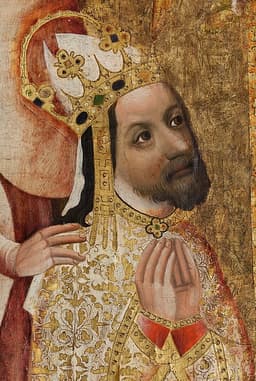
Charles IV of Bohemia
Emperor · Medieval
61.6Total

Napoleon Bonaparte
General · Modern
70.9Total
Basic Information
Born
1316
1769
Died
1378
1821
Era
Medieval
Modern
Nationality
Bohemia
France
Occupation
Emperor
General
Civilization
Western
Western
Score Comparison
Military (10%)
46.7
94.0
Political (20%)
78.0
72.0
Influence (20%)
65.0
40.0
Legacy (20%)
55.0
80.0
Leadership (15%)
78.0
78.0
Strategy (15%)
35.0
90.0
TOTAL
61.6
70.9
Charles IV of Bohemia — Complete Timeline
1348 AD
Foundation of Charles UniversityCultural◆ Major
Charles IV founded Charles University in Prague, the first university in Central Europe. The institution became a center of learning and culture, attracting scholars from across Europe and fostering the development of Czech intellectual life.
EducationUniversityCultural Center
Impact: regionalconstructive
1355 AD
Coronation as Holy Roman EmperorPolitical Action◆ Major
Charles IV was crowned Holy Roman Emperor in Rome by Pope Innocent VI. This coronation solidified his authority over the empire and allowed him to implement reforms that strengthened imperial governance.
CoronationImperial AuthorityPapal Relations
Impact: global
1356 AD
Golden Bull of 1356Reform
Charles IV issued the Golden Bull, a constitutional document that regulated the election of the Holy Roman Emperor. It established the seven prince-electors and defined their privileges, stabilizing the empire's political structure for centuries.
ConstitutionHoly Roman EmpireElectoral System
Impact: globalconstructive
1357 AD
Construction of Charles BridgeCultural◆ Major
Charles IV commissioned the construction of the Charles Bridge in Prague, a stone bridge connecting the Old Town with the Lesser Quarter. The bridge became a vital trade route and a symbol of Prague's architectural heritage.
ArchitectureInfrastructurePrague
constructive
Napoleon Bonaparte — Complete Timeline
1799 AD
Coup of 18 BrumaireOther◆ Major
Napoleon Bonaparte, with support from his brother Lucien and key political figures, overthrew the Directory in a bloodless coup. He established the Consulate with himself as First Consul, effectively becoming the ruler of France. This event ended the French Revolution's most unstable period.
French RevolutionCoupRise to Power
Impact: regional
1804 AD
Promulgation of the Napoleonic CodeOther◆ Major
Napoleon enacted the Civil Code of the French, known as the Napoleonic Code, a comprehensive set of laws that replaced the fragmented feudal legal systems. The code established legal equality, protected property rights, and secularized law. It became the basis for legal systems in many European and world countries.
Legal ReformNapoleonic CodeCivil Law
Impact: globalconstructive
1805 AD
Battle of AusterlitzWar◆ Major
Napoleon's Grande Arm
Napoleonic WarsBattleDecisive Victory
Impact: global
1812 AD
Invasion of RussiaWar◆ Major
Napoleon led the Grande Arm
Napoleonic WarsInvasionDisaster
Impact: globaldestructive
1815 AD
Battle of WaterlooWar◆ Major
Napoleon's French army was defeated by the combined forces of the Duke of Wellington's Anglo-Allied army and Gebhard Leberecht von Bl
Napoleonic WarsBattleFinal Defeat
Impact: globaldestructive
Expert Analysis
charles-iv-of-bohemia-vs-napoleon-bonaparte
The Emperor and the Builder
On a winter morning in 1805, Napoleon Bonaparte stood on a hill overlooking the frozen battlefield of Austerlitz, watching his Grand Armée crush the combined forces of Austria and Russia. His name would echo through history as the man who conquered Europe. A century and a half earlier, another ruler had walked the cobbled streets of Prague, not with an army at his back, but with a quill in his hand, signing charters for a university and a bridge. Charles IV built a city; Napoleon built an empire. One sought to dominate his age through war, the other to shape it through stone and law. Why did these two men, both crowned as emperors, leave such different marks on the world? The answer lies not merely in their talents, but in the worlds that made them.
Origins
Napoleon was born in 1769 on the island of Corsica, a land recently annexed by France. His family was minor nobility, but their poverty was real. He spoke French with an Italian accent and was mocked by his classmates at military school. This outsider status forged in him a relentless ambition—he had to prove himself, not just as a soldier, but as a Frenchman. The French Revolution had torn down the old order, and for a man of talent, the ladder to power was suddenly open.
Charles IV, born in 1316, came from the House of Luxembourg, one of the great medieval dynasties. His father, John of Bohemia, was a blind knight-errant who died at Crécy. Charles was raised in the French court, educated in Paris, and steeped in the chivalric and religious ideals of his time. He inherited a kingdom, not a revolution. His world was one of established hierarchies, where power came from birth and legitimacy, not from the barrel of a cannon.
Rise to Power
Napoleon’s ascent was a masterpiece of opportunism. At twenty-four, he drove the British out of Toulon. At twenty-six, he suppressed a royalist uprising in Paris with a "whiff of grapeshot." By thirty, he had conquered Italy and Egypt. His rise was meteoric because the Revolution had created a vacuum—the old generals were dead or discredited, and the Directory was weak. In 1799, he seized power in a coup, crowning himself emperor five years later. He did not wait for history to hand him a crown; he took it.
Charles IV’s rise was slower, more patient. He was elected King of the Romans in 1346, but his father’s death and the chaos of the plague delayed his full authority. He became Holy Roman Emperor in 1355, crowned in Rome by the Pope. His power was not won on battlefields but through diplomacy, marriage alliances, and careful negotiations with the German princes. Where Napoleon forced his way forward, Charles maneuvered through a labyrinth of medieval politics.
Leadership & Governance
Napoleon’s rule was a paradox. On one hand, he was a military genius—his campaign of 1805 at Austerlitz remains a textbook example of strategic brilliance. His armies moved faster than any had before, living off the land and striking at the enemy’s flanks. He reformed French law with the Napoleonic Code, creating a uniform legal system that abolished feudal privileges and enshrined meritocracy. But his governance was also autocratic. He centralized power, censored the press, and placed his brothers on thrones across Europe. He believed the state was himself: "I am the state," he once declared.
Charles IV governed differently. His military score of 34.1 reflects that he was no conqueror—he fought few wars and lost most of them. But his political score of 69.5 and leadership score of 82.9 reveal a ruler who understood that power in the Holy Roman Empire came from consensus. In 1356, he issued the Golden Bull, a constitutional document that fixed the rules for electing the emperor, reducing papal interference and stabilizing the realm for centuries. He founded Charles University in Prague in 1348, the first in Central Europe, turning his capital into a center of learning. He built the Charles Bridge in 1357, connecting the city’s districts and fostering trade. His legacy was not conquest but construction—physical, legal, and intellectual.
Triumph & Tragedy
Napoleon’s greatest triumph was Austerlitz, where he destroyed a larger army with perfect timing and deception. His greatest tragedy was the invasion of Russia in 1812. He marched 600,000 men into the vastness of the east; fewer than 100,000 returned. The disaster broke his aura of invincibility. Exiled to Elba, he escaped, raised another army, and met his final defeat at Waterloo in 1815. He died six years later on the remote island of Saint Helena, a prisoner of the British.
Charles IV’s triumphs were quieter but more enduring. The Golden Bull of 1356 stabilized the Empire for four centuries. Prague became a jewel of Gothic architecture. His tragedy was perhaps that he built a golden age that could not outlast the religious wars to come—the bridge and the university survived, but the peace he created did not.
Character & Destiny
Napoleon was driven by an insatiable hunger for glory. "Glory is fleeting," he once said, "but obscurity is forever." His personality was magnetic, his energy immense, but his arrogance was his undoing. He could not stop. He believed his star would always rise, even when the continent united against him.
Charles IV was a pragmatist. He wrote his own autobiography, a rare act for a medieval ruler, and it reveals a man who saw himself as a steward, not a conqueror. He was pious, diplomatic, and patient. He knew that the Holy Roman Empire could not be ruled by force alone—it required legitimacy, law, and the loyalty of the princes. His destiny was to build, not to burn.
Legacy
Napoleon’s legacy is a contradiction. He spread the ideals of the French Revolution—equality before the law, meritocracy, secular governance—across Europe, but he did so at the point of a bayonet. The Napoleonic Code influences legal systems from Louisiana to Japan. His military innovations are still studied. Yet he is also remembered as a tyrant who caused the deaths of millions.
Charles IV’s legacy is quieter but more concrete. Charles University still stands, the oldest in Central Europe. The Charles Bridge is a symbol of Prague. The Golden Bull remained the constitution of the Holy Roman Empire until its dissolution in 1806. He is remembered not as a warrior, but as a builder—a king who made his kingdom a center of culture and stability.
Conclusion
One emperor conquered the world and lost it; the other built a city that outlasted his empire. Napoleon’s story is a tragedy of ambition, Charles IV’s a triumph of patience. In the end, the bridge outlasts the battle. The university endures longer than the empire. History remembers the conqueror, but it lives in the works of the builder. Perhaps that is the deeper lesson: the sword writes the headlines, but the pen—and the stone—write the future.
Rankings
🥇
Napoleon BonaparteLeader
Mil: 94.0Pol: 72.0Inf: 40.0
70.9
🥈
Charles IV of Bohemia
Mil: 46.7Pol: 78.0Inf: 65.0
61.6
+9.3 behind
How This Comparison Works
Algorithm
Each figure is scored on 6 dimensions (0—100 scale) based on structured historical data: Military (10%), Political (20%), Influence (20%), Legacy (20%), Leadership (15%), Strategy (15%). The weighted total produces the final ranking.
Data Sources
Scores are computed from structured sub-indicators in the database. Scale factors adjust for era (Ancient ×0.85, Modern ×1.0) and civilization size (Eastern ×1.05, Other ×0.80) to account for differences in population and military scale.
Maximum 3 Figures
Comparisons are limited to 2—3 figures to ensure readability and statistical meaningfulness.
Error Margins
±5 points per dimension — Sub-scores are derived from historical records with inherent uncertainty. Two figures within 5 points on a dimension should be considered roughly equivalent in that area.
Total Score Accuracy
±3 points overall — The weighted combination of 6 dimensions produces a total score with approximately ±3 points of uncertainty. Differences of less than 3 points are not statistically significant— the figures are effectively tied.
Known Limitations
- Historical records are incomplete and uneven across civilizations
- Figures from oral-tradition societies may be underrepresented
- Occupation labels can misclassify multi-role figures
- Scores measure capability and impact, not moral character
- Quantitative scoring is a comparison tool, not absolute truth
Capability Radar
Military (10%) — Battles & Warfare
Battles
30
95
Win Rate
40
90
Expansion
25
95
Political (20%) — Governance & Reform
Reform
80
95
Diplomacy
85
80
Economy
80
85
Influence (20%) — Cultural & Global Reach
Cultural
80
85
Global
60
90
Legacy (20%) — Historical Impact
Historical
75
95
Longevity
70
90
Leadership (15%) — Power & Stability
Tenure
85
85
Stability
75
70
Strategy (15%) — Tactics & Innovation
Strategy
45
95
Tactics
35
98
Reform
20
92
Similar Comparisons
Comments & Discussion
AUSTERLITZ_ADDICT6/17/2026
Comparing these two is like comparing a wildfire to a cathedral. Napoleon crushed Europe's armies; Charles IV doesn't even have a major battle to his name. The man built a bridge. Come on. Austerlitz in 1805 saw 9,000 French dead vs 27,000 Allied casualties—that's raw military genius. Charles was a medieval bureaucrat with a good PR team. Napoleon remade the continent in a decade; Charles spent thirty years building a few buildings in one city.
布拉格石匠6/17/2026
你们都被浪漫化了。查理四世统治的黄金年代是靠贿赂和外交契约堆出来的。1348年建立查理大学很值得吹?别忘了那会儿神圣罗马帝国里选帝侯互相砍来砍去的背景。拿破仑用剑说话,查理用金子和特权收买选帝侯。论治国,拿破仑的《法典》到现在还管着半个欧洲;查理的金玺诏书?只不过是一纸没牙齿的妥协罢了。