Loading...
Charles Maurice de Talleyrand vs Napoleon Bonaparte
Napoleon Bonaparte leads by 0.9 pts · 2 figures compared
…
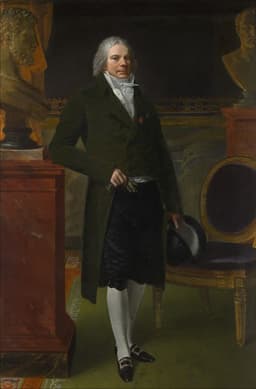
Charles Maurice de Talleyrand
Politician · Modern
70.0Total

Napoleon Bonaparte
General · Modern
70.9Total
Basic Information
Born
1754
1769
Died
1838
1821
Era
Modern
Modern
Nationality
France
France
Occupation
Politician
General
Civilization
Western
Western
Score Comparison
Military (10%)
49.6
94.0
Political (20%)
70.3
72.0
Influence (20%)
88.0
40.0
Legacy (20%)
65.0
80.0
Leadership (15%)
78.0
78.0
Strategy (15%)
45.0
90.0
TOTAL
70.0
70.9
Charles Maurice de Talleyrand — Complete Timeline
1788 AD
Ordained as a BishopPolitical Action
Talleyrand was ordained as Bishop of Autun, despite his reputation for skepticism and libertine behavior. His ecclesiastical position gave him a platform in the Estates-General of 1789.
French RevolutionChurchEstates-General
Impact: national
1789 AD
Proposed the Nationalization of Church LandsPolitical Action◆ Major
As a member of the National Assembly, Talleyrand proposed the confiscation of Church lands to address France's financial crisis. The proposal led to the Civil Constitution of the Clergy and his excommunication.
French RevolutionChurch PropertyFinancial Reform
Impact: nationalconstructive
1794 AD
Exiled to the United StatesPolitical Action
Talleyrand fled France during the Reign of Terror and lived in exile in the United States until 1796. He engaged in land speculation and wrote about American politics.
French RevolutionExileUnited States
Impact: national
1799 AD
Appointed Foreign Minister under NapoleonPolitical Action◆ Major
Talleyrand was appointed Minister of Foreign Affairs by Napoleon Bonaparte after the Coup of 18 Brumaire. He served as Napoleon's chief diplomat, negotiating treaties and shaping French foreign policy.
Napoleonic WarsDiplomacyFrench Empire
Impact: global
1802 AD
Negotiated the Treaty of AmiensPolitical Action◆ Major
Talleyrand negotiated the Treaty of Amiens with Britain, which temporarily ended the Napoleonic Wars. The treaty brought a brief peace but collapsed within a year due to mutual distrust.
Napoleonic WarsPeace TreatyAnglo-French Relations
Impact: globalconstructive
1814 AD
Defected to the Bourbon RestorationPolitical Action
As Napoleon's empire collapsed, Talleyrand negotiated with the Allies to restore the Bourbon monarchy. He served as foreign minister under Louis XVIII and represented France at the Congress of Vienna.
Bourbon RestorationCongress of ViennaDiplomacy
Impact: global
1815 AD
Represented France at the Congress of ViennaPolitical Action◆ Major
Talleyrand represented defeated France at the Congress of Vienna. He skillfully exploited divisions among the Allies to secure lenient terms for France, including maintaining its 1792 borders.
Congress of ViennaDiplomacyPost-Napoleonic Europe
Impact: globalconstructive
Napoleon Bonaparte — Complete Timeline
1799 AD
Coup of 18 BrumaireOther◆ Major
Napoleon Bonaparte, with support from his brother Lucien and key political figures, overthrew the Directory in a bloodless coup. He established the Consulate with himself as First Consul, effectively becoming the ruler of France. This event ended the French Revolution's most unstable period.
French RevolutionCoupRise to Power
Impact: regional
1804 AD
Promulgation of the Napoleonic CodeOther◆ Major
Napoleon enacted the Civil Code of the French, known as the Napoleonic Code, a comprehensive set of laws that replaced the fragmented feudal legal systems. The code established legal equality, protected property rights, and secularized law. It became the basis for legal systems in many European and world countries.
Legal ReformNapoleonic CodeCivil Law
Impact: globalconstructive
1805 AD
Battle of AusterlitzWar◆ Major
Napoleon's Grande Arm
Napoleonic WarsBattleDecisive Victory
Impact: global
1812 AD
Invasion of RussiaWar◆ Major
Napoleon led the Grande Arm
Napoleonic WarsInvasionDisaster
Impact: globaldestructive
1815 AD
Battle of WaterlooWar◆ Major
Napoleon's French army was defeated by the combined forces of the Duke of Wellington's Anglo-Allied army and Gebhard Leberecht von Bl
Napoleonic WarsBattleFinal Defeat
Impact: globaldestructive
Expert Analysis
charles-maurice-de-talleyrand-vs-napoleon-bonaparte
# The Emperor and the Ghost: Napoleon, Talleyrand, and the Two Faces of Power
On a winter evening in 1807, two men sat across from each other in the grand salon of the Tuileries Palace. One was the master of Europe, a general whose name had become synonymous with conquest. The other was a defrocked bishop, a diplomat whose smile never reached his eyes. Napoleon Bonaparte, at thirty-seven, had just redrawn the map of the continent. Charles Maurice de Talleyrand-Périgord, fifty-three, had just helped him do it—and was already plotting how to undo it. Their partnership would define an era, and their betrayal would seal a destiny. How did two men from the same nation, the same revolution, come to embody such opposing forces of history?
Origins
Napoleon was born in 1769 on the island of Corsica, a rocky outpost of the Mediterranean that France had purchased only a year before. His family was minor nobility, poor and resentful. He spoke French with an Italian accent, and his schoolmates in mainland France mocked him for it. That outsider's hunger—the need to prove himself worthy of a nation that did not want him—would drive him for the rest of his life. He devoured military history, studied artillery, and by the age of twenty-four had driven the British out of Toulon.
Talleyrand, born in 1754, came from the highest ranks of the French aristocracy. A childhood injury left him with a clubfoot that barred him from the military, the natural path for a nobleman. His family forced him into the Church. By 1788, he was ordained as Bishop of Autun—despite his well-known skepticism and libertine behavior. He was a man trapped in a role he despised, and he learned early that survival required masks. When the Revolution came in 1789, Talleyrand did not resist it. He proposed the nationalization of Church lands to solve France's financial crisis, betraying his own clergy with the same ease he would later betray every regime he served.
Rise to Power
The Revolution opened doors for both men, but in opposite ways. Napoleon rose through talent alone. At twenty-six, he crushed a royalist uprising in Paris with a "whiff of grapeshot" and was given command of the Army of Italy. He crossed the Alps, defeated the Austrians, and returned a hero. By 1799, he had staged the Coup of 18 Brumaire and made himself First Consul.
Talleyrand rose through survival. He fled France in 1794 during the Reign of Terror, living in exile in the United States until 1796, where he engaged in land speculation and learned the art of watching history from a distance. When he returned, he found Napoleon—young, ambitious, and in need of a man who understood the old world. In 1799, Napoleon appointed him Foreign Minister. It was a marriage of convenience: the sword needed the pen.
Leadership & Governance
Napoleon governed with the energy of a man who believed he could bend reality to his will. He reformed French law through the Napoleonic Code, centralizing administration, standardizing education, and creating the modern French state. He built roads, canals, and a banking system. But his genius was military. In 1805, at Austerlitz, he destroyed the combined armies of Austria and Russia in a single day—his greatest victory, a masterpiece of deception and timing. He conquered Prussia, Spain, and most of Italy. By 1810, his empire stretched from the Pyrenees to the Polish border.
Talleyrand governed through indirection. He negotiated the Treaty of Amiens in 1802, which briefly ended the Napoleonic Wars and gave France peace. He advised Napoleon on diplomacy, but he never trusted the emperor's ambition. While Napoleon dreamed of world conquest, Talleyrand saw the limits of power. He began secretly corresponding with the British and Russians as early as 1808, warning them that Napoleon must be stopped. He was not a traitor in the usual sense—he believed he was serving France, not Napoleon.
Triumph & Tragedy
Napoleon's triumph was absolute, and so was his fall. In 1812, he invaded Russia with over 600,000 men. He reached Moscow, but the Russians burned the city and refused to surrender. The winter destroyed his army. Only 40,000 returned. By 1814, the Allies had invaded France. Napoleon abdicated and was exiled to Elba.
Talleyrand's triumph came from the wreckage. As Napoleon's empire collapsed, Talleyrand negotiated with the Allies to restore the Bourbon monarchy. In 1814, he served as foreign minister for Louis XVIII. Then, in 1815, he represented defeated France at the Congress of Vienna. He exploited divisions among the victors—Austria, Prussia, Russia, and Britain—to secure generous terms for France. He argued that a stable Europe required a strong France, and he won. The Congress of Vienna gave France its 1792 borders, no indemnity, and a seat at the table.
Character & Destiny
Napoleon's character was his destiny. He was brilliant, arrogant, and incapable of stopping. "I am a man of the sword," he once said, and he meant it. He could not compromise, could not share power, could not see that even genius has limits. His final defeat at Waterloo in 1815 was not a failure of strategy but of character: he had exhausted everyone, including himself. He spent his last years on Saint Helena, dictating memoirs and blaming others.
Talleyrand's character was also his destiny, but in reverse. He was cautious, cynical, and patient. He served Louis XVI, the Revolution, Napoleon, Louis XVIII, and finally Louis-Philippe. Each time, he adapted. He never led armies, never wrote laws, never built anything permanent. But he survived. "Treason," he is said to have remarked, "is a matter of dates." He died in 1838, rich and respected, having outlived every enemy.
Legacy
Napoleon left behind a legend. The Napoleonic Code influences legal systems across Europe and the world. His military tactics are still studied. He reshaped the boundaries of nations and the dreams of generations. But his legacy is also one of war: millions dead, Europe ravaged, and a bitterness between France and its neighbors that lasted a century.
Talleyrand left behind a method. He taught the world that diplomacy is the art of the possible. The Congress of Vienna created a balance of power that kept Europe largely peaceful for forty years. He is remembered as a pragmatist, not a hero—a man who served France by serving himself.
Conclusion
Two men, one nation, one revolution. Napoleon tried to conquer the world with armies; Talleyrand tried to manage it with treaties. Napoleon burned bright and burned out; Talleyrand smoldered for decades. In the end, the emperor's sword broke, but the diplomat's pen wrote the peace. Perhaps the lesson is that history belongs not to those who fight hardest, but to those who survive longest. Or perhaps it is that the world needs both: the fire that destroys and the hand that rebuilds. Napoleon and Talleyrand were opposites, but they were also mirrors—and in their reflection, we see the two faces of power itself.
Rankings
🥇
Napoleon BonaparteLeader
Mil: 94.0Pol: 72.0Inf: 40.0
70.9
🥈
Charles Maurice de Talleyrand
Mil: 49.6Pol: 70.3Inf: 88.0
70.0
+0.9 behind
How This Comparison Works
Algorithm
Each figure is scored on 6 dimensions (0—100 scale) based on structured historical data: Military (10%), Political (20%), Influence (20%), Legacy (20%), Leadership (15%), Strategy (15%). The weighted total produces the final ranking.
Data Sources
Scores are computed from structured sub-indicators in the database. Scale factors adjust for era (Ancient ×0.85, Modern ×1.0) and civilization size (Eastern ×1.05, Other ×0.80) to account for differences in population and military scale.
Maximum 3 Figures
Comparisons are limited to 2—3 figures to ensure readability and statistical meaningfulness.
Error Margins
±5 points per dimension — Sub-scores are derived from historical records with inherent uncertainty. Two figures within 5 points on a dimension should be considered roughly equivalent in that area.
Total Score Accuracy
±3 points overall — The weighted combination of 6 dimensions produces a total score with approximately ±3 points of uncertainty. Differences of less than 3 points are not statistically significant— the figures are effectively tied.
Known Limitations
- Historical records are incomplete and uneven across civilizations
- Figures from oral-tradition societies may be underrepresented
- Occupation labels can misclassify multi-role figures
- Scores measure capability and impact, not moral character
- Quantitative scoring is a comparison tool, not absolute truth
Capability Radar
Military (10%) — Battles & Warfare
Battles
30
95
Win Rate
33
90
Expansion
34
95
Political (20%) — Governance & Reform
Reform
60
95
Diplomacy
95
80
Economy
70
85
Influence (20%) — Cultural & Global Reach
Cultural
65
85
Global
70
90
Legacy (20%) — Historical Impact
Historical
80
95
Longevity
75
90
Leadership (15%) — Power & Stability
Tenure
85
85
Stability
75
70
Strategy (15%) — Tactics & Innovation
Strategy
39
95
Tactics
39
98
Reform
41
92
Similar Comparisons
Comments & Discussion
I. The Butcher's Bill6/17/2026
Napoleon won battles; Talleyrand won the peace. That's the real measure. At the Congress of Vienna, Talleyrand outmaneuvered the victors who'd crushed Napoleon, securing France's borders as if she'd never lost. The Emperor bled 500,000 men in Russia alone. Talleyrand never sacrificed a single soldier for his victories. I know which kind of power I'd rather have on my side.
二. 公式的香槟6/17/2026
塔尔列朗才是真正的革命者——不是因为他焚烧教堂,而是因为他焚烧了贵族的自负。拿破仑穿着皇袍加冕,而塔尔列朗穿着燕尾服出卖皇帝。别忘了:是他一手策划了拿破仑的倒台,因为他看清了:一个无法自我控制的征服者,终究会被整个欧洲联合绞杀。这才是真正的政治智慧。
III. The Data Skeptic's Rebutt6/17/2026
People romanticize Talleyrand's "treachery," but let's look at the ledger. Napoleon conquered eighty battlefields; Talleyrand negotiated one congress. You tell me who contributed more to France's actual territorial expansion. Without Napoleon's armies, Talleyrand's diplomacy is just fancy dinner party chatter. The Emperor gave him the leverage; Talleyrand just signed the papers. That's not genius—that's the most comfortable office position in history.
四. 古典学派的酒杯6/17/2026
两个人代表了同一个硬币的正反面:权利的两个维度。拿破仑像亚历山大大帝,渴求永无止境的征服,直到耗尽帝国;塔尔列朗像普鲁塔克笔下的梭伦,用背叛构建秩序。拿破仑说过“不可能”不是法语词汇——而塔尔列朗用生命证明,“忠诚”才是他从词典中划掉的第一个词。两者都不可或缺,但我更尊敬那个亲手终结战争的人。
Historian5566/17/2026
The real tragedy is that both were right and both were wrong. Napoleon saved the Revolution's ideals by conquering Europe, and Talleyrand saved France by betraying Napoleon. Without the Emperor, Talleyrand's republicanism was just opportunism in silk stockings. Without the diplomat, Napoleon's empire was just a suicide note written in cannon fire. They were two halves of the same cursed genius—and they destroyed each other perfectly.