Loading...
This comparison has not been analyzed yet.
One-time AI generation (~1 minute). Scores and timeline are already available below.
Charles VI vs Mishal Al-Ahmad Al-Jaber
Mishal Al-Ahmad Al-Jaber leads by 3.0 pts · 2 figures compared
…
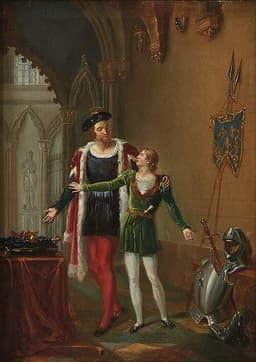
Charles VI
Emperor · Modern
50.0Total

Mishal Al-Ahmad Al-Jaber
Emperor · Modern
53.0Total
Basic Information
Born
1685
1940
Died
1740
—
Era
Modern
Modern
Nationality
Holy Roman Empire
Kuwait
Occupation
Emperor
Emperor
Civilization
Western
Middle Eastern
Score Comparison
Military (10%)
50.0
45.0
Political (20%)
45.0
68.0
Influence (20%)
54.9
51.8
Legacy (20%)
49.2
40.0
Leadership (15%)
53.2
66.0
Strategy (15%)
42.3
54.6
TOTAL
50.0
53.0
Charles VI — Complete Timeline
1713 AD
Issued the Pragmatic SanctionPolitical Action
Charles VI issued the Pragmatic Sanction, a legal instrument to ensure that the Habsburg hereditary lands could be inherited by a female heir (his daughter Maria Theresa) in the absence of a male son. He spent decades securing recognition from European powers, but it failed to prevent the War of the Austrian Succession.
Pragmatic SanctionSuccessionHabsburg
Impact: global
1739 AD
Treaty of BelgradePolitical Action◆ Major
Charles VI's forces, after a disastrous war with the Ottoman Empire, signed the Treaty of Belgrade. The treaty ceded Belgrade and northern Serbia to the Ottomans, reversing the gains of the Treaty of Passarowitz and weakening Habsburg influence in the Balkans.
Ottoman WarTreatyTerritorial Loss
Impact: regionaldestructive
1740 AD
War of the Austrian SuccessionWar◆ Major
Charles VI's death in 1740 triggered the War of the Austrian Succession, as Prussia, France, and Bavaria challenged Maria Theresa's inheritance. The war, lasting until 1748, resulted in the loss of Silesia to Prussia but confirmed Maria Theresa's rule in most Habsburg lands.
War of the Austrian SuccessionMaria TheresaSilesia
Impact: global
Mishal Al-Ahmad Al-Jaber — Complete Timeline
2004 AD
Appointment as Head of the Kuwait National GuardPolitical Action
Mishal Al-Ahmad Al-Jaber was appointed Deputy Chief of the Kuwait National Guard, later becoming its head. He modernized the force, enhancing its role in internal security and disaster response, building a reputation as a capable administrator.
National GuardSecurityKuwait
Impact: nationalconstructive
2023 AD
Accession as Emir of KuwaitPolitical Action◆ Major
Mishal became Emir of Kuwait after the death of his half-brother, Emir Nawaf Al-Ahmad Al-Jaber. His accession occurred during a period of political gridlock between the government and parliament, with expectations of reform.
SuccessionEmirKuwait
Impact: national
2024 AD
Dissolution of the National AssemblyPolitical Action◆ Major
Mishal dissolved the National Assembly and suspended some constitutional articles, citing political paralysis and threats to national unity. The move was controversial, with critics accusing him of authoritarianism, while supporters praised decisive action.
ParliamentDissolutionKuwait
Impact: nationaldestructive
This comparison has not been analyzed yet.
One-time AI generation (~1 minute). Scores and timeline are already available below.
Rankings
🥇
Mishal Al-Ahmad Al-JaberLeader
Mil: 45.0Pol: 68.0Inf: 51.8
53.0
🥈
Charles VI
Mil: 50.0Pol: 45.0Inf: 54.9
50.0
+3.0 behind
How This Comparison Works
Algorithm
Each figure is scored on 6 dimensions (0—100 scale) based on structured historical data: Military (10%), Political (20%), Influence (20%), Legacy (20%), Leadership (15%), Strategy (15%). The weighted total produces the final ranking.
Data Sources
Scores are computed from structured sub-indicators in the database. Scale factors adjust for era (Ancient ×0.85, Modern ×1.0) and civilization size (Eastern ×1.05, Other ×0.80) to account for differences in population and military scale.
Maximum 3 Figures
Comparisons are limited to 2—3 figures to ensure readability and statistical meaningfulness.
Error Margins
±5 points per dimension — Sub-scores are derived from historical records with inherent uncertainty. Two figures within 5 points on a dimension should be considered roughly equivalent in that area.
Total Score Accuracy
±3 points overall — The weighted combination of 6 dimensions produces a total score with approximately ±3 points of uncertainty. Differences of less than 3 points are not statistically significant— the figures are effectively tied.
Known Limitations
- Historical records are incomplete and uneven across civilizations
- Figures from oral-tradition societies may be underrepresented
- Occupation labels can misclassify multi-role figures
- Scores measure capability and impact, not moral character
- Quantitative scoring is a comparison tool, not absolute truth
Capability Radar
Military (10%) — Battles & Warfare
Battles
20
0
Win Rate
15
0
Expansion
10
0
Political (20%) — Governance & Reform
Reform
60
40
Diplomacy
65
60
Economy
40
50
Influence (20%) — Cultural & Global Reach
Cultural
30
20
Global
40
30
Legacy (20%) — Historical Impact
Historical
55
20
Longevity
50
30
Leadership (15%) — Power & Stability
Tenure
70
60
Stability
30
55
Strategy (15%) — Tactics & Innovation
Strategy
15
5
Tactics
10
5
Reform
10
10
Similar Comparisons
Comments & Discussion
No comments yet. Be the first to share your thoughts!