Loading...
This comparison has not been analyzed yet.
One-time AI generation (~1 minute). Scores and timeline are already available below.
Chen Yun vs Vincent Auriol
Vincent Auriol leads by 0.6 pts · 2 figures compared
…
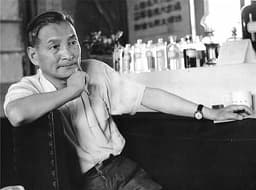
Chen Yun
Politician · Modern
55.2Total
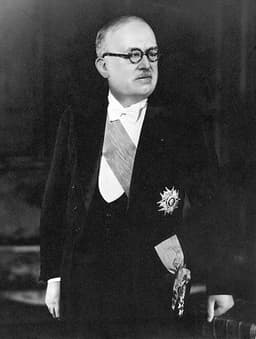
Vincent Auriol
Politician · Modern
55.8Total
Basic Information
Born
1905
1884
Died
1995
1966
Era
Modern
Modern
Nationality
China
France
Occupation
Politician
Politician
Civilization
Eastern
Western
Score Comparison
Military (10%)
11.7
49.6
Political (20%)
70.3
60.0
Influence (20%)
62.0
55.7
Legacy (20%)
55.0
46.7
Leadership (15%)
78.0
79.8
Strategy (15%)
25.6
43.0
TOTAL
55.2
55.8
Chen Yun — Complete Timeline
1925 AD
Joined the Chinese Communist PartyPolitical Action◆ Major
Chen Yun joined the Chinese Communist Party during the May Thirtieth Movement. He began his career as a labor organizer in Shanghai, rising through the ranks of the party's underground apparatus.
CCP MembershipLabor MovementShanghai
Impact: nationalconstructive
1961 AD
Led economic reconstruction after the Great Leap ForwardReform◆ Major
Chen Yun was appointed to lead economic recovery efforts after the disastrous Great Leap Forward. He implemented policies that reduced central planning, allowed private plots, and stabilized the economy, saving millions from famine.
Economic ReformGreat Leap ForwardFamine Relief
Impact: nationalconstructive
1966 AD
Purged during the Cultural RevolutionPolitical Action◆ Major
Chen Yun was purged from his leadership positions during the Cultural Revolution, accused of being a capitalist roader. He was sent to work in a factory in Jiangxi, but survived the period without being killed.
Cultural RevolutionPurgeEconomic Planning
Impact: nationaldestructive
1978 AD
Advocated for market reforms under Deng XiaopingReform◆ Major
Chen Yun supported Deng Xiaoping's economic reforms, advocating for a 'birdcage economy' that combined state planning with market mechanisms. He helped design the Special Economic Zones and agricultural decollectivization.
Deng XiaopingEconomic ReformMarket Economy
Impact: nationalconstructive
1987 AD
Served as Chairman of the Central Advisory CommissionPolitical Action
Chen Yun became Chairman of the Central Advisory Commission, a body of retired senior leaders. He used this position to influence economic policy, often cautioning against excessive market liberalization.
Advisory CommissionEconomic PolicyElder Statesman
Impact: national
Vincent Auriol — Complete Timeline
1936 AD
Served as Minister of FinancePolitical Action
Auriol served as Minister of Finance in the Popular Front government of L
Popular FrontLabor Reforms
Impact: nationalprogressive
1947 AD
Elected President of FrancePolitical Action◆ Major
Vincent Auriol was elected the first President of the Fourth French Republic, serving from 1947 to 1954. His presidency oversaw post-war reconstruction, the beginning of the Cold War, and the early stages of decolonization.
PresidencyFourth Republic
Impact: nationalconstructive
1951 AD
Presided over the Creation of the European Coal and Steel CommunityPolitical Action◆ Major
As president, Auriol supported the Schuman Plan and the Treaty of Paris (1951), which established the European Coal and Steel Community, a key step toward European integration.
European Integration
Impact: regionalconstructive
This comparison has not been analyzed yet.
One-time AI generation (~1 minute). Scores and timeline are already available below.
Rankings
🥇
Vincent AuriolLeader
Mil: 49.6Pol: 60.0Inf: 55.7
55.8
🥈
Chen Yun
Mil: 11.7Pol: 70.3Inf: 62.0
55.2
+0.6 behind
How This Comparison Works
Algorithm
Each figure is scored on 6 dimensions (0—100 scale) based on structured historical data: Military (10%), Political (20%), Influence (20%), Legacy (20%), Leadership (15%), Strategy (15%). The weighted total produces the final ranking.
Data Sources
Scores are computed from structured sub-indicators in the database. Scale factors adjust for era (Ancient ×0.85, Modern ×1.0) and civilization size (Eastern ×1.05, Other ×0.80) to account for differences in population and military scale.
Maximum 3 Figures
Comparisons are limited to 2—3 figures to ensure readability and statistical meaningfulness.
Error Margins
±5 points per dimension — Sub-scores are derived from historical records with inherent uncertainty. Two figures within 5 points on a dimension should be considered roughly equivalent in that area.
Total Score Accuracy
±3 points overall — The weighted combination of 6 dimensions produces a total score with approximately ±3 points of uncertainty. Differences of less than 3 points are not statistically significant— the figures are effectively tied.
Known Limitations
- Historical records are incomplete and uneven across civilizations
- Figures from oral-tradition societies may be underrepresented
- Occupation labels can misclassify multi-role figures
- Scores measure capability and impact, not moral character
- Quantitative scoring is a comparison tool, not absolute truth
Capability Radar
Military (10%) — Battles & Warfare
Battles
16
29
Win Rate
17
31
Expansion
20
36
Political (20%) — Governance & Reform
Reform
80
55
Diplomacy
70
60
Economy
90
50
Influence (20%) — Cultural & Global Reach
Cultural
40
30
Global
60
35
Legacy (20%) — Historical Impact
Historical
75
40
Longevity
65
30
Leadership (15%) — Power & Stability
Tenure
75
65
Stability
85
45
Strategy (15%) — Tactics & Innovation
Strategy
26
36
Tactics
27
41
Reform
28
47
Similar Comparisons
Comments & Discussion
No comments yet. Be the first to share your thoughts!