Loading...
Chester W. Nimitz vs Qin Shi Huang
Qin Shi Huang leads by 13.3 pts · 2 figures compared
…

Chester W. Nimitz
General · Modern
71.9Total
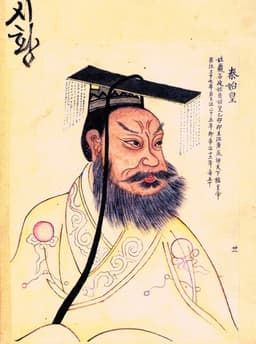
Qin Shi Huang
Emperor · Ancient
85.2Total
Basic Information
Born
1885
-259
Died
1966
-210
Era
Modern
Ancient
Nationality
United States
China
Occupation
General
Emperor
Civilization
Western
Eastern
Score Comparison
Military (10%)
82.0
80.0
Political (20%)
78.0
90.0
Influence (20%)
65.0
85.0
Legacy (20%)
65.0
90.0
Leadership (15%)
78.0
78.0
Strategy (15%)
78.4
82.0
TOTAL
71.9
85.2
Chester W. Nimitz — Complete Timeline
1941 AD
Appointed Commander-in-Chief of the Pacific FleetOther◆ Major
Following the attack on Pearl Harbor, Nimitz was appointed Commander-in-Chief of the U.S. Pacific Fleet on December 31, 1941. He assumed command during a period of severe losses and low morale, tasked with rebuilding the fleet and turning the tide against Japan.
World War IIPacific TheaterNaval Command
Impact: global
1942 AD
Battle of MidwayWar◆ Major
Nimitz directed the U.S. Navy to intercept the Japanese fleet at Midway Atoll from June 4-7, 1942. His forces sank four Japanese aircraft carriers against the loss of one U.S. carrier, marking a decisive turning point in the Pacific War and ending Japanese offensive capability.
World War IIPacific TheaterNaval Victory
Impact: globalconstructive
Guadalcanal CampaignWar◆ Major
Nimitz oversaw the amphibious assault on Guadalcanal beginning August 7, 1942, the first major Allied offensive in the Pacific. The campaign lasted six months, involving naval battles and ground combat, resulting in the first Japanese land defeat and securing Allied supply lines to Australia.
World War IIPacific TheaterAmphibious Assault
Impact: regionalconstructive
1943 AD
Island Hopping CampaignOther◆ Major
Nimitz implemented the island-hopping strategy, bypassing heavily fortified Japanese positions to capture strategically important islands. This campaign included the Gilbert and Marshall Islands operations in 1943-1944, progressively cutting Japanese supply lines and establishing bases for the final assault on Japan.
World War IIPacific TheaterMilitary Strategy
Impact: global
1944 AD
Battle of Leyte GulfWar◆ Major
Nimitz commanded U.S. naval forces during the Battle of Leyte Gulf from October 23-26, 1944, the largest naval battle in history. The victory destroyed the remaining Japanese fleet and secured the Allied invasion of the Philippines, effectively ending Japanese naval power.
World War IIPacific TheaterNaval Victory
Impact: globalconstructive
1945 AD
Signed the Japanese SurrenderOther◆ Major
As Commander of the Pacific Fleet, Nimitz signed the Japanese Instrument of Surrender on behalf of the United States aboard the USS Missouri on September 2, 1945. This act formally ended World War II and marked the conclusion of the Pacific War.
World War IIPacific TheaterDiplomacy
Impact: globalconstructive
Appointed Chief of Naval OperationsOther◆ Major
Nimitz was appointed Chief of Naval Operations in December 1945, the highest-ranking officer in the U.S. Navy. He served until 1947, overseeing the post-war demobilization and reorganization of the Navy, including the transition to a peacetime force.
Post-WarNaval AdministrationLeadership
Impact: national
Qin Shi Huang — Complete Timeline
246 BC
Construction of the Mausoleum and Terracotta ArmyOther◆ Major
Qin Shi Huang commissioned a vast mausoleum complex near Xi'an, guarded by thousands of life-sized terracotta soldiers, horses, and chariots. The project employed hundreds of thousands of workers and reflected his obsession with immortality and imperial power.
Impact: global
230 BC
Conquest of the Six Warring StatesWar
From 230 to 221 BCE, Ying Zheng led the Qin state in a series of campaigns that conquered the Han, Zhao, Wei, Chu, Yan, and Qi states. This unified China under a single ruler for the first time, ending the Warring States period.
Impact: global
221 BC
Standardization of Writing, Currency, and MeasurementsReform◆ Major
Qin Shi Huang ordered the standardization of Chinese script, currency, and weights and measures across the unified empire. This facilitated administration, trade, and cultural integration, laying a foundation for future dynasties.
Impact: globalconstructive
Proclamation of the Qin DynastyPolitical Action
After conquering the last independent state, Ying Zheng declared himself Shi Huangdi (First Emperor), founding the Qin Dynasty. He adopted a new title to signify his supreme authority and initiated centralized imperial rule.
Impact: global
214 BC
Initiation of the Great Wall ConstructionOther◆ Major
Qin Shi Huang ordered the connection and extension of existing northern fortifications to create a unified defensive wall against nomadic Xiongnu raids. This project involved massive conscripted labor and became the precursor to the later Great Wall.
Impact: regional
213 BC
Burning of Books and Burying of ScholarsPolitical Action◆ Major
On the advice of Li Si, Qin Shi Huang ordered the burning of historical records and philosophical texts not aligned with Legalist doctrine. He also had 460 Confucian scholars buried alive to suppress dissent and consolidate ideological control.
Impact: nationaldestructive
Expert Analysis
chester-w-nimitz-vs-qin-shi-huang
# The Emperor and the Admiral
On a spring morning in 221 BC, a man who called himself the First Emperor stood before the walls of a conquered city, watching as the last independent kingdom of China fell before his armies. Two thousand one hundred and thirty-six years later, on a December morning in 1941, another man stood on the deck of a battleship in Pearl Harbor, watching smoke rise from ships his navy had not yet learned to defend. Both men faced the same fundamental question: how do you impose order on chaos? Their answers defined not only their own careers but the fate of civilizations.
Origins
Ying Zheng was born in 259 BC into a world of endless war. The Warring States period had torn China apart for centuries, with seven kingdoms locked in a brutal struggle for supremacy. His father was a prince of Qin, a western state that had long been considered a semi-barbarian frontier. Young Zheng grew up in a court where survival meant cunning, where every ally was a potential enemy, and where the only law was power. By the time he ascended the throne at thirteen, he had already learned that trust was a luxury the strong could not afford.
Chester William Nimitz, born in 1885 in Fredericksburg, Texas, grew up in a world where order was assumed. His father died before he was born, and young Chester was raised by his mother and grandfather, a former German merchant seaman who taught him that the sea was a place of discipline, not chaos. Nimitz wanted to be an army officer, but no appointments were available. Instead, he entered the Naval Academy at Annapolis, graduating seventh in a class of 114 in 1905. The navy of his youth was a world of fixed routines, clear hierarchies, and predictable technologies—steam, steel, and the certainties of the nineteenth century.
Rise to Power
Qin Shi Huang’s path to power was carved in blood. At twenty-two, he crushed a rebellion led by his own chancellor, Lao Ai, and exiled his mother for her involvement. By 230 BC, he was ready to fulfill his dynasty’s destiny. In a series of campaigns that would have been unimaginable to his predecessors, he conquered the six remaining kingdoms one by one—Han in 230, Zhao in 228, Wei in 225, Chu in 223, Yan in 222, and finally Qi in 221. Each victory was not just a military triumph but a philosophical statement: the old world of competing states was dead.
Nimitz’s rise was quieter but no less decisive. He commanded submarines, then battleships, then divisions. By 1939, he was Chief of the Bureau of Navigation, the navy’s personnel chief. When the Japanese attacked Pearl Harbor on December 7, 1941, the Pacific Fleet was in ruins. President Roosevelt personally selected Nimitz to take command, promoting him over twenty-eight senior officers. The choice was deliberate: Nimitz was known for his calm, his competence, and his ability to rebuild. He arrived at Pearl Harbor on Christmas Eve, 1941, to find a fleet that had lost its will to fight.
Leadership & Governance
Qin Shi Huang ruled as no Chinese leader ever had. He standardized writing, currency, and measurements across his empire, creating the first unified Chinese bureaucracy. He ordered the construction of a network of roads and canals, connecting regions that had never been linked. He began the Great Wall, not as a single structure but as a linking of existing fortifications into a coherent defensive system. Every reform was designed to erase the past and create a single, universal Chinese civilization.
But his methods were brutal. On the advice of his chancellor Li Si, he ordered the burning of all historical records and philosophical texts that did not align with Legalist doctrine. Scholars who resisted were buried alive. The First Emperor believed that the past was a threat to his new order, and he was willing to destroy knowledge itself to secure his legacy.
Nimitz’s leadership was the opposite. He rebuilt the Pacific Fleet not by force but by trust. He delegated authority to his commanders—Admiral William Halsey, Admiral Raymond Spruance—and gave them the freedom to fight their own battles. His strategy was based on the principle of “calculated risk”: advance when the odds were favorable, retreat when they were not. At Midway in June 1942, Nimitz’s intelligence officers cracked the Japanese code, and his carriers ambushed the enemy fleet, sinking four Japanese carriers against the loss of one American. It was the turning point of the Pacific War.
Triumph & Tragedy
For Qin Shi Huang, triumph and tragedy were inseparable. His greatest achievement—the unification of China—was also his greatest failure. The Legalist system he imposed was so harsh that it generated widespread resentment. When he died in 210 BC during an eastern inspection tour, his empire collapsed within three years. His mausoleum near Xi’an, guarded by thousands of life-sized terracotta soldiers, was meant to protect him for eternity. Instead, it became a monument to his isolation.
Nimitz’s tragedy was different. He won the war, but he could not control its end. In August 1945, he signed the Japanese surrender aboard the USS Missouri in Tokyo Bay. But the atomic bombings of Hiroshima and Nagasaki, ordered by President Truman, had already ended the war. Nimitz, who had spent his career fighting a conventional naval war, watched as the nature of warfare changed forever. He retired in 1947, a hero of a world that was already disappearing.
Character & Destiny
Qin Shi Huang’s character was shaped by fear. He was terrified of assassination—he slept in a different palace every night, and his routes were kept secret. He was obsessed with immortality, sending expeditions to find the elixir of life. His paranoia made him ruthless, and his ruthlessness made him hated. He died at fifty, possibly from mercury poisoning from his own immortality treatments.
Nimitz’s character was shaped by duty. He was known for his self-control—he never raised his voice, never lost his temper, never blamed others for his mistakes. He believed that leadership was about service, not power. When the war ended, he refused to write memoirs, saying that the real heroes were the men who died. He died in 1966 at eighty, respected by all who knew him.
Legacy
Qin Shi Huang’s legacy is the Chinese state itself. The bureaucratic system he created—the centralized administration, the standardized writing, the unified currency—survived his dynasty and became the foundation of every Chinese empire that followed. The Great Wall, though rebuilt many times, still stands as a symbol of Chinese unity. He is remembered as both a tyrant and a unifier, a man who destroyed the old world to create a new one.
Nimitz’s legacy is the modern American navy. His emphasis on delegation, intelligence, and calculated risk became the doctrine of the post-war naval establishment. The Nimitz-class aircraft carriers, the largest warships ever built, bear his name. He is remembered as the quiet professional who won the greatest naval war in history.
Conclusion
What separates these two men is not their ambition—both wanted to create order out of chaos—but their understanding of what order means. Qin Shi Huang believed that order required destruction: the burning of books, the burying of scholars, the erasure of the past. Nimitz believed that order required trust: the delegation of authority, the respect for subordinates, the willingness to learn from mistakes. One built an empire that collapsed with his death; the other built an institution that survived for generations. The First Emperor’s terracotta soldiers still stand guard over his tomb, but Nimitz’s real monument is the navy that still sails the Pacific.
Rankings
🥇
Qin Shi HuangLeader
Mil: 80.0Pol: 90.0Inf: 85.0
85.2
🥈
Chester W. Nimitz
Mil: 82.0Pol: 78.0Inf: 65.0
71.9
+13.3 behind
How This Comparison Works
Algorithm
Each figure is scored on 6 dimensions (0—100 scale) based on structured historical data: Military (10%), Political (20%), Influence (20%), Legacy (20%), Leadership (15%), Strategy (15%). The weighted total produces the final ranking.
Data Sources
Scores are computed from structured sub-indicators in the database. Scale factors adjust for era (Ancient ×0.85, Modern ×1.0) and civilization size (Eastern ×1.05, Other ×0.80) to account for differences in population and military scale.
Maximum 3 Figures
Comparisons are limited to 2—3 figures to ensure readability and statistical meaningfulness.
Error Margins
±5 points per dimension — Sub-scores are derived from historical records with inherent uncertainty. Two figures within 5 points on a dimension should be considered roughly equivalent in that area.
Total Score Accuracy
±3 points overall — The weighted combination of 6 dimensions produces a total score with approximately ±3 points of uncertainty. Differences of less than 3 points are not statistically significant— the figures are effectively tied.
Known Limitations
- Historical records are incomplete and uneven across civilizations
- Figures from oral-tradition societies may be underrepresented
- Occupation labels can misclassify multi-role figures
- Scores measure capability and impact, not moral character
- Quantitative scoring is a comparison tool, not absolute truth
Capability Radar
Military (10%) — Battles & Warfare
Battles
92
85
Win Rate
95
90
Expansion
90
90
Political (20%) — Governance & Reform
Reform
75
95
Diplomacy
80
75
Economy
60
90
Influence (20%) — Cultural & Global Reach
Cultural
65
95
Global
80
85
Legacy (20%) — Historical Impact
Historical
85
95
Longevity
70
95
Leadership (15%) — Power & Stability
Tenure
70
70
Stability
85
65
Strategy (15%) — Tactics & Innovation
Strategy
95
85
Tactics
88
80
Reform
85
95
Similar Comparisons
Comments & Discussion
Fleet Admiral's Ghost6/17/2026
Calling this a clash of equals is like comparing a bronze sword to a nuclear submarine. Nimitz orchestrated the largest naval campaign in history across an entire ocean, adapting to submarine warfare and carrier tactics in real time. Qin Shi Huang unified warring states with chariots and conscripts. One faced Japan's Imperial Navy; the other faced rival kingdoms with bronze-age logistics. Nimitz wins on scale, complexity, and strategic adaptability. The First Emperor was a conqueror; Nimitz was
史料侦探6/17/2026
别被“千古一帝”的光环骗了。秦始皇统一确实靠武力,但他书同文车同轨的真正贡献是行政标准化,而不是军事天才。尼米兹在中途岛以少胜多,靠的是破译密码和灵活指挥,这才是顶级军事思维。没有行政改革,秦朝十五年就亡了;没有尼米茨,太平洋战争能拖到1950年。前者是制度家,后者是战略家,根本不是同一赛道。我给尼米兹一票,现代性碾压古代性。
Classics Curmudgeon6/17/2026
You're all missing the point—Qin Shi Huang wasn't just a general; he was the architect of Chinese civilization itself. Nimitz saved a navy; the First Emperor created a nation that still exists 2,200 years later. The Great Wall, standardized script, law codes—these outlast any battle. Nimitz's legacy is a few naval bases and a memoir. Qin Shi Huang's ghost still haunts Beijing. Scale matters. One man changed the fate of a quarter of humanity; the other changed the Pacific theater. Emperor wins by
战略考古员6/17/2026
尼米兹的胜利靠工业化和情报,秦始皇的胜利靠意志和体制统一。美军有雷达、密码破解、航母技术,而秦军只有弩箭和战车。把尼米兹扔到战国,他能撑十年吗?把嬴政放到1942年,他在太平洋上能看懂海图吗?各胜其世,但论影响力,秦始皇的帝国模板至今仍在暗处运行,而尼米兹的航母战术早就被导弹取代了。时间维度上,古代帝王更持久。
Revisionist Realist6/17/2026
Let's be honest: Nimitz was a competent administrator who inherited a massive industrial advantage. Qin Shi Huang built an empire from scratch using sheer brutality and vision. Nimitz never had to pacify rebels with mass executions or standardize weights across an ocean. The Admiral's greatest achievement was not losing the war he was expected to win. The Emperor's was winning a war no one thought possible. Give me the man who created a civilization over the one who managed a navy. Nimitz was a