Loading...
This comparison has not been analyzed yet.
One-time AI generation (~1 minute). Scores and timeline are already available below.
Childeric III vs Macbeth of Scotland
Macbeth of Scotland leads by 4.7 pts · 2 figures compared
…
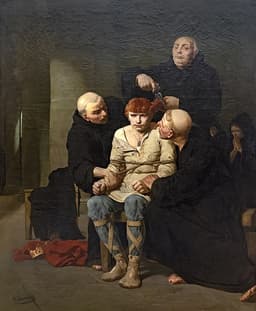
Childeric III
Emperor · Medieval
43.9Total
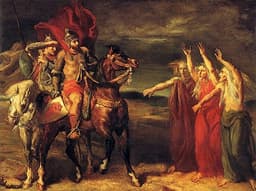
Macbeth of Scotland
Emperor · Medieval
48.6Total
Basic Information
Born
717
1005
Died
754
1057
Era
Medieval
Medieval
Nationality
Frankish Empire
Scotland
Occupation
Emperor
Emperor
Civilization
Western
Western
Score Comparison
Military (10%)
15.7
55.0
Political (20%)
39.4
26.4
Influence (20%)
60.0
55.0
Legacy (20%)
35.0
55.0
Leadership (15%)
55.3
48.4
Strategy (15%)
43.4
43.7
TOTAL
43.9
48.6
Childeric III — Complete Timeline
743 AD
Elevation to KingshipPolitical Action◆ Major
Childeric III was placed on the throne by the mayors of the palace, Pepin the Short and Carloman, after a seven-year interregnum. He was the last Merovingian king, serving as a figurehead while real power rested with the Carolingian mayors.
MerovingianSuccessionFigurehead
Impact: regional
751 AD
Deposition by Pepin the ShortPolitical Action
Childeric III was deposed by Pepin the Short, the mayor of the palace, with the approval of Pope Zachary. Childeric was tonsured and confined to a monastery, ending the Merovingian dynasty. Pepin was then crowned king of the Franks, beginning the Carolingian dynasty.
MerovingianDepositionCarolingian
Impact: regional
Tonsure and ImprisonmentPolitical Action◆ Major
After his deposition, Childeric III was tonsured (his hair cut short, symbolizing loss of royal status) and imprisoned in the monastery of Saint-Bertin or Saint-Omer. His son Theuderic was also imprisoned, ensuring the end of the Merovingian bloodline's claim to power.
MerovingianImprisonmentEnd of Dynasty
Impact: regionaltragic
Macbeth of Scotland — Complete Timeline
1040 AD
Battle of PitgavenyWar
Macbeth defeated and killed King Duncan I in battle at Pitgaveny near Elgin. Macbeth then claimed the Scottish throne, becoming King of Scots. This event is the basis for Shakespeare's play, though the historical circumstances differ from the fictional account.
BattleSuccessionDuncan
Impact: national
1050 AD
Pilgrimage to RomeCultural◆ Major
Macbeth made a pilgrimage to Rome, where he was received by Pope Leo IX and distributed alms to the poor. This was a significant act of piety and diplomacy, demonstrating Macbeth's legitimacy as a Christian king and his connections to the wider European church.
PilgrimageRomePiety
Impact: regionalconstructive
1054 AD
Battle of DunsinaneWar◆ Major
Macbeth was defeated at the Battle of Dunsinane by an army led by Siward, Earl of Northumbria, acting on behalf of Malcolm Canmore. The defeat weakened Macbeth's position but did not immediately end his reign, as he continued to rule for three more years.
BattleNorthumbriaMalcolm
Impact: regional
1057 AD
Battle of LumphananWar◆ Major
Macbeth was killed at the Battle of Lumphanan in Aberdeenshire, fighting against Malcolm Canmore's forces. His death ended his 17-year reign and allowed Malcolm to claim the throne. Macbeth's stepson Lulach succeeded briefly before being killed by Malcolm.
BattleDeathSuccession
Impact: national
This comparison has not been analyzed yet.
One-time AI generation (~1 minute). Scores and timeline are already available below.
Rankings
🥇
Macbeth of ScotlandLeader
Mil: 55.0Pol: 26.4Inf: 55.0
48.6
🥈
Childeric III
Mil: 15.7Pol: 39.4Inf: 60.0
43.9
+4.7 behind
How This Comparison Works
Algorithm
Each figure is scored on 6 dimensions (0—100 scale) based on structured historical data: Military (10%), Political (20%), Influence (20%), Legacy (20%), Leadership (15%), Strategy (15%). The weighted total produces the final ranking.
Data Sources
Scores are computed from structured sub-indicators in the database. Scale factors adjust for era (Ancient ×0.85, Modern ×1.0) and civilization size (Eastern ×1.05, Other ×0.80) to account for differences in population and military scale.
Maximum 3 Figures
Comparisons are limited to 2—3 figures to ensure readability and statistical meaningfulness.
Error Margins
±5 points per dimension — Sub-scores are derived from historical records with inherent uncertainty. Two figures within 5 points on a dimension should be considered roughly equivalent in that area.
Total Score Accuracy
±3 points overall — The weighted combination of 6 dimensions produces a total score with approximately ±3 points of uncertainty. Differences of less than 3 points are not statistically significant— the figures are effectively tied.
Known Limitations
- Historical records are incomplete and uneven across civilizations
- Figures from oral-tradition societies may be underrepresented
- Occupation labels can misclassify multi-role figures
- Scores measure capability and impact, not moral character
- Quantitative scoring is a comparison tool, not absolute truth
Capability Radar
Military (10%) — Battles & Warfare
Battles
4
30
Win Rate
9
35
Expansion
14
25
Political (20%) — Governance & Reform
Reform
0
15
Diplomacy
5
20
Economy
0
15
Influence (20%) — Cultural & Global Reach
Cultural
0
70
Global
0
60
Legacy (20%) — Historical Impact
Historical
5
65
Longevity
5
75
Leadership (15%) — Power & Stability
Tenure
5
40
Stability
5
20
Strategy (15%) — Tactics & Innovation
Strategy
15
20
Tactics
18
25
Reform
22
10
Similar Comparisons
Comments & Discussion
No comments yet. Be the first to share your thoughts!