Loading...
Chitimukulu vs Napoleon Bonaparte
Napoleon Bonaparte leads by 25.2 pts · 2 figures compared
…
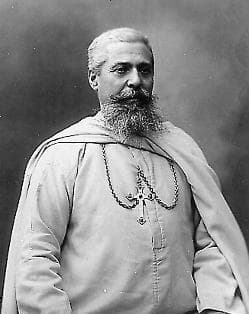
Chitimukulu
Emperor · Modern
45.7Total

Napoleon Bonaparte
General · Modern
70.9Total
Basic Information
Born
1750
1769
Died
1800
1821
Era
Modern
Modern
Nationality
Zambia
France
Occupation
Emperor
General
Civilization
Other
Western
Score Comparison
Military (10%)
45.0
94.0
Political (20%)
37.9
72.0
Influence (20%)
50.2
40.0
Legacy (20%)
39.2
80.0
Leadership (15%)
64.0
78.0
Strategy (15%)
35.7
90.0
TOTAL
45.7
70.9
Chitimukulu — Complete Timeline
1770 AD
Expansion of Bemba KingdomWar◆ Major
Chitimukulu led the Bemba people in military campaigns that expanded their territory in northern Zambia. The Bemba kingdom grew through conquest and assimilation of neighboring groups, establishing dominance over the region's trade routes.
ExpansionBembaConquest
Impact: regional
1780 AD
Consolidation of Bemba ParamountcyPolitical Action◆ Major
Chitimukulu centralized political authority among the Bemba, establishing the chieftaincy as the paramount power. This structure allowed the Bemba to resist external threats and maintain independence until the colonial era.
ConsolidationBembaPolitical Structure
Impact: regionalconstructive
1800 AD
Death of ChitimukuluPolitical Action◆ Major
Chitimukulu died around 1800, leaving a well-established Bemba kingdom. His successors continued the expansionist policies, and the Bemba remained a major power in northern Zambia until British colonization.
DeathBembaLegacy
Impact: regional
Napoleon Bonaparte — Complete Timeline
1799 AD
Coup of 18 BrumaireOther◆ Major
Napoleon Bonaparte, with support from his brother Lucien and key political figures, overthrew the Directory in a bloodless coup. He established the Consulate with himself as First Consul, effectively becoming the ruler of France. This event ended the French Revolution's most unstable period.
French RevolutionCoupRise to Power
Impact: regional
1804 AD
Promulgation of the Napoleonic CodeOther◆ Major
Napoleon enacted the Civil Code of the French, known as the Napoleonic Code, a comprehensive set of laws that replaced the fragmented feudal legal systems. The code established legal equality, protected property rights, and secularized law. It became the basis for legal systems in many European and world countries.
Legal ReformNapoleonic CodeCivil Law
Impact: globalconstructive
1805 AD
Battle of AusterlitzWar◆ Major
Napoleon's Grande Arm
Napoleonic WarsBattleDecisive Victory
Impact: global
1812 AD
Invasion of RussiaWar◆ Major
Napoleon led the Grande Arm
Napoleonic WarsInvasionDisaster
Impact: globaldestructive
1815 AD
Battle of WaterlooWar◆ Major
Napoleon's French army was defeated by the combined forces of the Duke of Wellington's Anglo-Allied army and Gebhard Leberecht von Bl
Napoleonic WarsBattleFinal Defeat
Impact: globaldestructive
Expert Analysis
chitimukulu-vs-napoleon-bonaparte
# The Lion and the Chief: Two Paths to Power in a Divided World
In the winter of 1812, as Napoleon Bonaparte watched his Grand Army freeze in the Russian snows, a very different kind of leader was being laid to rest in the warm woodlands of northern Zambia. Chitimukulu, the Bemba paramount chief, had died around 1800, leaving behind a kingdom he had built not through continental conquest but through patient consolidation. These two men never knew of each other's existence, yet their stories illuminate the vast gulf between how power was won and wielded in different corners of the modern world. One reshaped Europe; the other reshaped a people. Why did their fates diverge so dramatically?
Origins
Napoleon Bonaparte was born in 1769 on the Mediterranean island of Corsica, a place only recently annexed by France. His family belonged to the minor nobility, a status that allowed him to attend French military schools but also marked him as an outsider. The son of a lawyer and a fiercely proud mother, he grew up speaking Italian-accented French, a reminder that he was never quite at the center of the world he would one day conquer. The French Revolution, which erupted when he was twenty, shattered the old order and opened doors that would have remained closed in any stable monarchy.
Chitimukulu, born around 1750, emerged from an entirely different landscape. The Bemba people of northern Zambia lived in a world without written records, without standing armies, without the bureaucratic machinery that defined European states. Power here was personal, rooted in lineage, ritual, and the ability to command loyalty through generosity and strength. The Bemba chieftaincy was not a given; it had to be earned and constantly reaffirmed through the distribution of tribute and the arbitration of disputes. Chitimukulu inherited a title, but he had to build the authority that went with it.
Rise to Power
Napoleon’s ascent was meteoric. By 1796, at age twenty-six, he was commanding the French army in Italy, where his lightning campaigns stunned the Austrians. His political score of 75.0 reflects a man who understood that military victory was only the beginning. He cultivated allies, suppressed rivals, and in 1799 staged a coup that made him First Consul. By 1804, he crowned himself Emperor of the French, a gesture that announced both his ambition and his break with the past. The key turning point was not any single battle but his ability to translate battlefield success into political authority.
Chitimukulu’s rise was slower, more deliberate. In 1770, he led the Bemba in military campaigns that expanded their territory, but these were not the sweeping conquests of Napoleon. They were raids and skirmishes, designed to push back rival groups and secure access to trade routes. His strategy score of 50.2 suggests a leader who thought in terms of incremental gains rather than decisive victories. The Bemba kingdom grew not through the annihilation of enemies but through absorption and alliance. Chitimukulu understood that in a world without maps or standing armies, influence was measured in the number of villages that paid tribute, not in the square miles of territory controlled.
Leadership & Governance
Napoleon governed through a blend of genius and tyranny. The Napoleonic Code, his greatest peacetime achievement, standardized French law, enshrined property rights, and limited the power of the church. It was a revolutionary document, exported across Europe by the force of his armies. Yet his political score of 75.0 also reflects his authoritarian streak: he censored newspapers, suppressed dissent, and placed family members on thrones across the continent. He was a reformer who believed in order above all, a man who could admire the efficiency of a well-run bureaucracy even as he crushed the liberties that made it possible.
Chitimukulu’s governance was built on consensus and ritual. His leadership score of 74.7 is remarkably close to Napoleon’s 80.0, suggesting that in the art of ruling men, they were more alike than different. But where Napoleon issued decrees, Chitimukulu held councils. Where Napoleon relied on a professional army, the Bemba chief depended on the loyalty of clan elders. In 1780, he centralized political authority among the Bemba, establishing the chieftaincy as the paramount power. This was not a coup but a slow process of negotiation, gift-giving, and strategic marriages. He built a kingdom that could survive his death because it was rooted in relationships, not in the force of a single personality.
Triumph & Tragedy
Napoleon’s greatest triumph came in 1805 at Austerlitz, where he crushed the combined armies of Russia and Austria in a single day. His strategic genius—scored at 93.0—was on full display: he feigned weakness, lured his enemies into a trap, and then destroyed them. But the same ambition that made Austerlitz possible led to catastrophe. The invasion of Russia in 1812 cost hundreds of thousands of lives and shattered his invincible image. By 1814, he was exiled to Elba. He returned the next year, only to meet final defeat at Waterloo in 1815. His military score of 94.0 is nearly perfect, yet it could not save him from his own overreach.
Chitimukulu’s triumphs were quieter. He died around 1800, leaving a well-established Bemba kingdom that his successors would continue to expand. There was no dramatic fall, no Waterloo, no exile to a remote island. His tragedy was not personal but historical: the Bemba kingdom would eventually face European colonialism, a force far more powerful than any rival chief. The guns and germs of the twentieth century would undo much of what he had built. But in his own time, he succeeded in the most difficult task of leadership: creating an institution that outlasted him.
Character & Destiny
Napoleon was driven by an insatiable hunger for glory. “I am not an ordinary man,” he once declared, and he proved it by refusing to accept any limits on his ambition. His personality was a weapon: charismatic, ruthless, tireless. But it was also a flaw. He could not stop, could not consolidate, could not share power. His destiny was shaped by the revolutionary era that produced him, an age when a Corsican outsider could become emperor, but also an age when such an emperor could only fall by trying to climb higher.
Chitimukulu’s character is harder to read, for no letters or memoirs survive. But his actions suggest a man of patience and pragmatism. He did not seek to conquer the world; he sought to secure his people. His destiny was shaped by the constraints of his environment: limited resources, no writing system, no gunpowder. He worked within those limits and achieved something lasting. His legacy score of 51.2 is modest by global standards, but among the Bemba, his name remains synonymous with the founding of their nation.
Legacy
Napoleon’s legacy is written across the map of Europe: the Napoleonic Code, the metric system, the redrawing of borders, the myth of the self-made man. He is remembered as both a liberator and a tyrant, a genius and a megalomaniac. His influence score of 82.0 reflects a man whose shadow still falls over modern politics, law, and military strategy.
Chitimukulu’s legacy is less visible but no less real. Among the Bemba people of Zambia, his name is still spoken with reverence. The chieftaincy he consolidated remains a living institution, a link between the precolonial past and the present. His influence score of 66.1 is a reminder that historical significance is not measured only in battles won or empires built. It is also measured in the continuity of a culture, the survival of a people.
Conclusion
To compare Napoleon and Chitimukulu is to compare two different definitions of power. One sought to dominate the world; the other sought to shelter his people. One left behind a legend; the other left behind a legacy. In the end, perhaps the most telling difference is this: Napoleon’s empire crumbled within a decade of his death, while the Bemba paramountcy that Chitimukulu built endures to this day. The lion and the chief both shaped their worlds, but only one of them built something that would outlast the storm.
Rankings
🥇
Napoleon BonaparteLeader
Mil: 94.0Pol: 72.0Inf: 40.0
70.9
🥈
Chitimukulu
Mil: 45.0Pol: 37.9Inf: 50.2
45.7
+25.2 behind
How This Comparison Works
Algorithm
Each figure is scored on 6 dimensions (0—100 scale) based on structured historical data: Military (10%), Political (20%), Influence (20%), Legacy (20%), Leadership (15%), Strategy (15%). The weighted total produces the final ranking.
Data Sources
Scores are computed from structured sub-indicators in the database. Scale factors adjust for era (Ancient ×0.85, Modern ×1.0) and civilization size (Eastern ×1.05, Other ×0.80) to account for differences in population and military scale.
Maximum 3 Figures
Comparisons are limited to 2—3 figures to ensure readability and statistical meaningfulness.
Error Margins
±5 points per dimension — Sub-scores are derived from historical records with inherent uncertainty. Two figures within 5 points on a dimension should be considered roughly equivalent in that area.
Total Score Accuracy
±3 points overall — The weighted combination of 6 dimensions produces a total score with approximately ±3 points of uncertainty. Differences of less than 3 points are not statistically significant— the figures are effectively tied.
Known Limitations
- Historical records are incomplete and uneven across civilizations
- Figures from oral-tradition societies may be underrepresented
- Occupation labels can misclassify multi-role figures
- Scores measure capability and impact, not moral character
- Quantitative scoring is a comparison tool, not absolute truth
Capability Radar
Military (10%) — Battles & Warfare
Battles
25
95
Win Rate
30
90
Expansion
30
95
Political (20%) — Governance & Reform
Reform
35
95
Diplomacy
30
80
Economy
20
85
Influence (20%) — Cultural & Global Reach
Cultural
30
85
Global
10
90
Legacy (20%) — Historical Impact
Historical
25
95
Longevity
20
90
Leadership (15%) — Power & Stability
Tenure
40
85
Stability
35
70
Strategy (15%) — Tactics & Innovation
Strategy
25
95
Tactics
20
98
Reform
15
92
Similar Comparisons
Comments & Discussion
火药与犁6/17/2026
拿破仑的火炮轰开欧洲,查蒂穆库鲁的火种点燃氏族联盟。1812年,前者冻死在撤退路上;后者早已入土,王国却延续两百年。军事胜利是烟花,稳定传承才是铁律。别跟我谈征服,谈谈丰收典礼吧。
REVISIONIST\_SCEPTIC6/17/2026
This comparison romanticizes a chief we barely know. Chitimukulu’s consolidation likely involved as much blood—just unwritten. Napoleon’s 1807 Treaty of Tilsit was documented conquest; Bemba oral traditions sanitize power grabs. Don’t pretend one path was cleaner; both leaned on fear and loyalty in their own mirrors.
CORSICAN\_GHOST6/17/2026
Napoleon wasn’t a self-made man—he was a product of revolutionary chaos who leveraged artillery at Toulon in 1793 to skip the line. Chitimukulu built through soil and kinship, no massacres required. Russians froze, Bemba flourished. Give me the chief who didn’t need a Grande Armée to matter.
数据侦探6/17/2026
拿破仑的滑铁卢败于后勤,查蒂穆库鲁的王国却靠雨季行军和婚姻联盟巩固。大数据看:前者折损40万兵员在俄国,后者零外战伤亡统一高原。谁更高效?数字不说谎,部落制度秒杀帝国梦。
LATINIST\_REBEL6/17/2026
Both claimed divine right—Napoleon’s Notre Dame coronation vs. Chitimukulu’s ancestral spirits. But one needed a Pope, the other just his people. The Bemba chief’s legacy wasn’t a code of laws but a living lineage. Give me the man who ruled by custom, not cannons.