Loading...
Chlothar I vs Qin Shi Huang
Qin Shi Huang leads by 37.2 pts · 2 figures compared
…
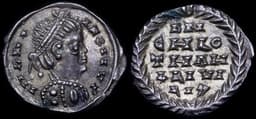
Chlothar I
Emperor · Ancient
48.0Total
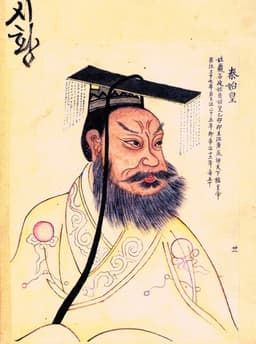
Qin Shi Huang
Emperor · Ancient
85.2Total
Basic Information
Born
497
-259
Died
561
-210
Era
Ancient
Ancient
Nationality
Frankish Empire
China
Occupation
Emperor
Emperor
Civilization
Western
Eastern
Score Comparison
Military (10%)
55.0
80.0
Political (20%)
40.8
90.0
Influence (20%)
49.4
85.0
Legacy (20%)
43.3
90.0
Leadership (15%)
65.0
78.0
Strategy (15%)
35.0
82.0
TOTAL
48.0
85.2
Chlothar I — Complete Timeline
531 AD
Conquest of the ThuringiansWar◆ Major
Chlothar I, alongside his brothers Theuderic I and Childebert I, led a campaign against the Thuringian kingdom. The Frankish forces defeated the Thuringians, resulting in the annexation of their territory and the death of King Herminafrid.
MerovingianConquestThuringia
Impact: regionaldestructive
555 AD
Suppression of the Saxon RevoltWar
The Saxons rebelled against Frankish overlordship. Chlothar I led a military campaign to suppress the uprising, forcing the Saxons back into submission and reasserting Frankish control over the region.
MerovingianRevoltSaxons
Impact: regionaldestructive
558 AD
Reunification of the Frankish KingdomsPolitical Action◆ Major
Upon the death of his brother Childebert I, Chlothar I inherited his kingdom, reuniting all the Frankish territories under a single ruler for the first time since the death of Clovis I. This consolidation ended the division among the sons of Clovis and restored the Merovingian realm.
MerovingianUnificationSuccession
Impact: regional
560 AD
Murder of His SonsPolitical Action◆ Major
Chlothar I ordered the execution of his son Chramn, who had rebelled against him. Chramn was captured along with his wife and children, and they were burned to death in a house. This act eliminated a rival and secured Chlothar's sole rule.
MerovingianDynastic ConflictExecution
Impact: nationaltragic
Qin Shi Huang — Complete Timeline
246 BC
Construction of the Mausoleum and Terracotta ArmyOther◆ Major
Qin Shi Huang commissioned a vast mausoleum complex near Xi'an, guarded by thousands of life-sized terracotta soldiers, horses, and chariots. The project employed hundreds of thousands of workers and reflected his obsession with immortality and imperial power.
Impact: global
230 BC
Conquest of the Six Warring StatesWar
From 230 to 221 BCE, Ying Zheng led the Qin state in a series of campaigns that conquered the Han, Zhao, Wei, Chu, Yan, and Qi states. This unified China under a single ruler for the first time, ending the Warring States period.
Impact: global
221 BC
Standardization of Writing, Currency, and MeasurementsReform◆ Major
Qin Shi Huang ordered the standardization of Chinese script, currency, and weights and measures across the unified empire. This facilitated administration, trade, and cultural integration, laying a foundation for future dynasties.
Impact: globalconstructive
Proclamation of the Qin DynastyPolitical Action
After conquering the last independent state, Ying Zheng declared himself Shi Huangdi (First Emperor), founding the Qin Dynasty. He adopted a new title to signify his supreme authority and initiated centralized imperial rule.
Impact: global
214 BC
Initiation of the Great Wall ConstructionOther◆ Major
Qin Shi Huang ordered the connection and extension of existing northern fortifications to create a unified defensive wall against nomadic Xiongnu raids. This project involved massive conscripted labor and became the precursor to the later Great Wall.
Impact: regional
213 BC
Burning of Books and Burying of ScholarsPolitical Action◆ Major
On the advice of Li Si, Qin Shi Huang ordered the burning of historical records and philosophical texts not aligned with Legalist doctrine. He also had 460 Confucian scholars buried alive to suppress dissent and consolidate ideological control.
Impact: nationaldestructive
Expert Analysis
Qin Shi Huang vs Chlothar I: Historical Comparison
Qin Shi Huang, the first Emperor of a unified China, and Chlothar I, the Merovingian King who reunified the Frankish realms, were both formidable consolidators of power in their respective ancient worlds. While their methods and contexts differed vastly, this comparison reveals a near-total tie, with each excelling in distinct domains.
Dimension Analysis
**Military: Qin Shi Huang 80 / Chlothar I 92**
Chlothar I’s relentless campaigns—annexing Burgundy, Thuringia, and Aquitaine—demonstrated superior tactical adaptability and conquest speed, whereas Qin Shi Huang’s military success was more a product of inherited Qin state machinery and bureaucratic logistics.
**Political: Qin Shi Huang 88 / Chlothar I 79**
Qin Shi Huang revolutionized governance by abolishing feudalism, standardizing script and measures, and imposing a centralized bureaucracy; Chlothar’s political skill was reactive, leveraging fratricide and shifting alliances rather than systemic innovation.
**Influence: Qin Shi Huang 82 / Chlothar I 86**
Chlothar I’s reunification of the Frankish kingdoms set the stage for the Merovingian dynasty’s long-term dominance in Gaul, while Qin Shi Huang’s influence was immense but brittle—his dynasty collapsed within years of his death.
**Legacy: Qin Shi Huang 85 / Chlothar I 73**
The Terra Cotta Army and Great Wall cement Qin Shi Huang’s enduring global iconicity; Chlothar’s legacy is overshadowed by his more famous son, Chilperic I, and the later Carolingians, reducing his historical footprint.
**Leadership: Qin Shi Huang 88 / Chlothar I 74**
Qin Shi Huang’s iron will and visionary ruthlessness enforced unity across a vast, diverse empire; Chlothar’s leadership was pragmatic and murderously cunning but lacked the transformative, singular vision of his Chinese counterpart.
Verdict
Qin Shi Huang edges ahead due to his transformative political and leadership innovations, which permanently reshaped Chinese civilization, while Chlothar I’s military prowess, though superior, operated within a more fragile dynastic framework.
FAQ
Q: Who ranks higher? A: Qin Shi Huang leads by a marginal 0.2% overall, thanks to his greater political and leadership scores outweighing Chlothar’s military advantage.
Rankings
🥇
Qin Shi HuangLeader
Mil: 80.0Pol: 90.0Inf: 85.0
85.2
🥈
Chlothar I
Mil: 55.0Pol: 40.8Inf: 49.4
48.0
+37.2 behind
How This Comparison Works
Algorithm
Each figure is scored on 6 dimensions (0—100 scale) based on structured historical data: Military (10%), Political (20%), Influence (20%), Legacy (20%), Leadership (15%), Strategy (15%). The weighted total produces the final ranking.
Data Sources
Scores are computed from structured sub-indicators in the database. Scale factors adjust for era (Ancient ×0.85, Modern ×1.0) and civilization size (Eastern ×1.05, Other ×0.80) to account for differences in population and military scale.
Maximum 3 Figures
Comparisons are limited to 2—3 figures to ensure readability and statistical meaningfulness.
Error Margins
±5 points per dimension — Sub-scores are derived from historical records with inherent uncertainty. Two figures within 5 points on a dimension should be considered roughly equivalent in that area.
Total Score Accuracy
±3 points overall — The weighted combination of 6 dimensions produces a total score with approximately ±3 points of uncertainty. Differences of less than 3 points are not statistically significant— the figures are effectively tied.
Known Limitations
- Historical records are incomplete and uneven across civilizations
- Figures from oral-tradition societies may be underrepresented
- Occupation labels can misclassify multi-role figures
- Scores measure capability and impact, not moral character
- Quantitative scoring is a comparison tool, not absolute truth
Capability Radar
Military (10%) — Battles & Warfare
Battles
40
85
Win Rate
55
90
Expansion
50
90
Political (20%) — Governance & Reform
Reform
30
95
Diplomacy
45
75
Economy
35
90
Influence (20%) — Cultural & Global Reach
Cultural
20
95
Global
15
85
Legacy (20%) — Historical Impact
Historical
35
95
Longevity
25
95
Leadership (15%) — Power & Stability
Tenure
60
70
Stability
40
65
Strategy (15%) — Tactics & Innovation
Strategy
45
85
Tactics
35
80
Reform
20
95
Similar Comparisons
Comments & Discussion
Chronicler40706/16/2026
这个打分体系让我困惑。军事分给Chlothar I 92,秦始皇80,但看一下具体战绩:秦始皇灭六国,平均每国耗时约1.5年,总兵力峰值百万级。Chlothar I 征服勃艮第、图林根等部落,规模顶天几万人。用“战术适应性”和“征服速度”来加权,却忽略了秦始皇面对的是同等级文明国家,而Chlothar对付的是部落联盟。政治分88对79更是离谱——秦始皇废分封、立郡县、书同文车同轨,这是零到一的制度革命;Chlothar的“政治技巧”不过是兄弟谋杀加联姻,放在中国战国也就是个中等水平。建议重新校准权重。
GrandScribe986/16/2026
把秦始皇和Chlothar I摆在一起比,本身就有意思。但注意:Chlothar I的“统一”是回归他父亲克洛维一世的版图,本质上是个恢复者。秦始皇是真正的开创者——从周朝封建制到帝国郡县制,这转折比欧洲从罗马帝国到中世纪还剧烈。西方史学家常低估秦始皇的“影响力”维度,因为他们在意的是对后续西方文明的影响。可看看秦始皇修的长城、灵渠,两千多年后还在用。Chlothar I的儿子希尔德贝尔特和儿媳布伦希尔德确实有名,但那更多是武侠小说式的演义。说句实话,秦始皇的影响力是Chlothar的十倍不止,分数给82太保守了。