Loading...
Christian I of Denmark vs Edward I
Edward I leads by 8.4 pts · 2 figures compared
…
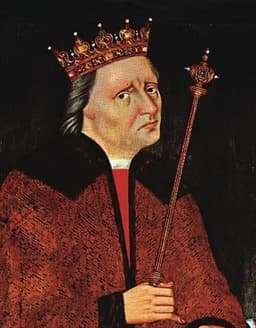
Christian I of Denmark
Emperor · Medieval
53.8Total
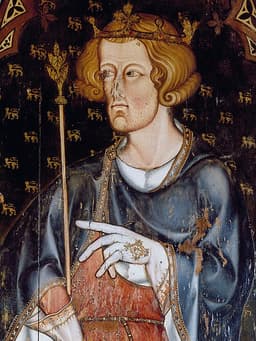
Edward I
Emperor · Medieval
62.2Total
Basic Information
Born
1426
1239
Died
1481
1307
Era
Medieval
Medieval
Nationality
Denmark
England
Occupation
Emperor
Emperor
Civilization
Western
Western
Score Comparison
Military (10%)
55.0
74.7
Political (20%)
54.7
60.0
Influence (20%)
55.7
56.7
Legacy (20%)
49.2
55.0
Leadership (15%)
67.0
72.0
Strategy (15%)
38.6
70.0
TOTAL
53.8
62.2
Christian I of Denmark — Complete Timeline
1448 AD
Election as King of DenmarkPolitical Action◆ Major
Following the death of King Christopher III, the Danish Council elected Christian of Oldenburg as king. This established the Oldenburg dynasty, which would rule Denmark for over four centuries.
AccessionDynasty Foundation
Impact: nationalconstructive
1450 AD
Union of Norway with DenmarkPolitical Action◆ Major
Christian I was crowned King of Norway in Trondheim, formalizing the union between Denmark and Norway. This union lasted until 1814, making Norway a Danish dominion for centuries.
UnionScandinavia
Impact: regional
1457 AD
Election as King of SwedenPolitical Action◆ Major
Christian I was elected King of Sweden, briefly restoring the Kalmar Union. His rule in Sweden was contested, leading to rebellion and his eventual deposition in 1464.
Kalmar UnionSweden
Impact: regional
1468 AD
Pledge of Orkney and ShetlandPolitical Action◆ Major
To secure a dowry for his daughter Margaret's marriage to James III of Scotland, Christian I pledged the Orkney and Shetland islands. The pledge was never redeemed, and the islands became permanently part of Scotland.
Territorial LossScotland
Impact: regionaltragic
1479 AD
Foundation of the University of CopenhagenCultural◆ Major
Christian I issued a charter establishing the University of Copenhagen, the first university in Denmark. Modeled on the University of Cologne, it became a center of learning and the oldest university in the country.
EducationUniversity
Impact: nationalconstructive
Edward I — Complete Timeline
1282 AD
Conquest of WalesWar◆ Major
Edward I led a military campaign that resulted in the conquest of Wales. After the death of Llywelyn ap Gruffudd, Edward built a ring of castles (including Caernarfon and Conwy) to control the region. The Statute of Rhuddlan in 1284 annexed Wales to England.
ConquestWalesCastles
Impact: regional
1290 AD
Expulsion of the Jews from EnglandPolitical Action◆ Major
Edward I issued the Edict of Expulsion, ordering all Jews to leave England. The expulsion was motivated by financial and religious pressures. Jews were given until November 1 to depart, and their property was confiscated by the crown. The ban lasted until 1656.
ExpulsionJewsReligious Persecution
Impact: nationaldestructive
1295 AD
Model ParliamentPolitical Action◆ Major
Edward I summoned the Model Parliament, which included representatives of the commons (knights and burgesses) alongside nobles and clergy. This assembly set a precedent for the composition of the English Parliament. It was called to approve taxes for wars in Scotland and France.
ParliamentRepresentationTaxation
Impact: nationalconstructive
1296 AD
First War of Scottish IndependenceWar◆ Major
Edward I invaded Scotland after the Scots refused to support his war in France. He captured Berwick and defeated the Scots at the Battle of Dunbar. Edward forced the submission of Scottish nobles and removed the Stone of Scone to Westminster Abbey.
ScotlandInvasionStone of Scone
Impact: regional
Expert Analysis
Origins
**Christian I of Denmark** (born 1426) was the first Oldenburg king, elected to the Danish throne in 1448 after the death of Christopher III. He came from the comital House of Oldenburg, a minor German dynasty. His early life was shaped by the complex politics of the Kalmar Union, a personal union of Denmark, Norway, and Sweden. He married Dorothea of Brandenburg, strengthening ties with German principalities.
**Edward I of England** (born 1239) was the son of Henry III and Eleanor of Provence. He was raised in a court marked by baronial conflict, including the Second Barons' War. His father's weakness instilled in Edward a determination to assert royal authority. He married Eleanor of Castile, gaining influence in Gascony and Castile.
Rise to Power
Christian I's rise was facilitated by the Danish Council's need for a strong ruler after Christopher III's death. He was elected King of Denmark in 1448, then King of Norway in 1450, and finally King of Sweden in 1457 after defeating the Swedish regent Karl Knutsson. However, his Swedish rule was contested, leading to rebellion and his eventual deposition in 1464. His reign saw the formalization of the union between Denmark and Norway, which lasted until 1814.
Edward I became king in 1272 upon his father's death, but he had already proven himself as a military commander during the Barons' War and the Ninth Crusade. His early reign focused on consolidating royal power, reforming the legal system, and expanding English territory. He conquered Wales between 1277 and 1283, using a combination of military force and castle-building. His reputation as 'Hammer of the Scots' emerged from his campaigns in Scotland after 1296.
Leadership & Governance
Christian I's leadership style was diplomatic and conciliatory, but he struggled to maintain the Kalmar Union. He relied on nobles and councils, often making concessions to secure their support. His governance included founding the University of Copenhagen in 1479, modeled on the University of Cologne, which became a center of learning. However, his financial mismanagement led to the pledging of Orkney and Shetland to Scotland as a dowry for his daughter Margaret—a pledge never redeemed, permanently losing these islands.
Edward I was an authoritarian and reformist ruler. He strengthened the English monarchy by curbing baronial power, standardizing laws, and developing the legal system. His Model Parliament of 1295, which included commoners, set a precedent for representative government. He also expelled the Jews from England in 1290, confiscating their property. His military leadership was aggressive and strategic, scoring 74.7 in military compared to Christian I's 55.0.
Triumph & Tragedy
Christian I's greatest triumph was establishing the Oldenburg dynasty, which ruled Denmark and Norway for centuries. His founding of the University of Copenhagen was a lasting contribution. However, his greatest failure was the loss of Orkney and Shetland, a strategic error that weakened Denmark's naval position. His inability to hold Sweden also highlighted the fragility of the Kalmar Union.
Edward I's triumphs include the conquest of Wales, the establishment of English control over Scotland (temporarily), and the creation of the Model Parliament. His building of castles in Wales, such as Caernarfon and Conwy, remains a testament to his military engineering. However, his Scottish campaigns ultimately failed to achieve permanent subjugation, and his harsh policies, including the expulsion of Jews, tarnished his legacy. His political score of 60.0 reflects both his successes and failures.
Character & Destiny
Christian I was pragmatic and diplomatic, but lacked the ruthlessness needed to maintain a multi-kingdom union. His character led to compromises that eroded his authority. He scored 67.0 in leadership, indicating a capable but not dominant ruler. His destiny was to be a transitional figure, founding a dynasty but losing territory.
Edward I was determined, ruthless, and strategic, with a leadership score of 72.0. His character drove him to expand English power at all costs, but his inflexibility alienated the Scots and led to ongoing conflict. His destiny was to be remembered as a great conqueror and lawgiver, but also as a tyrant.
Legacy
Christian I's legacy is mixed. He established the Oldenburg dynasty, which lasted until 1863 in Denmark and 1905 in Norway. The University of Copenhagen remains a prestigious institution. However, the loss of Orkney and Shetland was a permanent setback. His overall legacy score of 49.2 reflects limited enduring impact.
Edward I's legacy is more significant. He conquered Wales, which remains part of the United Kingdom. The Model Parliament influenced the development of English democracy. His legal reforms, including statutes like Quia Emptores, shaped property law. However, his Scottish wars set the stage for centuries of conflict. His legacy score of 55.0 is higher, but still moderate.
Conclusion
Edward I had a greater impact than Christian I, with a total score of 62.2 versus 53.8. His military achievements, political reforms, and legal legacy were more transformative. While Christian I's dynasty endured, Edward I's actions directly shaped the political geography of Britain and the development of parliamentary government. Edward I's influence is more tangible and lasting, making him the more consequential ruler.
Rankings
🥇
Edward ILeader
Mil: 74.7Pol: 60.0Inf: 56.7
62.2
🥈
Christian I of Denmark
Mil: 55.0Pol: 54.7Inf: 55.7
53.8
+8.4 behind
How This Comparison Works
Algorithm
Each figure is scored on 6 dimensions (0—100 scale) based on structured historical data: Military (10%), Political (20%), Influence (20%), Legacy (20%), Leadership (15%), Strategy (15%). The weighted total produces the final ranking.
Data Sources
Scores are computed from structured sub-indicators in the database. Scale factors adjust for era (Ancient ×0.85, Modern ×1.0) and civilization size (Eastern ×1.05, Other ×0.80) to account for differences in population and military scale.
Maximum 3 Figures
Comparisons are limited to 2—3 figures to ensure readability and statistical meaningfulness.
Error Margins
±5 points per dimension — Sub-scores are derived from historical records with inherent uncertainty. Two figures within 5 points on a dimension should be considered roughly equivalent in that area.
Total Score Accuracy
±3 points overall — The weighted combination of 6 dimensions produces a total score with approximately ±3 points of uncertainty. Differences of less than 3 points are not statistically significant— the figures are effectively tied.
Known Limitations
- Historical records are incomplete and uneven across civilizations
- Figures from oral-tradition societies may be underrepresented
- Occupation labels can misclassify multi-role figures
- Scores measure capability and impact, not moral character
- Quantitative scoring is a comparison tool, not absolute truth
Capability Radar
Military (10%) — Battles & Warfare
Battles
25
75
Win Rate
30
70
Expansion
35
75
Political (20%) — Governance & Reform
Reform
40
75
Diplomacy
55
65
Economy
45
70
Influence (20%) — Cultural & Global Reach
Cultural
40
65
Global
35
60
Legacy (20%) — Historical Impact
Historical
50
75
Longevity
45
70
Leadership (15%) — Power & Stability
Tenure
60
80
Stability
30
60
Strategy (15%) — Tactics & Innovation
Strategy
25
85
Tactics
20
80
Reform
15
70
Similar Comparisons
Comments & Discussion
No comments yet. Be the first to share your thoughts!