Loading...
Edward I vs Napoleon Bonaparte
Napoleon Bonaparte leads by 8.7 pts · 2 figures compared
…
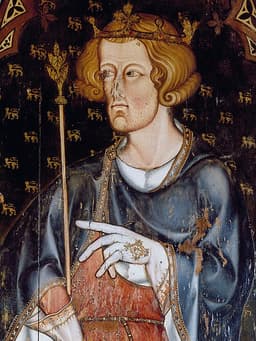
Edward I
Emperor · Medieval
62.2Total

Napoleon Bonaparte
General · Modern
70.9Total
Basic Information
Born
1239
1769
Died
1307
1821
Era
Medieval
Modern
Nationality
England
France
Occupation
Emperor
General
Civilization
Western
Western
Score Comparison
Military (10%)
74.7
94.0
Political (20%)
60.0
72.0
Influence (20%)
56.7
40.0
Legacy (20%)
55.0
80.0
Leadership (15%)
72.0
78.0
Strategy (15%)
70.0
90.0
TOTAL
62.2
70.9
Edward I — Complete Timeline
1282 AD
Conquest of WalesWar◆ Major
Edward I led a military campaign that resulted in the conquest of Wales. After the death of Llywelyn ap Gruffudd, Edward built a ring of castles (including Caernarfon and Conwy) to control the region. The Statute of Rhuddlan in 1284 annexed Wales to England.
ConquestWalesCastles
Impact: regional
1290 AD
Expulsion of the Jews from EnglandPolitical Action◆ Major
Edward I issued the Edict of Expulsion, ordering all Jews to leave England. The expulsion was motivated by financial and religious pressures. Jews were given until November 1 to depart, and their property was confiscated by the crown. The ban lasted until 1656.
ExpulsionJewsReligious Persecution
Impact: nationaldestructive
1295 AD
Model ParliamentPolitical Action◆ Major
Edward I summoned the Model Parliament, which included representatives of the commons (knights and burgesses) alongside nobles and clergy. This assembly set a precedent for the composition of the English Parliament. It was called to approve taxes for wars in Scotland and France.
ParliamentRepresentationTaxation
Impact: nationalconstructive
1296 AD
First War of Scottish IndependenceWar◆ Major
Edward I invaded Scotland after the Scots refused to support his war in France. He captured Berwick and defeated the Scots at the Battle of Dunbar. Edward forced the submission of Scottish nobles and removed the Stone of Scone to Westminster Abbey.
ScotlandInvasionStone of Scone
Impact: regional
Napoleon Bonaparte — Complete Timeline
1799 AD
Coup of 18 BrumaireOther◆ Major
Napoleon Bonaparte, with support from his brother Lucien and key political figures, overthrew the Directory in a bloodless coup. He established the Consulate with himself as First Consul, effectively becoming the ruler of France. This event ended the French Revolution's most unstable period.
French RevolutionCoupRise to Power
Impact: regional
1804 AD
Promulgation of the Napoleonic CodeOther◆ Major
Napoleon enacted the Civil Code of the French, known as the Napoleonic Code, a comprehensive set of laws that replaced the fragmented feudal legal systems. The code established legal equality, protected property rights, and secularized law. It became the basis for legal systems in many European and world countries.
Legal ReformNapoleonic CodeCivil Law
Impact: globalconstructive
1805 AD
Battle of AusterlitzWar◆ Major
Napoleon's Grande Arm
Napoleonic WarsBattleDecisive Victory
Impact: global
1812 AD
Invasion of RussiaWar◆ Major
Napoleon led the Grande Arm
Napoleonic WarsInvasionDisaster
Impact: globaldestructive
1815 AD
Battle of WaterlooWar◆ Major
Napoleon's French army was defeated by the combined forces of the Duke of Wellington's Anglo-Allied army and Gebhard Leberecht von Bl
Napoleonic WarsBattleFinal Defeat
Impact: globaldestructive
Expert Analysis
edward-i-vs-napoleon-bonaparte
# The Emperor and the Hammer: Napoleon and Edward I
On a frozen December morning in 1805, a short, pale-faced man in a grey overcoat watched his Grand Army crush the combined forces of Austria and Russia at Austerlitz. The sun rose over the battlefield, and Napoleon Bonaparte knew he had achieved something no French general had done before: he had made himself master of continental Europe. Nearly six centuries earlier, another man in chainmail stood on the banks of the Menai Strait, watching his engineers build a bridge of boats to carry his army into the heart of Wales. Edward I, called Longshanks for his towering height, was about to do what generations of English kings had failed to do—conquer the last independent Welsh principality. Both men wanted to build empires. One succeeded for a dazzling decade; the other built something that outlasted his bones. Why did their paths diverge so dramatically?
Origins
Napoleon was born in 1769 on the island of Corsica, a place that had only become French the year before. His family was minor nobility, but they were not wealthy. He spoke Italian before he learned French, and his accent marked him as an outsider in the elite military academies of Paris. This sense of being an outsider drove him: he had to prove himself constantly, and he never forgot that he was fighting for his place in a world that had not wanted him.
Edward I was born in 1239 into the English royal family, the son of Henry III. He was tall, athletic, and trained from childhood to command. He grew up in the shadow of his father’s weak rule, watching barons humiliate the crown. When Edward became king, he understood instinctively that power had to be demonstrated, not inherited. His childhood among the turbulent politics of thirteenth-century England taught him that authority required both iron and law.
Rise to Power
Napoleon’s rise was a rocket. In 1793, at age twenty-four, he drove the British out of Toulon and became a brigadier general. By 1796, he commanded the Army of Italy and won six battles in a single month. He was twenty-six. His campaigns in Italy and Egypt made him a national hero, and in 1799, he seized power in a coup d’état. He was thirty. The French Revolution had destroyed the old aristocracy, creating a vacuum that talent could fill. Napoleon filled it.
Edward’s rise was slower and more deliberate. He became king in 1272 while on crusade, and he did not rush home. He spent a year consolidating his reputation in the Holy Land before returning to England. He had already proven himself in battle during the Second Barons’ War, where he fought for his father and learned the art of siege warfare. His path to power was not a coup but a gradual accumulation of authority through patience, marriage, and the systematic crushing of opposition.
Leadership & Governance
Napoleon ruled through brilliance and charisma. He reorganized French law with the Napoleonic Code, creating a uniform legal system that abolished feudal privileges and established equality before the law. He reformed education, built roads, and centralized the state. But he also demanded absolute loyalty. His marshals were chosen for their talent, but they were kept dependent on his favor. He appointed his brothers to thrones across Europe, creating a family empire that collapsed when his military fortunes turned.
Edward ruled through institutions. In 1295, he summoned the Model Parliament, which included knights and burgesses alongside nobles and clergy. This was not democracy—Edward used Parliament to raise taxes and legitimize his wars—but it created a precedent. English kings after Edward could not rule without consulting the broader political community. Edward also expelled the Jews from England in 1290, a brutal act of state-sponsored antisemitism that was as much about seizing their assets as about religious prejudice. It was efficient, cruel, and permanent.
Militarily, Napoleon was a genius. His strategy at Austerlitz in 1805, where he lured the allies into attacking his deliberately weakened right flank before smashing their center, is still studied in war colleges. He moved armies faster than anyone before him, living off the land and striking at enemy communications. But he could not stop. His invasion of Russia in 1812, with 600,000 men, ended in catastrophic retreat. He lost his army, and with it, his empire.
Edward was not a strategic genius like Napoleon. His military score is lower—62.3 compared to Napoleon’s 94.0. But he understood logistics and persistence. His conquest of Wales (1282–1283) was methodical: he built castles at Caernarfon, Conwy, and Harlech, ringed the country with fortifications, and starved the Welsh into submission. His wars against Scotland (1296 onward) were less successful; he captured Berwick and defeated the Scots in battle, but he never fully conquered them. William Wallace and Robert the Bruce became legends because Edward could not finish what he started.
Triumph & Tragedy
Napoleon’s greatest moment was Austerlitz. He was thirty-six, and Europe lay at his feet. His worst moment was Waterloo in 1815, where he made mistakes—delaying his attack, misjudging the Prussian arrival—and lost everything. He died in exile on Saint Helena, a prisoner of the British, at age fifty-one.
Edward’s greatest moment was the conquest of Wales, which he completed by 1283. His worst moment was his failure in Scotland. He died in 1307 on his way to fight Robert the Bruce, a tired old king who had spent his last years chasing a victory he never achieved. He was sixty-eight.
Character & Destiny
Napoleon was driven by ambition, insecurity, and a belief that he was destined for greatness. “I am not a man,” he once said, “but a thing.” He saw himself as an instrument of history, and he burned through men and nations to prove it. His personality was magnetic but unstable—he could charm a room and then explode in rage. He trusted no one completely, and in the end, no one trusted him.
Edward was cold, calculating, and patient. He was called the Hammer of the Scots, but he was also a lawyer-king who understood that power needed paperwork. He was cruel—he executed David of Wales and starved Scottish prisoners—but he was not impulsive. His personality fit his era: a medieval king who ruled by both force and law, building institutions that would outlast his dynasty.
Legacy
Napoleon’s legacy is immense and contradictory. He spread the ideals of the French Revolution—equality before the law, secular administration, meritocracy—across Europe. His Napoleonic Code influenced legal systems from Italy to Japan. But he also destroyed the republican government he claimed to defend, made himself emperor, and caused the deaths of millions. He is remembered as both a liberator and a tyrant.
Edward’s legacy is quieter but more durable. The Model Parliament became a foundation of English constitutional government. The castles of Wales are UNESCO World Heritage sites. The expulsion of the Jews cast a long shadow over English history. He is remembered as a strong king who built England’s legal and political framework, but also as a conqueror who crushed Wales and failed to subdue Scotland.
Conclusion
Napoleon and Edward both tried to build empires through war. Napoleon’s empire burned bright and died fast, leaving behind ideas that changed the world. Edward’s empire was smaller and slower, but it left behind institutions that shaped centuries. The difference between them is the difference between the comet and the anvil. Napoleon was the comet—dazzling, destructive, unforgettable. Edward was the anvil—heavy, patient, and still standing long after the comet had fallen. Both men shaped history, but they did so in ways that reveal the deep truth about power: brilliance can conquer a continent, but only institutions can hold it.
Rankings
🥇
Napoleon BonaparteLeader
Mil: 94.0Pol: 72.0Inf: 40.0
70.9
🥈
Edward I
Mil: 74.7Pol: 60.0Inf: 56.7
62.2
+8.7 behind
How This Comparison Works
Algorithm
Each figure is scored on 6 dimensions (0—100 scale) based on structured historical data: Military (10%), Political (20%), Influence (20%), Legacy (20%), Leadership (15%), Strategy (15%). The weighted total produces the final ranking.
Data Sources
Scores are computed from structured sub-indicators in the database. Scale factors adjust for era (Ancient ×0.85, Modern ×1.0) and civilization size (Eastern ×1.05, Other ×0.80) to account for differences in population and military scale.
Maximum 3 Figures
Comparisons are limited to 2—3 figures to ensure readability and statistical meaningfulness.
Error Margins
±5 points per dimension — Sub-scores are derived from historical records with inherent uncertainty. Two figures within 5 points on a dimension should be considered roughly equivalent in that area.
Total Score Accuracy
±3 points overall — The weighted combination of 6 dimensions produces a total score with approximately ±3 points of uncertainty. Differences of less than 3 points are not statistically significant— the figures are effectively tied.
Known Limitations
- Historical records are incomplete and uneven across civilizations
- Figures from oral-tradition societies may be underrepresented
- Occupation labels can misclassify multi-role figures
- Scores measure capability and impact, not moral character
- Quantitative scoring is a comparison tool, not absolute truth
Capability Radar
Military (10%) — Battles & Warfare
Battles
75
95
Win Rate
70
90
Expansion
75
95
Political (20%) — Governance & Reform
Reform
75
95
Diplomacy
65
80
Economy
70
85
Influence (20%) — Cultural & Global Reach
Cultural
65
85
Global
60
90
Legacy (20%) — Historical Impact
Historical
75
95
Longevity
70
90
Leadership (15%) — Power & Stability
Tenure
80
85
Stability
60
70
Strategy (15%) — Tactics & Innovation
Strategy
85
95
Tactics
80
98
Reform
70
92
Similar Comparisons
Comments & Discussion
No comments yet. Be the first to share your thoughts!