Loading...
Edward I vs Rupert of the Palatinate
Edward I leads by 22.4 pts · 2 figures compared
…
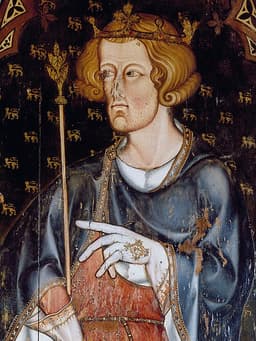
Edward I
Emperor · Medieval
62.2Total
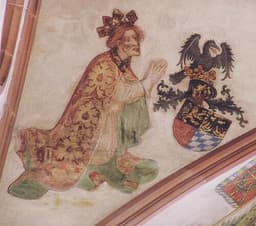
Rupert of the Palatinate
Emperor · Medieval
39.8Total
Basic Information
Born
1239
1352
Died
1307
1410
Era
Medieval
Medieval
Nationality
England
Holy Roman Empire
Occupation
Emperor
Emperor
Civilization
Western
Western
Score Comparison
Military (10%)
74.7
50.0
Political (20%)
60.0
26.4
Influence (20%)
56.7
47.9
Legacy (20%)
55.0
38.3
Leadership (15%)
72.0
38.1
Strategy (15%)
70.0
35.7
TOTAL
62.2
39.8
Edward I — Complete Timeline
1282 AD
Conquest of WalesWar◆ Major
Edward I led a military campaign that resulted in the conquest of Wales. After the death of Llywelyn ap Gruffudd, Edward built a ring of castles (including Caernarfon and Conwy) to control the region. The Statute of Rhuddlan in 1284 annexed Wales to England.
ConquestWalesCastles
Impact: regional
1290 AD
Expulsion of the Jews from EnglandPolitical Action◆ Major
Edward I issued the Edict of Expulsion, ordering all Jews to leave England. The expulsion was motivated by financial and religious pressures. Jews were given until November 1 to depart, and their property was confiscated by the crown. The ban lasted until 1656.
ExpulsionJewsReligious Persecution
Impact: nationaldestructive
1295 AD
Model ParliamentPolitical Action◆ Major
Edward I summoned the Model Parliament, which included representatives of the commons (knights and burgesses) alongside nobles and clergy. This assembly set a precedent for the composition of the English Parliament. It was called to approve taxes for wars in Scotland and France.
ParliamentRepresentationTaxation
Impact: nationalconstructive
1296 AD
First War of Scottish IndependenceWar◆ Major
Edward I invaded Scotland after the Scots refused to support his war in France. He captured Berwick and defeated the Scots at the Battle of Dunbar. Edward forced the submission of Scottish nobles and removed the Stone of Scone to Westminster Abbey.
ScotlandInvasionStone of Scone
Impact: regional
Rupert of the Palatinate — Complete Timeline
1400 AD
Election as King of the RomansPolitical Action◆ Major
The four Rhenish electors deposed Wenceslaus IV and elected Rupert of the Palatinate as King of the Romans. Rupert's election was contested by Wenceslaus and his supporters, leading to a divided empire. Rupert was never crowned Holy Roman Emperor by the Pope.
ElectionImperial PoliticsSchism
Impact: regional
1401 AD
Italian CampaignWar◆ Major
Rupert led an expedition to Italy to secure his coronation as Holy Roman Emperor and to support Pope Boniface IX against his rivals. The campaign was a failure; Rupert's army was defeated by the forces of Gian Galeazzo Visconti of Milan near Brescia. Rupert retreated to Germany without achieving his goals.
Italian CampaignMilitary DefeatCoronation
Impact: regionaltragic
1405 AD
Conflict with the Archbishop of MainzPolitical Action
Rupert became embroiled in a conflict with Archbishop Johann II of Mainz over the election of a new bishop in the diocese of Paderborn. The dispute escalated into a military confrontation, with Rupert besieging the archbishop's castle. The conflict was eventually resolved through mediation, but it weakened Rupert's authority.
Ecclesiastical ConflictSiegeImperial Authority
destructive
Expert Analysis
Origins
Edward I (born 1239) was the son of King Henry III of England and Eleanor of Provence. He grew up amid political turmoil, including the Second Barons' War (1264-1267), where he was captured by Simon de Montfort but later escaped and defeated the baronial forces. His early military experience in the Ninth Crusade (1271-1272) shaped his strategic outlook. Rupert of Palatinate (born 1352) came from the Wittelsbach family, serving as Count Palatine of the Rhine. He was elected King of the Romans in 1400 after the deposition of Wenceslaus IV, but never secured papal coronation as Holy Roman Emperor. His background was steeped in the complex politics of the Holy Roman Empire, where electoral alliances often overshadowed military might.
Rise to Power
Edward I ascended the throne in 1272 upon his father's death, but his return from crusade delayed his coronation until 1274. His early reign focused on administrative reforms and consolidating royal authority. The conquest of Wales (1277-1283) was his first major military achievement, culminating in the death of Llywelyn ap Gruffudd and the construction of a ring of castles (e.g., Caernarfon, Conwy). Rupert's rise was more contested. In 1400, four Rhenish electors deposed Wenceslaus and elected Rupert, but he faced opposition from Wenceslaus's supporters and the rival King Sigismund. Rupert's election was never universally recognized, and his authority remained limited.
Leadership & Governance
Edward I is known for his administrative innovations. He summoned the Model Parliament in 1295, which included knights and burgesses alongside nobles and clergy, setting a precedent for representative government. He also issued statutes such as the Statute of Westminster (1275) and the Statute of Winchester (1285), which reformed land law and maintained public order. In contrast, Rupert struggled to exert authority. His Italian campaign (1401-1402) aimed to secure coronation from Pope Boniface IX, but it failed due to lack of funds and military support. He spent most of his reign in conflict with local princes and the Archbishop of Mainz, achieving little lasting reform. Edward's leadership score of 72.0 reflects his ability to command loyalty and implement policy, while Rupert's 38.1 indicates his inability to overcome political fragmentation.
Triumph & Tragedy
Edward's greatest triumph was the conquest of Wales and the construction of castles that symbolized English dominance. However, his invasion of Scotland (First War of Scottish Independence, 1296) initially succeeded with the capture of Berwick and victory at the Battle of Dunbar, but his harsh policies provoked prolonged resistance under William Wallace and later Robert the Bruce. His expulsion of the Jews from England in 1290, motivated by financial and religious pressures, was a tragic and unjust act that ended Jewish life in England for centuries. Rupert's triumph was his election itself, a rare achievement for a Wittelsbach. His tragedy was his failed Italian expedition; he returned to Germany in 1402 having spent much of his treasury and gained no coronation. He died in 1410, largely forgotten.
Character & Destiny
Edward I was pragmatic, ruthless, and energetic. His nickname "Longshanks" reflected his imposing stature, but his character was marked by a determination to centralize power. His decision to expel the Jews shows a willingness to sacrifice minority groups for financial and political gain. Rupert was ambitious but lacked the resources and political acumen to succeed. He was described by contemporaries as pious and chivalrous, but these traits did not compensate for his weak power base. Edward's character drove him to achieve lasting reforms; Rupert's destiny was to be a footnote in imperial history.
Legacy
Edward I's legacy is profound: he conquered Wales, leaving a network of castles that remain UNESCO World Heritage sites. The Model Parliament influenced the development of the English Parliament. However, his Scottish campaigns sowed seeds of conflict that lasted for centuries. The expulsion of the Jews was a dark precedent. Rupert's legacy is minimal. He is remembered as an uncrowned emperor whose reign failed to strengthen the empire or his family. His total score of 39.8 reflects this limited impact.
Conclusion
Edward I had a far greater impact on history than Rupert of the Palatinate. With a total score of 62.2 compared to Rupert's 39.8, Edward's military (74.7 vs 50.0), political (60.0 vs 26.4), and leadership (72.0 vs 38.1) scores underscore his effectiveness. While Edward's actions had negative consequences, his administrative and military achievements shaped England for generations. Rupert's reign was a failure that left no enduring mark. Thus, Edward I is the more significant historical figure.
Rankings
🥇
Edward ILeader
Mil: 74.7Pol: 60.0Inf: 56.7
62.2
🥈
Rupert of the Palatinate
Mil: 50.0Pol: 26.4Inf: 47.9
39.8
+22.4 behind
How This Comparison Works
Algorithm
Each figure is scored on 6 dimensions (0—100 scale) based on structured historical data: Military (10%), Political (20%), Influence (20%), Legacy (20%), Leadership (15%), Strategy (15%). The weighted total produces the final ranking.
Data Sources
Scores are computed from structured sub-indicators in the database. Scale factors adjust for era (Ancient ×0.85, Modern ×1.0) and civilization size (Eastern ×1.05, Other ×0.80) to account for differences in population and military scale.
Maximum 3 Figures
Comparisons are limited to 2—3 figures to ensure readability and statistical meaningfulness.
Error Margins
±5 points per dimension — Sub-scores are derived from historical records with inherent uncertainty. Two figures within 5 points on a dimension should be considered roughly equivalent in that area.
Total Score Accuracy
±3 points overall — The weighted combination of 6 dimensions produces a total score with approximately ±3 points of uncertainty. Differences of less than 3 points are not statistically significant— the figures are effectively tied.
Known Limitations
- Historical records are incomplete and uneven across civilizations
- Figures from oral-tradition societies may be underrepresented
- Occupation labels can misclassify multi-role figures
- Scores measure capability and impact, not moral character
- Quantitative scoring is a comparison tool, not absolute truth
Capability Radar
Military (10%) — Battles & Warfare
Battles
75
20
Win Rate
70
25
Expansion
75
10
Political (20%) — Governance & Reform
Reform
75
15
Diplomacy
65
25
Economy
70
20
Influence (20%) — Cultural & Global Reach
Cultural
65
15
Global
60
10
Legacy (20%) — Historical Impact
Historical
75
20
Longevity
70
10
Leadership (15%) — Power & Stability
Tenure
80
30
Stability
60
15
Strategy (15%) — Tactics & Innovation
Strategy
85
15
Tactics
80
20
Reform
70
10
Similar Comparisons
Comments & Discussion
No comments yet. Be the first to share your thoughts!