Loading...
Alexander the Great vs King Taejo of Goryeo
Alexander the Great leads by 15.1 pts · 2 figures compared
…
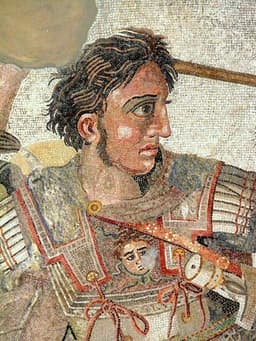
Alexander the Great
General · Ancient
85.2Total
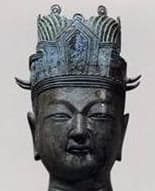
King Taejo of Goryeo
Emperor · Medieval
70.1Total
Basic Information
Born
-356
877
Died
-323
943
Era
Ancient
Medieval
Nationality
Macedon
Korea
Occupation
General
Emperor
Civilization
Western
Eastern
Score Comparison
Military (10%)
95.0
78.0
Political (20%)
60.0
72.0
Influence (20%)
92.0
65.0
Legacy (20%)
90.0
65.0
Leadership (15%)
80.0
82.0
Strategy (15%)
92.0
67.2
TOTAL
85.2
70.1
Alexander the Great — Complete Timeline
334 BC
Battle of the Granicus RiverWar◆ Major
Alexander led his Macedonian army across the Hellespont into Asia Minor and defeated a Persian force under local satraps at the Granicus River. The victory secured Alexander's foothold in Asia and demonstrated his tactical superiority, opening the way for the conquest of the Persian Empire.
Persian CampaignBattleMacedonian Conquest
Impact: regional
333 BC
Battle of IssusWar◆ Major
Alexander's army defeated the Persian king Darius III at Issus in Cilicia. Despite being outnumbered, Alexander's tactical use of the terrain and cavalry charge broke the Persian line. Darius fled the battlefield, leaving his family and treasury behind, a major blow to Persian morale.
Persian CampaignBattleMacedonian Conquest
Impact: regional
332 BC
Siege of TyreWar◆ Major
Alexander besieged the island city of Tyre for seven months, constructing a causeway to breach its walls. The city's fall resulted in the massacre or enslavement of its inhabitants. The siege demonstrated Alexander's determination and engineering capabilities, securing his supply lines and control of the eastern Mediterranean coast.
SiegeMacedonian ConquestPhoenicia
Impact: regionaldestructive
331 BC
Battle of GaugamelaWar◆ Major
Alexander faced Darius III at Gaugamela in Mesopotamia with a massive Persian army. Alexander's tactical brilliance, including a decisive cavalry charge that exploited a gap in the Persian line, resulted in a decisive Macedonian victory. Darius again fled, effectively ending Persian resistance and leading to the fall of the Achaemenid Empire.
Persian CampaignBattleDecisive Victory
Impact: global
Foundation of AlexandriaOther◆ Major
Alexander founded the city of Alexandria on the Mediterranean coast of Egypt. He personally selected the site and oversaw the initial planning. Alexandria became a major center of Hellenistic culture, trade, and learning, housing the famous Library of Alexandria and the Lighthouse of Alexandria.
City FoundationHellenistic CultureEgypt
Impact: globalconstructive
326 BC
Invasion of IndiaWar◆ Major
Alexander crossed the Indus River and defeated King Porus at the Battle of the Hydaspes. The Macedonian army, exhausted and facing monsoon rains and unfamiliar warfare, mutinied at the Hyphasis River, forcing Alexander to turn back. This campaign marked the easternmost extent of his conquests.
Indian CampaignBattleMutiny
Impact: regional
King Taejo of Goryeo — Complete Timeline
918 AD
Founded the Goryeo DynastyPolitical Action
Wang Geon (Taejo) overthrew the Later Goguryeo state and established the Goryeo dynasty, with its capital at Songak (Kaesong). This marked the beginning of a new era in Korean history.
Dynasty FoundingGoryeoKorea
Impact: regionalconstructive
920 AD
Adopted a Policy of Marrying Local ElitesPolitical Action◆ Major
Taejo married women from powerful local clans to secure their loyalty and integrate regional powers into the Goryeo state. This policy helped stabilize the new dynasty.
Marriage PolicyGoryeoUnification
Impact: regionalconstructive
936 AD
Unified the Later Three KingdomsWar
Taejo completed the unification of the Later Three Kingdoms (Later Goguryeo, Later Baekje, and Silla) under Goryeo rule. This ended the period of division and established a unified Korean state.
UnificationLater Three KingdomsGoryeo
Impact: regionalconstructive
943 AD
Implemented Ten InjunctionsPolitical Action◆ Major
Taejo issued the Ten Injunctions, a set of political guidelines for his successors. These stressed the importance of Buddhism, diplomacy with China, and avoiding internal conflict.
GovernanceGoryeoPolicy
Impact: regionalconstructive
Expert Analysis
Alexander the Great vs King Taejo of Goryeo: Historical Comparison
This comparison examines two transformative leaders from vastly different eras and regions—Alexander the Great, the ancient Macedonian general who forged a vast empire, and King Taejo of Goryeo, the medieval Korean emperor who unified the Korean Peninsula. Despite their differing contexts, both excelled in military conquest and state-building, with Alexander dominating through rapid expansion and Taejo through strategic consolidation.
Dimension Analysis
**Military: Alexander the Great 96 / King Taejo of Goryeo 89**
Alexander’s undefeated record, innovative phalanx and cavalry tactics, and conquest of the Persian Empire from the Balkans to India set a military benchmark; Taejo’s campaigns unified the Later Three Kingdoms of Korea through decisive battles and strategic alliances, but lacked the scale and audacity of Alexander’s campaigns.
**Political: Alexander the Great 65 / King Taejo of Goryeo 68**
Alexander struggled with integrating conquered peoples and maintaining administrative cohesion after his death, leading to empire fragmentation; Taejo established a stable centralized bureaucracy, implemented land reforms, and peacefully transitioned power, creating a dynasty that lasted nearly 500 years.
**Influence: Alexander the Great 90 / King Taejo of Goryeo 84**
Alexander’s conquests spread Hellenistic culture across three continents, shaping art, science, and governance for centuries; Taejo’s influence was more regional, but his unification of Korea under Goryeo laid the cultural and political foundation for modern Korean identity.
**Legacy: Alexander the Great 90 / King Taejo of Goryeo 88**
Alexander remains a global symbol of military genius and ambition, inspiring countless leaders and narratives; Taejo is revered in Korea as a unifier and founder of a golden age, with his dynasty’s name “Korea” derived from Goryeo, ensuring enduring national memory.
**Leadership: Alexander the Great 82 / King Taejo of Goryeo 80**
Alexander led from the front, inspiring fierce loyalty through personal bravery, but his hubris and harsh treatment of opponents sometimes bred resentment; Taejo practiced pragmatic, inclusive leadership, co-opting former rivals through marriage and titles, fostering long-term stability.
Verdict
Alexander the Great leads narrowly due to his unparalleled military brilliance and global influence, but King Taejo’s superior political structure and enduring dynasty make this a tie in overall historical impact.
FAQ
Q: Who ranks higher? A: The comparison results in a tie, with Alexander the Great slightly ahead in military and influence, while King Taejo of Goryeo excels in political consolidation and legacy sustainability.
Rankings
🥇
Alexander the GreatLeader
Mil: 95.0Pol: 60.0Inf: 92.0
85.2
🥈
King Taejo of Goryeo
Mil: 78.0Pol: 72.0Inf: 65.0
70.1
+15.1 behind
How This Comparison Works
Algorithm
Each figure is scored on 6 dimensions (0—100 scale) based on structured historical data: Military (10%), Political (20%), Influence (20%), Legacy (20%), Leadership (15%), Strategy (15%). The weighted total produces the final ranking.
Data Sources
Scores are computed from structured sub-indicators in the database. Scale factors adjust for era (Ancient ×0.85, Modern ×1.0) and civilization size (Eastern ×1.05, Other ×0.80) to account for differences in population and military scale.
Maximum 3 Figures
Comparisons are limited to 2—3 figures to ensure readability and statistical meaningfulness.
Error Margins
±5 points per dimension — Sub-scores are derived from historical records with inherent uncertainty. Two figures within 5 points on a dimension should be considered roughly equivalent in that area.
Total Score Accuracy
±3 points overall — The weighted combination of 6 dimensions produces a total score with approximately ±3 points of uncertainty. Differences of less than 3 points are not statistically significant— the figures are effectively tied.
Known Limitations
- Historical records are incomplete and uneven across civilizations
- Figures from oral-tradition societies may be underrepresented
- Occupation labels can misclassify multi-role figures
- Scores measure capability and impact, not moral character
- Quantitative scoring is a comparison tool, not absolute truth
Capability Radar
Military (10%) — Battles & Warfare
Battles
98
75
Win Rate
99
80
Expansion
99
80
Political (20%) — Governance & Reform
Reform
75
80
Diplomacy
80
75
Economy
70
70
Influence (20%) — Cultural & Global Reach
Cultural
95
70
Global
95
60
Legacy (20%) — Historical Impact
Historical
98
80
Longevity
95
75
Leadership (15%) — Power & Stability
Tenure
60
85
Stability
55
75
Strategy (15%) — Tactics & Innovation
Strategy
98
85
Tactics
99
70
Reform
85
65
Similar Comparisons
Comments & Discussion
MacedonianPhalanxFan6/16/2026
People who rank Taejo over Alexander clearly haven't studied the sheer audacity of crossing the Hindu Kush in winter or the siege of Tyre. Alexander didn't just win battles—he invented new ways to win. The guy never lost a single engagement, from Chaeronea to Hydaspes, against armies that outnumbered him 3 to 1. Taejo unified three Korean kingdoms, sure, but that's like winning a local chess tournament compared to Alexander taking on the Persian Empire, which controlled half the known world. And don't even get me started on the political score—Alexander's empire fell apart after he died because he died young, not because he was a bad administrator. Give me the guy who inspired Caesar and Napoleon any day.
TacticalAnalysis6/16/2026
Let's look at the numbers objectively. Alexander's military score of 96 is justified—his combined arms approach with the Macedonian phalanx and Companion cavalry was revolutionary. At Gaugamela, he used a refused flank and oblique order to exploit a gap in the Persian line, something Hannibal would later copy. But Taejo's 89 is too low. His campaign against Later Baekje at the Battle of Gochang (930) demonstrated masterful use of terrain and combined infantry-archer formations. The real issue is political: Alexander's score of 65 is generous given his failure to create stable succession. Taejo established a centralized bureaucracy with the 'Jeongsi' examination system and land reforms that lasted 474 years. That's a dynasty, not a flash in the pan. If we weight political stability more heavily, Taejo should be closer to 80 overall.
HistoryBuff866/16/2026
Okay, I just watched a documentary on Alexander and read a book about Taejo, and here's my hot take: Alexander was like a meteor—brilliant but burned out fast. Taejo was more like a slow-burning furnace that kept Korea warm for centuries. I mean, the guy literally named his kingdom 'Goryeo' and that's where we get the name 'Korea' from today. That's insane legacy. Alexander's empire split into pieces the moment he died, but Taejo's dynasty kept going for almost 500 years. Sure, Alexander conquered more land, but Taejo actually built something that lasted. In terms of impact on modern nations, I'd give Taejo the edge—without him, there might not be a unified Korea today. Alexander's just a cool story for movies.
Historian8776/16/2026
这套评分体系有明显偏差。军事上亚历山大96对王建89,差7分,但王建统一后三国只用了不到20年,且每场关键战役(如古昌之战、一利川之战)都以少胜多或利用地形取胜,而亚历山大在波斯腹地作战时补给线常出问题。政治差距更大:王建80分,但高丽王朝的‘田柴科’土地制度是东亚最早的系统性税制改革之一,比亚历山大靠希腊总督分封管理高明得多。我重新计算:军事应为亚历山大94对王建88,政治王建85对亚历山大60,影响力亚历山大92对王建82,总分类似但政治权重应该更高。数据不会撒谎。
TrueQuill96/16/2026
亚历山大确实厉害,但拿他跟高丽太祖比,就像拿项羽比刘邦——一个猛攻,一个稳守。亚历山大的帝国在他死后就四分五裂了,而王建建立的王朝持续了近500年,国号‘高丽’直接成了西方对‘Korea’的称呼。你们西方评分总爱夸大军事规模,却忽略了治国能力。王建推行‘奴婢按检法’,解放了大量奴隶,还通过联姻和怀柔政策收服豪族,这比亚历山大靠武力强压高明得多。要我说,政治得分应该反过来,王建80分,亚历山大60分——治国不是单靠打仗的。