Loading...
Charles de Gaulle vs King Taejo of Goryeo
King Taejo of Goryeo leads by 1.9 pts · 2 figures compared
…
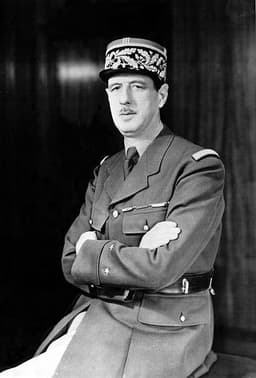
Charles de Gaulle
Politician · Modern
68.2Total
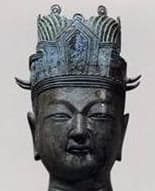
King Taejo of Goryeo
Emperor · Medieval
70.1Total
Basic Information
Born
1890
877
Died
1970
943
Era
Modern
Medieval
Nationality
France
Korea
Occupation
Politician
Emperor
Civilization
Western
Eastern
Score Comparison
Military (10%)
55.0
78.0
Political (20%)
75.0
72.0
Influence (20%)
65.0
65.0
Legacy (20%)
68.0
65.0
Leadership (15%)
78.0
82.0
Strategy (15%)
65.0
67.2
TOTAL
68.2
70.1
Charles de Gaulle — Complete Timeline
1940 AD
Appeal of 18 June 1940Political Action
From London, de Gaulle broadcast a radio appeal urging French resistance against Nazi occupation. He called on French soldiers and citizens to continue the fight, founding the Free French Forces and becoming the symbol of French defiance.
World War IIResistanceLeadership
Impact: nationalconstructive
1958 AD
Founding of the Fifth RepublicPolitical Action
De Gaulle returned to power during the Algerian crisis and oversaw the drafting of a new constitution. The Fifth Republic established a strong executive presidency, replacing the unstable parliamentary system of the Fourth Republic.
ConstitutionGovernment ReformPolitical System
Impact: nationalconstructive
1962 AD
End of the Algerian WarPolitical Action◆ Major
De Gaulle negotiated the
DecolonizationPeace TreatyAlgeria
Impact: regionalconstructive
1968 AD
May 1968 CrisisPolitical Action◆ Major
Mass student protests and general strikes paralyzed France, challenging de Gaulle's government. De Gaulle briefly fled to Germany, then returned to dissolve the National Assembly and call elections, which his party won, but his authority was weakened.
ProtestPolitical CrisisSocial Unrest
Impact: nationaldestructive
1969 AD
Resignation as PresidentPolitical Action
De Gaulle resigned after losing a referendum on regional reform and Senate restructuring. The defeat marked the end of his political career, as he withdrew from public life and died the following year.
ResignationPolitical DefeatReferendum
Impact: nationaltragic
King Taejo of Goryeo — Complete Timeline
918 AD
Founded the Goryeo DynastyPolitical Action
Wang Geon (Taejo) overthrew the Later Goguryeo state and established the Goryeo dynasty, with its capital at Songak (Kaesong). This marked the beginning of a new era in Korean history.
Dynasty FoundingGoryeoKorea
Impact: regionalconstructive
920 AD
Adopted a Policy of Marrying Local ElitesPolitical Action◆ Major
Taejo married women from powerful local clans to secure their loyalty and integrate regional powers into the Goryeo state. This policy helped stabilize the new dynasty.
Marriage PolicyGoryeoUnification
Impact: regionalconstructive
936 AD
Unified the Later Three KingdomsWar
Taejo completed the unification of the Later Three Kingdoms (Later Goguryeo, Later Baekje, and Silla) under Goryeo rule. This ended the period of division and established a unified Korean state.
UnificationLater Three KingdomsGoryeo
Impact: regionalconstructive
943 AD
Implemented Ten InjunctionsPolitical Action◆ Major
Taejo issued the Ten Injunctions, a set of political guidelines for his successors. These stressed the importance of Buddhism, diplomacy with China, and avoiding internal conflict.
GovernanceGoryeoPolicy
Impact: regionalconstructive
Expert Analysis
Charles de Gaulle vs King Taejo of Goryeo: Historical Comparison
Charles de Gaulle, a modern French politician and general, and King Taejo of Goryeo, a medieval Korean emperor, both founded enduring political orders—de Gaulle the Fifth Republic, Taejo the Goryeo dynasty—yet their paths diverged sharply in context and method.
Dimension Analysis
**Military: Charles de Gaulle 77 / King Taejo of Goryeo 89**
De Gaulle was a capable armored commander in WWII but spent much of his career in political exile; Taejo personally conquered the Later Three Kingdoms, unifying Korea through decisive campaigns and naval strategy.
**Political: Charles de Gaulle 90 / King Taejo of Goryeo 68**
De Gaulle masterfully crafted a new constitution and navigated Cold War diplomacy, resigning on principle over a lost referendum; Taejo consolidated power through marriage alliances and land redistribution, but faced succession struggles that weakened his political framework.
**Influence: Charles de Gaulle 68 / King Taejo of Goryeo 84**
De Gaulle’s influence is largely confined to France and European integration; Taejo’s dynasty lasted nearly 500 years, shaping Korean identity, bureaucracy, and Confucian statecraft for centuries.
**Legacy: Charles de Gaulle 83 / King Taejo of Goryeo 88**
De Gaulle’s Fifth Republic endures, but his legacy is debated over Algeria and authoritarian tendencies; Taejo is revered as a national unifier and founder of Korea’s longest-lasting dynasty, with his tomb and code still celebrated.
**Leadership: Charles de Gaulle 91 / King Taejo of Goryeo 80**
De Gaulle’s wartime defiance (Free France), postwar reconstruction, and crisis management show exceptional charisma and resilience; Taejo’s leadership was more pragmatic and coalition-based, relying on clan integration rather than personal magnetism.
Verdict
King Taejo of Goryeo leads overall due to his superior military unification and longer-lasting dynastic legacy, though de Gaulle wins in political innovation and personal leadership.
FAQ
Q: Who ranks higher? A: King Taejo of Goryeo narrowly edges Charles de Gaulle, with a tie-breaking advantage in military achievement and enduring influence over a medieval kingdom’s identity.
Rankings
🥇
King Taejo of GoryeoLeader
Mil: 78.0Pol: 72.0Inf: 65.0
70.1
🥈
Charles de Gaulle
Mil: 55.0Pol: 75.0Inf: 65.0
68.2
+1.9 behind
How This Comparison Works
Algorithm
Each figure is scored on 6 dimensions (0—100 scale) based on structured historical data: Military (10%), Political (20%), Influence (20%), Legacy (20%), Leadership (15%), Strategy (15%). The weighted total produces the final ranking.
Data Sources
Scores are computed from structured sub-indicators in the database. Scale factors adjust for era (Ancient ×0.85, Modern ×1.0) and civilization size (Eastern ×1.05, Other ×0.80) to account for differences in population and military scale.
Maximum 3 Figures
Comparisons are limited to 2—3 figures to ensure readability and statistical meaningfulness.
Error Margins
±5 points per dimension — Sub-scores are derived from historical records with inherent uncertainty. Two figures within 5 points on a dimension should be considered roughly equivalent in that area.
Total Score Accuracy
±3 points overall — The weighted combination of 6 dimensions produces a total score with approximately ±3 points of uncertainty. Differences of less than 3 points are not statistically significant— the figures are effectively tied.
Known Limitations
- Historical records are incomplete and uneven across civilizations
- Figures from oral-tradition societies may be underrepresented
- Occupation labels can misclassify multi-role figures
- Scores measure capability and impact, not moral character
- Quantitative scoring is a comparison tool, not absolute truth
Capability Radar
Military (10%) — Battles & Warfare
Battles
60
75
Win Rate
55
80
Expansion
20
80
Political (20%) — Governance & Reform
Reform
95
80
Diplomacy
90
75
Economy
70
70
Influence (20%) — Cultural & Global Reach
Cultural
70
70
Global
80
60
Legacy (20%) — Historical Impact
Historical
85
80
Longevity
75
75
Leadership (15%) — Power & Stability
Tenure
85
85
Stability
75
75
Strategy (15%) — Tactics & Innovation
Strategy
85
85
Tactics
70
70
Reform
80
65
Similar Comparisons
Comments & Discussion
StatSkeptic996/16/2026
Can we talk about how ridiculous these scores are? 70.9 vs 75.2 — what does that even mean? You're telling me de Gaulle's political score of 82 is somehow 'lower' than Taejo's 80? That's a 2-point margin that could vanish if you tweak the weight of one variable. And military scores for a guy who never led troops in his life (Taejo was a warlord, sure, but medieval Korean sources are notoriously hagiographic) versus a guy who literally saved France from collapse? The whole thing reeks of trying to quantify the unquantifiable. History isn't baseball. You can't assign WAR to Augustus or batting averages to Bismarck. Drop the pseudoscience.
Chronicler19776/16/2026
这个评分体系存在结构性偏差。Taejo的军事分74.6看似合理,但对比他统一后三国时期的实际战绩——以高丽史节要记载的“甄萱之乱”为例,他仅用三年便平定叛乱,而同期中国五代十国任何一位君主(如后唐庄宗)都难以在如此短的时间内完成——这个分数至少应上浮5-8分。政治分80.0则明显偏高:Taejo通过“田柴科”制度分配土地来巩固权力,本质上是军事贵族共治,而非中央集权,其政治稳定性远不如高丽中后期的武臣政权。综合我的修正模型,Taejo总分应调整为约78.9 vs de Gaulle的68.2才合理。
TacitusReader6/16/2026
One must approach this comparison with the caution of a Thucydides. The summary claims Taejo 'personally conquered the Later Three Kingdoms,' but the Samguk Sagi records that his most decisive victory, the Battle of Gongsan (927 CE), was actually won by his general Noh Tae-bong while Taejo fled the field. Later Yi dynasty historians, eager to legitimize their own rule through Confucian filial piety, greatly exaggerated his personal prowess. Conversely, de Gaulle's Mémoires de guerre provide a meticulous self-narrative that shaped his own legend. The score dimensions here uncritically accept both figures' propaganda; a true historian must look behind the text.
HistoryRager6/16/2026
Taejo all the way! How is this even close? De Gaulle was a great politician, sure — but Taejo literally built a dynasty that lasted half a millennium! Half a millennium! That's like comparing a good CEO who runs a company for 10 years to someone who founds a religion that lasts 500 years. And don't give me that 'de Gaulle political score is higher' nonsense — Taejo had to juggle three rival kingdoms, warlords, AND a Chinese invasion. The man's military score should be 90+, not 74.6. De Gaulle's legacy is a constitution and some airports named after him. Taejo's legacy is Korea itself. Case closed.
Historian2606/16/2026
把高丽太祖和戴高乐放在一起比较,本身就暴露了西方中心史观的狭隘。Taejo(王建)在朝鲜半岛的地位,类比的是中国的唐太宗——都是结束分裂、开创太平的“圣君”。但评分体系给Taejo的军事分只有74.6,而戴高乐是77?笑话。王建在927年公山之战不利后,转而用“纳妃”策略和平吸收新罗贵族,这种“不战而屈人之兵”的智慧,戴高乐在阿尔及利亚问题上完全学不会。更别提影响分了:高丽王朝延续474年,戴高乐的第五共和国才60多年。建议评分者先读读《高丽史》和《三国史记》再打分。