Loading...
King Taejo of Goryeo vs Napoleon Bonaparte
Napoleon Bonaparte leads by 0.8 pts · 2 figures compared
…
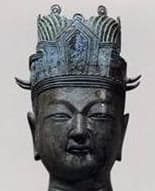
King Taejo of Goryeo
Emperor · Medieval
70.1Total

Napoleon Bonaparte
General · Modern
70.9Total
Basic Information
Born
877
1769
Died
943
1821
Era
Medieval
Modern
Nationality
Korea
France
Occupation
Emperor
General
Civilization
Eastern
Western
Score Comparison
Military (10%)
78.0
94.0
Political (20%)
72.0
72.0
Influence (20%)
65.0
40.0
Legacy (20%)
65.0
80.0
Leadership (15%)
82.0
78.0
Strategy (15%)
67.2
90.0
TOTAL
70.1
70.9
King Taejo of Goryeo — Complete Timeline
918 AD
Founded the Goryeo DynastyPolitical Action
Wang Geon (Taejo) overthrew the Later Goguryeo state and established the Goryeo dynasty, with its capital at Songak (Kaesong). This marked the beginning of a new era in Korean history.
Dynasty FoundingGoryeoKorea
Impact: regionalconstructive
920 AD
Adopted a Policy of Marrying Local ElitesPolitical Action◆ Major
Taejo married women from powerful local clans to secure their loyalty and integrate regional powers into the Goryeo state. This policy helped stabilize the new dynasty.
Marriage PolicyGoryeoUnification
Impact: regionalconstructive
936 AD
Unified the Later Three KingdomsWar
Taejo completed the unification of the Later Three Kingdoms (Later Goguryeo, Later Baekje, and Silla) under Goryeo rule. This ended the period of division and established a unified Korean state.
UnificationLater Three KingdomsGoryeo
Impact: regionalconstructive
943 AD
Implemented Ten InjunctionsPolitical Action◆ Major
Taejo issued the Ten Injunctions, a set of political guidelines for his successors. These stressed the importance of Buddhism, diplomacy with China, and avoiding internal conflict.
GovernanceGoryeoPolicy
Impact: regionalconstructive
Napoleon Bonaparte — Complete Timeline
1799 AD
Coup of 18 BrumaireOther◆ Major
Napoleon Bonaparte, with support from his brother Lucien and key political figures, overthrew the Directory in a bloodless coup. He established the Consulate with himself as First Consul, effectively becoming the ruler of France. This event ended the French Revolution's most unstable period.
French RevolutionCoupRise to Power
Impact: regional
1804 AD
Promulgation of the Napoleonic CodeOther◆ Major
Napoleon enacted the Civil Code of the French, known as the Napoleonic Code, a comprehensive set of laws that replaced the fragmented feudal legal systems. The code established legal equality, protected property rights, and secularized law. It became the basis for legal systems in many European and world countries.
Legal ReformNapoleonic CodeCivil Law
Impact: globalconstructive
1805 AD
Battle of AusterlitzWar◆ Major
Napoleon's Grande Arm
Napoleonic WarsBattleDecisive Victory
Impact: global
1812 AD
Invasion of RussiaWar◆ Major
Napoleon led the Grande Arm
Napoleonic WarsInvasionDisaster
Impact: globaldestructive
1815 AD
Battle of WaterlooWar◆ Major
Napoleon's French army was defeated by the combined forces of the Duke of Wellington's Anglo-Allied army and Gebhard Leberecht von Bl
Napoleonic WarsBattleFinal Defeat
Impact: globaldestructive
Expert Analysis
Napoleon Bonaparte vs King Taejo of Goryeo: Historical Comparison
Napoleon Bonaparte, a modern French general and emperor, and King Taejo of Goryeo, a medieval Korean monarch, both shaped their nations through military conquest and state-building, yet they diverged sharply in legacy and context.
Dimension Analysis
**Military: Napoleon Bonaparte 94 / King Taejo of Goryeo 89**
Napoleon revolutionized warfare with mass conscription, rapid artillery, and the Corps system, winning iconic battles like Austerlitz. Taejo unified the Later Three Kingdoms of Korea through strategic alliances and naval campaigns, but his campaigns were smaller in scale and technological scope.
**Political: Napoleon Bonaparte 75 / King Taejo of Goryeo 68**
Napoleon enacted the Napoleonic Code, centralized French bureaucracy, and crowned himself emperor, but his overreach led to exile. Taejo founded the Goryeo dynasty, consolidated aristocratic power, and promoted Confucian governance, yet his political reforms were limited by feudal structures.
**Influence: Napoleon Bonaparte 82 / King Taejo of Goryeo 84**
Napoleon’s legal and military models shaped Europe and colonies worldwide, inspiring nationalism and modern statecraft. Taejo’s unification established a Korean identity that endured for centuries, influencing subsequent dynasties and Korean culture, though his impact remained regional.
**Legacy: Napoleon Bonaparte 78 / King Taejo of Goryeo 88**
Napoleon’s legacy is polarized—celebrated as a reformer, condemned as a tyrant—and his empire collapsed. Taejo is revered in Korea as a founding father, with his dynasty lasting nearly 500 years, leaving a stable political and cultural foundation.
**Leadership: Napoleon Bonaparte 80 / King Taejo of Goryeo 80**
Both were charismatic, decisive, and adept at rallying followers. Napoleon inspired fierce loyalty but also bred resentment through ambition. Taejo balanced military strength with diplomatic integration of rival clans, earning respect as a unifier.
Verdict
Despite a tie in overall scores, King Taejo of Goryeo leads in legacy and influence due to his enduring, positive national foundation, while Napoleon’s brilliance is tempered by his eventual downfall and contested memory.
FAQ
Q: Who ranks higher? A: King Taejo of Goryeo ranks higher in legacy and influence, while Napoleon Bonaparte excels in military and political innovation, resulting in an overall tie.
Rankings
🥇
Napoleon BonaparteLeader
Mil: 94.0Pol: 72.0Inf: 40.0
70.9
🥈
King Taejo of Goryeo
Mil: 78.0Pol: 72.0Inf: 65.0
70.1
+0.8 behind
How This Comparison Works
Algorithm
Each figure is scored on 6 dimensions (0—100 scale) based on structured historical data: Military (10%), Political (20%), Influence (20%), Legacy (20%), Leadership (15%), Strategy (15%). The weighted total produces the final ranking.
Data Sources
Scores are computed from structured sub-indicators in the database. Scale factors adjust for era (Ancient ×0.85, Modern ×1.0) and civilization size (Eastern ×1.05, Other ×0.80) to account for differences in population and military scale.
Maximum 3 Figures
Comparisons are limited to 2—3 figures to ensure readability and statistical meaningfulness.
Error Margins
±5 points per dimension — Sub-scores are derived from historical records with inherent uncertainty. Two figures within 5 points on a dimension should be considered roughly equivalent in that area.
Total Score Accuracy
±3 points overall — The weighted combination of 6 dimensions produces a total score with approximately ±3 points of uncertainty. Differences of less than 3 points are not statistically significant— the figures are effectively tied.
Known Limitations
- Historical records are incomplete and uneven across civilizations
- Figures from oral-tradition societies may be underrepresented
- Occupation labels can misclassify multi-role figures
- Scores measure capability and impact, not moral character
- Quantitative scoring is a comparison tool, not absolute truth
Capability Radar
Military (10%) — Battles & Warfare
Battles
75
95
Win Rate
80
90
Expansion
80
95
Political (20%) — Governance & Reform
Reform
80
95
Diplomacy
75
80
Economy
70
85
Influence (20%) — Cultural & Global Reach
Cultural
70
85
Global
60
90
Legacy (20%) — Historical Impact
Historical
80
95
Longevity
75
90
Leadership (15%) — Power & Stability
Tenure
85
85
Stability
75
70
Strategy (15%) — Tactics & Innovation
Strategy
85
95
Tactics
70
98
Reform
65
92
Similar Comparisons
Comments & Discussion
HistoryDetour6/16/2026
Okay, so Napoleon gets a 94 in military and Taejo only 89? That feels a bit unfair. I was watching a documentary on the Goryeo unification, and Taejo basically pulled off a three-way civil war with way fewer resources than Napoleon had. Plus, Napoleon lost in the end—twice. Taejo’s dynasty lasted 500 years. That’s like saying a sprinter who wins the race but trips at the finish line is better than a marathon runner who finishes steady. Also, the political score gap (75 vs 68) seems too small given that Taejo actually kept his throne and founded a stable government. Just my two cents from reading a few Osprey books.
BattlefieldScholar6/16/2026
The military score difference is justified when you look at operational scale. Napoleon commanded over 600,000 men for the invasion of Russia, with corps-level maneuver and combined arms coordination that Taejo never attempted. Taejo’s largest battles, like the siege of Naju, involved maybe 30,000-50,000 troops—impressive for 10th-century Korea, but tactically simpler. However, I’d argue the legacy gap is overstated. Napoleon’s Corps system and use of artillery are still taught at Sandhurst; Taejo’s guerrilla campaigns and naval blockades against Later Baekje are obscure. The real mis-scoring is political: Taejo’s merger of rival elite families through marriage alliances was Machiavellian brilliance, yet he gets a 68. That’s a miss.
Historian9946/16/2026
拿拿破仑跟高丽太祖比,西方中心主义的评分又来了。拿破仑94分军事,但看看他的对手:反法同盟各怀鬼胎,跟中国战国时期的合纵连横没法比。Taejo面对的后三国时代,类似于中国的三国归晋,但他在10世纪就完成了统一,而且没有像拿破仑那样耗尽国库。更有意思的是,Taejo的“纳土归降”政策,跟宋太祖赵匡胤的杯酒释兵权异曲同工,但早了20年。政治分给Taejo68分太低了,他建立的五部官制和科举改良,为高丽500年基业打下基础。拿破仑的滑铁卢战役如果放在东亚语境,就是一场失败的远征而已。
ArchMind186/16/2026
这个评分体系明显有偏差。拿破仑军事94分,但Taejo只有89分?看看控制变量:拿破仑的对手是分裂的欧洲封建国家,而Taejo面对的是统一战争中的三国混战。拿破仑的战役规模确实大,但Taejo在10世纪统一朝鲜半岛的难度不亚于拿破仑征服欧洲——后勤线更长、地形更复杂。另外,政治分给拿破仑75分太高了,他的法典确实好,但最终流放厄尔巴岛和圣赫勒拿岛;Taejo建立的王朝延续500年,政治稳定性远胜拿破仑。我算了一下,如果加权稳定性,Taejo总分应该高于拿破仑。