Loading...
Christian II of Denmark vs Toghrul Beg
Toghrul Beg leads by 17.3 pts · 2 figures compared
…
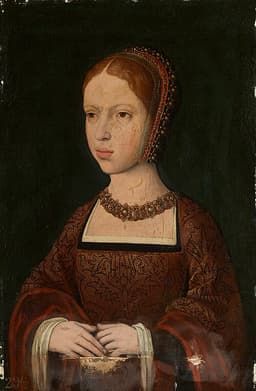
Christian II of Denmark
Emperor · Medieval
54.1Total
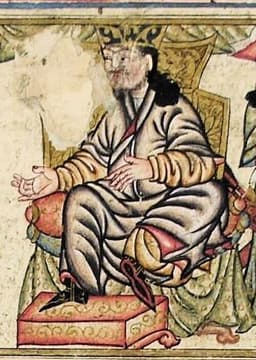
Toghrul Beg
Emperor · Medieval
71.4Total
Basic Information
Born
1481
990
Died
1559
1063
Era
Medieval
Medieval
Nationality
Denmark
Seljuk Empire
Occupation
Emperor
Emperor
Civilization
Western
Middle Eastern
Score Comparison
Military (10%)
45.0
78.5
Political (20%)
68.0
70.0
Influence (20%)
54.9
65.0
Legacy (20%)
45.8
72.0
Leadership (15%)
65.7
79.8
Strategy (15%)
43.3
68.0
TOTAL
54.1
71.4
Christian II of Denmark — Complete Timeline
1520 AD
Stockholm BloodbathPolitical Action
After conquering Sweden, Christian II invited Swedish nobles to a coronation banquet in Stockholm, then arrested and executed about 80-90 people, including bishops and leading figures of the Swedish independence party. This massacre aimed to crush Swedish resistance but instead galvanized opposition.
MassacreSwedish IndependenceUnion of Kalmar
Impact: regionaldestructive
1523 AD
Deposition and exilePolitical Action◆ Major
Following the Stockholm Bloodbath, a Swedish rebellion led by Gustav Vasa succeeded in driving out Danish forces. Christian II was deposed in Denmark by his uncle Frederick I, who took the throne. Christian fled to the Netherlands, seeking support from his brother-in-law, Emperor Charles V.
DepositionExileUnion of Kalmar Collapse
Impact: regionaltragic
1526 AD
Introduction of the Reformation in DenmarkReform◆ Major
During his reign, Christian II showed early support for Lutheran ideas, inviting reformers and translating the New Testament into Danish. Though his deposition interrupted this, his actions laid groundwork for the official Reformation under his successor, Christian III.
ReformationLutheranismReligious Change
Impact: regionalprogressive
1531 AD
Attempted reconquest of NorwayWar◆ Major
Christian II launched a military expedition from the Netherlands to reclaim his thrones, landing in Norway. He failed to gain sufficient support and was captured by his rival, Frederick I. He was imprisoned for the rest of his life, first at S
Military CampaignImprisonmentFailed Restoration
Impact: regionaltragic
Toghrul Beg — Complete Timeline
1040 AD
Battle of DandanaqanWar
Toghrul Beg led the Seljuk Turks to victory over the Ghaznavid Empire at Dandanaqan in Khorasan. This defeat forced the Ghaznavids to retreat eastward, granting the Seljuks control of Khorasan and establishing their power base in Persia.
Seljuk ExpansionGhaznavid DefeatKhorasan
Impact: regional
1054 AD
Campaign against the Byzantine EmpireWar◆ Major
Toghrul Beg launched a major raid into Byzantine Anatolia, reaching as far as the city of Manzikert. Although he did not capture the city, the campaign demonstrated Seljuk military strength and foreshadowed future conflicts that would lead to the Battle of Manzikert in 1071.
Byzantine-Seljuk WarsAnatoliaManzikert
Impact: regional
1055 AD
Conquest of BaghdadWar
Toghrul Beg entered Baghdad at the invitation of the Abbasid Caliph al-Qa'im, who sought protection from the Buyid dynasty. Toghrul deposed the Buyid ruler, married the caliph's daughter, and was granted the title 'Sultan', becoming the de facto ruler of the Islamic world.
BaghdadAbbasid CaliphateSultanate
Impact: global
1058 AD
Suppression of the Rebellion of Ibrahim InalWar◆ Major
Toghrul's half-brother Ibrahim Inal rebelled against his authority, allying with the Fatimid Caliphate. Toghrul defeated and executed Ibrahim Inal, consolidating his power and eliminating a major internal threat to Seljuk unity.
Civil WarInternal ConflictIbrahim Inal
Impact: nationaldestructive
Expert Analysis
Origins
Christian II of Denmark was born in 1481 to King John of Denmark and Christina of Saxony. Educated in the traditions of the Kalmar Union, he grew up amid tensions between the Danish nobility and the Swedish separatists. His early years were marked by exposure to the political intrigues of Scandinavia and the emerging ideas of the Reformation.
Toghrul Beg was born around 990 into the Seljuk clan of the Oghuz Turks. His grandfather, Seljuk, had converted to Islam and established a power base in the region of Jand. Toghrul and his brother Chaghri Beg led their nomadic warriors into Khorasan, seeking to expand their influence against the Ghaznavid Empire. His early life was shaped by tribal warfare and the desire to establish a stable state.
Rise to Power
Christian II ascended to the thrones of Denmark and Norway in 1513, and later conquered Sweden in 1520. His rise was facilitated by his father's death and his own ambitious policies. A turning point was the Stockholm Bloodbath in 1520, where he invited Swedish nobles to a coronation banquet and executed around 80-90 people, including bishops, to eliminate opposition. This act, however, provoked a Swedish rebellion led by Gustav Vasa, who expelled Danish forces and became king of an independent Sweden in 1523. Christian II was then deposed in Denmark as well, fleeing to the Netherlands.
Toghrul Beg's rise began with the Battle of Dandanaqan in 1040, where the Seljuks defeated the Ghaznavid Empire. This victory opened Khorasan to Seljuk control. By 1055, Toghrul entered Baghdad at the invitation of the Abbasid Caliph al-Qa'im, who sought protection from the Buyid dynasty. Toghrul deposed the Buyids and was recognized as Sultan, effectively founding the Seljuk Empire. His political score of 70.0 reflects his ability to secure legitimacy from the caliphate while expanding military control.
Leadership & Governance
Christian II's leadership style was authoritarian and reformist. He supported Lutheran ideas, inviting reformers such as Hans Tausen and translating the New Testament into Danish, which scored him 65.7 in leadership. However, his reliance on force and his bloody suppression of the Swedish nobility alienated allies. His governance was marked by centralization efforts but ultimately failed due to lack of noble support. He scored 43.3 in strategy, reflecting his poor handling of the Swedish rebellion.
Toghrul Beg combined military prowess with diplomatic acumen. He maintained the authority of the Abbasid Caliphate while integrating Persian administrative practices. He suppressed the rebellion of his half-brother Ibrahim Inal, who allied with the Fatimids, demonstrating his strategic skill (score 68.0). His governance established a Sunni Islamic state that balanced Turkic military traditions with Persian bureaucracy, earning him a political score of 70.0.
Triumph & Tragedy
Christian II's greatest triumph was the introduction of the Reformation in Denmark, which laid the groundwork for the Lutheran state church. His tragedy was the Stockholm Bloodbath and subsequent deposition; he died in 1559 in prison after failed attempts to reclaim his throne. His military score of 45.0 reflects his inability to sustain conquests.
Toghrul Beg's triumph was the conquest of Baghdad and the founding of the Seljuk Empire, which controlled much of the Middle East. His tragedy was the internal rebellion of Ibrahim Inal and his failure to decisively expand into Byzantine Anatolia, though his campaigns paved the way for later victories. He died in 1063, leaving a stable empire to his successors.
Character & Destiny
Christian II was determined and reform-minded but ruthless and tactically flawed. His decision to massacre Swedish nobles alienated his subjects and led to his downfall. His character combined visionary religious reform with political shortsightedness, which shaped his fate as a deposed and imprisoned king.
Toghrul Beg was a pragmatic leader who balanced military conquest with political legitimacy. He subordinated his ambitions to the caliphate's authority, which ensured his acceptance. His patient strategy and ability to suppress internal dissent allowed him to build a lasting empire. His character was marked by discipline and a clear vision of state-building.
Legacy
Christian II's legacy is mixed: he is remembered for the Stockholm Bloodbath, but his reforms contributed to the Danish Reformation. His influence score of 54.9 reflects his limited long-term impact, as his dynasty continued without him. The Danish Lutheran Church ultimately became a state institution after his deposition.
Toghrul Beg's legacy is foundational: he created the Seljuk Empire, which influenced the Islamic world for centuries. His military score of 78.5 and legacy score of 72.0 reflect his role in shaping medieval Islamic history. The Seljuk Empire revived Sunni power, countered Shia influence, and set the stage for the Crusades.
Conclusion
Toghrul Beg had a greater impact than Christian II, as reflected by his higher total score of 71.4 versus 54.1. While Christian II's Reformation efforts were significant, his reign was short and ended in failure. Toghrul Beg founded a dynasty that dominated the Middle East for generations, altering the balance of power in the Islamic world and beyond. His military, political, and strategic achievements far outweigh Christian II's contested and fleeting rule.
Rankings
🥇
Toghrul BegLeader
Mil: 78.5Pol: 70.0Inf: 65.0
71.4
🥈
Christian II of Denmark
Mil: 45.0Pol: 68.0Inf: 54.9
54.1
+17.3 behind
How This Comparison Works
Algorithm
Each figure is scored on 6 dimensions (0—100 scale) based on structured historical data: Military (10%), Political (20%), Influence (20%), Legacy (20%), Leadership (15%), Strategy (15%). The weighted total produces the final ranking.
Data Sources
Scores are computed from structured sub-indicators in the database. Scale factors adjust for era (Ancient ×0.85, Modern ×1.0) and civilization size (Eastern ×1.05, Other ×0.80) to account for differences in population and military scale.
Maximum 3 Figures
Comparisons are limited to 2—3 figures to ensure readability and statistical meaningfulness.
Error Margins
±5 points per dimension — Sub-scores are derived from historical records with inherent uncertainty. Two figures within 5 points on a dimension should be considered roughly equivalent in that area.
Total Score Accuracy
±3 points overall — The weighted combination of 6 dimensions produces a total score with approximately ±3 points of uncertainty. Differences of less than 3 points are not statistically significant— the figures are effectively tied.
Known Limitations
- Historical records are incomplete and uneven across civilizations
- Figures from oral-tradition societies may be underrepresented
- Occupation labels can misclassify multi-role figures
- Scores measure capability and impact, not moral character
- Quantitative scoring is a comparison tool, not absolute truth
Capability Radar
Military (10%) — Battles & Warfare
Battles
30
85
Win Rate
25
90
Expansion
30
90
Political (20%) — Governance & Reform
Reform
55
75
Diplomacy
30
85
Economy
40
70
Influence (20%) — Cultural & Global Reach
Cultural
40
65
Global
30
75
Legacy (20%) — Historical Impact
Historical
50
80
Longevity
35
70
Leadership (15%) — Power & Stability
Tenure
45
80
Stability
20
70
Strategy (15%) — Tactics & Innovation
Strategy
35
85
Tactics
30
80
Reform
40
75
Similar Comparisons
Comments & Discussion
No comments yet. Be the first to share your thoughts!