Loading...
Bilge Qaghan vs Toghrul Beg
Toghrul Beg leads by 5.9 pts · 2 figures compared
…
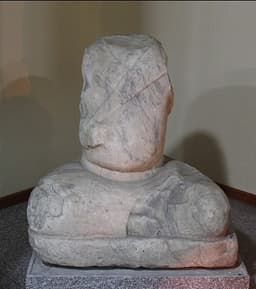
Bilge Qaghan
Emperor · Medieval
65.5Total
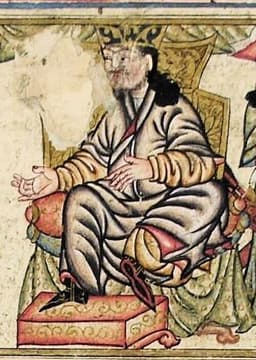
Toghrul Beg
Emperor · Medieval
71.4Total
Basic Information
Born
683
990
Died
734
1063
Era
Medieval
Medieval
Nationality
Gokturk Khaganate
Seljuk Empire
Occupation
Emperor
Emperor
Civilization
Eastern
Middle Eastern
Score Comparison
Military (10%)
78.0
78.5
Political (20%)
70.0
70.0
Influence (20%)
62.0
65.0
Legacy (20%)
56.0
72.0
Leadership (15%)
72.0
79.8
Strategy (15%)
69.1
68.0
TOTAL
65.5
71.4
Bilge Qaghan — Complete Timeline
716 AD
Restoration of the Eastern Turkic KhaganatePolitical Action◆ Major
After the Eastern Turkic Khaganate was destroyed by the Tang dynasty in 630, Bilge Qaghan, with the help of his brother Kul Tigin and vizier Tonyukuk, revived the khaganate. He defeated the Tang and their allies, re-establishing Turkic independence.
RestorationTurkic Revival
Impact: regionalconstructive
717 AD
Battle of the Irtysh RiverWar◆ Major
Bilge Qaghan led a campaign against the Tang and their Turkic allies, defeating them at the Irtysh River. This victory secured the khaganate's western borders and demonstrated the military prowess of the revived Turkic state.
BattleTang-Turkic War
Impact: regionaldestructive
727 AD
Peace treaty with the Tang dynastyPolitical Action◆ Major
Bilge Qaghan negotiated a peace treaty with the Tang dynasty, ending decades of conflict. The treaty established the borders between the two empires and allowed for trade and diplomatic exchanges, bringing stability to the region.
TreatyPeace
Impact: regionalconstructive
732 AD
Construction of the Orkhon inscriptionsCultural◆ Major
Bilge Qaghan commissioned the Orkhon inscriptions, monumental stelae inscribed with runic Turkic script. These inscriptions, written by Tonyukuk and later by Bilge's son, recorded the history and achievements of the Turkic Khaganate, providing a key source for Turkic history.
InscriptionsCultural Heritage
Impact: regionalconstructive
734 AD
Assassination of Bilge QaghanPolitical Action◆ Major
Bilge Qaghan was poisoned by a minister, possibly on the orders of the Tang court. His death led to a period of instability and decline for the Eastern Turkic Khaganate, which eventually fell to the Uyghurs in 744.
AssassinationDecline
Impact: regionaltragic
Toghrul Beg — Complete Timeline
1040 AD
Battle of DandanaqanWar
Toghrul Beg led the Seljuk Turks to victory over the Ghaznavid Empire at Dandanaqan in Khorasan. This defeat forced the Ghaznavids to retreat eastward, granting the Seljuks control of Khorasan and establishing their power base in Persia.
Seljuk ExpansionGhaznavid DefeatKhorasan
Impact: regional
1054 AD
Campaign against the Byzantine EmpireWar◆ Major
Toghrul Beg launched a major raid into Byzantine Anatolia, reaching as far as the city of Manzikert. Although he did not capture the city, the campaign demonstrated Seljuk military strength and foreshadowed future conflicts that would lead to the Battle of Manzikert in 1071.
Byzantine-Seljuk WarsAnatoliaManzikert
Impact: regional
1055 AD
Conquest of BaghdadWar
Toghrul Beg entered Baghdad at the invitation of the Abbasid Caliph al-Qa'im, who sought protection from the Buyid dynasty. Toghrul deposed the Buyid ruler, married the caliph's daughter, and was granted the title 'Sultan', becoming the de facto ruler of the Islamic world.
BaghdadAbbasid CaliphateSultanate
Impact: global
1058 AD
Suppression of the Rebellion of Ibrahim InalWar◆ Major
Toghrul's half-brother Ibrahim Inal rebelled against his authority, allying with the Fatimid Caliphate. Toghrul defeated and executed Ibrahim Inal, consolidating his power and eliminating a major internal threat to Seljuk unity.
Civil WarInternal ConflictIbrahim Inal
Impact: nationaldestructive
Expert Analysis
Origins
Bilge Qaghan (born 683 AD) was a prince of the Ashina clan, the ruling dynasty of the Eastern Turkic Khaganate. His early life was shaped by the Tang dynasty's domination of the steppes after the khaganate's collapse in 630. He was educated by the sage Tonyukuk, who instilled in him a vision of Turkic unity. Toghrul Beg (born 990 AD) was a chieftain of the Seljuk tribe, part of the Oghuz Turkic confederation. The Seljuks had migrated from the steppes to the borders of the Islamic world, and Toghrul grew up amid the power struggles between the Ghaznavids, Buyids, and Abbasid Caliphate. Both emerged from nomadic backgrounds but faced different geopolitical contexts.
Rise to Power
Bilge Qaghan rose to power after the Eastern Turkic Khaganate was re-established by his father, Ilterish Qaghan, in 682. Ilterish died in 694, and Bilge's brother Kapaghan ruled until 716. Bilge then assumed the throne, but faced internal opposition. He consolidated power by eliminating rivals, aided by his brother Kul Tigin and vizier Tonyukuk. His key turning point was the Battle of the Irtysh River (711? or 718?), where he defeated a Tang-led coalition, securing the khaganate's western borders. Toghrul Beg's rise began in the 1030s when he and his brother Chagri Beg expanded Seljuk influence in Khorasan. The decisive event was the Battle of Dandanaqan (1040), where they defeated the Ghaznavid Sultan Mas'ud I. This victory gave them control of Khorasan and allowed Toghrul to proclaim himself sultan. He then marched westward, entering Baghdad in 1055 at the invitation of the Abbasid Caliph al-Qa'im, who granted him the title of sultan.
Leadership & Governance
Bilge Qaghan ruled as a traditional steppe khagan, relying on tribal councils and military leaders. He implemented reforms to centralize authority, such as appointing trusted officials like Tonyukuk as vizier. He also commissioned the Orkhon inscriptions, which promoted a unified Turkic identity and recorded his achievements. His governance focused on stability and diplomacy, culminating in a peace treaty with the Tang dynasty (c. 721) that fixed borders and reduced conflict. Toghrul Beg, by contrast, established a more complex imperial structure, integrating Islamic institutions. He adopted the title of sultan and ruled through a combination of military force and religious legitimacy from the Abbasid Caliph. He suppressed the Buyid dynasty and created a centralized administration with Persian bureaucrats. Toghrul's leadership style was more hierarchical, reflecting the influence of Persian and Islamic governance models.
Triumph & Tragedy
Bilge Qaghan's greatest triumph was restoring the Eastern Turkic Khaganate to a position of power, defeating Tang forces, and securing a favorable peace treaty. He also fostered cultural legacy through the Orkhon inscriptions, which are a key source on Turkic history. His tragedy was his assassination in 734, poisoned by a minister possibly on Tang orders, leading to the khaganate's rapid decline. Toghrul Beg's triumph was founding the Great Seljuk Empire, which stretched from Central Asia to Anatolia, and gaining control of Baghdad as protector of the Abbasid Caliphate. His tragedy was the rebellion of his half-brother Ibrahim Inal (1058-1059), which he suppressed but which weakened his health and prestige. Toghrul died childless in 1063, leading to a succession crisis.
Character & Destiny
Bilge Qaghan was pragmatic and cautious, relying on his advisors Tonyukuk and Kul Tigin. He valued diplomacy over war, as shown by his peace treaty with Tang. However, his trust in others may have led to his assassination. Toghrul Beg was ambitious and decisive, as seen in his swift campaigns and political maneuvers. He skillfully used religious legitimacy to bolster his rule. But his lack of an heir created instability after his death. Both faced challenges from internal rivals, but Toghrul's destiny was to build a lasting empire, while Bilge's was to revive a khaganate that soon collapsed.
Legacy
Bilge Qaghan's legacy is primarily cultural: the Orkhon inscriptions are the earliest known Turkic texts, crucial for understanding Turkic history and language. His political achievements, however, were short-lived; the khaganate disintegrated after his death. His overall score is 65.5, with military 78.0 and legacy 56.0. Toghrul Beg's legacy is more substantial: he founded the Seljuk Empire, which dominated the Middle East for centuries, influenced Islamic political structures, and paved the way for later Turkic empires like the Ottomans. His total score is 71.4, with military 78.5 and legacy 72.0. The 5.9-point gap reflects Toghrul's greater enduring impact.
Conclusion
Toghrul Beg had a greater historical impact than Bilge Qaghan. While Bilge revived a khaganate and left a cultural monument, his empire did not outlast him. Toghrul, scoring 71.4 to Bilge's 65.5, founded a dynasty that reshaped the Islamic world and set the stage for centuries of Turkic rule. His conquest of Baghdad and establishment of the Seljuk sultanate had lasting political and religious consequences. Bilge's achievements, though significant, were more localized and ephemeral. Therefore, Toghrul Beg emerges as the more influential figure in medieval Eurasian history.
Rankings
🥇
Toghrul BegLeader
Mil: 78.5Pol: 70.0Inf: 65.0
71.4
🥈
Bilge Qaghan
Mil: 78.0Pol: 70.0Inf: 62.0
65.5
+5.9 behind
How This Comparison Works
Algorithm
Each figure is scored on 6 dimensions (0—100 scale) based on structured historical data: Military (10%), Political (20%), Influence (20%), Legacy (20%), Leadership (15%), Strategy (15%). The weighted total produces the final ranking.
Data Sources
Scores are computed from structured sub-indicators in the database. Scale factors adjust for era (Ancient ×0.85, Modern ×1.0) and civilization size (Eastern ×1.05, Other ×0.80) to account for differences in population and military scale.
Maximum 3 Figures
Comparisons are limited to 2—3 figures to ensure readability and statistical meaningfulness.
Error Margins
±5 points per dimension — Sub-scores are derived from historical records with inherent uncertainty. Two figures within 5 points on a dimension should be considered roughly equivalent in that area.
Total Score Accuracy
±3 points overall — The weighted combination of 6 dimensions produces a total score with approximately ±3 points of uncertainty. Differences of less than 3 points are not statistically significant— the figures are effectively tied.
Known Limitations
- Historical records are incomplete and uneven across civilizations
- Figures from oral-tradition societies may be underrepresented
- Occupation labels can misclassify multi-role figures
- Scores measure capability and impact, not moral character
- Quantitative scoring is a comparison tool, not absolute truth
Capability Radar
Military (10%) — Battles & Warfare
Battles
75
85
Win Rate
80
90
Expansion
80
90
Political (20%) — Governance & Reform
Reform
85
75
Diplomacy
75
85
Economy
70
70
Influence (20%) — Cultural & Global Reach
Cultural
60
65
Global
50
75
Legacy (20%) — Historical Impact
Historical
65
80
Longevity
55
70
Leadership (15%) — Power & Stability
Tenure
70
80
Stability
75
70
Strategy (15%) — Tactics & Innovation
Strategy
75
85
Tactics
70
80
Reform
85
75
Similar Comparisons
Comments & Discussion
No comments yet. Be the first to share your thoughts!