Loading...
Cnut the Great vs Muhammad I Tapar
Cnut the Great leads by 10.8 pts · 2 figures compared
…

Cnut the Great
Emperor · Medieval
63.5Total
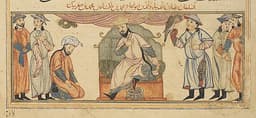
Muhammad I Tapar
Emperor · Medieval
52.7Total
Basic Information
Born
990
1082
Died
1035
1118
Era
Medieval
Medieval
Nationality
Denmark
Seljuk Empire
Occupation
Emperor
Emperor
Civilization
Western
Middle Eastern
Score Comparison
Military (10%)
76.0
47.5
Political (20%)
70.0
68.0
Influence (20%)
55.0
57.2
Legacy (20%)
52.0
45.8
Leadership (15%)
79.8
40.0
Strategy (15%)
66.3
60.0
TOTAL
63.5
52.7
Cnut the Great — Complete Timeline
1016 AD
Conquest of EnglandWar◆ Major
After defeating Edmund Ironside at Assandun and Edmund's death, Cnut became sole king of England. He divided the kingdom into four earldoms: Wessex, Mercia, Northumbria, and East Anglia.
ConquestVikingEngland
Impact: regional
1019 AD
Accession to Danish ThronePolitical Action◆ Major
Cnut succeeded his brother Harald II as king of Denmark. He now ruled both England and Denmark, creating a North Sea empire.
SuccessionEmpireDenmark
Impact: regionalconstructive
1027 AD
Pilgrimage to RomeCultural
Cnut traveled to Rome for the coronation of Holy Roman Emperor Conrad II. He secured agreements for reduced tolls for English pilgrims and merchants traveling through Europe.
PilgrimageDiplomacyTrade
Impact: regionalconstructive
1028 AD
Conquest of NorwayWar◆ Major
Cnut invaded Norway and defeated King Olaf Haraldsson at the Battle of Stiklestad. Olaf was killed, and Cnut added Norway to his domains, becoming ruler of a North Sea empire.
ConquestVikingNorway
Impact: regional
1035 AD
Death of Cnut the GreatPolitical Action◆ Major
Cnut died at Shaftesbury in Dorset on November 12, 1035. His death led to the disintegration of his North Sea empire, with his sons Harold Harefoot and Harthacnut contesting the English throne.
DeathEmpire CollapseSuccession Crisis
Impact: regionaltragic
Muhammad I Tapar — Complete Timeline
1099 AD
Rebellion against BarkiyaruqWar◆ Major
Muhammad I Tapar rebelled against his half-brother Sultan Barkiyaruq, claiming the sultanate with support from the Abbasid Caliph al-Mustazhir. This began a prolonged civil war that divided the Seljuk Empire.
Civil WarBarkiyaruqAbbasid Caliph
Impact: regionaldestructive
1100 AD
Capture of IsfahanWar◆ Major
Muhammad I Tapar's forces captured the city of Isfahan, the Seljuk capital, from Barkiyaruq's control. This victory strengthened his position and forced Barkiyaruq to retreat to western Persia.
IsfahanCivil WarCapital
Impact: national
1104 AD
Treaty with BarkiyaruqPolitical Action◆ Major
Muhammad I Tapar agreed to a partition treaty with Barkiyaruq, dividing the Seljuk Empire. Muhammad gained control over the eastern provinces, including Khorasan and Transoxiana, while Barkiyaruq retained the title of sultan and western domains.
TreatyPartitionCivil War
Impact: regional
1105 AD
Accession as Sole SultanPolitical Action
Following Barkiyaruq's death, Muhammad I Tapar became the sole sultan of the Seljuk Empire. He reunified the empire and began campaigns to restore Seljuk authority in the west, including against the Crusader states.
ReunificationSultanCrusades
Impact: regionalconstructive
1110 AD
Campaign against the Crusader StatesWar◆ Major
Muhammad I Tapar launched a major military campaign against the Crusader states in Syria, besieging the city of Edessa. Although he failed to capture the city, the campaign demonstrated renewed Seljuk military power and pressured the Crusaders.
CrusadesEdessaSyria
Impact: regional
1118 AD
Death of Muhammad I TaparPolitical Action◆ Major
Muhammad I Tapar died in Isfahan, possibly from illness. His death led to another succession crisis, with his son Mahmud II claiming the sultanate but facing challenges from his uncle Ahmad Sanjar, who eventually became the dominant Seljuk ruler.
DeathSuccession CrisisAhmad Sanjar
Impact: regionaltragic
Expert Analysis
Origins
Cnut the Great was born around 995 in Denmark, the son of King Sweyn Forkbeard. He was raised in a Viking warrior tradition, learning warfare and governance from a young age. His father's conquest of England in 1013 exposed Cnut to the complexities of ruling a multi-ethnic realm. In contrast, Muhammad I Tapar was born in 1082 in the Seljuk Empire, the son of Sultan Malik Shah I. His upbringing was shaped by court politics and the influence of his mother, a Seljuk princess. The empire was already fractured by succession disputes, and Muhammad grew up amid civil wars between his half-brothers.
Rise to Power
Cnut's rise began after his father's death in 1014. He was initially rejected by the English, but returned with a Danish fleet in 1015. After a series of battles, including the Battle of Assandun in 1016, he defeated Edmund Ironside. Edmund's death later that year left Cnut as sole king of England, at age 21. Muhammad I Tapar's path was more contested. He rebelled against his half-brother Sultan Barkiyaruq in 1099, claiming the sultanate with support from the Abbasid Caliph. After years of conflict, a treaty in 1104 divided the empire, giving Muhammad control over the east. Barkiyaruq's death in 1105 made Muhammad the sole sultan, but he had to fight to reassert authority.
Leadership & Governance
Cnut's leadership scored 79.8, reflecting his ability to integrate conquered territories. He divided England into four earldoms, retaining Wessex under his direct rule. He married Emma of Normandy, linking his line to Anglo-Saxon royalty, and issued laws that blended Danish and English customs. His pilgrimage to Rome in 1027 secured trade concessions for English merchants. Muhammad I Tapar's political score of 68.0 indicates competent but less transformative governance. He restored central authority after the civil wars, appointing loyal governors and patronizing Sunni orthodoxy to counter Shia influence. However, his reign was marked by ongoing conflicts with the Crusader states and internal revolts.
Triumph & Tragedy
Cnut's greatest triumph was the creation of the North Sea Empire, ruling England, Denmark, Norway, and parts of Sweden. His score of 76.0 in military reflects his successful campaigns. However, his empire disintegrated within a decade of his death in 1035, due to succession disputes among his sons. Muhammad I Tapar's major success was reunifying the Seljuk Empire after years of fragmentation. He captured Isfahan in 1100 and campaigned against the Crusaders, besieging Edessa in 1111. Yet his military score of 47.5 indicates limited battlefield success; he failed to take Edessa and lost territory to the Franks. His death in 1118 led to renewed civil wars.
Character & Destiny
Cnut was pragmatic and ruthless, but also diplomatic. He famously demonstrated his humility by failing to command the tide, a story that underscores his political acumen. His leadership score of 79.8 suggests he was decisive and effective. Muhammad I Tapar, with a leadership score of 40.0, was more reactive. He struggled to maintain control over his fractious family and faced constant rebellions. His reign was a holding action rather than a period of consolidation.
Legacy
Cnut's legacy is mixed: his empire was short-lived, but his reign marked the peak of Viking power and integrated Scandinavia into European Christendom. His legal and administrative reforms influenced later English kings. Muhammad I Tapar's legacy is more modest; he temporarily reunified the Seljuk Empire but failed to halt its decline. His support for Sunni institutions had lasting cultural effects, but his military setbacks against the Crusaders weakened the empire's prestige.
Conclusion
Cnut the Great had a greater impact than Muhammad I Tapar. His total score of 63.5 versus 52.7 reflects his superior military, political, and leadership abilities. While both faced challenges in holding their empires together, Cnut's North Sea Empire represented a unique political entity that influenced Northern European history. Muhammad I Tapar, despite reunifying the Seljuk realm, could not reverse its fragmentation. Cnut's achievements, though ephemeral, were more significant in scale and historical resonance.
Rankings
🥇
Cnut the GreatLeader
Mil: 76.0Pol: 70.0Inf: 55.0
63.5
🥈
Muhammad I Tapar
Mil: 47.5Pol: 68.0Inf: 57.2
52.7
+10.8 behind
How This Comparison Works
Algorithm
Each figure is scored on 6 dimensions (0—100 scale) based on structured historical data: Military (10%), Political (20%), Influence (20%), Legacy (20%), Leadership (15%), Strategy (15%). The weighted total produces the final ranking.
Data Sources
Scores are computed from structured sub-indicators in the database. Scale factors adjust for era (Ancient ×0.85, Modern ×1.0) and civilization size (Eastern ×1.05, Other ×0.80) to account for differences in population and military scale.
Maximum 3 Figures
Comparisons are limited to 2—3 figures to ensure readability and statistical meaningfulness.
Error Margins
±5 points per dimension — Sub-scores are derived from historical records with inherent uncertainty. Two figures within 5 points on a dimension should be considered roughly equivalent in that area.
Total Score Accuracy
±3 points overall — The weighted combination of 6 dimensions produces a total score with approximately ±3 points of uncertainty. Differences of less than 3 points are not statistically significant— the figures are effectively tied.
Known Limitations
- Historical records are incomplete and uneven across civilizations
- Figures from oral-tradition societies may be underrepresented
- Occupation labels can misclassify multi-role figures
- Scores measure capability and impact, not moral character
- Quantitative scoring is a comparison tool, not absolute truth
Capability Radar
Military (10%) — Battles & Warfare
Battles
75
55
Win Rate
80
60
Expansion
85
60
Political (20%) — Governance & Reform
Reform
70
45
Diplomacy
85
50
Economy
75
45
Influence (20%) — Cultural & Global Reach
Cultural
65
30
Global
55
25
Legacy (20%) — Historical Impact
Historical
70
35
Longevity
60
30
Leadership (15%) — Power & Stability
Tenure
80
55
Stability
70
40
Strategy (15%) — Tactics & Innovation
Strategy
85
55
Tactics
70
50
Reform
60
40
Similar Comparisons
Comments & Discussion
No comments yet. Be the first to share your thoughts!