Loading...
Cnut the Great vs Rana Sanga
Cnut the Great leads by 5.8 pts · 2 figures compared
…

Cnut the Great
Emperor · Medieval
63.5Total
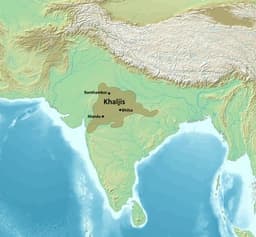
Rana Sanga
Emperor · Medieval
57.7Total
Basic Information
Born
990
1482
Died
1035
1528
Era
Medieval
Medieval
Nationality
Denmark
India
Occupation
Emperor
Emperor
Civilization
Western
Indian
Score Comparison
Military (10%)
76.0
66.0
Political (20%)
70.0
53.8
Influence (20%)
55.0
59.0
Legacy (20%)
52.0
50.0
Leadership (15%)
79.8
66.0
Strategy (15%)
66.3
58.4
TOTAL
63.5
57.7
Cnut the Great — Complete Timeline
1016 AD
Conquest of EnglandWar◆ Major
After defeating Edmund Ironside at Assandun and Edmund's death, Cnut became sole king of England. He divided the kingdom into four earldoms: Wessex, Mercia, Northumbria, and East Anglia.
ConquestVikingEngland
Impact: regional
1019 AD
Accession to Danish ThronePolitical Action◆ Major
Cnut succeeded his brother Harald II as king of Denmark. He now ruled both England and Denmark, creating a North Sea empire.
SuccessionEmpireDenmark
Impact: regionalconstructive
1027 AD
Pilgrimage to RomeCultural
Cnut traveled to Rome for the coronation of Holy Roman Emperor Conrad II. He secured agreements for reduced tolls for English pilgrims and merchants traveling through Europe.
PilgrimageDiplomacyTrade
Impact: regionalconstructive
1028 AD
Conquest of NorwayWar◆ Major
Cnut invaded Norway and defeated King Olaf Haraldsson at the Battle of Stiklestad. Olaf was killed, and Cnut added Norway to his domains, becoming ruler of a North Sea empire.
ConquestVikingNorway
Impact: regional
1035 AD
Death of Cnut the GreatPolitical Action◆ Major
Cnut died at Shaftesbury in Dorset on November 12, 1035. His death led to the disintegration of his North Sea empire, with his sons Harold Harefoot and Harthacnut contesting the English throne.
DeathEmpire CollapseSuccession Crisis
Impact: regionaltragic
Rana Sanga — Complete Timeline
1518 AD
Battle of KhatoliWar◆ Major
Rana Sanga defeated the Lodi Sultan Ibrahim Lodi at the Battle of Khatoli. The victory expanded Mewar's territory and influence. Rana Sanga captured several Lodi officers and gained control of parts of eastern Rajasthan.
VictoryLodi SultanateTerritorial Expansion
Impact: regionalconstructive
1526 AD
Battle of DholpurWar◆ Major
Rana Sanga defeated Babur's forces at the Battle of Dholpur, capturing the fort. This victory encouraged Sanga to challenge Babur directly. It set the stage for the decisive Battle of Khanwa.
VictoryMughal ConflictPrelude to Khanwa
Impact: regionalconstructive
Formation of Rajput confederation against BaburPolitical Action◆ Major
Rana Sanga united several Rajput kingdoms, including Mewar, Marwar, and Amber, to oppose Babur's invasion of India. The confederation aimed to restore Rajput sovereignty. This alliance was the largest Rajput coalition since the medieval period.
AllianceRajput UnityAnti-Mughal
Impact: regionalconstructive
1527 AD
Battle of KhanwaWar
Rana Sanga led a confederation of Rajput clans against Babur at the Battle of Khanwa. The Rajput forces were defeated by Babur's use of artillery and tactics. This battle cemented Mughal power in North India and ended Rajput hopes of restoring their dominance.
Mughal ConquestRajput ConfederacyDefeat
Impact: globaltragic
Expert Analysis
Origins
Cnut the Great, born around 995 CE in Denmark, was the son of King Sweyn Forkbeard. He grew up in a Viking warrior culture, learning seamanship and combat from an early age. His father's conquest of England in 1013 provided Cnut with a model for expansion. In contrast, Rana Sanga, born in 1482 in Mewar, India, was a Rajput prince of the Sisodia clan. His early life was marked by internal Rajput conflicts and the declining Delhi Sultanate. While Cnut inherited a tradition of Scandinavian raiding and kingship, Sanga inherited a legacy of Rajput resistance against Muslim invaders, particularly after the sack of Chittor by Alauddin Khalji in 1303.
Rise to Power
Cnut's rise began with his father's death in 1014. He was declared king by the Danish fleet but faced opposition from the English under Edmund Ironside. After a series of battles, Cnut defeated Edmund at Assandun in 1016, and after Edmund's death, Cnut became sole king of England. He solidified his rule by marrying Emma of Normandy, widow of King Æthelred. In 1018, he succeeded his brother Harald as king of Denmark, and in 1028, he conquered Norway after defeating King Olaf at Stiklestad. Rana Sanga's rise was more gradual. He became ruler of Mewar around 1509 after a period of internal strife. His early victories included defeating the Lodi Sultan Ibrahim Lodi at the Battle of Khatoli (1517), where he captured cannons and expanded Mewar's territory. In 1526, after Babur's victory at Panipat, Sanga united Rajput clans including Marwar and Amber to oppose the Mughal invasion. His confederation scored a victory at Dholpur in 1526, capturing the fort.
Leadership & Governance
Cnut's leadership was pragmatic and diplomatic. He divided England into four earldoms (Wessex, Mercia, Northumbria, East Anglia) to manage local elites. He also undertook a pilgrimage to Rome in 1027, securing reduced tolls for English pilgrims and merchants. His governance score of 70.0 reflects his ability to integrate diverse realms. Rana Sanga's leadership was more militaristic and alliance-based. He forged a Rajput confederation through marriage and kinship ties, but his political score of 53.8 indicates weaker institutional control. Unlike Cnut, who used marriage alliances (e.g., with Normandy), Sanga's confederation was brittle, relying on personal loyalty rather than bureaucratic structures.
Triumph & Tragedy
Cnut's greatest triumph was the creation of the North Sea Empire, uniting England, Denmark, and Norway. He also secured recognition from the Holy Roman Empire and the papacy. However, his empire disintegrated after his death in 1035, as his sons Harold Harefoot and Harthacnut fought over succession. Rana Sanga's greatest success was uniting Rajput clans against Babur and winning at Dholpur. However, his tragedy was the defeat at Khanwa in 1527, where Babur's use of artillery and flanking maneuvers shattered the Rajput confederation. Sanga was wounded and later poisoned by his own nobles, dying in 1528. Cnut's military score of 76.0 and strategy of 66.3 reflect his effective conquests, while Sanga's military score of 66.0 and strategy of 58.4 highlight his battlefield prowess but strategic limitations.
Character & Destiny
Cnut was known for his shrewd diplomacy and piety, as seen in his pilgrimage and gifts to the church. His story of commanding the tide to halt is apocryphal but illustrates his desire to project humility. His character allowed him to rule a multicultural empire without major revolts. Rana Sanga was a warrior-king driven by Rajput honor and resistance to Mughal expansion. His decision to face Babur in open battle at Khanwa, despite Babur's artillery advantage, reflected his martial ethos but also tactical inflexibility. Historical assessments note Sanga's bravery but criticize his inability to adapt to gunpowder warfare. Cnut's leadership score of 79.8 and total of 63.5 exceed Sanga's 66.0 and 57.7, indicating a more effective ruler.
Legacy
Cnut's legacy is the short-lived North Sea Empire, which demonstrated the potential of Scandinavian political unity. He also strengthened the English church and legal system, with his laws drawing on earlier codes. However, his empire's collapse meant his impact was limited. Rana Sanga's legacy is more enduring in Indian history: he is remembered as a symbol of Rajput resistance and unity against Mughal rule. His confederation inspired later rebellions, and his defeat at Khanwa marked the beginning of Mughal dominance in India. Sanga's influence score of 59.0 is slightly higher than Cnut's 55.0, reflecting his cultural resonance.
Conclusion
Cnut the Great achieved greater immediate power, ruling a larger and more stable empire than Sanga. His total score of 63.5 versus Sanga's 57.7 reflects his superior military, political, and leadership skills. However, Sanga's legacy as a unifier of Rajputs against foreign invasion has had a longer cultural impact in India. Yet, by objective measures of governance, conquest, and strategic vision, Cnut stands higher. He built an empire that spanned seas, while Sanga's confederation fell within a year. Thus, Cnut the Great had greater impact in his era, though Sanga's symbolic importance remains significant.
Rankings
🥇
Cnut the GreatLeader
Mil: 76.0Pol: 70.0Inf: 55.0
63.5
🥈
Rana Sanga
Mil: 66.0Pol: 53.8Inf: 59.0
57.7
+5.8 behind
How This Comparison Works
Algorithm
Each figure is scored on 6 dimensions (0—100 scale) based on structured historical data: Military (10%), Political (20%), Influence (20%), Legacy (20%), Leadership (15%), Strategy (15%). The weighted total produces the final ranking.
Data Sources
Scores are computed from structured sub-indicators in the database. Scale factors adjust for era (Ancient ×0.85, Modern ×1.0) and civilization size (Eastern ×1.05, Other ×0.80) to account for differences in population and military scale.
Maximum 3 Figures
Comparisons are limited to 2—3 figures to ensure readability and statistical meaningfulness.
Error Margins
±5 points per dimension — Sub-scores are derived from historical records with inherent uncertainty. Two figures within 5 points on a dimension should be considered roughly equivalent in that area.
Total Score Accuracy
±3 points overall — The weighted combination of 6 dimensions produces a total score with approximately ±3 points of uncertainty. Differences of less than 3 points are not statistically significant— the figures are effectively tied.
Known Limitations
- Historical records are incomplete and uneven across civilizations
- Figures from oral-tradition societies may be underrepresented
- Occupation labels can misclassify multi-role figures
- Scores measure capability and impact, not moral character
- Quantitative scoring is a comparison tool, not absolute truth
Capability Radar
Military (10%) — Battles & Warfare
Battles
75
65
Win Rate
80
60
Expansion
85
68
Political (20%) — Governance & Reform
Reform
70
50
Diplomacy
85
65
Economy
75
45
Influence (20%) — Cultural & Global Reach
Cultural
65
55
Global
55
40
Legacy (20%) — Historical Impact
Historical
70
60
Longevity
60
50
Leadership (15%) — Power & Stability
Tenure
80
60
Stability
70
55
Strategy (15%) — Tactics & Innovation
Strategy
85
72
Tactics
70
70
Reform
60
55
Similar Comparisons
Comments & Discussion
No comments yet. Be the first to share your thoughts!