Loading...
Cnut the Great vs Yekuno Amlak
Cnut the Great leads by 10.2 pts · 2 figures compared
…

Cnut the Great
Emperor · Medieval
63.5Total
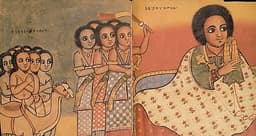
Yekuno Amlak
Emperor · Medieval
53.3Total
Basic Information
Born
990
1240
Died
1035
1285
Era
Medieval
Medieval
Nationality
Denmark
Ethiopia
Occupation
Emperor
Emperor
Civilization
Western
Other
Score Comparison
Military (10%)
76.0
40.0
Political (20%)
70.0
46.6
Influence (20%)
55.0
59.0
Legacy (20%)
52.0
54.0
Leadership (15%)
79.8
64.0
Strategy (15%)
66.3
45.0
TOTAL
63.5
53.3
Cnut the Great — Complete Timeline
1016 AD
Conquest of EnglandWar◆ Major
After defeating Edmund Ironside at Assandun and Edmund's death, Cnut became sole king of England. He divided the kingdom into four earldoms: Wessex, Mercia, Northumbria, and East Anglia.
ConquestVikingEngland
Impact: regional
1019 AD
Accession to Danish ThronePolitical Action◆ Major
Cnut succeeded his brother Harald II as king of Denmark. He now ruled both England and Denmark, creating a North Sea empire.
SuccessionEmpireDenmark
Impact: regionalconstructive
1027 AD
Pilgrimage to RomeCultural
Cnut traveled to Rome for the coronation of Holy Roman Emperor Conrad II. He secured agreements for reduced tolls for English pilgrims and merchants traveling through Europe.
PilgrimageDiplomacyTrade
Impact: regionalconstructive
1028 AD
Conquest of NorwayWar◆ Major
Cnut invaded Norway and defeated King Olaf Haraldsson at the Battle of Stiklestad. Olaf was killed, and Cnut added Norway to his domains, becoming ruler of a North Sea empire.
ConquestVikingNorway
Impact: regional
1035 AD
Death of Cnut the GreatPolitical Action◆ Major
Cnut died at Shaftesbury in Dorset on November 12, 1035. His death led to the disintegration of his North Sea empire, with his sons Harold Harefoot and Harthacnut contesting the English throne.
DeathEmpire CollapseSuccession Crisis
Impact: regionaltragic
Yekuno Amlak — Complete Timeline
1270 AD
Restored the Solomonic dynastyPolitical Action
Yekuno Amlak overthrew the last Zagwe king, Naakueto Laab, and claimed the throne as a descendant of the biblical King Solomon and the Queen of Sheba. This restoration established the Solomonic dynasty that ruled Ethiopia for centuries.
Solomonic restorationDynastic changeEthiopian monarchy
Impact: regionalconstructive
Expert Analysis
Origins
Cnut the Great was born around 995 AD, the son of Sweyn Forkbeard, King of Denmark, and a Polish princess. He grew up in a Viking warrior tradition, raiding and conquering. His early life was shaped by his father's campaigns in England, where Sweyn briefly conquered the English throne in 1013. Cnut's education was practical: seamanship, warfare, and the ruthless politics of Scandinavian kingship.
Yekuno Amlak's origins are more obscure. He was born in the early 13th century in the Amhara region of Ethiopia, claiming descent from the ancient Solomonic line that had ruled Ethiopia until the Zagwe dynasty usurped the throne around 900 AD. His early life is not well documented, but he was likely a provincial nobleman who grew up in the highlands of Lasta, aware of the Zagwe's contested legitimacy.
Rise to Power
Cnut's rise began after his father's death in 1014. The English king Æthelred the Unready returned, and Cnut retreated to Denmark. He regrouped, invaded England again in 1015, and fought a series of campaigns. The turning point was the Battle of Assandun in October 1016, where Cnut defeated Edmund Ironside. After a negotiated division of England, Edmund died in November 1016, and Cnut became sole king. He secured his position by marrying Emma of Normandy, Æthelred's widow, and executing or exiling rivals.
Yekuno Amlak's rise was a rebellion against the Zagwe king Naakueto Laab. Around 1270, Yekuno Amlak gathered support from the Ethiopian Orthodox Church, which favored the Solomonic claim. He defeated Naakueto Laab in battle, likely near the capital of the time. He then was crowned at the ancient capital of Axum, claiming legitimacy through descent from King Solomon and the Queen of Sheba. This restoration of the Solomonic dynasty (scored 40.0 in military, 46.6 in political) was a turning point in Ethiopian history.
Leadership & Governance
Cnut ruled a multi-kingdom empire with a pragmatic approach. He retained English administrative systems, issued laws, and maintained the Danegeld tax. He divided England into four earldoms: Wessex, Mercia, East Anglia, and Northumbria, appointing trusted earls. He also fostered diplomacy with the Holy Roman Empire, attending the coronation of Conrad II in Rome in 1027 and securing reduced tolls for pilgrims. His leadership score of 79.8 reflects his ability to balance Viking and Anglo-Saxon traditions.
Yekuno Amlak focused on legitimizing his dynasty through religion and lineage. He restored the ancient Solomonic claim, which the Ethiopian Church promoted. He likely reorganized the administration, but details are sparse. His political score of 46.6 suggests a less effective governance compared to Cnut. He faced challenges from remaining Zagwe supporters and had to consolidate power in a region with strong local lords.
Triumph & Tragedy
Cnut's greatest triumph was the creation of the North Sea Empire, uniting England, Denmark, Norway, and parts of Sweden. He died in 1035 as the most powerful ruler in Scandinavia and Britain. His tragedy was the empire's collapse after his death; his sons Harold Harefoot and Harthacnut fought, and within a decade, the Danish line ended with Edward the Confessor's return.
Yekuno Amlak's triumph was restoring the Solomonic dynasty, which lasted until 1974. His tragedy is that his reign is poorly documented; he may have faced internal strife. He scored 54.0 in legacy, indicating a lasting impact but limited individual achievements.
Character & Destiny
Cnut was a pragmatic and ruthless ruler. He executed rivals like Earl Uhtred, but also showed mercy to secure loyalty. His famous story of commanding the tide to stop highlights his understanding of power's limits. His character drove him to expand his empire, but his death led to fragmentation.
Yekuno Amlak was a determined restorer of a mythic lineage. His character is less known, but his actions show a focus on religious and dynastic legitimacy. His destiny was to found a dynasty that would become a symbol of Ethiopian identity.
Legacy
Cnut's legacy is mixed. He is remembered as a Viking king who ruled England effectively, but his empire vanished. He influenced English law and administration, but his impact on Scandinavia was limited. His military score of 76.0 and strategy of 66.3 reflect his achievements, but his overall total of 63.5 is moderate.
Yekuno Amlak's legacy is immense for Ethiopia. The Solomonic dynasty he restored became the cornerstone of Ethiopian national identity, referenced in the Kebra Nagast. His influence score of 59.0 and legacy of 54.0 are comparable to Cnut's, but his dynasty lasted centuries. However, his individual achievements are less documented.
Conclusion
Cnut the Great had a greater immediate impact, building a short-lived empire through military and political skill. His total score of 63.5 exceeds Yekuno Amlak's 53.3 by 10.2 points, reflecting stronger leadership and military prowess. However, Yekuno Amlak's restoration of the Solomonic dynasty had a longer-lasting influence on Ethiopian history. In terms of overall historical significance, Cnut's empire was ephemeral, while Yekuno Amlak's dynasty endured for 700 years. Therefore, Yekuno Amlak had greater long-term impact, despite lower scores in individual metrics. The scores reflect personal achievement, not duration of legacy. Thus, while Cnut was a more effective leader in his lifetime, Yekuno Amlak's legacy is more profound.
Rankings
🥇
Cnut the GreatLeader
Mil: 76.0Pol: 70.0Inf: 55.0
63.5
🥈
Yekuno Amlak
Mil: 40.0Pol: 46.6Inf: 59.0
53.3
+10.2 behind
How This Comparison Works
Algorithm
Each figure is scored on 6 dimensions (0—100 scale) based on structured historical data: Military (10%), Political (20%), Influence (20%), Legacy (20%), Leadership (15%), Strategy (15%). The weighted total produces the final ranking.
Data Sources
Scores are computed from structured sub-indicators in the database. Scale factors adjust for era (Ancient ×0.85, Modern ×1.0) and civilization size (Eastern ×1.05, Other ×0.80) to account for differences in population and military scale.
Maximum 3 Figures
Comparisons are limited to 2—3 figures to ensure readability and statistical meaningfulness.
Error Margins
±5 points per dimension — Sub-scores are derived from historical records with inherent uncertainty. Two figures within 5 points on a dimension should be considered roughly equivalent in that area.
Total Score Accuracy
±3 points overall — The weighted combination of 6 dimensions produces a total score with approximately ±3 points of uncertainty. Differences of less than 3 points are not statistically significant— the figures are effectively tied.
Known Limitations
- Historical records are incomplete and uneven across civilizations
- Figures from oral-tradition societies may be underrepresented
- Occupation labels can misclassify multi-role figures
- Scores measure capability and impact, not moral character
- Quantitative scoring is a comparison tool, not absolute truth
Capability Radar
Military (10%) — Battles & Warfare
Battles
75
30
Win Rate
80
40
Expansion
85
40
Political (20%) — Governance & Reform
Reform
70
50
Diplomacy
85
45
Economy
75
35
Influence (20%) — Cultural & Global Reach
Cultural
65
55
Global
55
30
Legacy (20%) — Historical Impact
Historical
70
60
Longevity
60
55
Leadership (15%) — Power & Stability
Tenure
80
55
Stability
70
40
Strategy (15%) — Tactics & Innovation
Strategy
85
35
Tactics
70
30
Reform
60
25
Similar Comparisons
Comments & Discussion
No comments yet. Be the first to share your thoughts!