Loading...
Cnut the Great vs William II Rufus
Cnut the Great leads by 13.7 pts · 2 figures compared
…

Cnut the Great
Emperor · Medieval
63.5Total
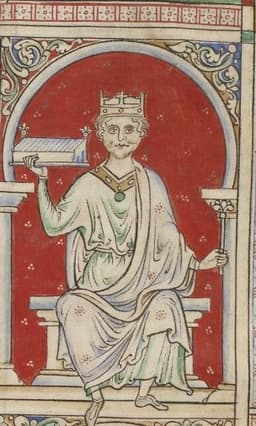
William II Rufus
Emperor · Medieval
49.8Total
Basic Information
Born
990
1056
Died
1035
1100
Era
Medieval
Medieval
Nationality
Denmark
England
Occupation
Emperor
Emperor
Civilization
Western
Western
Score Comparison
Military (10%)
76.0
55.0
Political (20%)
70.0
48.0
Influence (20%)
55.0
50.2
Legacy (20%)
52.0
41.7
Leadership (15%)
79.8
64.0
Strategy (15%)
66.3
45.0
TOTAL
63.5
49.8
Cnut the Great — Complete Timeline
1016 AD
Conquest of EnglandWar◆ Major
After defeating Edmund Ironside at Assandun and Edmund's death, Cnut became sole king of England. He divided the kingdom into four earldoms: Wessex, Mercia, Northumbria, and East Anglia.
ConquestVikingEngland
Impact: regional
1019 AD
Accession to Danish ThronePolitical Action◆ Major
Cnut succeeded his brother Harald II as king of Denmark. He now ruled both England and Denmark, creating a North Sea empire.
SuccessionEmpireDenmark
Impact: regionalconstructive
1027 AD
Pilgrimage to RomeCultural
Cnut traveled to Rome for the coronation of Holy Roman Emperor Conrad II. He secured agreements for reduced tolls for English pilgrims and merchants traveling through Europe.
PilgrimageDiplomacyTrade
Impact: regionalconstructive
1028 AD
Conquest of NorwayWar◆ Major
Cnut invaded Norway and defeated King Olaf Haraldsson at the Battle of Stiklestad. Olaf was killed, and Cnut added Norway to his domains, becoming ruler of a North Sea empire.
ConquestVikingNorway
Impact: regional
1035 AD
Death of Cnut the GreatPolitical Action◆ Major
Cnut died at Shaftesbury in Dorset on November 12, 1035. His death led to the disintegration of his North Sea empire, with his sons Harold Harefoot and Harthacnut contesting the English throne.
DeathEmpire CollapseSuccession Crisis
Impact: regionaltragic
William II Rufus — Complete Timeline
1087 AD
Coronation of William IIPolitical Action◆ Major
William was crowned king of England on September 26, 1087, after the death of his father William the Conqueror. He inherited the English throne while his brother Robert Curthose received Normandy.
CoronationSuccessionNorman Dynasty
Impact: national
1088 AD
Rebellion of 1088War◆ Major
William faced a rebellion led by Norman barons supporting his brother Robert Curthose. William suppressed the revolt by promising reforms and confiscating rebel lands.
RebellionCivil WarBarons
Impact: nationaldestructive
1097 AD
Conflict with Anselm of CanterburyPolitical Action◆ Major
William quarreled with Archbishop Anselm over church revenues and authority. Anselm went into exile in 1097, and William seized the revenues of the archbishopric.
Church-State ConflictExilePower Struggle
Impact: nationaldestructive
1100 AD
Death of William IIPolitical Action◆ Major
William was killed by an arrow while hunting in the New Forest on August 2, 1100. The circumstances were suspicious, and his brother Henry I quickly seized the throne.
DeathHunting AccidentSuccession
Impact: nationaltragic
Expert Analysis
Origins
Cnut the Great was born around 995 AD, the son of Sweyn Forkbeard, King of Denmark, and a Polish princess. He grew up in a Viking tradition of raiding and conquest, learning military tactics and leadership from his father. Cnut's early life was marked by his father's invasion of England in 1013, which briefly dethroned King Æthelred the Unready. After Sweyn's death in 1014, Cnut returned to Denmark to consolidate power before launching his own campaign in England.
William II Rufus was born around 1056, the third son of William the Conqueror and Matilda of Flanders. As a younger son, he was not expected to inherit the throne, but his father's deathbed decision gave him England while his elder brother Robert Curthose received Normandy. William II was raised in the Norman court, trained in knightly skills, and witnessed his father's consolidation of power after the Norman Conquest of 1066.
Rise to Power
Cnut's rise began with his invasion of England in 1015. He fought a series of campaigns against King Edmund Ironside, culminating in the Battle of Assandun in October 1016. After a decisive victory, Cnut and Edmund divided the kingdom, but Edmund's death in November 1016 left Cnut as sole king of England. He secured his position by marrying Emma of Normandy, widow of Æthelred, and executing or exiling potential rivals. By 1018, he had consolidated control and turned his attention to Denmark, where his brother Harald II died in 1018, allowing Cnut to claim the throne. He then invaded Norway in 1028, defeating King Olaf Haraldsson at the Battle of Stiklestad, and added Norway to his realm, creating a North Sea empire.
William II's rise was more straightforward. Upon his father's death on September 9, 1087, William II was crowned king of England on September 26, 1087. However, he faced an immediate rebellion in 1088, led by Norman barons who supported his brother Robert Curthose. William suppressed the revolt by promising reforms and confiscating rebel lands, distributing them to loyal followers. He also faced a rebellion in 1095 led by Robert de Mowbray, Earl of Northumbria, which he crushed. His reign was marked by constant conflict with the church, particularly Archbishop Anselm of Canterbury, whom he exiled in 1097.
Leadership & Governance
Cnut's leadership style was pragmatic and inclusive. He ruled his multi-kingdom empire by delegating authority to trusted earls, such as Godwin in Wessex. He issued law codes that blended Danish and English traditions, maintaining peace and order. He also engaged in diplomacy, making a pilgrimage to Rome in 1027 to attend the coronation of Holy Roman Emperor Conrad II, where he negotiated reduced tolls for English pilgrims and merchants. Cnut's governance scored 70.0 in political acumen, reflecting his ability to manage a diverse realm.
William II's leadership was autocratic and confrontational. He quarreled with the church over revenues and appointments, seizing ecclesiastical assets when sees were vacant. He also faced constant baronial unrest, which he suppressed through force and confiscation. His governance scored 48.0, lower than Cnut's, due to his inability to maintain stable relationships with key power bases. He was known for his harsh rule and heavy taxation to fund wars in Normandy against his brother Robert.
Triumph & Tragedy
Cnut's greatest triumph was the creation of the North Sea empire, uniting England, Denmark, and Norway under a single ruler. He also secured his legacy through his pilgrimage to Rome and his law codes. His tragedy was the fragility of his empire: after his death on November 12, 1035, it disintegrated due to succession disputes among his sons. Cnut scored 76.0 in military, reflecting his successful conquests, but his legacy score of 52.0 indicates the ephemeral nature of his achievements.
William II's triumph was maintaining control of England despite rebellions and conflicts. He successfully defended his throne against his brother Robert and expanded Norman influence in Scotland and Wales. His tragedy was his sudden death in a hunting accident on August 2, 1100, under suspicious circumstances. He left no heir, and his brother Henry I swiftly seized the throne. William's military score of 55.0 and legacy score of 41.7 reflect a reign of conflict but limited lasting impact.
Character & Destiny
Cnut was a strategic and calculating ruler. He understood the importance of legitimacy, marrying Emma of Normandy to link himself to the previous English dynasty. He also famously demonstrated his humility by failing to command the tide, a story that illustrates his political savvy. His decisions shaped his fate: by consolidating power but failing to establish a stable succession, he ensured his empire's collapse. Historians rate his leadership at 79.8, the highest of his scores.
William II was a ruthless and aggressive king, nicknamed 'Rufus' for his red hair. He was known for his greed and conflicts with the church. His character led to constant friction with the nobility and clergy, undermining his authority. His death in the New Forest, possibly an assassination, reflects the instability of his reign. His leadership score of 64.0 is lower than Cnut's, indicating less effective governance.
Legacy
Cnut's legacy is that of a great Viking king who temporarily united Scandinavia and England. He is remembered as a wise ruler who brought peace and prosperity to England. His empire foreshadowed later unions like the Kalmar Union. However, his legacy score of 52.0 is modest because his empire did not endure. He influenced the development of English common law and administration.
William II's legacy is overshadowed by his father and brother. He is often seen as a transitional figure between the Norman Conquest and the reign of Henry I. His conflicts with the church set precedents for later struggles between crown and clergy. His legacy score of 41.7 reflects his limited impact. He is mostly remembered for his mysterious death.
Conclusion
Cnut the Great had a greater impact than William II Rufus. Cnut's total score of 63.5 versus William's 49.8 reflects his superior military, political, and leadership abilities. Cnut built a multi-kingdom empire and maintained peace across it, while William's reign was marked by constant conflict and ended abruptly. Although Cnut's empire did not last, his achievements in uniting England, Denmark, and Norway were unprecedented. William II, by contrast, merely held onto his father's conquest and left no lasting institutions. Cnut's pragmatic and inclusive leadership contrasts with William's autocratic and confrontational style. Therefore, Cnut the Great is the more significant historical figure.
Rankings
🥇
Cnut the GreatLeader
Mil: 76.0Pol: 70.0Inf: 55.0
63.5
🥈
William II Rufus
Mil: 55.0Pol: 48.0Inf: 50.2
49.8
+13.7 behind
How This Comparison Works
Algorithm
Each figure is scored on 6 dimensions (0—100 scale) based on structured historical data: Military (10%), Political (20%), Influence (20%), Legacy (20%), Leadership (15%), Strategy (15%). The weighted total produces the final ranking.
Data Sources
Scores are computed from structured sub-indicators in the database. Scale factors adjust for era (Ancient ×0.85, Modern ×1.0) and civilization size (Eastern ×1.05, Other ×0.80) to account for differences in population and military scale.
Maximum 3 Figures
Comparisons are limited to 2—3 figures to ensure readability and statistical meaningfulness.
Error Margins
±5 points per dimension — Sub-scores are derived from historical records with inherent uncertainty. Two figures within 5 points on a dimension should be considered roughly equivalent in that area.
Total Score Accuracy
±3 points overall — The weighted combination of 6 dimensions produces a total score with approximately ±3 points of uncertainty. Differences of less than 3 points are not statistically significant— the figures are effectively tied.
Known Limitations
- Historical records are incomplete and uneven across civilizations
- Figures from oral-tradition societies may be underrepresented
- Occupation labels can misclassify multi-role figures
- Scores measure capability and impact, not moral character
- Quantitative scoring is a comparison tool, not absolute truth
Capability Radar
Military (10%) — Battles & Warfare
Battles
75
35
Win Rate
80
40
Expansion
85
30
Political (20%) — Governance & Reform
Reform
70
40
Diplomacy
85
45
Economy
75
50
Influence (20%) — Cultural & Global Reach
Cultural
65
25
Global
55
15
Legacy (20%) — Historical Impact
Historical
70
30
Longevity
60
20
Leadership (15%) — Power & Stability
Tenure
80
55
Stability
70
40
Strategy (15%) — Tactics & Innovation
Strategy
85
35
Tactics
70
30
Reform
60
20
Similar Comparisons
Comments & Discussion
No comments yet. Be the first to share your thoughts!