Loading...
Confucius vs Socrates
Socrates leads by 0.5 pts · 2 figures compared
…
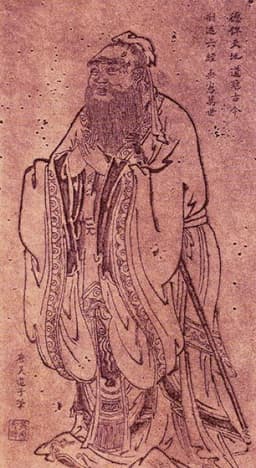
Confucius
Philosopher · Ancient
61.4Total
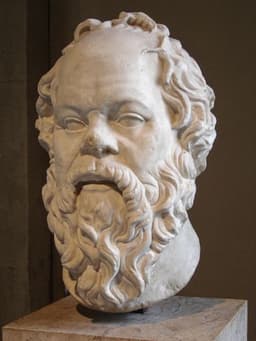
Socrates
Philosopher · Ancient
61.9Total
Basic Information
Born
-551
-470
Died
-479
-399
Era
Ancient
Ancient
Nationality
China
Greece
Occupation
Philosopher
Philosopher
Civilization
Eastern
Western
Score Comparison
Military (10%)
8.7
8.8
Political (20%)
35.1
35.0
Influence (20%)
95.0
88.0
Legacy (20%)
87.0
87.0
Leadership (15%)
35.4
51.7
Strategy (15%)
44.3
42.8
TOTAL
61.4
61.9
Confucius — Complete Timeline
501 BC
Appointment as Minister of Crime in LuPolitical Action
Confucius served as Minister of Crime in the state of Lu, where he implemented reforms to improve public order and justice. His tenure was short-lived due to political opposition, but it demonstrated his practical application of Confucian principles.
GovernmentReformLu
constructive
500 BC
Teaching Career in LuCultural
Confucius traveled through the state of Lu, teaching a group of disciples about ethics, ritual, and governance. He compiled and edited classical texts, including the Five Classics, and developed his philosophy centered on ren (benevolence) and li (ritual propriety).
TeachingPhilosophyConfucianism
Impact: globalconstructive
497 BC
Exile and Travels through Warring StatesPolitical Action◆ Major
After falling out of favor in Lu, Confucius went into voluntary exile, traveling to various states including Wei, Song, and Chen. He sought a ruler who would adopt his teachings, but was largely unsuccessful, spending 14 years wandering.
ExileTravelPhilosophy
Impact: regional
481 BC
Compilation of the Spring and Autumn AnnalsCultural◆ Major
Confucius is traditionally credited with compiling the Spring and Autumn Annals, a historical chronicle of the state of Lu. This work became a foundational text for Confucian historiography, emphasizing moral judgment in historical recording.
HistoriographyClassicsConfucianism
Impact: globalconstructive
479 BC
Death and Posthumous InfluenceCultural
Confucius died in Qufu, Lu, at age 72. His disciples compiled his teachings into the Analects, which later became the core text of Confucianism. Over centuries, his philosophy became the dominant ethical and political system in East Asia.
DeathLegacyConfucianism
Impact: globalconstructive
Socrates — Complete Timeline
432 BC
Service in the Peloponnesian WarWar
Socrates served as a hoplite (heavy infantryman) in the Athenian army during the Peloponnesian War. He fought in the battles of Potidaea, Delium, and Amphipolis, where he was noted for his bravery and endurance, saving the life of Alcibiades at Potidaea.
Military ServiceWarBravery
430 BC
Development of the Socratic MethodCultural◆ Major
Socrates developed a method of inquiry through questioning, known as the Socratic method. He engaged Athenians in dialogues to expose contradictions in their beliefs and stimulate critical thinking. This method became a cornerstone of Western philosophy and education.
PhilosophyMethodDialectic
Impact: globalprogressive
404 BC
Refusal to Obey the Thirty TyrantsPolitical Action
During the reign of the Thirty Tyrants, Socrates was ordered to arrest Leon of Salamis for execution. He refused, risking his own life, because he considered the order unjust. This act demonstrated his commitment to moral principles over political authority.
Civil DisobedienceMoralityTyranny
constructive
399 BC
Trial and Execution of SocratesPolitical Action
Socrates was tried by an Athenian jury on charges of impiety and corrupting the youth. He was found guilty and sentenced to death by drinking hemlock. His refusal to escape and calm acceptance of death became a foundational example of philosophical integrity.
TrialDeathPhilosophy
Impact: globaltragic
Expert Analysis
Origins
Confucius (551–479 BCE) was born in the state of Lu (modern-day Qufu, China) during the Zhou dynasty's decline. His father died when he was three, leaving his family in poverty. Despite humble beginnings, Confucius educated himself in ritual, music, and history, later claiming he "studied without satiety and taught without growing weary." He married at 19 and worked as a granary keeper and livestock manager before opening a private school.
Socrates (c. 470–399 BCE) was born in Athens, Greece, to Sophroniscus, a sculptor, and Phaenarete, a midwife. He received a basic Athenian education in gymnastics, music, and grammar. He worked as a stonemason before becoming a philosopher. He married Xanthippe, with whom he had three sons. Unlike Confucius, Socrates left no writings; his life is known through Plato and Xenophon.
Rise to Power
Confucius rose to prominence as a teacher and advisor in Lu. In his early 30s, he traveled to the Zhou capital to study ritual, gaining recognition. Around 501 BCE, he was appointed Minister of Crime in Lu, where he implemented reforms to improve justice and public order. His tenure was short-lived; political rivals forced him into exile in 497 BCE. He then wandered through various states (Wei, Song, Chen) for 13 years, seeking a ruler who would adopt his ethical governance principles. He returned to Lu at age 67, focusing on teaching and editing classical texts.
Socrates never held political office but became famous through his dialectical method. He served as a hoplite in the Peloponnesian War, fighting at Potidaea (432 BCE), Delium (424 BCE), and Amphipolis (422 BCE). His philosophical activity began in his 30s, questioning Athenians about virtue, justice, and knowledge. He attracted young followers, including Plato, but also earned enemies. In 399 BCE, he was tried for impiety and corrupting the youth, convicted, and executed by drinking hemlock.
Leadership & Governance
Confucius advocated for governance through moral example and ritual propriety. He argued that rulers should cultivate virtue (ren) and maintain proper relationships (li). He famously said, "If you govern the people by laws and keep them in line by punishments, they will avoid punishment but have no sense of shame. If you govern them by virtue and keep them in line by ritual, they will have a sense of shame and will be orderly." His ideal was a meritocratic bureaucracy where officials were selected by ability, not birth.
Socrates viewed governance critically. He questioned democratic decisions and refused to obey the Thirty Tyrants' order to arrest Leon of Salamis, risking execution. He argued that knowledge leads to virtue and that good governance requires wisdom, not popular opinion. He never held power but influenced political thought through his students, including Plato, who wrote The Republic.
Triumph & Tragedy
Confucius's greatest success was the creation of a comprehensive ethical system that shaped East Asian civilization. His teachings were compiled in the Analects, which became central to Chinese education and civil service examinations for over 2,000 years. However, his political failure was profound: he never achieved a high-ranking position to implement his reforms. He died believing his teachings had failed, saying, "No intelligent ruler arises to take me as his master."
Socrates's triumph was his unwavering commitment to truth and his method of critical inquiry, which laid the foundation for Western philosophy. His trial and death became a symbol of intellectual integrity. His tragedy was his execution by a democratic state, highlighting the tension between philosophy and politics. He left no writings, so his ideas survive only through others, risking distortion.
Character & Destiny
Confucius was disciplined, optimistic, and pragmatic. He believed in human perfectibility through education and ritual. His character of resilience (13 years of exile) and dedication to teaching shaped his legacy. Socrates was ironic, relentless, and confrontational. His divine sign (daimonion) and refusal to compromise led to his death. Both chose integrity over safety: Confucius accepted failure; Socrates accepted execution.
Legacy
Confucius's influence is immense: his ideas on filial piety, social harmony, and meritocracy permeate China, Japan, Korea, and Vietnam. The civil service exam system (keju) lasted until 1905. His total score of 71.1 reflects high influence (95.0) and legacy (81.5). Socrates's legacy is equally profound but different: he initiated the tradition of critical philosophy, influencing Plato, Aristotle, and subsequent Western thought. His method is used in law, education, and ethics. His scores: influence 87.8, legacy 94.4.
Conclusion
Confucius achieved greater practical impact on governance and social structures across East Asia for millennia, reflected in his higher total score (71.1 vs. 60.3). Socrates's influence is more philosophical and methodological, shaping Western intellectual history. While Socrates scored higher in legacy (94.4 vs. 81.5), Confucius's comprehensive system of ethics and governance directly shaped the world's most populous region. Therefore, Confucius had greater historical and societal impact, but Socrates's contribution to critical thought is no less valuable.
Rankings
🥇
SocratesLeader
Mil: 8.8Pol: 35.0Inf: 88.0
61.9
🥈
Confucius
Mil: 8.7Pol: 35.1Inf: 95.0
61.4
+0.5 behind
How This Comparison Works
Algorithm
Each figure is scored on 6 dimensions (0—100 scale) based on structured historical data: Military (10%), Political (20%), Influence (20%), Legacy (20%), Leadership (15%), Strategy (15%). The weighted total produces the final ranking.
Data Sources
Scores are computed from structured sub-indicators in the database. Scale factors adjust for era (Ancient ×0.85, Modern ×1.0) and civilization size (Eastern ×1.05, Other ×0.80) to account for differences in population and military scale.
Maximum 3 Figures
Comparisons are limited to 2—3 figures to ensure readability and statistical meaningfulness.
Error Margins
±5 points per dimension — Sub-scores are derived from historical records with inherent uncertainty. Two figures within 5 points on a dimension should be considered roughly equivalent in that area.
Total Score Accuracy
±3 points overall — The weighted combination of 6 dimensions produces a total score with approximately ±3 points of uncertainty. Differences of less than 3 points are not statistically significant— the figures are effectively tied.
Known Limitations
- Historical records are incomplete and uneven across civilizations
- Figures from oral-tradition societies may be underrepresented
- Occupation labels can misclassify multi-role figures
- Scores measure capability and impact, not moral character
- Quantitative scoring is a comparison tool, not absolute truth
Capability Radar
Military (10%) — Battles & Warfare
Battles
15
16
Win Rate
15
14
Expansion
19
22
Political (20%) — Governance & Reform
Reform
85
0
Diplomacy
70
10
Economy
40
0
Influence (20%) — Cultural & Global Reach
Cultural
95
95
Global
90
90
Legacy (20%) — Historical Impact
Historical
95
95
Longevity
95
95
Leadership (15%) — Power & Stability
Tenure
20
0
Stability
75
0
Strategy (15%) — Tactics & Innovation
Strategy
22
24
Tactics
28
25
Reform
31
27
Similar Comparisons
Comments & Discussion
No comments yet. Be the first to share your thoughts!