Loading...
This comparison has not been analyzed yet.
One-time AI generation (~1 minute). Scores and timeline are already available below.
Conrad II vs Krishna I of Rashtrakuta
Conrad II leads by 10.2 pts · 2 figures compared
…
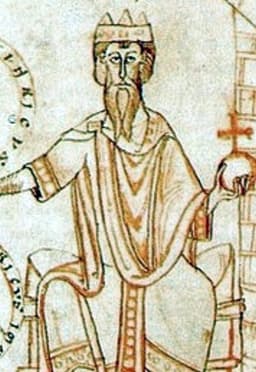
Conrad II
Emperor · Medieval
58.8Total
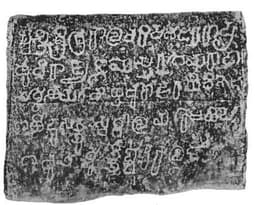
Krishna I of Rashtrakuta
Emperor · Medieval
48.6Total
Basic Information
Born
990
756
Died
1039
774
Era
Medieval
Medieval
Nationality
Holy Roman Empire
India
Occupation
Emperor
Emperor
Civilization
Western
Indian
Score Comparison
Military (10%)
47.5
10.0
Political (20%)
72.0
42.3
Influence (20%)
55.7
56.7
Legacy (20%)
50.0
52.0
Leadership (15%)
72.0
64.0
Strategy (15%)
60.0
45.0
TOTAL
58.8
48.6
Conrad II — Complete Timeline
1024 AD
Election as King of GermanyPolitical Action◆ Major
Following the death of Henry II without heirs, Conrad II was elected King of Germany in 1024, becoming the first ruler of the Salian dynasty. His election ended the Ottonian line and established a new royal house.
SuccessionSalian Dynasty
Impact: regional
1027 AD
Coronation as Holy Roman EmperorPolitical Action◆ Major
Pope John XIX crowned Conrad II Holy Roman Emperor in Rome on March 26, 1027. The coronation solidified Salian imperial authority and included the participation of kings from Burgundy and Italy.
CoronationImperial Authority
Impact: regionalconstructive
1032 AD
Acquisition of the Kingdom of BurgundyPolitical Action◆ Major
Upon the death of King Rudolf III of Burgundy in 1032, Conrad II claimed the Kingdom of Burgundy through a treaty of succession. He was crowned King of Burgundy in 1033, expanding the Empire's territory into the Rh
Territorial ExpansionBurgundy
Impact: regionalconstructive
1037 AD
Promulgation of the Constitutio de feudisReform◆ Major
Conrad II issued the Constitutio de feudis in 1037, which made fiefs hereditary for lesser nobles in Italy. This legal reform strengthened the position of the lower nobility and stabilized feudal relationships in the kingdom of Italy.
Legal ReformFeudalism
Impact: regionalconstructive
Krishna I of Rashtrakuta — Complete Timeline
760 AD
Commissioned the Kailasa Temple at ElloraCultural◆ Major
Krishna I ordered the construction of the Kailasa Temple (Cave 16) at Ellora, a monolithic rock-cut temple dedicated to Shiva. The temple was carved from a single cliff face, representing a major architectural achievement of the Rashtrakuta dynasty.
ArchitectureHindu TempleEllora Caves
Impact: regionalconstructive
765 AD
Expanded Rashtrakuta territory in the DeccanWar
Krishna I led military campaigns that extended Rashtrakuta control over parts of the Deccan plateau, including areas of present-day Maharashtra and Karnataka. These conquests consolidated the dynasty's power in central India.
Territorial ExpansionDeccan
Impact: regional
770 AD
Defeated the Western ChalukyasWar◆ Major
Krishna I's forces defeated the Western Chalukya king Kirtivarman II, ending Chalukya resistance in the region. This victory solidified Rashtrakuta supremacy in the Deccan for the next century.
Chalukya-Rashtrakuta ConflictDeccan
Impact: regional
This comparison has not been analyzed yet.
One-time AI generation (~1 minute). Scores and timeline are already available below.
Rankings
🥇
Conrad IILeader
Mil: 47.5Pol: 72.0Inf: 55.7
58.8
🥈
Krishna I of Rashtrakuta
Mil: 10.0Pol: 42.3Inf: 56.7
48.6
+10.2 behind
How This Comparison Works
Algorithm
Each figure is scored on 6 dimensions (0—100 scale) based on structured historical data: Military (10%), Political (20%), Influence (20%), Legacy (20%), Leadership (15%), Strategy (15%). The weighted total produces the final ranking.
Data Sources
Scores are computed from structured sub-indicators in the database. Scale factors adjust for era (Ancient ×0.85, Modern ×1.0) and civilization size (Eastern ×1.05, Other ×0.80) to account for differences in population and military scale.
Maximum 3 Figures
Comparisons are limited to 2—3 figures to ensure readability and statistical meaningfulness.
Error Margins
±5 points per dimension — Sub-scores are derived from historical records with inherent uncertainty. Two figures within 5 points on a dimension should be considered roughly equivalent in that area.
Total Score Accuracy
±3 points overall — The weighted combination of 6 dimensions produces a total score with approximately ±3 points of uncertainty. Differences of less than 3 points are not statistically significant— the figures are effectively tied.
Known Limitations
- Historical records are incomplete and uneven across civilizations
- Figures from oral-tradition societies may be underrepresented
- Occupation labels can misclassify multi-role figures
- Scores measure capability and impact, not moral character
- Quantitative scoring is a comparison tool, not absolute truth
Capability Radar
Military (10%) — Battles & Warfare
Battles
45
40
Win Rate
50
40
Expansion
60
40
Political (20%) — Governance & Reform
Reform
65
30
Diplomacy
75
40
Economy
60
45
Influence (20%) — Cultural & Global Reach
Cultural
40
70
Global
35
55
Legacy (20%) — Historical Impact
Historical
55
70
Longevity
50
65
Leadership (15%) — Power & Stability
Tenure
70
50
Stability
70
45
Strategy (15%) — Tactics & Innovation
Strategy
55
35
Tactics
40
35
Reform
30
20
Similar Comparisons
Comments & Discussion
No comments yet. Be the first to share your thoughts!