Loading...
Krishna I of Rashtrakuta vs Napoleon Bonaparte
Napoleon Bonaparte leads by 22.3 pts · 2 figures compared
…
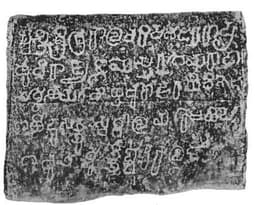
Krishna I of Rashtrakuta
Emperor · Medieval
48.6Total

Napoleon Bonaparte
General · Modern
70.9Total
Basic Information
Born
756
1769
Died
774
1821
Era
Medieval
Modern
Nationality
India
France
Occupation
Emperor
General
Civilization
Indian
Western
Score Comparison
Military (10%)
10.0
94.0
Political (20%)
42.3
72.0
Influence (20%)
56.7
40.0
Legacy (20%)
52.0
80.0
Leadership (15%)
64.0
78.0
Strategy (15%)
45.0
90.0
TOTAL
48.6
70.9
Krishna I of Rashtrakuta — Complete Timeline
760 AD
Commissioned the Kailasa Temple at ElloraCultural◆ Major
Krishna I ordered the construction of the Kailasa Temple (Cave 16) at Ellora, a monolithic rock-cut temple dedicated to Shiva. The temple was carved from a single cliff face, representing a major architectural achievement of the Rashtrakuta dynasty.
ArchitectureHindu TempleEllora Caves
Impact: regionalconstructive
765 AD
Expanded Rashtrakuta territory in the DeccanWar
Krishna I led military campaigns that extended Rashtrakuta control over parts of the Deccan plateau, including areas of present-day Maharashtra and Karnataka. These conquests consolidated the dynasty's power in central India.
Territorial ExpansionDeccan
Impact: regional
770 AD
Defeated the Western ChalukyasWar◆ Major
Krishna I's forces defeated the Western Chalukya king Kirtivarman II, ending Chalukya resistance in the region. This victory solidified Rashtrakuta supremacy in the Deccan for the next century.
Chalukya-Rashtrakuta ConflictDeccan
Impact: regional
Napoleon Bonaparte — Complete Timeline
1799 AD
Coup of 18 BrumaireOther◆ Major
Napoleon Bonaparte, with support from his brother Lucien and key political figures, overthrew the Directory in a bloodless coup. He established the Consulate with himself as First Consul, effectively becoming the ruler of France. This event ended the French Revolution's most unstable period.
French RevolutionCoupRise to Power
Impact: regional
1804 AD
Promulgation of the Napoleonic CodeOther◆ Major
Napoleon enacted the Civil Code of the French, known as the Napoleonic Code, a comprehensive set of laws that replaced the fragmented feudal legal systems. The code established legal equality, protected property rights, and secularized law. It became the basis for legal systems in many European and world countries.
Legal ReformNapoleonic CodeCivil Law
Impact: globalconstructive
1805 AD
Battle of AusterlitzWar◆ Major
Napoleon's Grande Arm
Napoleonic WarsBattleDecisive Victory
Impact: global
1812 AD
Invasion of RussiaWar◆ Major
Napoleon led the Grande Arm
Napoleonic WarsInvasionDisaster
Impact: globaldestructive
1815 AD
Battle of WaterlooWar◆ Major
Napoleon's French army was defeated by the combined forces of the Duke of Wellington's Anglo-Allied army and Gebhard Leberecht von Bl
Napoleonic WarsBattleFinal Defeat
Impact: globaldestructive
Expert Analysis
krishna-i-of-rashtrakuta-vs-napoleon-bonaparte
# The Emperor and the Temple Builder
On a June morning in 1815, Napoleon Bonaparte watched his Imperial Guard advance across the muddy fields of Waterloo, their blue coats dark with rain. He had staked everything on this final gamble. Six hundred miles away, on a different continent and a thousand years earlier, Krishna I of the Rashtrakuta dynasty stood before a sheer basalt cliff in the Deccan plateau, ordering his workers to carve an entire temple from living rock. These two men—one the architect of modern Europe, the other the patron of one of India's greatest architectural wonders—shared the title of emperor, yet their paths could not have diverged more dramatically. Why did one man’s empire rise and fall in a blaze of cannon fire, while another’s monument endures in stone?
Origins
Napoleon was born in 1769 on the island of Corsica, a territory only recently acquired by France. His family belonged to the minor nobility, but they were neither wealthy nor powerful. The young Bonaparte grew up speaking Italian-accented French, an outsider in a nation that would one day worship him. His era was one of revolution and chaos—the old order of kings and aristocrats was collapsing, and opportunity lay in the hands of those bold enough to seize it.
Krishna I, by contrast, emerged from a warrior lineage that had already established itself in the Deccan. He ascended to the throne of the Rashtrakuta dynasty in 756 AD, inheriting a kingdom that stretched across what is now Maharashtra and Karnataka. His world was one of stable hierarchies, where power came from birthright and from the patronage of gods and temples. There were no revolutions in eighth-century India, only the slow rhythms of conquest and consolidation.
Rise to Power
Napoleon’s ascent was meteoric, propelled by the French Revolution’s disruption of traditional military hierarchy. By 1795, at age twenty-six, he had already suppressed a royalist uprising in Paris. His Italian campaign of 1796-1797 made him a national hero, and his Egyptian expedition of 1798 cemented his reputation as a commander who could think beyond conventional warfare. In 1799, he seized power in a coup d’état, becoming First Consul of France at just thirty years old. His rise was not inevitable—it was the product of timing, ambition, and a ruthless willingness to break rules.
Krishna I’s path was quieter but no less significant. He inherited the throne in 756 AD, likely through dynastic succession. His early reign focused on consolidating Rashtrakuta power in the Deccan, a region contested by rival kingdoms like the Western Chalukyas and the Pallavas. His military campaigns were methodical rather than dramatic: in 765, he expanded Rashtrakuta territory across the Deccan plateau, and by 770, his forces had decisively defeated Kirtivarman II of the Western Chalukyas, ending their resistance. These victories were not the stuff of legend, but they secured his dynasty’s dominance for generations.
Leadership & Governance
Napoleon ruled through sheer force of personality and a genius for organization. He reformed French law with the Napoleonic Code of 1804, which standardized legal systems across Europe and enshrined principles of meritocracy and property rights. He centralized the French state, created a system of lycées for education, and reorganized the banking system. Yet his governance was also deeply authoritarian—he suppressed dissent, controlled the press, and crowned himself emperor in 1804. His military strategy was revolutionary: he used speed, concentration of force, and the division of enemy armies to win battles like Austerlitz in 1805, where he defeated a larger Russo-Austrian army with devastating precision.
Krishna I’s governance left fewer written records, but his legacy speaks through stone. His greatest act of leadership was commissioning the Kailasa Temple at Ellora around 760 AD. This was not merely a religious gesture; it was a statement of power and devotion. The temple, carved from a single basalt cliff, required the removal of over 200,000 tons of rock. It stands as a testament to his ability to mobilize vast resources and inspire craftsmen to achieve the seemingly impossible. Unlike Napoleon’s reforms, Krishna I’s rule did not reshape legal systems or political boundaries—it shaped the spiritual and cultural landscape of India.
Triumph & Tragedy
Napoleon’s greatest triumph was his empire at its height in 1811-1812, when France controlled most of continental Europe. His greatest tragedy was the invasion of Russia in 1812, where he lost over 400,000 men to the Russian winter and guerrilla warfare. The disaster shattered his aura of invincibility. Exiled to Elba in 1814, he returned in 1815 for the Hundred Days, only to meet final defeat at Waterloo. He died in 1821 on the remote island of Saint Helena, a prisoner of the British.
Krishna I’s triumphs and tragedies were measured differently. His victory over the Western Chalukyas in 770 secured Rashtrakuta dominance, but his reign ended in 774 with his death, possibly from natural causes. There was no dramatic fall, no exile. His tragedy, if it can be called that, is that his name is largely forgotten outside of Indian history, while his temple remains one of the world’s great wonders.
Character & Destiny
Napoleon was driven by an insatiable ambition and a belief in his own destiny. “I am not a man, but a thing,” he once said, suggesting that he saw himself as an instrument of history. His personality—brilliant, impatient, and egotistical—led him to overreach. He could not stop, could not consolidate, could not accept limits. This is why he ended in exile.
Krishna I, by contrast, appears to have been a builder rather than a conqueror. His military victories were means to an end, not ends in themselves. His destiny was to create something that would outlast him, not to dominate his contemporaries. The Kailasa Temple, carved from the living rock, is a metaphor for his reign: it is a work of immense patience and skill, not of explosive force.
Legacy
Napoleon’s legacy is vast and contradictory. He is remembered as both a liberator who spread revolutionary ideals across Europe and a tyrant who caused millions of deaths. His legal and administrative reforms shaped modern France and influenced countries from Italy to Egypt. His military tactics are still studied in war colleges. Yet his empire crumbled within a decade of his death, and his final years were spent in obscurity.
Krishna I’s legacy is more focused but more enduring. The Kailasa Temple at Ellora is a UNESCO World Heritage Site, visited by millions who marvel at its scale and beauty. It stands as a monument to the Rashtrakuta dynasty’s power and to the artistic genius of eighth-century India. His military conquests are footnotes in history books, but his temple is immortal.
Conclusion
Napoleon and Krishna I represent two different answers to the same question: what does it mean to be an emperor? Napoleon chose conquest, reform, and the pursuit of glory—a path that burned bright but brief. Krishna I chose creation, patronage, and the pursuit of permanence—a path that left a mark on the earth itself. The contrast is not a judgment; it is a reflection of their times and their characters. Napoleon lived in an age of revolution, where everything was possible and nothing was stable. Krishna I lived in an age of tradition, where the greatest ambition was to build something that would endure. Perhaps the true measure of a ruler is not how much land he conquers, but how much he leaves behind. By that measure, the emperor who carved a temple from a mountain may have achieved the greater victory.
Rankings
🥇
Napoleon BonaparteLeader
Mil: 94.0Pol: 72.0Inf: 40.0
70.9
🥈
Krishna I of Rashtrakuta
Mil: 10.0Pol: 42.3Inf: 56.7
48.6
+22.3 behind
How This Comparison Works
Algorithm
Each figure is scored on 6 dimensions (0—100 scale) based on structured historical data: Military (10%), Political (20%), Influence (20%), Legacy (20%), Leadership (15%), Strategy (15%). The weighted total produces the final ranking.
Data Sources
Scores are computed from structured sub-indicators in the database. Scale factors adjust for era (Ancient ×0.85, Modern ×1.0) and civilization size (Eastern ×1.05, Other ×0.80) to account for differences in population and military scale.
Maximum 3 Figures
Comparisons are limited to 2—3 figures to ensure readability and statistical meaningfulness.
Error Margins
±5 points per dimension — Sub-scores are derived from historical records with inherent uncertainty. Two figures within 5 points on a dimension should be considered roughly equivalent in that area.
Total Score Accuracy
±3 points overall — The weighted combination of 6 dimensions produces a total score with approximately ±3 points of uncertainty. Differences of less than 3 points are not statistically significant— the figures are effectively tied.
Known Limitations
- Historical records are incomplete and uneven across civilizations
- Figures from oral-tradition societies may be underrepresented
- Occupation labels can misclassify multi-role figures
- Scores measure capability and impact, not moral character
- Quantitative scoring is a comparison tool, not absolute truth
Capability Radar
Military (10%) — Battles & Warfare
Battles
40
95
Win Rate
40
90
Expansion
40
95
Political (20%) — Governance & Reform
Reform
30
95
Diplomacy
40
80
Economy
45
85
Influence (20%) — Cultural & Global Reach
Cultural
70
85
Global
55
90
Legacy (20%) — Historical Impact
Historical
70
95
Longevity
65
90
Leadership (15%) — Power & Stability
Tenure
50
85
Stability
45
70
Strategy (15%) — Tactics & Innovation
Strategy
35
95
Tactics
35
98
Reform
20
92
Similar Comparisons
Comments & Discussion
RashtrakutaRock6/17/2026
"These ain't comparable. Napoleon was a general who lost at Waterloo; Krishna I carved Kailasa temple out of a mountain. Rock beats gunpowder every time. Napoleon's legacy is a footnote in European textbooks; Krishna's temple still draws pilgrims. Empire vs. eternity—spare me the cannonball romance."
石匠观察6/17/2026
"拿破仑的滑铁卢败绩,换到印度语境里,顶多算一个王公输了一场战役。可Krishna I留下的凯拉萨神庙,是整座山凿出来的奇迹。你告诉我,哪个更持久?军事征服是过眼云烟,石刻文明才是硬通货。欧洲人该少看点枪炮,多摸点石头。"
DataDecimator6/17/2026
"Let's be real: Krishna I ruled a stable empire for decades; Napoleon's 'empire' lasted ten years and bankrupted France. War death toll? Napoleon's campaigns killed ~3.5 million. Krishna's reign? Zero external wars recorded. Who's the better emperor? The one who builds, not burns."
度量衡爱好者6/17/2026
"拿破仑的征战,把欧洲人口刮掉一大块;Krishna I在位期间,没有大规模对外战争记录。稳定发展vs.血腥扩张,数据不会撒谎。后者还留下了世界遗产,前者只剩战死名单和历史课本的吹捧。赢家不言自明。"