Loading...
Conrad II vs John of England
Conrad II leads by 6.9 pts · 2 figures compared
…
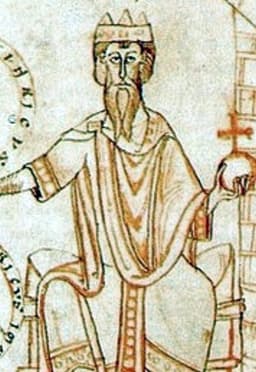
Conrad II
Emperor · Medieval
58.8Total
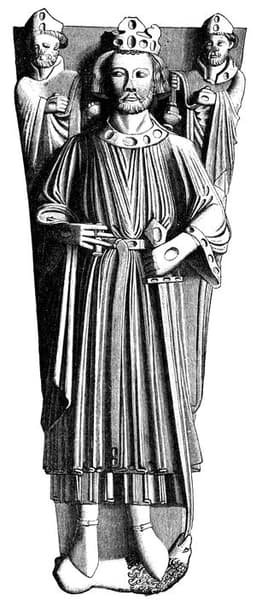
John of England
Emperor · Medieval
51.9Total
Basic Information
Born
990
1166
Died
1039
1216
Era
Medieval
Medieval
Nationality
Holy Roman Empire
England
Occupation
Emperor
Emperor
Civilization
Western
Western
Score Comparison
Military (10%)
47.5
50.0
Political (20%)
72.0
39.4
Influence (20%)
55.7
62.0
Legacy (20%)
50.0
55.0
Leadership (15%)
72.0
45.0
Strategy (15%)
60.0
50.0
TOTAL
58.8
51.9
Conrad II — Complete Timeline
1024 AD
Election as King of GermanyPolitical Action◆ Major
Following the death of Henry II without heirs, Conrad II was elected King of Germany in 1024, becoming the first ruler of the Salian dynasty. His election ended the Ottonian line and established a new royal house.
SuccessionSalian Dynasty
Impact: regional
1027 AD
Coronation as Holy Roman EmperorPolitical Action◆ Major
Pope John XIX crowned Conrad II Holy Roman Emperor in Rome on March 26, 1027. The coronation solidified Salian imperial authority and included the participation of kings from Burgundy and Italy.
CoronationImperial Authority
Impact: regionalconstructive
1032 AD
Acquisition of the Kingdom of BurgundyPolitical Action◆ Major
Upon the death of King Rudolf III of Burgundy in 1032, Conrad II claimed the Kingdom of Burgundy through a treaty of succession. He was crowned King of Burgundy in 1033, expanding the Empire's territory into the Rh
Territorial ExpansionBurgundy
Impact: regionalconstructive
1037 AD
Promulgation of the Constitutio de feudisReform◆ Major
Conrad II issued the Constitutio de feudis in 1037, which made fiefs hereditary for lesser nobles in Italy. This legal reform strengthened the position of the lower nobility and stabilized feudal relationships in the kingdom of Italy.
Legal ReformFeudalism
Impact: regionalconstructive
John of England — Complete Timeline
1204 AD
Loss of NormandyWar◆ Major
King John lost the Duchy of Normandy to King Philip II of France after the fall of Ch
Territorial LossFranceAngevin Empire
Impact: regionaldestructive
1208 AD
Interdict on EnglandPolitical Action◆ Major
Pope Innocent III placed England under interdict after John refused to accept Stephen Langton as Archbishop of Canterbury. This suspended church services, causing widespread discontent and leading to John's excommunication.
Church ConflictPapal InterdictExcommunication
Impact: nationaldestructive
1215 AD
First Barons' WarWar◆ Major
After repudiating Magna Carta, John faced the First Barons' War, where rebel barons invited Prince Louis of France to take the English throne. John fought to retain control, leading to widespread devastation.
Civil WarBaronial RevoltFrench Invasion
Impact: nationaldestructive
Signing of Magna CartaPolitical Action
Under pressure from rebellious barons, John signed Magna Carta at Runnymede. The charter limited royal power, established legal rights, and influenced constitutional law, though John later repudiated it.
CharterConstitutionalBaronial Revolt
Impact: globalconstructive
1216 AD
Death from DysenteryOther◆ Major
John died of dysentery at Newark Castle during the First Barons' War. His death allowed his young son Henry III to succeed, and the war ended with the Treaty of Lambeth.
DeathDisease
Impact: nationaltragic
Expert Analysis
Origins
Conrad II (c. 990–1039) was born into the Salian Frankish nobility in the Holy Roman Empire. His father, Count Henry of Speyer, died when Conrad was young, and he was raised under the guardianship of his uncle, Bishop Warmann of Constance. Conrad received a strong ecclesiastical and military education, typical for a noble of his rank. He became Duke of Carinthia in 1011, but lost the duchy after a conflict with Emperor Henry II. Despite this setback, Conrad remained loyal and rebuilt his influence.
John of England (1166–1216) was born at Beaumont Palace, Oxford, the youngest son of King Henry II and Eleanor of Aquitaine. Unlike Conrad, John grew up in a royal court, but as a younger son, he had no expected path to the throne. His father nicknamed him "John Lackland" because he received no substantial inheritance. John was well-educated but known for his volatile temper. He was given the Lordship of Ireland in 1185, but his mismanagement led to rebellion.
Rise to Power
Conrad II rose to power after the death of Emperor Henry II in 1024, who left no heir. The German princes elected Conrad as King of Germany at Kamba on September 4, 1024, because of his noble lineage and military competence. He was crowned in Mainz. To secure his position, Conrad quickly moved to Italy, where he was crowned Holy Roman Emperor by Pope John XIX on March 26, 1027. His rise was marked by negotiation and alliance-building, scoring 72.0 in political skill.
John became King of England in 1199 after the death of his older brother Richard I. He faced immediate challenges from his nephew Arthur of Brittany, who claimed the throne. John captured Arthur and reportedly murdered him. He also lost the Duchy of Normandy to King Philip II of France after the siege of Château Gaillard in 1204. John's rise was marred by military failure and political missteps, reflected in his military score of 50.0 and political score of 39.4.
Leadership & Governance
Conrad II governed with a focus on centralizing imperial authority. He issued the Constitutio de feudis in 1037, which made fiefs hereditary for lesser nobles in Italy, strengthening the loyalty of knights and reducing feudal chaos. He also acquired the Kingdom of Burgundy in 1032 through a succession treaty, expanding the empire without war. Conrad's leadership style was pragmatic and legalistic, earning him a leadership score of 72.0.
John's governance was confrontational. He raised taxes heavily to fund wars, alienated the barons, and clashed with the Church over the appointment of Stephen Langton as Archbishop of Canterbury. Pope Innocent III placed England under interdict in 1208, and John was excommunicated. His authoritarian style provoked a baronial rebellion that forced him to sign Magna Carta in 1215, limiting royal power. John's leadership score is 45.0, reflecting his divisive rule.
Triumph & Tragedy
Conrad II's greatest triumph was the acquisition of Burgundy, expanding the Holy Roman Empire to its largest territorial extent since Charlemagne. His Constitutio de feudis also provided a legal foundation for feudalism in Italy. However, his reign saw no major military conquests—his military score of 47.5 indicates limited martial success. His death in 1039 was peaceful, but his dynasty faced challenges later.
John's greatest triumph was Magna Carta, a document that established principles of due process and limited government, influencing English law for centuries. His tragedy was the loss of Normandy and the subsequent Barons' War, which devastated England. John died of dysentery in 1216, leaving a kingdom in chaos. His legacy score of 55.0 is mixed: he is often seen as a tyrant, but Magna Carta is a cornerstone of liberty.
Character & Destiny
Conrad II was patient and diplomatic, using negotiation over force. His character shaped a stable reign that expanded the empire peacefully. He was remembered as a just ruler who strengthened institutions.
John was impulsive and suspicious, alienating allies and making enemies. His character led to constant conflict, and his death during the Barons' War allowed his son Henry III to restore order. Historians often rank John among England's worst kings.
Legacy
Conrad II's legacy includes the Salian dynasty's consolidation of imperial power and the Constitutio de feudis, which influenced European feudalism. His acquisition of Burgundy integrated a key region into the empire for centuries.
John's legacy is dominated by Magna Carta, which inspired later constitutional documents like the U.S. Constitution. However, his reign also demonstrated the dangers of overreach. His total score of 51.9 is lower than Conrad's 58.8.
Conclusion
Conrad II had greater impact within his realm, expanding the empire and reforming law, while John's influence is more symbolic through Magna Carta. Conrad's political and leadership scores (72.0 each) surpass John's (39.4 and 45.0). Despite John's enduring charter, Conrad's tangible achievements in state-building and legal reform give him a higher total score of 58.8 versus John's 51.9. Conrad II was the more effective ruler.
Rankings
🥇
Conrad IILeader
Mil: 47.5Pol: 72.0Inf: 55.7
58.8
🥈
John of England
Mil: 50.0Pol: 39.4Inf: 62.0
51.9
+6.9 behind
How This Comparison Works
Algorithm
Each figure is scored on 6 dimensions (0—100 scale) based on structured historical data: Military (10%), Political (20%), Influence (20%), Legacy (20%), Leadership (15%), Strategy (15%). The weighted total produces the final ranking.
Data Sources
Scores are computed from structured sub-indicators in the database. Scale factors adjust for era (Ancient ×0.85, Modern ×1.0) and civilization size (Eastern ×1.05, Other ×0.80) to account for differences in population and military scale.
Maximum 3 Figures
Comparisons are limited to 2—3 figures to ensure readability and statistical meaningfulness.
Error Margins
±5 points per dimension — Sub-scores are derived from historical records with inherent uncertainty. Two figures within 5 points on a dimension should be considered roughly equivalent in that area.
Total Score Accuracy
±3 points overall — The weighted combination of 6 dimensions produces a total score with approximately ±3 points of uncertainty. Differences of less than 3 points are not statistically significant— the figures are effectively tied.
Known Limitations
- Historical records are incomplete and uneven across civilizations
- Figures from oral-tradition societies may be underrepresented
- Occupation labels can misclassify multi-role figures
- Scores measure capability and impact, not moral character
- Quantitative scoring is a comparison tool, not absolute truth
Capability Radar
Military (10%) — Battles & Warfare
Battles
45
25
Win Rate
50
20
Expansion
60
10
Political (20%) — Governance & Reform
Reform
65
60
Diplomacy
75
20
Economy
60
25
Influence (20%) — Cultural & Global Reach
Cultural
40
45
Global
35
65
Legacy (20%) — Historical Impact
Historical
55
75
Longevity
50
70
Leadership (15%) — Power & Stability
Tenure
70
40
Stability
70
15
Strategy (15%) — Tactics & Innovation
Strategy
55
25
Tactics
40
30
Reform
30
15
Similar Comparisons
Comments & Discussion
No comments yet. Be the first to share your thoughts!