Loading...
Constantine the Great vs Esarhaddon
Constantine the Great leads by 13.3 pts · 2 figures compared
…
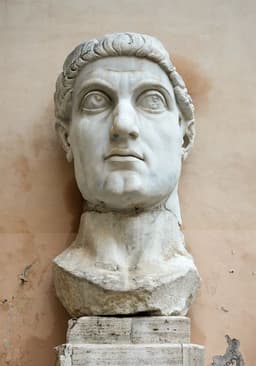
Constantine the Great
Emperor · Ancient
75.5Total
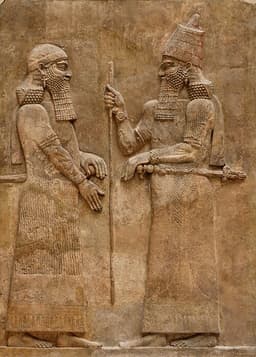
Esarhaddon
Emperor · Ancient
62.2Total
Basic Information
Born
272
-681
Died
337
-669
Era
Ancient
Ancient
Nationality
Roman Empire
Assyria
Occupation
Emperor
Emperor
Civilization
Western
Middle Eastern
Score Comparison
Military (10%)
78.0
72.0
Political (20%)
82.0
59.3
Influence (20%)
75.0
61.0
Legacy (20%)
70.0
56.0
Leadership (15%)
80.0
66.0
Strategy (15%)
72.0
70.0
TOTAL
75.5
62.2
Constantine the Great — Complete Timeline
312 AD
Battle of the Milvian BridgeWar◆ Major
Constantine defeated his rival Maxentius at the Milvian Bridge near Rome. According to tradition, Constantine saw a vision of a cross in the sky with the words 'In this sign, conquer.' The victory made Constantine the sole ruler of the Western Roman Empire and led to his conversion to Christianity.
Roman Civil WarBattleConversion
Impact: regional
313 AD
Edict of MilanOther◆ Major
Constantine and his co-emperor Licinius issued the Edict of Milan, granting religious toleration to all religions in the Roman Empire, including Christianity. The edict ended the persecution of Christians, restored confiscated church property, and established Christianity as a legally recognized religion.
Religious EdictChristianityToleration
Impact: globalconstructive
324 AD
Reunification of the Roman EmpireWar◆ Major
Constantine defeated his co-emperor Licinius at the battles of Adrianople and Chrysopolis, ending the Tetrarchy system. He became the sole ruler of the entire Roman Empire, reuniting the Western and Eastern halves under his control. This reunification was the last time the Roman Empire was united under a single ruler.
Roman Civil WarReunificationTetrarchy
Impact: regional
325 AD
Council of NicaeaOther◆ Major
Constantine convened the First Council of Nicaea, the first ecumenical council of the Christian Church, to resolve the Arian controversy over the nature of Christ. The council produced the Nicene Creed, affirming the divinity of Christ and establishing a unified Christian doctrine. Constantine presided over the council.
Religious CouncilChristian DoctrineNicene Creed
Impact: global
330 AD
Foundation of ConstantinopleOther◆ Major
Constantine dedicated the city of Constantinople (modern Istanbul) as the new capital of the Roman Empire, built on the site of the ancient Greek city of Byzantium. The city was strategically located on the Bosporus strait, controlling trade routes between Europe and Asia. It became the capital of the Eastern Roman Empire for over a thousand years.
City FoundationCapitalByzantine Empire
Impact: globalconstructive
Esarhaddon — Complete Timeline
680 BC
Rebuilding of BabylonReform◆ Major
Esarhaddon reversed his father Sennacherib's destruction of Babylon. He ordered the reconstruction of the city, its temples, and the Esagila. He returned the statue of Marduk and granted Babylon privileges, seeking to heal the religious rift caused by his father.
BabylonReconstructionReconciliation
Impact: regionalconstructive
679 BC
Campaign Against the CimmeriansWar
Esarhaddon defeated the Cimmerian invaders in the region of Hubushna (Anatolia). The Cimmerians had been threatening Assyrian vassals. This victory secured the northern frontier of the Assyrian Empire for a time.
CimmeriansAnatoliaDefense
Impact: regional
672 BC
Vassal Treaties of EsarhaddonPolitical Action◆ Major
Esarhaddon imposed loyalty oaths on his subjects, officials, and vassal states, requiring them to swear allegiance to his chosen heir Ashurbanipal. These treaties were inscribed on tablets and included curses for violation. They ensured a smooth succession.
TreatiesSuccessionAshurbanipal
Impact: regional
671 BC
Conquest of EgyptWar◆ Major
Esarhaddon led the Assyrian army across the Sinai desert and defeated the Kushite Pharaoh Taharqa. He captured Memphis and took the Egyptian royal family hostage. This was the first time an Assyrian king ruled Egypt, though control was brief.
EgyptConquestTaharqa
Impact: regional
Expert Analysis
Origins
Constantine the Great was born in Naissus (modern Niš, Serbia) around 272 CE, the son of Constantius Chlorus, a Roman emperor, and Helena, a woman of low birth. His father was part of the Tetrarchy, the system of four rulers instituted by Diocletian. Constantine grew up in the imperial court, receiving a military education and serving under Diocletian and Galerius. He was present at campaigns in the East, learning military strategy and governance firsthand.
Esarhaddon, born around 713 BCE, was the son of Sennacherib, king of Assyria, and a secondary wife, Naqi'a. His early life was marked by palace intrigue; his father had destroyed Babylon and faced rebellion. Esarhaddon was chosen as crown prince over older brothers, which led to conflict. He was likely trained in administrative and military affairs, preparing him for rule amidst Assyria's vast empire.
Rise to Power
Constantine's rise began after his father's death in 306 CE, when his troops proclaimed him emperor in York. He spent the next two decades consolidating power, first as a junior Augustus in the West. His major turning point was the Battle of the Milvian Bridge in 312 CE, where he defeated his rival Maxentius. According to tradition, before the battle Constantine saw a vision of a cross with the words "In this sign, conquer." He adopted the Christian symbol and won decisively. This victory made him the sole ruler of the Western Roman Empire. In 324 CE, he defeated Licinius, his co-emperor in the East, at the battles of Adrianople and Chrysopolis, reunifying the Roman Empire under his sole rule.
Esarhaddon's path to power was more violent. In 681 BCE, his father Sennacherib was murdered by two of his own sons (Esarhaddon's brothers) after Babylon's destruction. Esarhaddon, then in the western provinces, raised an army and marched to Nineveh. He defeated his brothers in a civil war and was crowned king within two months. To legitimize his rule, he immediately reversed his father's unpopular policies, particularly regarding Babylon. He ordered the rebuilding of the city and its temples, restoring the cult statue of Marduk. This act won him support from Babylonian elites.
Leadership & Governance
Constantine's leadership was transformative. Politically, he centralized power by ending the Tetrarchy system and establishing a dynasty. He founded Constantinople in 324 CE on the site of Byzantium, creating a new capital that combined Roman administration with Greek culture. The city was built with a Christian identity, featuring churches rather than pagan temples, yet it maintained Roman legal and governmental structures. Militarily, Constantine scored 78.0, reflecting his successful campaigns against internal rivals and border tribes. He reorganized the army into mobile field forces and garrison troops, a system that lasted for centuries. His most significant act was the Edict of Milan in 313 CE, which granted religious toleration to all religions, effectively legalizing Christianity. This was a political move to unify the empire under a single god, but it had profound consequences. He also convened the Council of Nicaea in 325 CE to resolve the Arian controversy, shaping Christian doctrine.
Esarhaddon's governance was characterized by pragmatism and consolidation. He scored 59.3 in political, reflecting his efforts to stabilize a fractured empire. He rebuilt Babylon, returning its gods and privileges, which eased tensions within the empire. He also imposed the Vassal Treaties of Esarhaddon, requiring all subjects and vassal states to swear loyalty to his chosen heir, Ashurbanipal, ensuring a smooth succession. Militarily, he scored 72.0, with his greatest achievement being the conquest of Egypt in 671 BCE. He led his army across the Sinai desert, defeated the Kushite Pharaoh Taharqa, and captured Memphis. He took the Egyptian royal family as hostages and installed local governors. However, he struggled to maintain control, as Egypt rebelled soon after his departure. His strategy score of 70.0 is evident in his campaigns against the Cimmerians, where he secured Anatolian borders.
Triumph & Tragedy
Constantine's greatest triumph was the transformation of the Roman Empire into a Christian state. The Edict of Milan ended persecution and set the stage for Christianity's dominance. The foundation of Constantinople created a new center of power that lasted over a thousand years as the capital of the Byzantine Empire. His defeat of Licinius unified the empire, bringing stability after decades of civil war. However, his failures include the execution of his eldest son, Crispus, and his wife Fausta in 326 CE on dubious charges, a bloody episode that tarnished his legacy. Additionally, his military campaigns against the Goths and other tribes were not decisive, and his tax policies were burdensome.
Esarhaddon's triumph was the conquest of Egypt, the first time an Assyrian king had controlled the Nile Valley. This expanded Assyria's empire to its greatest territorial extent. His rebuilding of Babylon was a diplomatic success that pacified a key region. However, his tragedy was the fleeting nature of his Egyptian conquest; it was lost within a few years after his death. He also suffered from chronic illness, which may have shortened his reign (681–669 BCE). His vassal treaties, while ensuring Ashurbanipal's succession, also created resentment among some nobles.
Character & Destiny
Constantine was pragmatic and visionary. He understood the power of religion as a unifying force and used Christianity to consolidate his rule. His character was ruthless when necessary, as seen in the executions of Crispus and Fausta, but also capable of grand gestures like the Edict of Milan. He was a skilled administrator who reorganized the empire's currency, civil service, and military. His destiny was to be remembered as the first Christian emperor, a title that shaped Western civilization.
Esarhaddon was a reformer who sought to heal the wounds caused by his father. He was known for his piety, rebuilding temples and restoring cults. He was also a capable diplomat, forming alliances with vassal states. His character was more conciliatory than his predecessors, but he could be ruthless in imposing loyalty oaths. His destiny was to be a transitional figure; his conquests were short-lived, and Assyria's decline began after his death.
Legacy
Constantine's legacy is enormous. He permanently altered the religious landscape of Europe and the Mediterranean. The Byzantine Empire, which lasted until 1453, was his creation. The Nicene Creed, established at his council, remains central to most Christian denominations. He scored 75.0 in influence and 70.0 in legacy, reflecting his enduring impact. Today, he is venerated as a saint in some Christian traditions.
Esarhaddon's legacy is more limited. He is remembered as the Assyrian king who conquered Egypt, but his empire collapsed within a century after his death. His rebuilding of Babylon was undone by his son Ashurbanipal's later destruction. He scored 61.0 in influence and 56.0 in legacy, indicating a less lasting mark. He is primarily studied as part of Assyrian imperial history.
Conclusion
Constantine the Great had a greater impact on world history than Esarhaddon. With a total score of 75.5 against Esarhaddon's 62.2, the numerical difference is 13.3 points. Constantine's decisions—legalizing Christianity, founding Constantinople, and convening the Council of Nicaea—shaped the course of Western civilization for over a millennium. Esarhaddon's conquest of Egypt was impressive but ephemeral, and his empire did not survive long after his reign. While both were skilled rulers, Constantine's enduring influence on religion, politics, and culture is unmatched. Therefore, Constantine is the more significant historical figure.
Rankings
🥇
Constantine the GreatLeader
Mil: 78.0Pol: 82.0Inf: 75.0
75.5
🥈
Esarhaddon
Mil: 72.0Pol: 59.3Inf: 61.0
62.2
+13.3 behind
How This Comparison Works
Algorithm
Each figure is scored on 6 dimensions (0—100 scale) based on structured historical data: Military (10%), Political (20%), Influence (20%), Legacy (20%), Leadership (15%), Strategy (15%). The weighted total produces the final ranking.
Data Sources
Scores are computed from structured sub-indicators in the database. Scale factors adjust for era (Ancient ×0.85, Modern ×1.0) and civilization size (Eastern ×1.05, Other ×0.80) to account for differences in population and military scale.
Maximum 3 Figures
Comparisons are limited to 2—3 figures to ensure readability and statistical meaningfulness.
Error Margins
±5 points per dimension — Sub-scores are derived from historical records with inherent uncertainty. Two figures within 5 points on a dimension should be considered roughly equivalent in that area.
Total Score Accuracy
±3 points overall — The weighted combination of 6 dimensions produces a total score with approximately ±3 points of uncertainty. Differences of less than 3 points are not statistically significant— the figures are effectively tied.
Known Limitations
- Historical records are incomplete and uneven across civilizations
- Figures from oral-tradition societies may be underrepresented
- Occupation labels can misclassify multi-role figures
- Scores measure capability and impact, not moral character
- Quantitative scoring is a comparison tool, not absolute truth
Capability Radar
Military (10%) — Battles & Warfare
Battles
85
75
Win Rate
80
85
Expansion
85
80
Political (20%) — Governance & Reform
Reform
95
75
Diplomacy
90
80
Economy
80
70
Influence (20%) — Cultural & Global Reach
Cultural
95
60
Global
95
65
Legacy (20%) — Historical Impact
Historical
95
70
Longevity
95
60
Leadership (15%) — Power & Stability
Tenure
85
70
Stability
70
65
Strategy (15%) — Tactics & Innovation
Strategy
85
85
Tactics
75
80
Reform
90
70
Similar Comparisons
Comments & Discussion
No comments yet. Be the first to share your thoughts!