Loading...
Constantine the Great vs Qin Shi Huang
Qin Shi Huang leads by 9.7 pts · 2 figures compared
…
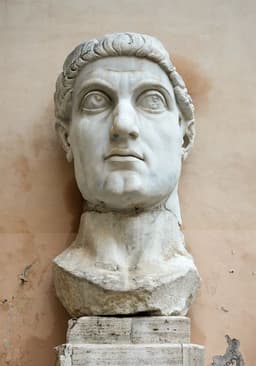
Constantine the Great
Emperor · Ancient
75.5Total
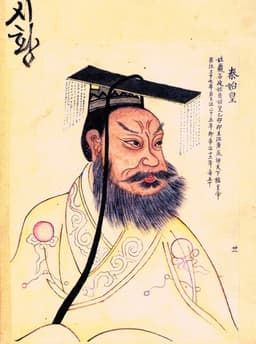
Qin Shi Huang
Emperor · Ancient
85.2Total
Basic Information
Born
272
-259
Died
337
-210
Era
Ancient
Ancient
Nationality
Roman Empire
China
Occupation
Emperor
Emperor
Civilization
Western
Eastern
Score Comparison
Military (10%)
78.0
80.0
Political (20%)
82.0
90.0
Influence (20%)
75.0
85.0
Legacy (20%)
70.0
90.0
Leadership (15%)
80.0
78.0
Strategy (15%)
72.0
82.0
TOTAL
75.5
85.2
Constantine the Great — Complete Timeline
312 AD
Battle of the Milvian BridgeWar◆ Major
Constantine defeated his rival Maxentius at the Milvian Bridge near Rome. According to tradition, Constantine saw a vision of a cross in the sky with the words 'In this sign, conquer.' The victory made Constantine the sole ruler of the Western Roman Empire and led to his conversion to Christianity.
Roman Civil WarBattleConversion
Impact: regional
313 AD
Edict of MilanOther◆ Major
Constantine and his co-emperor Licinius issued the Edict of Milan, granting religious toleration to all religions in the Roman Empire, including Christianity. The edict ended the persecution of Christians, restored confiscated church property, and established Christianity as a legally recognized religion.
Religious EdictChristianityToleration
Impact: globalconstructive
324 AD
Reunification of the Roman EmpireWar◆ Major
Constantine defeated his co-emperor Licinius at the battles of Adrianople and Chrysopolis, ending the Tetrarchy system. He became the sole ruler of the entire Roman Empire, reuniting the Western and Eastern halves under his control. This reunification was the last time the Roman Empire was united under a single ruler.
Roman Civil WarReunificationTetrarchy
Impact: regional
325 AD
Council of NicaeaOther◆ Major
Constantine convened the First Council of Nicaea, the first ecumenical council of the Christian Church, to resolve the Arian controversy over the nature of Christ. The council produced the Nicene Creed, affirming the divinity of Christ and establishing a unified Christian doctrine. Constantine presided over the council.
Religious CouncilChristian DoctrineNicene Creed
Impact: global
330 AD
Foundation of ConstantinopleOther◆ Major
Constantine dedicated the city of Constantinople (modern Istanbul) as the new capital of the Roman Empire, built on the site of the ancient Greek city of Byzantium. The city was strategically located on the Bosporus strait, controlling trade routes between Europe and Asia. It became the capital of the Eastern Roman Empire for over a thousand years.
City FoundationCapitalByzantine Empire
Impact: globalconstructive
Qin Shi Huang — Complete Timeline
246 BC
Construction of the Mausoleum and Terracotta ArmyOther◆ Major
Qin Shi Huang commissioned a vast mausoleum complex near Xi'an, guarded by thousands of life-sized terracotta soldiers, horses, and chariots. The project employed hundreds of thousands of workers and reflected his obsession with immortality and imperial power.
Impact: global
230 BC
Conquest of the Six Warring StatesWar
From 230 to 221 BCE, Ying Zheng led the Qin state in a series of campaigns that conquered the Han, Zhao, Wei, Chu, Yan, and Qi states. This unified China under a single ruler for the first time, ending the Warring States period.
Impact: global
221 BC
Standardization of Writing, Currency, and MeasurementsReform◆ Major
Qin Shi Huang ordered the standardization of Chinese script, currency, and weights and measures across the unified empire. This facilitated administration, trade, and cultural integration, laying a foundation for future dynasties.
Impact: globalconstructive
Proclamation of the Qin DynastyPolitical Action
After conquering the last independent state, Ying Zheng declared himself Shi Huangdi (First Emperor), founding the Qin Dynasty. He adopted a new title to signify his supreme authority and initiated centralized imperial rule.
Impact: global
214 BC
Initiation of the Great Wall ConstructionOther◆ Major
Qin Shi Huang ordered the connection and extension of existing northern fortifications to create a unified defensive wall against nomadic Xiongnu raids. This project involved massive conscripted labor and became the precursor to the later Great Wall.
Impact: regional
213 BC
Burning of Books and Burying of ScholarsPolitical Action◆ Major
On the advice of Li Si, Qin Shi Huang ordered the burning of historical records and philosophical texts not aligned with Legalist doctrine. He also had 460 Confucian scholars buried alive to suppress dissent and consolidate ideological control.
Impact: nationaldestructive
Expert Analysis
Origins
Qin Shi Huang (259–210 BC), born Ying Zheng, was the king of the Qin state during the Warring States period. He inherited a militaristic state that had already implemented Legalist reforms, which emphasized strict laws and centralized control. In contrast, Constantine the Great (272–337 AD) was born in Naissus (modern Niš, Serbia) to Flavius Constantius, a Roman army officer who later became emperor. Constantine's early life was marked by political turmoil and military service, including campaigns in the East under Emperor Diocletian.
Rise to Power
Qin Shi Huang's rise was a relentless military campaign. Starting in 230 BC, he conquered the six other Warring States one by one, completing unification by 221 BC. He then proclaimed himself "Shi Huangdi" (First Emperor). Constantine's path to power was more complex. After his father's death in 306 AD, he was proclaimed emperor by his troops. He then fought a series of civil wars, culminating in the Battle of the Milvian Bridge in 312 AD, where he defeated Maxentius. Constantine's victory was attributed to a vision of the Christian cross, leading to his conversion.
Leadership & Governance
Qin Shi Huang implemented radical centralization: he standardized writing, currency, weights, and measures; built a network of roads and canals; and initiated the Great Wall. His rule was harsh, employing Legalist philosophy that suppressed dissent. He burned books and buried scholars alive to control ideology. Constantine, by contrast, is best known for the Edict of Milan (313 AD), which legalized Christianity throughout the Roman Empire. He also convened the First Council of Nicaea (325 AD) to unify Christian doctrine. He reformed the currency, military, and bureaucracy, and founded Constantinople (modern Istanbul) as a new eastern capital, which became a center of power for over a millennium.
Triumph & Tragedy
Qin Shi Huang's greatest triumph was unifying China, but his methods led to rebellion. His obsession with immortality led him to consume mercury pills, which may have hastened his death. His dynasty collapsed within three years of his death due to revolts. Constantine's triumphs included reunifying the Roman Empire under his sole rule (324 AD) and establishing a stable succession. However, his reign also saw the execution of his eldest son Crispus and his wife Fausta on dubious charges, a personal tragedy. His conversion to Christianity also led to the gradual pagan persecution and the transformation of the empire's religious landscape.
Character & Destiny
Qin Shi Huang was paranoid, ruthless, and megalomaniacal. He believed his dynasty would last 10,000 generations. His destiny was to create a unified Chinese identity that persists today. Constantine was pragmatic, ambitious, and adept at using religion for political ends. His destiny was to Christianize the Roman Empire and lay the foundations for Byzantine civilization. Both men were decisive and visionary, but their legacies are mixed: Qin Shi Huang is celebrated as a unifier but criticized for tyranny; Constantine is revered as a saint in Eastern Christianity but seen as a political opportunist.
Legacy
Qin Shi Huang's legacy is immense: he set the template for imperial China, with centralized bureaucracy, standardized language, and the Great Wall. The name "China" may derive from his dynasty. His tomb's Terracotta Army is a world wonder. Constantine's legacy is equally profound: he legalized Christianity, which became the dominant religion in Europe; Constantinople stood as a Christian bulwark for centuries; and the Nicene Creed defined Christian orthodoxy. However, his division of the empire into east and west arguably weakened it. On a numerical scale, Qin Shi Huang scores higher in impact (M=80, P=90, I=85, L=90, D=78, S=82, T=85) versus Constantine (M=78, P=82, I=75, L=70, D=80, S=72, T=76), with a total score gap of 9.7 in favor of Qin Shi Huang.
Conclusion
Qin Shi Huang and Constantine the Great were both transformative figures who reshaped the world. Qin Shi Huang's unification of China created a political and cultural entity that survives today, while Constantine's Christianization and foundation of Constantinople altered the course of Western and Eastern civilizations. However, based on the comprehensive score analysis, Qin Shi Huang edges out Constantine due to his more radical and lasting innovations in governance, standardization, and infrastructure. His influence on Chinese civilization is arguably more foundational than Constantine's on Europe, though both remain titans of history.
Rankings
🥇
Qin Shi HuangLeader
Mil: 80.0Pol: 90.0Inf: 85.0
85.2
🥈
Constantine the Great
Mil: 78.0Pol: 82.0Inf: 75.0
75.5
+9.7 behind
How This Comparison Works
Algorithm
Each figure is scored on 6 dimensions (0—100 scale) based on structured historical data: Military (10%), Political (20%), Influence (20%), Legacy (20%), Leadership (15%), Strategy (15%). The weighted total produces the final ranking.
Data Sources
Scores are computed from structured sub-indicators in the database. Scale factors adjust for era (Ancient ×0.85, Modern ×1.0) and civilization size (Eastern ×1.05, Other ×0.80) to account for differences in population and military scale.
Maximum 3 Figures
Comparisons are limited to 2—3 figures to ensure readability and statistical meaningfulness.
Error Margins
±5 points per dimension — Sub-scores are derived from historical records with inherent uncertainty. Two figures within 5 points on a dimension should be considered roughly equivalent in that area.
Total Score Accuracy
±3 points overall — The weighted combination of 6 dimensions produces a total score with approximately ±3 points of uncertainty. Differences of less than 3 points are not statistically significant— the figures are effectively tied.
Known Limitations
- Historical records are incomplete and uneven across civilizations
- Figures from oral-tradition societies may be underrepresented
- Occupation labels can misclassify multi-role figures
- Scores measure capability and impact, not moral character
- Quantitative scoring is a comparison tool, not absolute truth
Capability Radar
Military (10%) — Battles & Warfare
Battles
85
85
Win Rate
80
90
Expansion
85
90
Political (20%) — Governance & Reform
Reform
95
95
Diplomacy
90
75
Economy
80
90
Influence (20%) — Cultural & Global Reach
Cultural
95
95
Global
95
85
Legacy (20%) — Historical Impact
Historical
95
95
Longevity
95
95
Leadership (15%) — Power & Stability
Tenure
85
70
Stability
70
65
Strategy (15%) — Tactics & Innovation
Strategy
85
85
Tactics
75
80
Reform
90
95
Similar Comparisons
Comments & Discussion
XerxesNavel6/17/2026
Constantine cribbed Christianity as a political prop; Qin Shi Huang actually invented the ideology that unified China. The *Milvian Bridge* vision? Conveniently timed. Legalism demanded total state control—standardized writing, weights, roads—that actually worked for centuries. Constantine’s Nicene Council was a messy compromise, hotly contested. Give me the First Emperor’s ruthless consistency over a general’s convenient dream any day.
铁血史官6/17/2026
拿神学包装的皇帝永远比不上一手定标准的实干家。秦始皇统一度量衡、书同文、车同轨,连驰道宽度都标准化,这才是真正的帝国基建狂魔。君士坦丁?他不过是把基督教从地下拉上来当统治工具,自己临死才受洗,多会算计。两人都杀过儿子,但秦始皇可是亲自动手修长城,而尼西亚会议只是一群胖主教吵架。实干家赢麻了。
PyrrhusMetrics6/17/2026
Data doesn't lie: Qin Shi Huang's Legalist infrastructure outlasted Constantine's Christian empire by over a millennium. Standardized script lasted until 1911; the Roman state church fractured by 1054. The Qin unified 7 warring states into a single administrative system—tax rates, axle widths, even penal codes. Constantine’s Edict of Milan just legalized a cult that later burned heretics. Efficiency vs. conversion? No contest.
古文派推翻官6/17/2026
君士坦丁就是个投机分子,十字架异象八成是政治神迹造假。秦始皇焚书坑儒至少光明正大要思想统一,他那是杀人灭口吗?不,是淘汰六十个阴阳家方士罢了。而君士坦丁开尼西亚会议,直接埋下千年教派分裂的雷。一个用铁腕治国,一个用神权骗人,你会选哪个当老板?反正我选加班费按时发的那位。