Loading...
Count Andrassy vs Ferenc Gyurcsany
Count Andrassy leads by 11.5 pts · 2 figures compared
…
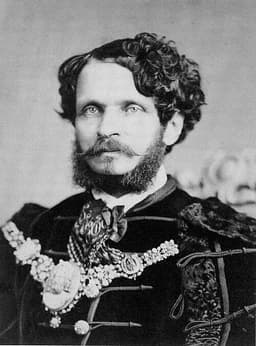
Count Andrassy
Politician · Modern
58.1Total
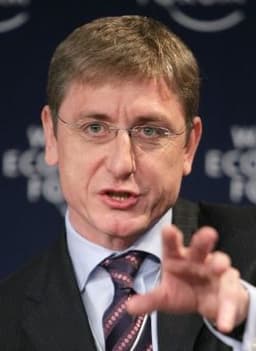
Ferenc Gyurcsany
Politician · Modern
46.6Total
Basic Information
Born
1823
1961
Died
1890
—
Era
Modern
Modern
Nationality
Austria
Hungary
Occupation
Politician
Politician
Civilization
Western
Western
Score Comparison
Military (10%)
48.9
48.7
Political (20%)
72.0
40.8
Influence (20%)
60.0
50.2
Legacy (20%)
49.2
40.0
Leadership (15%)
72.0
58.8
Strategy (15%)
43.2
42.2
TOTAL
58.1
46.6
Count Andrassy — Complete Timeline
1871 AD
Appointment as Foreign Minister of Austria-HungaryPolitical Action◆ Major
Andrassy was appointed Foreign Minister of Austria-Hungary by Emperor Franz Joseph. He was the first Hungarian to hold this position, reflecting the dual monarchy's structure.
AppointmentForeign PolicyDual Monarchy
Impact: national
1878 AD
Congress of BerlinPolitical Action◆ Major
Andrassy represented Austria-Hungary at the Congress of Berlin, which revised the Treaty of San Stefano. He secured the right to occupy and administer Bosnia and Herzegovina, expanding Habsburg influence in the Balkans.
CongressBalkansTerritorial Expansion
Impact: regionalconstructive
1879 AD
Dual Alliance with GermanyPolitical Action
Andrassy negotiated the Dual Alliance between Austria-Hungary and Germany. This defensive treaty committed both powers to mutual support in case of a Russian attack, forming the core of the Central Powers in World War I.
AllianceGermanyCentral Powers
Impact: regionalconstructive
Resignation as Foreign MinisterPolitical Action◆ Major
Andrassy resigned as Foreign Minister after the Dual Alliance was signed. He cited health reasons and a desire to return to Hungarian politics, but his resignation also reflected tensions within the empire.
ResignationHungaryPolitics
Impact: national
Ferenc Gyurcsany — Complete Timeline
2004 AD
Appointed Prime Minister of HungaryPolitical Action◆ Major
Ferenc Gyurcsany was appointed Prime Minister of Hungary by President Laszlo Solyom, succeeding Peter Medgyessy. He was a wealthy businessman and former member of the Hungarian Socialist Party. His appointment marked a continuation of socialist-led government.
Prime MinisterHungarian Socialist PartyGovernment Change
Impact: national
2006 AD
Implemented Austerity MeasuresReform◆ Major
Following the leaked speech, Gyurcsany's government implemented austerity measures including tax increases, spending cuts, and public sector reforms to reduce the budget deficit. The measures were unpopular and contributed to the political instability.
AusterityEconomic ReformBudget Deficit
Impact: nationaldestructive
Leaked Speech Caused RiotsPolitical Action◆ Major
A leaked recording of Gyurcsany's private speech to Socialist Party MPs revealed him admitting that the government had lied about the economy to win the 2006 election. The leak sparked massive protests and riots in Budapest, with demonstrators calling for his resignation.
LeakRiotsPolitical Crisis
Impact: nationaldestructive
2009 AD
Resigned as Prime MinisterPolitical Action◆ Major
Gyurcsany resigned as Prime Minister after losing a no-confidence vote in parliament. His resignation came amid the global financial crisis and ongoing political turmoil. He was succeeded by Gordon Bajnai.
ResignationNo-ConfidencePolitical Crisis
Impact: nationaltragic
Expert Analysis
Origins
Count Gyula Andrassy was born on March 3, 1823, in Oláhpatak, Kingdom of Hungary (now Slovakia), into an aristocratic family. His father was a liberal politician, and Andrassy was educated at home and later in Pest and abroad. He participated in the Hungarian Revolution of 1848, serving as a diplomat, and went into exile after its defeat, returning in 1858.
Ferenc Gyurcsany was born on June 4, 1961, in Pécs, Hungary, into a middle-class family. He studied economics at the University of Pécs and later worked in business, becoming a wealthy entrepreneur in the 1990s. He joined the Socialist Party and served as Minister of Sports and Youth before becoming Prime Minister.
Rise to Power
Andrassy rose to prominence through his role in the Austro-Hungarian Compromise of 1867, which established the Dual Monarchy. He became the first Hungarian Prime Minister after the compromise, serving from 1867 to 1871. His diplomatic skills led to his appointment as Foreign Minister of Austria-Hungary in 1871, a position he held until 1879. Key turning points included his negotiation of the Dual Alliance with Germany in 1879, which committed both powers to mutual defense.
Gyurcsany became Prime Minister on September 29, 2004, after his predecessor Peter Medgyessy resigned. He was a wealthy businessman and former finance minister, known for his economic expertise. His rise was facilitated by his close ties to the Socialist Party leadership and his reputation as a reformer.
Leadership & Governance
Andrassy's leadership was characterized by pragmatism and diplomatic finesse. As Foreign Minister, he pursued a policy of alliance with Germany (scoring 72.0 in political skill) while maintaining the balance of power in the Balkans. At the Congress of Berlin in 1878, he secured the right for Austria-Hungary to occupy Bosnia and Herzegovina, expanding Habsburg influence. His governance style was cautious and methodical, avoiding risky confrontations.
Gyurcsany's leadership was marked by bold economic reforms but also by a lack of political trust. He implemented austerity measures in 2006-2007 to reduce the budget deficit, including tax increases and spending cuts. However, his leaked speech in 2006, where he admitted lying about the economy to win elections, triggered massive riots and protests. His governance approach was technocratic but undermined by perceived dishonesty.
Triumph & Tragedy
Andrassy's greatest success was negotiating the Dual Alliance, which secured Austria-Hungary's position in Europe and lasted until 1918. His diplomacy at the Congress of Berlin also enhanced the empire's international standing. His failures included the occupation of Bosnia, which created long-term ethnic tensions and contributed to World War I. He also resigned in 1879 after the alliance was signed, partly due to criticism from Hungarian nationalists who opposed his foreign policy.
Gyurcsany's triumph was steering Hungary through economic recovery after 2006, with GDP growth and deficit reduction. However, his tragedy was the 2006 speech leak, which shattered public trust and led to violent clashes. He also failed to maintain coalition support, leading to a no-confidence vote in 2009, which forced his resignation as the global financial crisis hit Hungary.
Character & Destiny
Andrassy was a skilled diplomat, known for his charm and intelligence. He was described as a 'gentleman of the old school' who prioritized stability. His character shaped his fate: his cautious approach allowed him to achieve the Dual Alliance but also left Austria-Hungary overextended in the Balkans. Historians rate him favorably, with a political score of 72.0 and leadership of 72.0.
Gyurcsany was a confident and ambitious reformer, but his arrogance and lack of transparency led to his downfall. The leaked speech revealed a willingness to deceive for political gain, which destroyed his credibility. His leadership score of 58.8 reflects this mixed legacy. He remains a controversial figure in Hungarian politics.
Legacy
Andrassy's legacy is tied to the Dual Alliance, which shaped European alliances before World War I. He is remembered as a founding father of the Austro-Hungarian Empire's foreign policy. His influence score is 60.0, and legacy score 49.2. Streets and institutions in Hungary bear his name.
Gyurcsany's legacy is overshadowed by the 2006 speech, which damaged the Socialist Party and contributed to its decline. His austerity measures had mixed long-term effects. He is less influential, with influence 50.2 and legacy 40.0. His tenure is a cautionary tale about political trust.
Conclusion
Count Andrassy had a greater impact than Ferenc Gyurcsany. His political score of 72.0 versus Gyurcsany's 40.8, and total score of 58.1 versus 46.6, reflect his superior diplomatic achievements. Andrassy's Dual Alliance shaped European history for decades, while Gyurcsany's tenure was a brief, troubled episode in Hungarian politics. Andrassy's legacy endures in international relations, whereas Gyurcsany is remembered mainly for a scandal. Thus, Andrassy is the more significant figure.
Rankings
🥇
Count AndrassyLeader
Mil: 48.9Pol: 72.0Inf: 60.0
58.1
🥈
Ferenc Gyurcsany
Mil: 48.7Pol: 40.8Inf: 50.2
46.6
+11.5 behind
How This Comparison Works
Algorithm
Each figure is scored on 6 dimensions (0—100 scale) based on structured historical data: Military (10%), Political (20%), Influence (20%), Legacy (20%), Leadership (15%), Strategy (15%). The weighted total produces the final ranking.
Data Sources
Scores are computed from structured sub-indicators in the database. Scale factors adjust for era (Ancient ×0.85, Modern ×1.0) and civilization size (Eastern ×1.05, Other ×0.80) to account for differences in population and military scale.
Maximum 3 Figures
Comparisons are limited to 2—3 figures to ensure readability and statistical meaningfulness.
Error Margins
±5 points per dimension — Sub-scores are derived from historical records with inherent uncertainty. Two figures within 5 points on a dimension should be considered roughly equivalent in that area.
Total Score Accuracy
±3 points overall — The weighted combination of 6 dimensions produces a total score with approximately ±3 points of uncertainty. Differences of less than 3 points are not statistically significant— the figures are effectively tied.
Known Limitations
- Historical records are incomplete and uneven across civilizations
- Figures from oral-tradition societies may be underrepresented
- Occupation labels can misclassify multi-role figures
- Scores measure capability and impact, not moral character
- Quantitative scoring is a comparison tool, not absolute truth
Capability Radar
Military (10%) — Battles & Warfare
Battles
26
29
Win Rate
34
34
Expansion
37
35
Political (20%) — Governance & Reform
Reform
60
35
Diplomacy
75
30
Economy
55
30
Influence (20%) — Cultural & Global Reach
Cultural
40
20
Global
50
20
Legacy (20%) — Historical Impact
Historical
55
25
Longevity
40
15
Leadership (15%) — Power & Stability
Tenure
65
40
Stability
60
15
Strategy (15%) — Tactics & Innovation
Strategy
40
38
Tactics
41
40
Reform
43
44
Similar Comparisons
Comments & Discussion
No comments yet. Be the first to share your thoughts!