Loading...
Count Andrassy vs George Habash
Count Andrassy leads by 11.1 pts · 2 figures compared
…
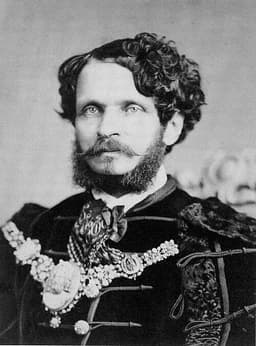
Count Andrassy
Politician · Modern
58.1Total
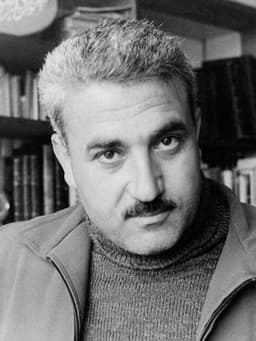
George Habash
Politician · Modern
47.0Total
Basic Information
Born
1823
1926
Died
1890
—
Era
Modern
Modern
Nationality
Austria
Palestine
Occupation
Politician
Politician
Civilization
Western
Middle Eastern
Score Comparison
Military (10%)
48.9
38.3
Political (20%)
72.0
36.5
Influence (20%)
60.0
53.3
Legacy (20%)
49.2
42.5
Leadership (15%)
72.0
55.3
Strategy (15%)
43.2
54.3
TOTAL
58.1
47.0
Count Andrassy — Complete Timeline
1871 AD
Appointment as Foreign Minister of Austria-HungaryPolitical Action◆ Major
Andrassy was appointed Foreign Minister of Austria-Hungary by Emperor Franz Joseph. He was the first Hungarian to hold this position, reflecting the dual monarchy's structure.
AppointmentForeign PolicyDual Monarchy
Impact: national
1878 AD
Congress of BerlinPolitical Action◆ Major
Andrassy represented Austria-Hungary at the Congress of Berlin, which revised the Treaty of San Stefano. He secured the right to occupy and administer Bosnia and Herzegovina, expanding Habsburg influence in the Balkans.
CongressBalkansTerritorial Expansion
Impact: regionalconstructive
1879 AD
Dual Alliance with GermanyPolitical Action
Andrassy negotiated the Dual Alliance between Austria-Hungary and Germany. This defensive treaty committed both powers to mutual support in case of a Russian attack, forming the core of the Central Powers in World War I.
AllianceGermanyCentral Powers
Impact: regionalconstructive
Resignation as Foreign MinisterPolitical Action◆ Major
Andrassy resigned as Foreign Minister after the Dual Alliance was signed. He cited health reasons and a desire to return to Hungarian politics, but his resignation also reflected tensions within the empire.
ResignationHungaryPolitics
Impact: national
George Habash — Complete Timeline
1967 AD
Founded the Popular Front for the Liberation of PalestinePolitical Action
Habash founded the PFLP as a Marxist-Leninist organization dedicated to armed struggle against Israel. The group became known for hijackings and other operations, positioning itself as a radical alternative to Fatah.
PFLPFoundingMarxism
Impact: global
1970 AD
Led PFLP Hijacking CampaignPolitical Action◆ Major
Habash orchestrated a series of hijackings, including the Dawson's Field hijackings where three planes were blown up in Jordan. The operations aimed to internationalize the Palestinian cause but led to the Black September conflict with Jordan.
HijackingsPFLPBlack September
Impact: globaldestructive
1993 AD
Opposed Oslo AccordsPolitical Action◆ Major
Habash strongly opposed the Oslo Accords, denouncing them as a surrender. He led the PFLP in forming the Alliance of Palestinian Forces, a coalition of rejectionist groups that opposed the peace process.
Oslo AccordsRejectionismPFLP
Impact: regionaldestructive
2000 AD
Resigned as PFLP General SecretaryPolitical Action◆ Major
Habash resigned as General Secretary of the PFLP due to health reasons, handing leadership to Abu Ali Mustafa. He remained a symbolic figure in the Palestinian left until his death in 2008.
ResignationPFLPLeadership change
Impact: regional
Expert Analysis
Origins
Count Gyula Andrassy was born on March 8, 1823, in Oláhpatak, Hungary (then part of the Austrian Empire), into an aristocratic family. His father was a count and a supporter of liberal reforms. Andrassy studied law and philosophy at the University of Pest. He was influenced by the Hungarian nationalist movement and participated in the 1848-49 Hungarian Revolution, after which he was exiled. He returned in 1858 and entered politics.
George Habash was born on August 2, 1926, in Lydda, Palestine (now Lod, Israel), to a Greek Orthodox Christian family. His father was a merchant. After the 1948 Arab-Israeli war, his family was expelled from their home, and he experienced the Nakba firsthand. He studied medicine at the American University of Beirut, graduating in 1951. While in Beirut, he became politically active, influenced by Arab nationalism and Marxism.
Rise to Power
Andrassy's rise came after his exile. He was elected to the Hungarian Diet in 1861 and became a key figure in the negotiations for the Austro-Hungarian Compromise of 1867, which established the dual monarchy. He served as Hungary's first prime minister under the new system (1867-1871). In 1871, Emperor Franz Joseph appointed him Foreign Minister of Austria-Hungary, making him the first Hungarian to hold that post. His diplomatic skills were crucial in managing the Balkan crisis.
Habash's rise began with the founding of the Arab Nationalist Movement in the 1950s. After the 1967 Six-Day War, he founded the Popular Front for the Liberation of Palestine (PFLP) in December 1967, as a Marxist-Leninist faction distinct from Fatah. The PFLP gained notoriety for its radical tactics, including hijackings, which brought Habash to global attention. His leadership of the PFLP made him a prominent figure in the Palestinian resistance.
Leadership & Governance
Andrassy's leadership was defined by diplomacy and alliance-building. He negotiated the Dual Alliance with Germany in 1879, a defensive treaty that tied Austria-Hungary to the German Empire, shaping European alliances until World War I. At the Congress of Berlin (1878), he secured the right for Austria-Hungary to occupy and administer Bosnia and Herzegovina, expanding imperial influence without direct annexation. His governance approach favored conservative stability and cooperation with the Habsburg monarchy. He scored 72.0 in Political and 72.0 in Leadership.
Habash's leadership was revolutionary and militant. He advocated for armed struggle as the only path to liberate Palestine, rejecting diplomacy and compromise. He organized the PFLP's hijacking campaign, most notably the Dawson's Field hijackings in September 1970, where three planes were blown up in Jordan. This tactic aimed to internationalize the Palestinian cause. He opposed the Oslo Accords in 1993, denouncing them as a surrender. His leadership style was ideological and uncompromising, scoring 55.3 in Leadership and 54.3 in Strategy.
Triumph & Tragedy
Andrassy's greatest success was the Dual Alliance, which ensured Austria-Hungary's security against Russia and France. His handling of the Congress of Berlin expanded Austrian influence in the Balkans. However, his occupation of Bosnia-Herzegovina sowed long-term ethnic tensions that contributed to World War I. His resignation in 1879 after the alliance was signed may have limited his later influence. His legacy score is 49.2.
Habash's triumphs include founding the PFLP and keeping the Palestinian cause on the world stage through dramatic actions. However, the hijackings also alienated potential supporters and led to the Black September conflict in Jordan, where the PLO was expelled. His rejection of the Oslo Accords marginalized his faction as the peace process gained traction. His military score is 38.3, reflecting limited conventional success.
Character & Destiny
Andrassy was pragmatic, aristocratic, and skilled in negotiation. He balanced Hungarian nationalism with loyalty to the Habsburg Empire. His character shaped a career of cautious expansion and alliance-building, but his decisions contributed to the instability that led to World War I. Historians view him as a capable statesman who navigated complex imperial politics.
Habash was ideological, charismatic, and uncompromising. His personal experience of displacement drove his revolutionary zeal. His character led the PFLP to adopt extreme tactics that both elevated and isolated the Palestinian movement. He remained a symbol of resistance but never achieved his goal of liberation.
Legacy
Andrassy's legacy is tied to the Dual Alliance and the Austro-Hungarian alliance system that preceded World War I. He is remembered as a key architect of Hungarian autonomy within the empire. His diplomatic approach influenced Central European politics for decades. He scores 60.0 in Influence.
Habash's legacy is as a pioneer of modern revolutionary hijacking and a symbol of Palestinian armed struggle. The PFLP continues to exist but has diminished influence. His ideas influenced later leftist movements in the Middle East. His legacy score is 42.5.
Conclusion
Count Andrassy had a greater impact on world history through his diplomatic achievements that shaped European alliances and the balance of power. His total score of 58.1 versus Habash's 47.0 reflects his higher political and leadership scores. While Habash's actions brought attention to the Palestinian cause, his tactics did not achieve strategic goals. Andrassy's influence on the alliance system that led to World War I is a more profound historical contribution. Therefore, Andrassy is the more significant figure.
Rankings
🥇
Count AndrassyLeader
Mil: 48.9Pol: 72.0Inf: 60.0
58.1
🥈
George Habash
Mil: 38.3Pol: 36.5Inf: 53.3
47.0
+11.1 behind
How This Comparison Works
Algorithm
Each figure is scored on 6 dimensions (0—100 scale) based on structured historical data: Military (10%), Political (20%), Influence (20%), Legacy (20%), Leadership (15%), Strategy (15%). The weighted total produces the final ranking.
Data Sources
Scores are computed from structured sub-indicators in the database. Scale factors adjust for era (Ancient ×0.85, Modern ×1.0) and civilization size (Eastern ×1.05, Other ×0.80) to account for differences in population and military scale.
Maximum 3 Figures
Comparisons are limited to 2—3 figures to ensure readability and statistical meaningfulness.
Error Margins
±5 points per dimension — Sub-scores are derived from historical records with inherent uncertainty. Two figures within 5 points on a dimension should be considered roughly equivalent in that area.
Total Score Accuracy
±3 points overall — The weighted combination of 6 dimensions produces a total score with approximately ±3 points of uncertainty. Differences of less than 3 points are not statistically significant— the figures are effectively tied.
Known Limitations
- Historical records are incomplete and uneven across civilizations
- Figures from oral-tradition societies may be underrepresented
- Occupation labels can misclassify multi-role figures
- Scores measure capability and impact, not moral character
- Quantitative scoring is a comparison tool, not absolute truth
Capability Radar
Military (10%) — Battles & Warfare
Battles
26
10
Win Rate
34
5
Expansion
37
5
Political (20%) — Governance & Reform
Reform
60
35
Diplomacy
75
30
Economy
55
15
Influence (20%) — Cultural & Global Reach
Cultural
40
30
Global
50
30
Legacy (20%) — Historical Impact
Historical
55
35
Longevity
40
20
Leadership (15%) — Power & Stability
Tenure
65
40
Stability
60
10
Strategy (15%) — Tactics & Innovation
Strategy
40
20
Tactics
41
15
Reform
43
10
Similar Comparisons
Comments & Discussion
No comments yet. Be the first to share your thoughts!