Loading...
George Habash vs Napoleon Bonaparte
Napoleon Bonaparte leads by 23.9 pts · 2 figures compared
…
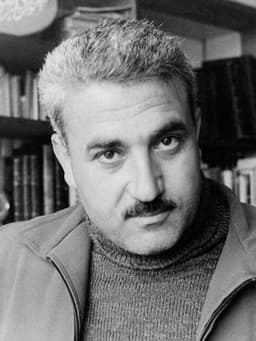
George Habash
Politician · Modern
47.0Total

Napoleon Bonaparte
General · Modern
70.9Total
Basic Information
Born
1926
1769
Died
—
1821
Era
Modern
Modern
Nationality
Palestine
France
Occupation
Politician
General
Civilization
Middle Eastern
Western
Score Comparison
Military (10%)
38.3
94.0
Political (20%)
36.5
72.0
Influence (20%)
53.3
40.0
Legacy (20%)
42.5
80.0
Leadership (15%)
55.3
78.0
Strategy (15%)
54.3
90.0
TOTAL
47.0
70.9
George Habash — Complete Timeline
1967 AD
Founded the Popular Front for the Liberation of PalestinePolitical Action
Habash founded the PFLP as a Marxist-Leninist organization dedicated to armed struggle against Israel. The group became known for hijackings and other operations, positioning itself as a radical alternative to Fatah.
PFLPFoundingMarxism
Impact: global
1970 AD
Led PFLP Hijacking CampaignPolitical Action◆ Major
Habash orchestrated a series of hijackings, including the Dawson's Field hijackings where three planes were blown up in Jordan. The operations aimed to internationalize the Palestinian cause but led to the Black September conflict with Jordan.
HijackingsPFLPBlack September
Impact: globaldestructive
1993 AD
Opposed Oslo AccordsPolitical Action◆ Major
Habash strongly opposed the Oslo Accords, denouncing them as a surrender. He led the PFLP in forming the Alliance of Palestinian Forces, a coalition of rejectionist groups that opposed the peace process.
Oslo AccordsRejectionismPFLP
Impact: regionaldestructive
2000 AD
Resigned as PFLP General SecretaryPolitical Action◆ Major
Habash resigned as General Secretary of the PFLP due to health reasons, handing leadership to Abu Ali Mustafa. He remained a symbolic figure in the Palestinian left until his death in 2008.
ResignationPFLPLeadership change
Impact: regional
Napoleon Bonaparte — Complete Timeline
1799 AD
Coup of 18 BrumaireOther◆ Major
Napoleon Bonaparte, with support from his brother Lucien and key political figures, overthrew the Directory in a bloodless coup. He established the Consulate with himself as First Consul, effectively becoming the ruler of France. This event ended the French Revolution's most unstable period.
French RevolutionCoupRise to Power
Impact: regional
1804 AD
Promulgation of the Napoleonic CodeOther◆ Major
Napoleon enacted the Civil Code of the French, known as the Napoleonic Code, a comprehensive set of laws that replaced the fragmented feudal legal systems. The code established legal equality, protected property rights, and secularized law. It became the basis for legal systems in many European and world countries.
Legal ReformNapoleonic CodeCivil Law
Impact: globalconstructive
1805 AD
Battle of AusterlitzWar◆ Major
Napoleon's Grande Arm
Napoleonic WarsBattleDecisive Victory
Impact: global
1812 AD
Invasion of RussiaWar◆ Major
Napoleon led the Grande Arm
Napoleonic WarsInvasionDisaster
Impact: globaldestructive
1815 AD
Battle of WaterlooWar◆ Major
Napoleon's French army was defeated by the combined forces of the Duke of Wellington's Anglo-Allied army and Gebhard Leberecht von Bl
Napoleonic WarsBattleFinal Defeat
Impact: globaldestructive
Expert Analysis
george-habash-vs-napoleon-bonaparte
# The Emperor and the Revolutionary
On a June morning in 1815, Napoleon Bonaparte watched his Imperial Guard march toward the ridge at Waterloo, their bearskin caps silhouetted against the Belgian sky. On a September day in 1970, George Habash sat in a Damascus safe house, listening to radio reports of three hijacked airliners exploding on a Jordanian airstrip. Both men sought to reshape the world through force of will. One came closer than perhaps any figure in modern history. The other changed the language of resistance, if not the map. What separates a conqueror from a revolutionary, a builder of empires from a breaker of chains? The answer lies not merely in power or circumstance, but in the deeper currents of ambition, timing, and the strange alchemy between a man and his era.
Origins
Napoleon Bonaparte was born in 1769 on Corsica, an island that had just passed from Genoese to French control. His family was minor nobility, poor enough to resent the French but ambitious enough to serve them. The young artillery officer emerged from a world of rigid hierarchies and Enlightenment ideals. He read Rousseau, studied military history, and learned to calculate odds with the precision of a mathematician. His era was one of revolution and war—a time when a man of talent could vault from obscurity to throne.
George Habash was born in 1926 in Lydda, Palestine, then under British mandate. His family was Christian Arab, comfortable and educated. He studied medicine at the American University of Beirut, intending to heal bodies. But in 1948, during the Nakba, Israeli forces captured Lydda. Habash’s family lost their home, their land, their world. He never forgot watching his people become refugees. His era was one of defeat, displacement, and the dawning realization that diplomacy had failed. While Napoleon’s world rewarded audacity, Habash’s world demanded resistance.
Rise to Power
Napoleon’s ascent was a masterpiece of timing and talent. In 1795, at age twenty-six, he dispersed a royalist mob with a “whiff of grapeshot,” saving the revolutionary government. By 1796, he commanded the Army of Italy, where his speed, mobility, and ruthless exploitation of enemy weaknesses won stunning victories. In 1799, he returned from Egypt to seize power in a coup, becoming First Consul. By 1804, he crowned himself Emperor. Each step was calculated, each risk measured. He understood that in revolutionary France, legitimacy came from success.
Habash’s rise followed a different logic. After 1948, he joined the Arab Nationalist Movement, believing unity could liberate Palestine. But the 1967 Six-Day War shattered that hope. Israel captured the West Bank, Gaza, and the rest of historic Palestine. For Habash, conventional armies had failed. In 1967, he founded the Popular Front for the Liberation of Palestine (PFLP), a Marxist-Leninist organization that rejected both Arab regimes and the idea of a negotiated settlement. His path was not through state power but through armed struggle, through the shock of dramatic action meant to force Palestine onto the world stage.
Leadership & Governance
Napoleon ruled through a blend of genius and iron will. His military leadership was legendary: he won over sixty battles, from Austerlitz in 1805 to Wagram in 1809, by concentrating forces at decisive points and exploiting enemy mistakes. Politically, he created the Napoleonic Code, which standardized French law, protected property rights, and enshrined meritocracy. He built roads, schools, and a centralized bureaucracy. But his governance was also authoritarian—he suppressed dissent, censored the press, and placed family members on European thrones. His vision was order imposed through conquest.
Habash led through ideology and perseverance. The PFLP never controlled territory; it operated from exile, from camps in Jordan, Lebanon, and Syria. Its military score of 24.2 reflects its weakness in conventional terms. But Habash’s strategy was asymmetric: hijackings, hostage-taking, and international attention. In 1970, his fighters seized three planes and blew them up at Dawson’s Field in Jordan, a spectacle designed to show that Palestine could not be ignored. Politically, he scored 52.5—a man who rejected compromise, who opposed the 1993 Oslo Accords as a surrender, who kept the flame of total liberation alive even as it burned his movement.
Triumph & Tragedy
Napoleon’s triumph was the zenith of 1810, when his empire stretched from Spain to Poland. He had remade Europe, humbled kings, and spread revolutionary ideals. His tragedy was the invasion of Russia in 1812—600,000 men marched east; fewer than 100,000 returned. Exiled to Elba in 1814, he escaped in 1815, raised another army, and met his final defeat at Waterloo. He died in 1821 on Saint Helena, a prisoner, blaming the weather and his generals.
Habash’s triumph was the 1970 hijackings, which made Palestine a global issue. His tragedy was the Black September that followed—King Hussein of Jordan crushed the PFLP and other factions, killing thousands. Habash never saw a Palestinian state. He resigned in 2000 due to ill health, his movement weakened by internal splits and the rise of Fatah and Hamas. He died in 2008, his dream of liberation unrealized.
Character & Destiny
Napoleon was driven by ambition, a belief that he was destiny’s instrument. “Impossible is a word to be found only in the dictionary of fools,” he said. His personality—calculating, charismatic, ruthless—shaped every decision. He could charm diplomats and terrify generals. But his hubris, his refusal to stop, led to overreach. He could not share power, could not accept limits.
Habash was driven by grievance, a doctor who became a revolutionary because healing was not enough. “We are not terrorists, but freedom fighters,” he insisted. His personality—austere, intellectual, unwavering—gave the PFLP ideological coherence but also rigidity. He could inspire devotion but not flexibility. He could not accept a two-state solution, could not pivot from armed struggle to politics.
Legacy
Napoleon’s legacy is monumental. The Napoleonic Code influenced legal systems across Europe and the Americas. His military tactics are still studied. He reshaped nationalism, administration, and the very idea of the modern state. His total score of 82.4 reflects a figure who changed history’s course.
Habash’s legacy is narrower but real. His influence score of 70.3 shows how he shaped Palestinian resistance, inspiring groups from the PFLP to others who adopted his tactics. His legacy is contested—some see a terrorist, others a revolutionary. But he forced the world to confront Palestine, even if he could not free it.
Conclusion
Standing at their respective crossroads, Napoleon and Habash embody two faces of the modern age. Napoleon built an empire that collapsed under its own weight, yet left foundations that endured. Habash led a revolution that never succeeded, yet changed the terms of the struggle. Both were men of their time, shaped by defeat and opportunity. Both believed that history could be bent by will. One bent it so far it snapped back. The other bent it just enough to leave a mark. In the end, what separates them is not just power or success, but the scale of their dreams and the cost of their failures. Napoleon dreamed of a continent; Habash dreamed of a homeland. One reshaped the world; the other reshaped a people’s sense of themselves. Which is more lasting? History has not yet finished its judgment.
Rankings
🥇
Napoleon BonaparteLeader
Mil: 94.0Pol: 72.0Inf: 40.0
70.9
🥈
George Habash
Mil: 38.3Pol: 36.5Inf: 53.3
47.0
+23.9 behind
How This Comparison Works
Algorithm
Each figure is scored on 6 dimensions (0—100 scale) based on structured historical data: Military (10%), Political (20%), Influence (20%), Legacy (20%), Leadership (15%), Strategy (15%). The weighted total produces the final ranking.
Data Sources
Scores are computed from structured sub-indicators in the database. Scale factors adjust for era (Ancient ×0.85, Modern ×1.0) and civilization size (Eastern ×1.05, Other ×0.80) to account for differences in population and military scale.
Maximum 3 Figures
Comparisons are limited to 2—3 figures to ensure readability and statistical meaningfulness.
Error Margins
±5 points per dimension — Sub-scores are derived from historical records with inherent uncertainty. Two figures within 5 points on a dimension should be considered roughly equivalent in that area.
Total Score Accuracy
±3 points overall — The weighted combination of 6 dimensions produces a total score with approximately ±3 points of uncertainty. Differences of less than 3 points are not statistically significant— the figures are effectively tied.
Known Limitations
- Historical records are incomplete and uneven across civilizations
- Figures from oral-tradition societies may be underrepresented
- Occupation labels can misclassify multi-role figures
- Scores measure capability and impact, not moral character
- Quantitative scoring is a comparison tool, not absolute truth
Capability Radar
Military (10%) — Battles & Warfare
Battles
10
95
Win Rate
5
90
Expansion
5
95
Political (20%) — Governance & Reform
Reform
35
95
Diplomacy
30
80
Economy
15
85
Influence (20%) — Cultural & Global Reach
Cultural
30
85
Global
30
90
Legacy (20%) — Historical Impact
Historical
35
95
Longevity
20
90
Leadership (15%) — Power & Stability
Tenure
40
85
Stability
10
70
Strategy (15%) — Tactics & Innovation
Strategy
20
95
Tactics
15
98
Reform
10
92
Similar Comparisons
Comments & Discussion
Napoleon’s Shadow6/17/2026
Habash hijacked planes; Napoleon hijacked Europe. One bombed empty runways, the other conquered nations. Habash’s PFLP couldn’t hold a single airport, let alone an empire. Napoleon lost at Waterloo but reshaped law and governance permanently. Habash left behind slogans and shattered glass. Ambition needs scale—Habash aimed small and hit smaller.
大炮下的逻辑6/17/2026
拿破仑用炮兵战术碾压欧洲防线,哈巴什用飞机劫持点燃中东火药桶。但军事成就差距悬殊:拿破仑在奥斯特里茨以少胜多,哈巴什的游击战从未真正威胁以色列国防军。没有战略纵深和持久战的革命,不过是绝望的烟花。历史只会记住征服者,而非恐吓者。
Empire of the Mind6/17/2026
Napoleon governed through the Napoleonic Code, a lasting legal framework across Europe. Habash governed through an ideology of rejection—no state, no institutions, just a permanent “no.” One built courts and schools; the other built martyrs and checkpoints. Ideas need structure to survive. Habash’s resistance burned bright but brief; Napoleon’s legacy still shapes civil law from Paris to Louisiana.
家园与帝国6/17/2026
拿破仑想重塑欧洲地图,哈巴什只想收回故乡的地契。前者从科西嘉小贵族跃升为皇帝,属于野心驱动的扩张者;后者从被迫流亡的医生变成革命领袖,属于创伤驱动的抵抗者。拿破仑的成功在于他始终在“得到”,哈巴什的悲剧在于他永远在“失去”。二人的故事让人想起“成功是胜利者的历史,失败是遗民的诗篇”。
The Data Gap6/17/2026
Comparing Habash to Napoleon is like comparing a compass to a clock—both measure something, but one built empires. Look at the numbers: Napoleon commanded over 600,000 men at his peak; Habash’s PFLP maxed out at a few thousand. Napoleon fought 60+ battles, winning most; Habash’s major “victory” was blowing up planes with no strategic gain. Scale matters. A revolutionary without armies is just a dramatist with guns.