Loading...
John I of Portugal vs Napoleon Bonaparte
Napoleon Bonaparte leads by 10.6 pts · 2 figures compared
…
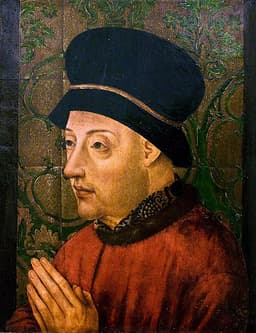
John I of Portugal
Emperor · Medieval
60.3Total

Napoleon Bonaparte
General · Modern
70.9Total
Basic Information
Born
1357
1769
Died
1433
1821
Era
Medieval
Modern
Nationality
Portugal
France
Occupation
Emperor
General
Civilization
Western
Western
Score Comparison
Military (10%)
65.0
94.0
Political (20%)
55.0
72.0
Influence (20%)
56.7
40.0
Legacy (20%)
58.0
80.0
Leadership (15%)
72.0
78.0
Strategy (15%)
60.7
90.0
TOTAL
60.3
70.9
John I of Portugal — Complete Timeline
1385 AD
Battle of AljubarrotaWar
John I led Portuguese forces to a decisive victory over the Castilian army at Aljubarrota. This battle secured Portuguese independence and solidified John's claim to the throne.
BattleIndependenceCastile
Impact: regionalconstructive
Accession to the thronePolitical Action
John I became King of Portugal after the 1383-1385 Crisis, being elected by the Cortes of Coimbra. His accession ended the Burgundian dynasty and founded the House of Aviz.
SuccessionDynastyAviz
Impact: nationalconstructive
1386 AD
Treaty of WindsorPolitical Action◆ Major
John I signed the Treaty of Windsor with England, establishing a perpetual alliance between Portugal and England. This alliance, the oldest in the world, has endured to the present day.
TreatyAllianceEngland
Impact: globalconstructive
1415 AD
Conquest of CeutaWar◆ Major
John I led the conquest of Ceuta in North Africa, marking the beginning of Portuguese overseas expansion. The capture of the city opened the era of European colonialism.
ConquestColonialismNorth Africa
Impact: global
Napoleon Bonaparte — Complete Timeline
1799 AD
Coup of 18 BrumaireOther◆ Major
Napoleon Bonaparte, with support from his brother Lucien and key political figures, overthrew the Directory in a bloodless coup. He established the Consulate with himself as First Consul, effectively becoming the ruler of France. This event ended the French Revolution's most unstable period.
French RevolutionCoupRise to Power
Impact: regional
1804 AD
Promulgation of the Napoleonic CodeOther◆ Major
Napoleon enacted the Civil Code of the French, known as the Napoleonic Code, a comprehensive set of laws that replaced the fragmented feudal legal systems. The code established legal equality, protected property rights, and secularized law. It became the basis for legal systems in many European and world countries.
Legal ReformNapoleonic CodeCivil Law
Impact: globalconstructive
1805 AD
Battle of AusterlitzWar◆ Major
Napoleon's Grande Arm
Napoleonic WarsBattleDecisive Victory
Impact: global
1812 AD
Invasion of RussiaWar◆ Major
Napoleon led the Grande Arm
Napoleonic WarsInvasionDisaster
Impact: globaldestructive
1815 AD
Battle of WaterlooWar◆ Major
Napoleon's French army was defeated by the combined forces of the Duke of Wellington's Anglo-Allied army and Gebhard Leberecht von Bl
Napoleonic WarsBattleFinal Defeat
Impact: globaldestructive
Expert Analysis
john-i-of-portugal-vs-napoleon-bonaparte
# Two Paths to Greatness: Napoleon and John I, Architects of Their Eras
On a June morning in 1815, Napoleon Bonaparte surveyed the muddy fields near Waterloo, his grand army poised for what would be his final gambit. Four centuries earlier, on an August afternoon in 1385, John of Aviz knelt in prayer before leading his outnumbered Portuguese forces against a Castilian invasion. Both men faced moments that would define their nations. Yet one would become a titan whose shadow still falls across Europe, while the other—no less consequential—would launch an age of discovery that reshaped the world itself. What drove these two Western leaders down such different roads?
Origins
Napoleon was born in 1769 on Corsica, an island barely a year removed from French rule. His family belonged to the minor nobility, but they were outsiders in a France that viewed Corsicans with suspicion. This bred a ferocious ambition in the young Napoleon, a hunger to prove himself that never quite left him. He devoured military history and mathematics at the military school of Brienne, where his Italian accent marked him as different. France was convulsed by revolution when he came of age, a society that had torn down its old hierarchies and offered unprecedented opportunity to talent.
John I entered the world in 1357 under very different circumstances. He was the illegitimate son of King Peter I of Portugal, a bastard in an age when bloodline determined everything. Portugal was a small Christian kingdom squeezed between Castile and the Atlantic, its independence constantly threatened by its larger neighbor. John grew up as Master of the military Order of Aviz, learning command within a monastic-military tradition that valued discipline and collective purpose over individual brilliance. The world he knew was one of fixed ranks and divine order, not revolution.
Rise to Power
Napoleon’s ascent was meteoric, powered by the chaos of the French Revolution. At 24, he drove the British from Toulon and was promoted to brigadier general. At 26, he saved the revolutionary government from a royalist uprising with a "whiff of grapeshot." By 30, he was First Consul of France, having seized power in the coup of 18 Brumaire. Each step was a calculated gamble, exploiting the instability of a nation desperate for order. His path was not predetermined—it was carved by his own sword.
John’s rise was slower and more reluctant. The 1383-1385 Crisis began when King Ferdinand died without a male heir, and Castile claimed the Portuguese throne. John was not the obvious choice—he was a bastard and a monk. But he became the symbol of Portuguese resistance, elected King by the Cortes of Coimbra in 1385 only after the Burgundian dynasty had failed. He did not seize power; power was thrust upon him by a nation refusing to be absorbed by Castile. His legitimacy came not from ambition but from necessity.
Leadership & Governance
Napoleon governed as he conquered—with relentless energy and total control. He centralized French administration, reorganized education, and most enduringly, codified French law into the Napoleonic Code, which swept away feudal privileges and established legal equality. His military genius was staggering: he won 60 battles, from Austerlitz in 1805 to Borodino in 1812, by moving armies faster and thinking more creatively than his enemies. But his political wisdom had limits. He crowned himself Emperor in 1804, alienated the republicans, and appointed his brothers as puppet kings across Europe, treating nations as personal possessions.
John I ruled as a builder, not a conqueror. After securing Portuguese independence at the Battle of Aljubarrota in 1385—a victory achieved through defensive tactics and English longbowmen—he turned to consolidation. He signed the Treaty of Windsor with England in 1386, the oldest continuous alliance in European history. He patronized the Portuguese language, commissioning chroniclers to write the nation’s history. And crucially, he looked outward. In 1415, he led the conquest of Ceuta in North Africa, a strategic port that launched Portugal’s Age of Discovery. His military score of 55.2 reflects a commander who knew his limits; his leadership score of 79.3 shows a king who built institutions that outlasted him.
Triumph & Tragedy
Napoleon’s greatest triumph was Austerlitz in 1805, where he destroyed an Austro-Russian army and remade the map of Europe. His greatest tragedy was the invasion of Russia in 1812, where hubris and logistics destroyed his Grand Army—of 600,000 men, barely 100,000 returned. He was exiled to Elba, escaped, ruled for 100 days, and met final defeat at Waterloo. His end was lonely, imprisoned on Saint Helena, dictating memoirs to justify his life.
John I’s triumph was Aljubarrota, where 6,600 Portuguese and English defeated 31,000 Castilians—a victory that preserved Portuguese independence for centuries. His tragedy was more subtle: the conquest of Ceuta drained resources and drew Portugal into costly North African wars. But he died in 1433 in his bed, aged 76, having founded a dynasty that would last until 1580. His son Henry the Navigator would carry his vision further, sending ships down the African coast toward India.
Character & Destiny
Napoleon was driven by an insatiable ego. “I am not a man, but a thing,” he once said, meaning he saw himself as an instrument of destiny. His personality—brilliant, impatient, ruthless—shaped every decision. He could not stop conquering because he could not imagine limits. This made him a genius in war and a failure in peace. His total score of 82.4 reflects extraordinary ability marred by fatal flaws.
John I was shaped by his illegitimacy and his monastic training. He was cautious, pious, and pragmatic. He knew he ruled by consent, not divine right, and governed accordingly. “I will defend my people even if I die,” he reportedly said before Aljubarrota. This humility made him a successful king, but it also limited his ambition. His total score of 68.1 is lower, but it measures a different kind of greatness—not conquest, but foundation.
Legacy
Napoleon left a contradictory legacy. He spread revolutionary ideals of legal equality and nationalism across Europe, but he also destroyed them through his tyranny. The Napoleonic Code survives in many legal systems. His military innovations are still studied. But he is remembered as much for his fall as his rise—a warning about the price of unchecked ambition.
John I left Portugal independent, prosperous, and outward-looking. The Age of Discovery he launched transformed world history, connecting continents and beginning European colonialism. He is remembered as “John of Good Memory,” a founder king who built a nation that would produce explorers like Vasco da Gama and Magellan. His legacy is quieter than Napoleon’s, but it endures in the Portuguese language spoken by 250 million people today.
Conclusion
Standing at Waterloo, Napoleon saw only his own glory. Standing at Ceuta, John saw a horizon. One man tried to conquer the world and lost everything; the other opened a door and let the world come to him. Both were products of their eras—the revolutionary age that produced titans, and the medieval age that produced builders. But their deeper difference lies in what they wanted. Napoleon wanted to be remembered. John wanted his nation to endure. History has granted both their wishes, but in very different measure.
Rankings
🥇
Napoleon BonaparteLeader
Mil: 94.0Pol: 72.0Inf: 40.0
70.9
🥈
John I of Portugal
Mil: 65.0Pol: 55.0Inf: 56.7
60.3
+10.6 behind
How This Comparison Works
Algorithm
Each figure is scored on 6 dimensions (0—100 scale) based on structured historical data: Military (10%), Political (20%), Influence (20%), Legacy (20%), Leadership (15%), Strategy (15%). The weighted total produces the final ranking.
Data Sources
Scores are computed from structured sub-indicators in the database. Scale factors adjust for era (Ancient ×0.85, Modern ×1.0) and civilization size (Eastern ×1.05, Other ×0.80) to account for differences in population and military scale.
Maximum 3 Figures
Comparisons are limited to 2—3 figures to ensure readability and statistical meaningfulness.
Error Margins
±5 points per dimension — Sub-scores are derived from historical records with inherent uncertainty. Two figures within 5 points on a dimension should be considered roughly equivalent in that area.
Total Score Accuracy
±3 points overall — The weighted combination of 6 dimensions produces a total score with approximately ±3 points of uncertainty. Differences of less than 3 points are not statistically significant— the figures are effectively tied.
Known Limitations
- Historical records are incomplete and uneven across civilizations
- Figures from oral-tradition societies may be underrepresented
- Occupation labels can misclassify multi-role figures
- Scores measure capability and impact, not moral character
- Quantitative scoring is a comparison tool, not absolute truth
Capability Radar
Military (10%) — Battles & Warfare
Battles
65
95
Win Rate
70
90
Expansion
60
95
Political (20%) — Governance & Reform
Reform
70
95
Diplomacy
75
80
Economy
70
85
Influence (20%) — Cultural & Global Reach
Cultural
60
85
Global
55
90
Legacy (20%) — Historical Impact
Historical
65
95
Longevity
60
90
Leadership (15%) — Power & Stability
Tenure
75
85
Stability
65
70
Strategy (15%) — Tactics & Innovation
Strategy
65
95
Tactics
60
98
Reform
55
92
Similar Comparisons
Comments & Discussion
CorsicanMeteor6/17/2026
Comparing Napoleon to John I is like comparing a wildfire to a slow-burning forge. Napoleon was a tactical genius who won 60 battles but couldn't beat the Russian winter or British seapower. John I? He defeated Castile at Aljubarrota with a combined-arms formation that predated Napoleon's corps system by 400 years. Without English longbowmen, John would've been a footnote. Napoleon built his own army from scratch.
火药统计员6/17/2026
数据不会说谎:拿破仑指挥过73场主要战役,约翰一世只有5场。拿破仑的战争跨越整个欧洲,约翰只在伊比利亚半岛打架。从纯粹的战略支配力来看,拿破仑的版图覆盖过7千多万人口,而葡萄牙当时只有100万人。但我必须承认——约翰的胜利持续时间更长,葡萄牙的独立延续500年,而拿破仑的帝国只活了10年。这算不算"赢在持久"?
SorbonneScholar6/17/2026
The classical comparison misses the point entirely. Napoleon was a child of Enlightenment meritocracy, while John I embodied medieval dynastic pragmatism. Napoleon's Code Civil modernized half of Europe; John's most enduring legacy was financing explorers who found a sea route to India. One reshaped law and governance, the other reshaped global trade routes. If we're measuring impact on the average person's daily life, Napoleon wins hands down. Your tax code still reflects his reforms.
里斯本观察者6/17/2026
不要再美化那个科西嘉矮子了!约翰一世在阿勒祖巴洛特战役中亲自率领波尔图民兵打垮了卡斯蒂利亚骑士团,当时他的骑兵只有对手的十分之一。而拿破仑在滑铁卢干什么?坐在马车上头痛,把指挥权交给尼元帅那个愣头青。约翰建立的是真正的民族英雄形象,拿破仑只是个自我膨胀的战争狂人。葡萄牙的黄金时代由约翰开启,拿破仑留给法国的是什么?国债和莱茵兰驻军。
SkepticSpectacles6/17/2026
I challenge the very premise of this comparison. Napoleon shaped continental Europe for 15 years; John I's dynasty ruled Portugal for 400+ years and funded the Age of Discovery. Napoleon's legacy is measured in battles lost and won; John's in continents explored and trade networks built. Who had more impact on global history? The man who opened sea routes to India and Brazil, or the guy who lost at Waterloo and got exiled to an island? John's decisions echo in every port from Macau to Rio.