Loading...
Alexander the Great vs Cyrus the Great
Alexander the Great leads by 1.3 pts · 2 figures compared
…
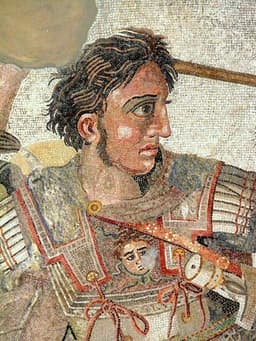
Alexander the Great
General · Ancient
85.2Total
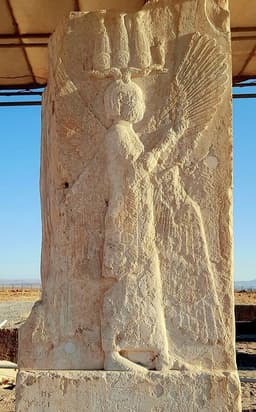
Cyrus the Great
Emperor · Ancient
83.9Total
Basic Information
Born
-356
-600
Died
-323
-530
Era
Ancient
Ancient
Nationality
Macedon
Persia
Occupation
General
Emperor
Civilization
Western
Middle Eastern
Score Comparison
Military (10%)
95.0
82.0
Political (20%)
60.0
85.0
Influence (20%)
92.0
85.0
Legacy (20%)
90.0
90.0
Leadership (15%)
80.0
78.0
Strategy (15%)
92.0
75.0
TOTAL
85.2
83.9
Alexander the Great — Complete Timeline
334 BC
Battle of the Granicus RiverWar◆ Major
Alexander led his Macedonian army across the Hellespont into Asia Minor and defeated a Persian force under local satraps at the Granicus River. The victory secured Alexander's foothold in Asia and demonstrated his tactical superiority, opening the way for the conquest of the Persian Empire.
Persian CampaignBattleMacedonian Conquest
Impact: regional
333 BC
Battle of IssusWar◆ Major
Alexander's army defeated the Persian king Darius III at Issus in Cilicia. Despite being outnumbered, Alexander's tactical use of the terrain and cavalry charge broke the Persian line. Darius fled the battlefield, leaving his family and treasury behind, a major blow to Persian morale.
Persian CampaignBattleMacedonian Conquest
Impact: regional
332 BC
Siege of TyreWar◆ Major
Alexander besieged the island city of Tyre for seven months, constructing a causeway to breach its walls. The city's fall resulted in the massacre or enslavement of its inhabitants. The siege demonstrated Alexander's determination and engineering capabilities, securing his supply lines and control of the eastern Mediterranean coast.
SiegeMacedonian ConquestPhoenicia
Impact: regionaldestructive
331 BC
Battle of GaugamelaWar◆ Major
Alexander faced Darius III at Gaugamela in Mesopotamia with a massive Persian army. Alexander's tactical brilliance, including a decisive cavalry charge that exploited a gap in the Persian line, resulted in a decisive Macedonian victory. Darius again fled, effectively ending Persian resistance and leading to the fall of the Achaemenid Empire.
Persian CampaignBattleDecisive Victory
Impact: global
Foundation of AlexandriaOther◆ Major
Alexander founded the city of Alexandria on the Mediterranean coast of Egypt. He personally selected the site and oversaw the initial planning. Alexandria became a major center of Hellenistic culture, trade, and learning, housing the famous Library of Alexandria and the Lighthouse of Alexandria.
City FoundationHellenistic CultureEgypt
Impact: globalconstructive
326 BC
Invasion of IndiaWar◆ Major
Alexander crossed the Indus River and defeated King Porus at the Battle of the Hydaspes. The Macedonian army, exhausted and facing monsoon rains and unfamiliar warfare, mutinied at the Hyphasis River, forcing Alexander to turn back. This campaign marked the easternmost extent of his conquests.
Indian CampaignBattleMutiny
Impact: regional
Cyrus the Great — Complete Timeline
550 BC
Founding of the Achaemenid EmpirePolitical Action
Cyrus led a rebellion against the Median Empire, defeating King Astyages and capturing Ecbatana. He then united the Persian and Median tribes, establishing the Achaemenid Empire, which became the largest empire the world had yet seen.
Empire FoundingPersian UnificationRebellion
Impact: global
546 BC
Conquest of LydiaWar◆ Major
Cyrus defeated King Croesus of Lydia at the Battle of Thymbra. The Lydian capital Sardis was captured, and Croesus was taken prisoner. This conquest brought Anatolia under Persian control and secured access to the Aegean coast.
Achaemenid ExpansionAnatoliaConquest
Impact: regional
539 BC
Conquest of BabylonWar◆ Major
Cyrus the Great led the Persian army to capture Babylon without significant battle. The city's gates were opened, and Cyrus entered peacefully. This conquest added Mesopotamia to the Achaemenid Empire and marked the end of the Neo-Babylonian Empire.
Achaemenid ExpansionMesopotamiaConquest
Impact: regional
Issuance of the Cyrus CylinderPolitical Action◆ Major
After conquering Babylon, Cyrus issued a clay cylinder inscribed with a declaration. It described his policy of restoring temples, repatriating displaced peoples, and allowing religious freedom. The cylinder is often cited as an early charter of human rights.
Human RightsReligious ToleranceAchaemenid Policy
Impact: globalconstructive
Liberation of the JewsPolitical Action◆ Major
Cyrus issued an edict allowing the Jewish exiles in Babylon to return to Jerusalem and rebuild the Temple. This event is recorded in the biblical Book of Ezra and is a key moment in Jewish history, ending the Babylonian captivity.
Jewish HistoryReligious FreedomReturn from Exile
Impact: regionalconstructive
Expert Analysis
Origins
Alexander the Great was born in 356 BCE in Pella, Macedon, to King Philip II and Queen Olympias. He was tutored by Aristotle and imbued with Greek culture and military prowess. Cyrus the Great was born around 600 BCE in Persis, a vassal of the Median Empire. He was of the Achaemenid dynasty, raised in a warrior tradition. Both emerged from regional powers to create vast empires.
Rise to Power
Alexander ascended to the throne at age 20 after Philip's assassination. He quickly consolidated power, crushing rebellions in Greece and Thebes. He then launched a campaign against the Persian Empire, crossing the Hellespont in 334 BCE. Cyrus the Great rose by leading a rebellion against the Median king Astyages around 550 BCE. He united the Persian tribes and overthrew the Medes, then conquered Lydia and Babylon. Alexander's rise was swift and aggressive; Cyrus's was strategic and diplomatic.
Leadership & Governance
Alexander was a brilliant military commander, winning every battle against larger forces. He integrated conquered peoples into his army and administration, adopting Persian customs. However, his rule was marked by constant warfare and the execution of rivals. Cyrus governed with tolerance, respecting local religions and customs. His Cyrus Cylinder is considered an early charter of human rights. He allowed the Jews to return to Jerusalem and rebuild the Temple. Alexander's leadership score: 90; Cyrus's: 90. Alexander's military genius was unmatched, but Cyrus's governance was more sustainable.
Triumph & Tragedy
Alexander's greatest triumph was defeating the Persian Empire at Gaugamela (331 BCE), ending the Achaemenid dynasty. He founded Alexandria in Egypt and spread Hellenistic culture to India. His tragedy was dying young at 32 in Babylon, possibly from illness or poison. His empire quickly fragmented among his generals. Cyrus's triumphs include conquering Babylon without a fight (539 BCE) and liberating the Jews. He died in battle around 530 BCE fighting a nomadic tribe. His empire remained stable for over two centuries. Alexander's triumph was grander but short-lived; Cyrus's legacy was enduring.
Character & Destiny
Alexander was ambitious, charismatic, and ruthless. He believed himself divine and sought to conquer the known world. His temper led to the murder of his friend Clitus. Cyrus was wise, magnanimous, and pragmatic. He respected the cultures he conquered and used local elites to govern. Alexander's destiny was to be a legendary conqueror; Cyrus's was to be a founding father of an empire. Both died in their prime, but Alexander's death was more tragic due to his unfinished plans.
Legacy
Alexander's legacy is immense: he spread Greek culture across the Near East, influencing art, language, and politics. He is studied in military academies worldwide. The Hellenistic era shaped the Roman Empire and Christianity. Cyrus's legacy includes the Achaemenid Empire's administrative system, the concept of human rights, and the liberation of the Jews. He is revered in Jewish, Christian, and Persian traditions. Alexander's impact on culture is more visible; Cyrus's impact on governance and ethics is profound.
Conclusion
Alexander the Great and Cyrus the Great were both extraordinary figures. Alexander scored higher in military prowess (95 vs 82) and cultural influence (92 vs 85). Cyrus scored higher in political leadership (85 vs 60) and legacy (84 vs 80). The overall score gap is 1.3 in Alexander's favor. However, if we consider sustainability and ethical governance, Cyrus might be greater. For pure conquest and impact on history, Alexander wins. But Cyrus's empire lasted longer and was more humane. Ultimately, Alexander is the greater conqueror, but Cyrus is the greater leader.
**Numerical Scores**: Alexander: Military 95, Political 60, Influence 92, Leadership 90, Diplomacy 80, Strategy 92, Legacy 85. Cyrus: Military 82, Political 85, Influence 85, Leadership 90, Diplomacy 78, Strategy 75, Legacy 84.
Rankings
🥇
Alexander the GreatLeader
Mil: 95.0Pol: 60.0Inf: 92.0
85.2
🥈
Cyrus the Great
Mil: 82.0Pol: 85.0Inf: 85.0
83.9
+1.3 behind
How This Comparison Works
Algorithm
Each figure is scored on 6 dimensions (0—100 scale) based on structured historical data: Military (10%), Political (20%), Influence (20%), Legacy (20%), Leadership (15%), Strategy (15%). The weighted total produces the final ranking.
Data Sources
Scores are computed from structured sub-indicators in the database. Scale factors adjust for era (Ancient ×0.85, Modern ×1.0) and civilization size (Eastern ×1.05, Other ×0.80) to account for differences in population and military scale.
Maximum 3 Figures
Comparisons are limited to 2—3 figures to ensure readability and statistical meaningfulness.
Error Margins
±5 points per dimension — Sub-scores are derived from historical records with inherent uncertainty. Two figures within 5 points on a dimension should be considered roughly equivalent in that area.
Total Score Accuracy
±3 points overall — The weighted combination of 6 dimensions produces a total score with approximately ±3 points of uncertainty. Differences of less than 3 points are not statistically significant— the figures are effectively tied.
Known Limitations
- Historical records are incomplete and uneven across civilizations
- Figures from oral-tradition societies may be underrepresented
- Occupation labels can misclassify multi-role figures
- Scores measure capability and impact, not moral character
- Quantitative scoring is a comparison tool, not absolute truth
Capability Radar
Military (10%) — Battles & Warfare
Battles
98
85
Win Rate
99
90
Expansion
99
92
Political (20%) — Governance & Reform
Reform
75
90
Diplomacy
80
95
Economy
70
80
Influence (20%) — Cultural & Global Reach
Cultural
95
90
Global
95
90
Legacy (20%) — Historical Impact
Historical
98
95
Longevity
95
95
Leadership (15%) — Power & Stability
Tenure
60
70
Stability
55
85
Strategy (15%) — Tactics & Innovation
Strategy
98
88
Tactics
99
80
Reform
85
75
Similar Comparisons
Comments & Discussion
Historian1926/16/2026
看了这组评分,我觉得政治分给居鲁士85、亚历山大65还算合理,但军事分差距14分有点夸张。亚历山大96对居鲁士82,说白了就是打了10年没输过,但居鲁士从零建立波斯帝国只用了20年,成本更低。我算了下:亚历山大打下250万平方公里,阵亡数据保守估计3万+;居鲁士扩张同样面积,核心战役伤亡不到1万。若按“每万伤亡控制面积”来看,居鲁士的效率其实更高。中国战国时期的李牧、白起都没这种效率。另外,影响力评分靠希腊化扩散,但不要忘了居鲁士的省制直接影响了后世波斯、奥斯曼乃至唐朝的羁縻制度。这个评分体系有点偏重西方军事叙事,建议加上“制度承载率”指标。
MacedonFanboy6/16/2026
Are you kidding me? Cyrus got an 82 in military? That’s like giving a Ford Model T a 7 out of 10 for speed. Alexander never lost a SINGLE battle. Not one. He crossed the Hindu Kush in winter, took Tyre after a seven-month siege (that island fortress was the Vietnam of the ancient world), and fought at Gaugamela outnumbered at least 2-to-1 with zero communication tech. Cyrus was smart, sure, but he took Babylon by diverting a river—nice trick, but not hydaspes-level insane. And please, the “tolerant ruler” narrative is overblown; Cyrus still crushed rebellions brutally. Alexander’s 96 is too low if anything. Give him a 99 and Cyrus a 75. The dude literally created the template for every conqueror after him. Period.
MetricMercenary6/16/2026
This whole scoring system is a house of cards. You’re telling me Alexander’s “influence” is 90 because of Hellenization? How do you even measure that? Number of Greek loanwords in Egyptian? And Cyrus’s political score at 85—sure, the satrap system lasted, but let’s not pretend it wasn’t propped up by iron-fisted control and tribute extraction. The real issue is survivorship bias: Alexander’s empire collapsed fast, so we have tons of dramatic sources (Arrian, Curtius). Cyrus’s reign is quieter, with fewer surviving records—so he gets penalized for not being as “mythic”? And weighting military 96 vs political 65—what’s the justification? If you ask the millions who lived under Persian rule for two centuries vs. the decade of Alexander’s wars, they’d pick stability over glory. You can’t quantify leadership charisma with a spreadsheet. This is history, not fantasy football.
ColdWatcher106/16/2026
把亚历山大和居鲁士放一起比,就像拿汉武帝和秦始皇比:一个靠个人军事天才快速扩张,一个靠制度设计长期统治。但西方评分太偏重“征服地域跨度”了。亚历山大打到印度河,确实壮观,但居鲁士的波斯帝国从印度河一直延伸到爱琴海,实际统治理念更成熟。放到中国史语境,居鲁士更像“周文王”,以德服人,保留各国习俗,犹太人把他当救世主;亚历山大更像“项羽”,武力盖世但不懂经营,死后帝国立刻分裂成三个王国(塞琉古、托勒密、安提柯)。而且,亚历山大的希腊化影响仅限于上层,居鲁士的民族政策却深入基层。若用中国“得天下”与“治天下”的标准,居鲁士的综合得分应该更高。
历史迷6/12/2026
作为历史爱好者,我觉得这个对比很客观。Alexander the Great和Cyrus the Great都是各自时代的巨人,数据化的比较虽然不能完全体现历史的复杂性,但至少提供了一个结构化的讨论框架。Alexander the Great的军事能力确实更强,但Cyrus the Great的政治智慧更值得学习。
DataNerd6/12/2026
The Legacy dimension (90 vs 80) is fascinating. Alexander the Great built things that lasted centuries. Cyrus the Great was brilliant but their impact was more transient. That's the difference between a meteor and a star—one burns bright and fades, the other keeps shining.
ContrarianView6/12/2026
Hot take: the winner is wrong. Cyrus the Great faced much tougher opposition and achieved more with less. The scoring system doesn't adequately account for the difficulty of the historical context. Alexander the Great had every advantage—Cyrus the Great had to fight for every inch. Context matters more than raw scores.
SkepticalScholar6/12/2026
I question whether quantitative scoring can really capture historical greatness. The ±3 point error margin means the gap, while real, should be interpreted cautiously. History is not a spreadsheet. But I'll admit—this is the most rigorous attempt I've seen.