Loading...
Daniel of Galicia vs Muhan Qaghan
Muhan Qaghan leads by 10.3 pts · 2 figures compared
…
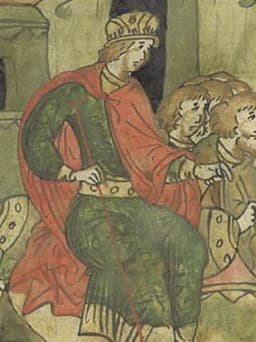
Daniel of Galicia
Emperor · Medieval
54.6Total
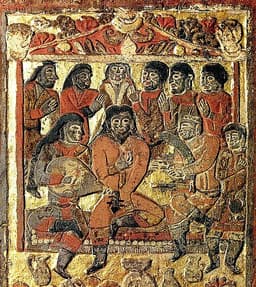
Muhan Qaghan
Emperor · Medieval
64.9Total
Basic Information
Born
1201
540
Died
1264
572
Era
Medieval
Medieval
Nationality
Galicia-Volhynia
Gokturk Khaganate
Occupation
Emperor
Emperor
Civilization
Western
Eastern
Score Comparison
Military (10%)
40.0
74.0
Political (20%)
61.3
72.0
Influence (20%)
54.9
58.3
Legacy (20%)
46.7
54.0
Leadership (15%)
67.0
79.8
Strategy (15%)
60.0
66.3
TOTAL
54.6
64.9
Daniel of Galicia — Complete Timeline
1240 AD
Prince of Galicia-Volhynia during Mongol invasionWar◆ Major
Daniel of Galicia ruled the Principality of Galicia-Volhynia when the Mongols invaded. He initially resisted but was forced to submit to Mongol suzerainty after the destruction of Kyiv in 1240. Daniel's submission preserved his realm from total destruction, but he became a vassal of the Golden Horde, paying tribute and providing troops.
Mongol invasionVassalageTribute
Impact: regionaltragic
1253 AD
Coronation as King of Galicia-Volhynia by the PopePolitical Action◆ Major
Daniel accepted a royal crown from Pope Innocent IV in exchange for promising to promote church union with Rome and organize a crusade against the Mongols. He was crowned King of Galicia-Volhynia in Dorohychyn. This coronation elevated his status and sought Western support against the Mongols, but the promised crusade never materialized.
Royal coronationPapal allianceAnti-Mongol strategy
Impact: regionalconstructive
1254 AD
Military campaign against the Mongols (1254-1255)War
Daniel launched a military campaign against the Mongol forces in Podolia and Volhynia, achieving some initial successes. He recaptured several towns from Mongol control. However, the campaign ultimately failed due to lack of Western support and Mongol reinforcements. Daniel was forced to reaffirm his vassalage to the Golden Horde.
Anti-Mongol campaignMilitary failureVassalage reaffirmed
Impact: regional
1256 AD
Foundation of the city of Lviv (Lwów)Cultural◆ Major
Daniel founded the city of Lviv (Lw
City foundationLvivTrade hub
Impact: regionalconstructive
Muhan Qaghan — Complete Timeline
557 AD
Conquest of the Hephthalite EmpireWar◆ Major
Muhan Qaghan allied with the Sassanid Persian Empire to defeat the Hephthalite Empire in Central Asia. The Hephthalites were crushed, and their territory was divided between the Turks and Persians, with the Turks gaining the eastern regions.
ConquestHephthalites
Impact: regionaldestructive
560 AD
Expansion of the Turkic Khaganate to its greatest extentWar◆ Major
Muhan Qaghan led campaigns that expanded the Turkic Khaganate to its maximum territorial extent, stretching from the Caspian Sea to the borders of China. He conquered the Hephthalites in Central Asia and subjugated many tribes, making the khaganate a dominant power.
ExpansionTurkic Empire
Impact: regionalconstructive
565 AD
Suppression of internal revoltsWar
Muhan Qaghan faced revolts from subject tribes, including the Tiele and other steppe peoples. He brutally suppressed these uprisings, executing many leaders and forcibly relocating populations to maintain control over the vast khaganate.
Revolt SuppressionInternal Conflict
Impact: regionaldestructive
568 AD
Diplomatic relations with the Byzantine EmpirePolitical Action◆ Major
Muhan Qaghan sent an embassy to the Byzantine Empire, establishing diplomatic and trade relations. This alliance was aimed against the Sassanid Persians, and it opened the Silk Road to Turkic merchants, increasing the khaganate's wealth and influence.
DiplomacyByzantine-Turkic Alliance
Impact: globalconstructive
Expert Analysis
Origins
Daniel of Galicia (born 1201) was a prince of the Rurikid dynasty, ruling the Principality of Galicia-Volhynia in modern-day Ukraine and Poland. His father, Roman the Great, had consolidated power in the region, but after his death, Daniel and his brother Vasylko faced a power struggle. Daniel spent his early years in exile at the court of King Andrew II of Hungary before reclaiming his patrimony. In contrast, Muhan Qaghan (reigned 553–572 CE) was the third son of Bumin Qaghan, founder of the Gokturk Khaganate. The Gokturks were steppe nomads who emerged as a major power after overthrowing the Rouran Khaganate. Muhan grew up in a militaristic society, inheriting a tradition of rapid cavalry warfare and tribal confederation.
Rise to Power
Daniel's rise began in 1205 when he became prince, but real power came after 1238 when he reunited Galicia and Volhynia. However, the Mongol invasion of 1240 forced him to submit to Batu Khan, paying tribute and destroying fortifications. His political acumen (score 61.3) led him to seek Western allies. In 1253, he accepted a crown from Pope Innocent IV, becoming the first King of Galicia-Volhynia, hoping for a crusade against the Mongols. Muhan Qaghan ascended the throne around 553 after his brother Issik Qaghan's death. He quickly consolidated power by eliminating rivals and launching campaigns. His military score of 74.0 reflects his success in expanding the khaganate. By 558, he allied with the Sassanid Persians to crush the Hephthalite Empire, annexing vast territories in Central Asia. He also sent embassies to the Byzantine Empire (568 CE), establishing diplomatic ties.
Leadership & Governance
Daniel's governance focused on building fortified cities, such as Lviv (founded 1256), and promoting trade. He implemented administrative reforms to centralize power, but his reliance on Mongol overlordship limited his autonomy. His leadership score of 67.0 indicates effective rule within constraints. Muhan Qaghan, with a leadership score of 79.8, governed a vast multi-ethnic empire. He organized the khaganate into tribal divisions, appointed loyal governors, and maintained a powerful army. His suppression of revolts, such as the Tiele rebellion, was brutal, executing leaders to deter dissent. Muhan also established a legal code and promoted trade along the Silk Road.
Triumph & Tragedy
Daniel's greatest triumph was securing a royal crown from the Pope, elevating his status internationally. He also founded Lviv, which became a major commercial center. However, his tragedy was the failure to rally a crusade against the Mongols; after a brief campaign in 1254-1255, he was forced back into submission. His total score is 54.6. Muhan's triumph was expanding the Gokturk Khaganate to its greatest extent, from the Caspian Sea to China's borders. His alliance with Byzantium against Sassanid Persia was a diplomatic success. Yet his tragedy was internal strife; his harsh methods bred resentment, and after his death, the khaganate fragmented. His total score is 64.9.
Character & Destiny
Daniel was pragmatic and diplomatic, willing to submit to the Mongols temporarily while seeking Western allies. His strategic score of 60.0 reflects careful planning, but his limited military power (40.0) constrained him. Muhan was ambitious and ruthless, driving expansion but sowing seeds of rebellion. His military and leadership scores (74.0 and 79.8) show a forceful leader who shaped his destiny through conquest. Daniel's destiny was tied to the Mongol yoke; Muhan's was to build a short-lived empire.
Legacy
Daniel's legacy includes the city of Lviv and the brief independence of Galicia-Volhynia, influencing Ukrainian statehood. His coronation set a precedent for seeking Western alliances. Muhan's legacy is the Gokturk Khaganate as a model for later Turkic empires, and his diplomatic ties with Byzantium influenced Silk Road trade. However, the khaganate collapsed within decades.
Conclusion
Muhan Qaghan had greater impact. His military expansion and diplomatic achievements shaped Central Asian history, while Daniel's influence was more regional and constrained. Muhan's total score of 64.9 surpasses Daniel's 54.6, reflecting his broader reach and lasting impact on steppe politics.
Rankings
🥇
Muhan QaghanLeader
Mil: 74.0Pol: 72.0Inf: 58.3
64.9
🥈
Daniel of Galicia
Mil: 40.0Pol: 61.3Inf: 54.9
54.6
+10.3 behind
How This Comparison Works
Algorithm
Each figure is scored on 6 dimensions (0—100 scale) based on structured historical data: Military (10%), Political (20%), Influence (20%), Legacy (20%), Leadership (15%), Strategy (15%). The weighted total produces the final ranking.
Data Sources
Scores are computed from structured sub-indicators in the database. Scale factors adjust for era (Ancient ×0.85, Modern ×1.0) and civilization size (Eastern ×1.05, Other ×0.80) to account for differences in population and military scale.
Maximum 3 Figures
Comparisons are limited to 2—3 figures to ensure readability and statistical meaningfulness.
Error Margins
±5 points per dimension — Sub-scores are derived from historical records with inherent uncertainty. Two figures within 5 points on a dimension should be considered roughly equivalent in that area.
Total Score Accuracy
±3 points overall — The weighted combination of 6 dimensions produces a total score with approximately ±3 points of uncertainty. Differences of less than 3 points are not statistically significant— the figures are effectively tied.
Known Limitations
- Historical records are incomplete and uneven across civilizations
- Figures from oral-tradition societies may be underrepresented
- Occupation labels can misclassify multi-role figures
- Scores measure capability and impact, not moral character
- Quantitative scoring is a comparison tool, not absolute truth
Capability Radar
Military (10%) — Battles & Warfare
Battles
45
75
Win Rate
40
80
Expansion
50
90
Political (20%) — Governance & Reform
Reform
40
65
Diplomacy
60
75
Economy
45
60
Influence (20%) — Cultural & Global Reach
Cultural
40
55
Global
30
55
Legacy (20%) — Historical Impact
Historical
45
65
Longevity
35
50
Leadership (15%) — Power & Stability
Tenure
55
80
Stability
35
70
Strategy (15%) — Tactics & Innovation
Strategy
55
85
Tactics
50
70
Reform
35
60
Similar Comparisons
Comments & Discussion
No comments yet. Be the first to share your thoughts!