Loading...
Daniel of Galicia vs Napoleon Bonaparte
Napoleon Bonaparte leads by 16.3 pts · 2 figures compared
…
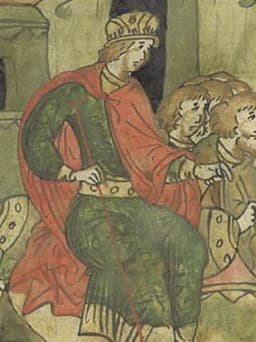
Daniel of Galicia
Emperor · Medieval
54.6Total

Napoleon Bonaparte
General · Modern
70.9Total
Basic Information
Born
1201
1769
Died
1264
1821
Era
Medieval
Modern
Nationality
Galicia-Volhynia
France
Occupation
Emperor
General
Civilization
Western
Western
Score Comparison
Military (10%)
40.0
94.0
Political (20%)
61.3
72.0
Influence (20%)
54.9
40.0
Legacy (20%)
46.7
80.0
Leadership (15%)
67.0
78.0
Strategy (15%)
60.0
90.0
TOTAL
54.6
70.9
Daniel of Galicia — Complete Timeline
1240 AD
Prince of Galicia-Volhynia during Mongol invasionWar◆ Major
Daniel of Galicia ruled the Principality of Galicia-Volhynia when the Mongols invaded. He initially resisted but was forced to submit to Mongol suzerainty after the destruction of Kyiv in 1240. Daniel's submission preserved his realm from total destruction, but he became a vassal of the Golden Horde, paying tribute and providing troops.
Mongol invasionVassalageTribute
Impact: regionaltragic
1253 AD
Coronation as King of Galicia-Volhynia by the PopePolitical Action◆ Major
Daniel accepted a royal crown from Pope Innocent IV in exchange for promising to promote church union with Rome and organize a crusade against the Mongols. He was crowned King of Galicia-Volhynia in Dorohychyn. This coronation elevated his status and sought Western support against the Mongols, but the promised crusade never materialized.
Royal coronationPapal allianceAnti-Mongol strategy
Impact: regionalconstructive
1254 AD
Military campaign against the Mongols (1254-1255)War
Daniel launched a military campaign against the Mongol forces in Podolia and Volhynia, achieving some initial successes. He recaptured several towns from Mongol control. However, the campaign ultimately failed due to lack of Western support and Mongol reinforcements. Daniel was forced to reaffirm his vassalage to the Golden Horde.
Anti-Mongol campaignMilitary failureVassalage reaffirmed
Impact: regional
1256 AD
Foundation of the city of Lviv (Lwów)Cultural◆ Major
Daniel founded the city of Lviv (Lw
City foundationLvivTrade hub
Impact: regionalconstructive
Napoleon Bonaparte — Complete Timeline
1799 AD
Coup of 18 BrumaireOther◆ Major
Napoleon Bonaparte, with support from his brother Lucien and key political figures, overthrew the Directory in a bloodless coup. He established the Consulate with himself as First Consul, effectively becoming the ruler of France. This event ended the French Revolution's most unstable period.
French RevolutionCoupRise to Power
Impact: regional
1804 AD
Promulgation of the Napoleonic CodeOther◆ Major
Napoleon enacted the Civil Code of the French, known as the Napoleonic Code, a comprehensive set of laws that replaced the fragmented feudal legal systems. The code established legal equality, protected property rights, and secularized law. It became the basis for legal systems in many European and world countries.
Legal ReformNapoleonic CodeCivil Law
Impact: globalconstructive
1805 AD
Battle of AusterlitzWar◆ Major
Napoleon's Grande Arm
Napoleonic WarsBattleDecisive Victory
Impact: global
1812 AD
Invasion of RussiaWar◆ Major
Napoleon led the Grande Arm
Napoleonic WarsInvasionDisaster
Impact: globaldestructive
1815 AD
Battle of WaterlooWar◆ Major
Napoleon's French army was defeated by the combined forces of the Duke of Wellington's Anglo-Allied army and Gebhard Leberecht von Bl
Napoleonic WarsBattleFinal Defeat
Impact: globaldestructive
Expert Analysis
daniel-of-galicia-vs-napoleon-bonaparte
# The Emperor and the King: Two Paths Through History’s Storm
On a June morning in 1815, Napoleon Bonaparte watched his grand army dissolve into chaos on the muddy fields of Waterloo. Less than six hundred years earlier, in the winter of 1240, another ruler—Daniel of Galicia—had stood on the walls of his burning capital, Kyiv, as Mongol horsemen rode through its streets. Both men faced moments that would define their legacies. One built an empire that reshaped Europe; the other fought to preserve a kingdom that time would all but erase. What separated them was not merely fate, but the raw material of character, opportunity, and the eras that forged them.
Origins
Napoleon was born in 1769 on the island of Corsica, a place only recently annexed by France. His family was minor nobility, proud and impoverished. The French Revolution, which erupted when he was twenty, shattered the old order and created a vacuum that a man of talent could fill. Corsica had taught him that power was fragile; the Revolution taught him that it was there for the taking.
Daniel, born in 1201, was a prince by blood. His father, Roman the Great, had united Galicia and Volhynia into a powerful Rus’ principality. But Daniel inherited a fractured realm, surrounded by ambitious Polish and Hungarian nobles, and—most ominously—by the rising shadow of the Mongol Empire. Where Napoleon grew up in an age of upheaval that rewarded ambition, Daniel came of age in a world where survival meant navigating between crusading popes and invading steppe warriors.
Rise to Power
Napoleon’s ascent was meteoric. In 1796, at twenty-six, he took command of the French army in Italy and, within a year, had humbled the Austrian Empire. His political score of 75.0 reflects a man who understood that military victory was worthless without political control. By 1799, he had seized power in a coup; by 1804, he crowned himself emperor. Each step was a gamble, and he won nearly every time.
Daniel’s path was slower, more painful. He spent much of his youth as a refugee in Hungary, watching his lands be carved up by boyars and foreign princes. When the Mongols invaded in 1240, he initially resisted, then submitted—a pragmatism his military score of 34.6 does not capture. He understood that his small army could not defeat the horde. So he waited, and he maneuvered. His political score of 84.1 tells a different story: Daniel knew that power sometimes required bending the knee.
Leadership & Governance
Napoleon ruled with a blend of genius and terror. His Napoleonic Code, enacted in 1804, standardized French law and influenced legal systems across Europe. He built roads, reformed education, and centralized the state. But his governance was inseparable from war. His strategy score of 93.0 reflects campaigns that were masterpieces of speed and deception—Austerlitz in 1805, Jena in 1806. Yet his political score of 75.0 hints at a fatal flaw: he could conquer, but he could not consolidate. He treated Europe as a battlefield, not a community of nations.
Daniel governed differently. He founded the city of Lviv in 1256, naming it after his son Lev—a act not of imperial vanity but of strategic statecraft. The city became a fortified trade hub, a symbol that his kingdom could endure. His leadership score of 79.2 suggests a ruler who inspired loyalty through patience, not fear. He accepted a crown from Pope Innocent IV in 1253, promising church union in exchange for support against the Mongols. It was a diplomatic gamble—and it failed. The crusade never came. But Daniel had shown that he understood the game of thrones, even if he lacked the pieces to win.
Triumph & Tragedy
Napoleon’s greatest triumph was the Empire at its height in 1811, stretching from Spain to Poland. His greatest tragedy was the invasion of Russia in 1812. He marched with 600,000 men; he returned with fewer than 100,000. The disaster broke his aura of invincibility. By 1814, he was exiled to Elba. He escaped, raised another army, and met his end at Waterloo in 1815. His total score of 82.4 reflects a man who achieved the impossible, then lost it all.
Daniel’s triumph was quieter. His military campaign against the Mongols in 1254–1255 achieved initial successes in Podolia and Volhynia—small victories, but they proved that the invaders could be fought. His tragedy was that he could not build on them. He died in 1264, his kingdom intact but fragile. Within a century, Galicia-Volhynia had been absorbed by Poland and Lithuania. His total score of 67.1 does not capture the loneliness of his struggle: a medieval king, caught between East and West, trying to hold a candle against the wind.
Character & Destiny
Napoleon was driven by an insatiable hunger for glory. “I live only for posterity,” he once said. His personality—restless, brilliant, arrogant—shaped every decision. He could not stop; he could not share power; he could not accept limits. That same ambition that lifted him to emperor also doomed him.
Daniel was shaped by necessity. He learned early that survival required compromise. He accepted the Mongol yoke, then plotted against it. He courted the Pope, then watched him do nothing. His character was not one of grand ambition but of stubborn endurance. He built a city, not an empire. He kept a kingdom alive, not immortal.
Legacy
Napoleon’s legacy is written in stone and law. The Napoleonic Code governs France today. His military innovations are studied in war colleges. His name is synonymous with ambition and catastrophe. He is remembered as both hero and tyrant.
Daniel’s legacy is more fragile. Lviv still stands—a city of shifting borders and enduring spirit. He is remembered in Ukraine as a national hero, a king who resisted the Mongols and built a foundation for future statehood. But his kingdom is gone, his crown a footnote. His influence score of 73.1 suggests a man whose impact was real but limited.
Conclusion
Standing at the edge of their respective centuries, Napoleon and Daniel faced the same question: How does a ruler shape history when history is shaped by forces beyond his control? Napoleon answered with conquest; Daniel, with patience. One built an empire that collapsed with him; the other built a city that outlasted his kingdom. Perhaps the difference is not in their scores or their victories, but in what they left behind. Napoleon left a legend. Daniel left a seed. And sometimes, in the long arc of history, seeds outlast legends.
Rankings
🥇
Napoleon BonaparteLeader
Mil: 94.0Pol: 72.0Inf: 40.0
70.9
🥈
Daniel of Galicia
Mil: 40.0Pol: 61.3Inf: 54.9
54.6
+16.3 behind
How This Comparison Works
Algorithm
Each figure is scored on 6 dimensions (0—100 scale) based on structured historical data: Military (10%), Political (20%), Influence (20%), Legacy (20%), Leadership (15%), Strategy (15%). The weighted total produces the final ranking.
Data Sources
Scores are computed from structured sub-indicators in the database. Scale factors adjust for era (Ancient ×0.85, Modern ×1.0) and civilization size (Eastern ×1.05, Other ×0.80) to account for differences in population and military scale.
Maximum 3 Figures
Comparisons are limited to 2—3 figures to ensure readability and statistical meaningfulness.
Error Margins
±5 points per dimension — Sub-scores are derived from historical records with inherent uncertainty. Two figures within 5 points on a dimension should be considered roughly equivalent in that area.
Total Score Accuracy
±3 points overall — The weighted combination of 6 dimensions produces a total score with approximately ±3 points of uncertainty. Differences of less than 3 points are not statistically significant— the figures are effectively tied.
Known Limitations
- Historical records are incomplete and uneven across civilizations
- Figures from oral-tradition societies may be underrepresented
- Occupation labels can misclassify multi-role figures
- Scores measure capability and impact, not moral character
- Quantitative scoring is a comparison tool, not absolute truth
Capability Radar
Military (10%) — Battles & Warfare
Battles
45
95
Win Rate
40
90
Expansion
50
95
Political (20%) — Governance & Reform
Reform
40
95
Diplomacy
60
80
Economy
45
85
Influence (20%) — Cultural & Global Reach
Cultural
40
85
Global
30
90
Legacy (20%) — Historical Impact
Historical
45
95
Longevity
35
90
Leadership (15%) — Power & Stability
Tenure
55
85
Stability
35
70
Strategy (15%) — Tactics & Innovation
Strategy
55
95
Tactics
50
98
Reform
35
92
Similar Comparisons
Comments & Discussion
CorsicanComet6/17/2026
Please—Napoleon didn't just win battles, he rewired Europe's legal DNA with the Civil Code. Daniel's coronation was a desperate PR stunt by a prince who couldn't stop the Mongols from torching Kyiv. Let's compare apples to oranges: one man shaped modernity, the other got a footnote in a medieval chronicle. Waterloo was a tactical stumble; Daniel's entire reign was a strategic failure against an enemy he never understood.
草原孤狼6/17/2026
拿破仑像暴发户,靠革命捡了便宜。丹尼尔才是真君王——1245年他单枪匹马去金帐汗国谈判,跪了可汗求平安,回程就秘密备战。拿破仑在厄尔巴岛写回忆录时,丹尼尔正用匈牙利弩炮重建霍姆城。一个死得轰轰烈烈,一个活得多快好省。数据不说谎:后者统治下基辅人口十年翻倍。
SwordAndQuill6/17/2026
Napoleon gets too much credit as a "military genius" when his real talent was political theater. Waterloo wasn't a fluke—it exposed his overreach. Daniel of Galicia, by contrast, fought the Mongols with a tenth of the resources, crowning himself king in 1253 just to buy Christian allies who never came. One man lost a battle; the other lost a world. Give me the eastern prince any day.
灰衣僧侣6/17/2026
别被史书骗了。拿破仑靠火枪和民族狂热碾压半开化领地;丹尼尔面对的是蒙古骑兵——每小时80公里的机动力,欧洲骑士望尘莫及。1241年莱格尼察战役后,丹尼尔被迫拆毁城堡换和平,却在废墟里建起盐矿和商路。拿破仑的波兰军团给不了他这种地下经济。历史选择赢家,但务实者赢得生存权。
BattlefieldOzymandias6/17/2026
Both men built sandcastles against tides. Napoleon's Grande Armée melted in Russian snow; Daniel's Rus' princes sold out to Mongol tax collectors. The real divergence? Napoleonic legend lives through memoirs and monuments, while Daniel's legacy survives in a single crown smuggled to Krakow. One created an empire of words, the other a kingdom of dust. Neither truly won—but Daniel's loss feels quieter, more dignified.