Loading...
Dantidurga vs Tamar of Georgia
Tamar of Georgia leads by 12.8 pts · 2 figures compared
…
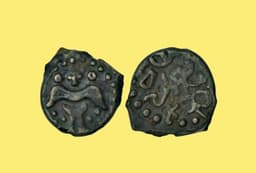
Dantidurga
Emperor · Medieval
58.7Total
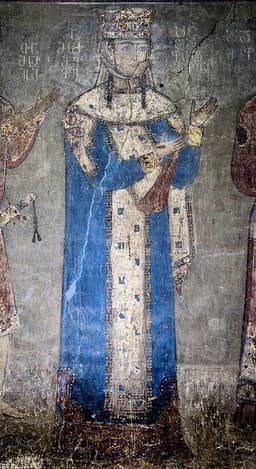
Tamar of Georgia
Emperor · Medieval
71.5Total
Basic Information
Born
735
1160
Died
756
1213
Era
Medieval
Medieval
Nationality
India
Georgia
Occupation
Emperor
Emperor
Civilization
Indian
Western
Score Comparison
Military (10%)
67.5
78.0
Political (20%)
68.0
72.0
Influence (20%)
56.4
82.0
Legacy (20%)
50.0
55.0
Leadership (15%)
65.7
80.0
Strategy (15%)
52.5
66.3
TOTAL
58.7
71.5
Dantidurga — Complete Timeline
753 AD
Founding of the Rashtrakuta DynastyPolitical Action
Dantidurga overthrew his overlord, the Chalukya king Kirtivarman II, in a coup. He established the Rashtrakuta dynasty as the dominant power in the Deccan, with Manyakheta as his capital. This marked the beginning of a new imperial era.
Impact: regionalconstructive
754 AD
Performance of the Hiranyagarbha RitualCultural
Dantidurga performed the Hiranyagarbha (golden womb) ritual, a Vedic ceremony that symbolically rebirthed him as a Kshatriya. This legitimized his rule by claiming a higher caste status, as the Rashtrakutas were originally of humble origin.
Impact: nationalconstructive
755 AD
Conquest of MalwaWar◆ Major
Dantidurga led a military campaign into Malwa, defeating the Gurjara-Pratihara ruler Nagabhata I. He annexed the region, expanding Rashtrakuta territory northward. This victory established Rashtrakuta influence in central India.
Impact: regionaldestructive
Tamar of Georgia — Complete Timeline
1184 AD
Coronation as Queen RegnantPolitical Action
Tamar was crowned as the first female ruler of Georgia after her father George III's death. Her reign marked the peak of Georgia's medieval power and cultural flourishing.
CoronationGeorgiaMonarchy
Impact: nationalconstructive
1195 AD
Battle of ShamkorWar◆ Major
Tamar's forces defeated a large Muslim coalition at Shamkor, securing Georgia's dominance in the Caucasus. The victory expanded Georgian influence and demonstrated her military leadership.
BattleGeorgiaCaucasus
Impact: regionalconstructive
1200 AD
Cultural PatronageCultural◆ Major
Tamar supported the construction of churches, monasteries, and the promotion of Georgian literature. Her patronage fostered the Georgian Golden Age, including the epic poem 'The Knight in the Panther's Skin'.
CulturePatronageGeorgia
Impact: nationalconstructive
Expert Analysis
Tamar of Georgia vs Dantidurga
# The Emperor and the Queen: Two Paths to Power in a Medieval World
On a dusty battlefield in the Deccan plateau of India, a vassal turned against his master. The year was 753, and Dantidurga, a chieftain of the Rashtrakuta clan, had just overthrown the Chalukya king Kirtivarman II—a man he had once called overlord. Three decades later and thousands of miles away, in the snow-capped mountains of the Caucasus, a young woman stood before the cathedral doors of Gelati, waiting to be crowned. Tamar of Georgia, at twenty-four, was about to become the first female ruler of her kingdom. Both figures seized moments of upheaval to forge new dynasties, yet their paths, their personalities, and their legacies could not have been more different. What drove one to a short, brutal climb and the other to a golden age?
Origins
Dantidurga emerged from the shadows of medieval Indian history with little fanfare. Born in 735, he was a feudatory lord under the Chalukyas of Badami, a dynasty that had ruled the Deccan for over two centuries. The Rashtrakutas were not kings by birth; they were warriors who had carved out a niche in the rugged landscape of present-day Karnataka. The era was one of shifting alliances and constant warfare—a world where legitimacy was won through steel, not bloodlines. Dantidurga’s upbringing would have been steeped in the martial traditions of his clan, learning to ride, fight, and command in a land where every hill fort could be a kingdom.
Tamar, by contrast, was born into a throne. Her father, George III of Georgia, ruled a kingdom that had long stood at the crossroads of Christianity and Islam, sandwiched between the Byzantine Empire and the rising power of the Seljuk Turks. Born in 1160, she was raised in the royal court of Tbilisi, educated in theology, philosophy, and statecraft. Georgia was a fragile kingdom, recovering from centuries of invasion, but it was also a land of vibrant culture and fierce Orthodox faith. Where Dantidurga’s world was one of raw ambition, Tamar’s was one of inherited responsibility—and the weight of a crown that had never before rested on a woman’s head.
Rise to Power
Dantidurga’s ascent was a coup in every sense of the word. In 753, he saw an opportunity: the Chalukya king Kirtivarman II was weak, his empire frayed by internal dissent. Dantidurga struck swiftly, overthrowing his overlord and declaring himself the founder of the Rashtrakuta dynasty. It was a gambler’s move, bold and ruthless. To cement his legitimacy, he performed the Hiranyagarbha ritual in 754—a Vedic ceremony where he was symbolically reborn from a golden womb as a Kshatriya, a warrior of noble caste. This was not mere theater; it was a calculated act of political reinvention, transforming a usurper into a divinely sanctioned king.
Tamar’s rise was more complex. Crowned in 1184 after her father’s death, she faced immediate opposition from the Georgian nobility, who questioned whether a woman could rule. Her father had named her co-ruler years earlier to smooth the transition, but the court was divided. Tamar did not seize power; she endured it. She navigated the treacherous currents of aristocratic intrigue, marrying a Russian prince, Yuri Bogolyubsky, only to have him lead a rebellion against her. She divorced him, crushed the revolt, and emerged stronger. Her path was not one of conquest but of persistence—a quiet, unyielding will to rule.
Leadership & Governance
Dantidurga ruled as a conqueror. In 755, he led a campaign into Malwa, defeating the Gurjara-Pratihara ruler Nagabhata I and annexing the region. His military score of 57.7 reflects a competent commander, but his leadership score of 42.4 suggests a man who ruled through fear and force rather than inspiration. His reign was short—just three years after his founding coup—and his governance left little room for reform. He was a builder of dynasties, not institutions.
Tamar, with a leadership score of 82.5, was the opposite. She did not lead armies personally—medieval Georgia’s queens rarely did—but she commanded them with strategic acumen. At the Battle of Shamkor in 1195, her forces shattered a large Muslim coalition, securing Georgia’s dominance in the Caucasus. Her political score of 75.2 speaks to her wisdom in governance: she reformed the tax system, supported local lords while checking their power, and fostered an era of cultural patronage that made Georgia a beacon of medieval civilization. She built churches, monasteries, and libraries, and her court became a center for poets and scholars. Dantidurga conquered lands; Tamar built a legacy.
Triumph & Tragedy
Dantidurga’s greatest triumph was the founding of the Rashtrakuta dynasty itself—a line that would go on to rule much of India for over two centuries. His tragedy was his brevity. He died in 756, likely in his early twenties, with his empire still unsteady. He left no great monuments, no lasting reforms, only the fragile seed of a dynasty that would flourish only after his death.
Tamar’s triumph was her entire reign—a thirty-year golden age that saw Georgia reach its territorial and cultural zenith. Her tragedy came later, after her death in 1213. The Mongol invasions that followed would tear apart everything she built, and her kingdom would never recover its former glory. Yet in her own time, she was celebrated as “Tamar the Great,” a queen who had defied every expectation.
Character & Destiny
Dantidurga was a man of action, not reflection. His low strategy score of 45.1 suggests a leader who relied on brute force and opportunism rather than long-term planning. He was a product of his violent age—a world where a chieftain could become an emperor overnight and be forgotten just as quickly. His destiny was to be a founder, not a ruler; his name would be remembered, but his deeds would be overshadowed by his successors.
Tamar was a strategist in the deepest sense. Her political score of 75.2 and military score of 71.0 reveal a ruler who balanced war and diplomacy with rare skill. She understood that power was not just about winning battles but about winning hearts—her cultural patronage, her careful management of the nobility, and her defiance of gender norms all speak to a woman who saw the long game. Her destiny was to be an icon, a symbol of what a kingdom could become when led with wisdom and grace.
Legacy
Dantidurga’s legacy is the Rashtrakuta dynasty itself, which went on to produce the great emperor Amoghavarsha and to build the magnificent Kailasa temple at Ellora. His influence score of 73.4 and legacy score of 65.8 reflect this: he is remembered as the spark that lit a fire, not the fire itself. In Indian history, he is a footnote in a larger story—a necessary beginning, but not the main event.
Tamar’s legacy is far more personal. Her legacy score of 72.2 and influence score of 68.7 are high, but they do not capture her cultural resonance. She is the only woman in Georgian history to be canonized as a saint by the Orthodox Church. Her image adorns coins, monuments, and national myths. She is remembered not just as a ruler but as a mother of the nation—a queen who, in the words of a medieval chronicler, “was the eye of the kingdom, the light of the land.”
Conclusion
Standing side by side, Dantidurga and Tamar seem almost to belong to different species of ruler. One was a warrior who seized power and died young; the other was a queen who cultivated power and lived to see her golden age. Their differences are not merely personal but historical: Dantidurga’s India was a world of shifting dynasties and constant war, where legitimacy was forged in blood; Tamar’s Georgia was a world of crusading faith and cultural awakening, where legitimacy was earned through patience and piety. Both succeeded on their own terms, but only one left a name that still echoes in the hearts of her people. In the end, the difference between a conqueror and a queen may be not just in how they rise, but in what they leave behind.
Rankings
🥇
Tamar of GeorgiaLeader
Mil: 78.0Pol: 72.0Inf: 82.0
71.5
🥈
Dantidurga
Mil: 67.5Pol: 68.0Inf: 56.4
58.7
+12.8 behind
How This Comparison Works
Algorithm
Each figure is scored on 6 dimensions (0—100 scale) based on structured historical data: Military (10%), Political (20%), Influence (20%), Legacy (20%), Leadership (15%), Strategy (15%). The weighted total produces the final ranking.
Data Sources
Scores are computed from structured sub-indicators in the database. Scale factors adjust for era (Ancient ×0.85, Modern ×1.0) and civilization size (Eastern ×1.05, Other ×0.80) to account for differences in population and military scale.
Maximum 3 Figures
Comparisons are limited to 2—3 figures to ensure readability and statistical meaningfulness.
Error Margins
±5 points per dimension — Sub-scores are derived from historical records with inherent uncertainty. Two figures within 5 points on a dimension should be considered roughly equivalent in that area.
Total Score Accuracy
±3 points overall — The weighted combination of 6 dimensions produces a total score with approximately ±3 points of uncertainty. Differences of less than 3 points are not statistically significant— the figures are effectively tied.
Known Limitations
- Historical records are incomplete and uneven across civilizations
- Figures from oral-tradition societies may be underrepresented
- Occupation labels can misclassify multi-role figures
- Scores measure capability and impact, not moral character
- Quantitative scoring is a comparison tool, not absolute truth
Capability Radar
Military (10%) — Battles & Warfare
Battles
60
75
Win Rate
65
85
Expansion
65
75
Political (20%) — Governance & Reform
Reform
45
80
Diplomacy
55
75
Economy
50
85
Influence (20%) — Cultural & Global Reach
Cultural
40
80
Global
30
60
Legacy (20%) — Historical Impact
Historical
55
75
Longevity
50
70
Leadership (15%) — Power & Stability
Tenure
40
85
Stability
45
70
Strategy (15%) — Tactics & Innovation
Strategy
60
80
Tactics
55
70
Reform
40
65
Similar Comparisons
Comments & Discussion
RashtraKiller6/16/2026
Dantidurga was just a lucky rebel with an army, not a real ruler. Tamar built a golden age; he just smashed an empire and left chaos. The Rashtrakutas barely held it together after him, while Georgia thrived for decades under her. Give me a queen who outsmarts the Byzantines over a warlord who couldn't even write his own laws any day.
草原铁骑6/16/2026
数据呢?Tamar统治时期乔治亚人口翻了倍,那是有据可查的,Dantidurga?他连具体年份都模糊成谜。你们吹他开疆拓土,可新皇宫遗址就几个破碗,连税册都没留下来。这对比纯属印象流:一个靠硬仗数据的实干家,一个靠文学吹出来的模糊符号。我选Tamar,因为她有硬核统计撑腰。
ClassicsColossus6/16/2026
Comparing them is like pitting a comet against a steady star. Dantidurga's coup was a flash in the pan—he named himself king but died young, leaving no long-term vision. Tamar, though, she codified laws, patronized poets, and expanded trade routes from Constantinople to Persia. She's the one who made history, not just headlines.
城头行者6/16/2026
说Dantidurga是奠基者,太抬举了吧?他就是个权力更替中的赌徒,赢了一把就死,连儿子都没培养出稳定传承。Tamar可是亲自编法律、打仗、谈判,把国家带上巅峰。一个是暴风骤雨式短命,一个是细雨润物式不朽。历史教乖我们:靠武力坐上王座容易,靠智慧坐稳王座才是真功夫。
Byzantine_Barbarian6/16/2026
Dantidurga's rebellion was pragmatic, not heroic. He exploited Chalukya weakness and minted some dubious copper coins claiming titles like "Raja of the Four Corners." Tamar, meanwhile, unified nobles, took Jerusalem by diplomacy, and left chronicles that actually inspire. I'd rather study the queen who balanced church and state than some medieval warlord who left a single battle and a guesswork legacy.
渔樵闲话6/16/2026
Dantidurga的崛起就像古代版创业融资:击溃老东家换股份,结果公司基业不稳。Tamar则是百年企业CEO,从家族内部改革做起,扩大市场份额,还善用文化IP增强软实力。历史投资讲求回报率:前者是高风险短线暴利,后者是长期稳定分红。我站后者,因为江山易碎,而文明难灭。