Loading...
Darius I vs Emperor Wu of Liang
Darius I leads by 19.4 pts · 2 figures compared
…
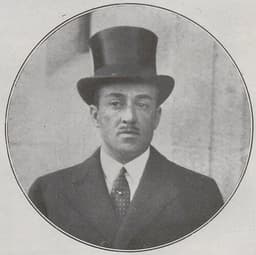
Darius I
Emperor · Ancient
74.8Total

Emperor Wu of Liang
Emperor · Ancient
55.4Total
Basic Information
Born
-550
464
Died
-486
549
Era
Ancient
Ancient
Nationality
Persia
China
Occupation
Emperor
Emperor
Civilization
Middle Eastern
Eastern
Score Comparison
Military (10%)
76.0
30.0
Political (20%)
75.0
60.0
Influence (20%)
88.0
55.0
Legacy (20%)
65.0
58.0
Leadership (15%)
72.0
72.0
Strategy (15%)
69.1
43.3
TOTAL
74.8
55.4
Darius I — Complete Timeline
522 BC
Suppression of revoltsWar◆ Major
Upon seizing the throne, Darius I suppressed widespread revolts across the empire, including in Babylon, Media, and Egypt. He recorded these victories on the Behistun Inscription, which also legitimized his rule.
RevoltEmpireBehistun Inscription
Impact: regionaldestructive
518 BC
Reorganization of the Persian EmpireReform
Darius I divided the Persian Empire into 20 provinces called satrapies, each governed by a satrap. He standardized coinage, weights, measures, and established a postal system, creating an efficient administrative structure.
AdministrationEmpireReform
Impact: globalconstructive
515 BC
Construction of PersepolisCultural◆ Major
Darius I began construction of Persepolis as the ceremonial capital of the Persian Empire. The city featured grand palaces and reliefs depicting tribute bearers from across the empire, symbolizing Achaemenid power.
ArchitectureCapitalPersia
Impact: regionalconstructive
500 BC
Construction of the Royal RoadOther◆ Major
Darius I built the Royal Road from Susa to Sardis, spanning 2,700 km. The road facilitated rapid communication and trade across the empire, with relay stations allowing messengers to travel in days.
InfrastructureRoadTrade
Impact: regionalconstructive
490 BC
Invasion of GreeceWar◆ Major
Darius I launched a punitive expedition against Greece, resulting in the Battle of Marathon. The Persian army was defeated by the Athenians, marking the first major Greek victory in the Greco-Persian Wars.
Greco-Persian WarsInvasionMarathon
Impact: global
Emperor Wu of Liang — Complete Timeline
502 AD
Founding of the Liang DynastyPolitical Action
Emperor Wu of Liang, then a general of the Southern Qi dynasty, overthrew the Qi emperor and established the Liang dynasty. He became its first emperor, ruling for 47 years and ushering in a period of cultural and religious flourishing.
Dynasty FoundingCoup
Impact: regionalconstructive
504 AD
Patronage of BuddhismCultural◆ Major
Emperor Wu became a devout Buddhist and promoted Buddhism throughout the Liang dynasty. He built temples, sponsored translations of Buddhist texts, and even took monastic vows multiple times, though he was ransomed back by his court. This patronage made Buddhism a dominant force in southern China.
ReligionCultural Patronage
Impact: regionalconstructive
505 AD
Establishment of the Imperial UniversityCultural
Emperor Wu established an Imperial University to promote Confucian learning and scholarship. This institution helped foster a cultural renaissance in the Liang dynasty, attracting scholars and poets to the court.
EducationCultural Patronage
Impact: nationalconstructive
548 AD
Siege of Jiankang by Hou JingWar
The rebel general Hou Jing besieged the Liang capital Jiankang (modern Nanjing). Emperor Wu was trapped in the palace and died of starvation during the siege. This event marked the beginning of the Liang dynasty's decline and led to widespread devastation.
RebellionSiegeDeath
Impact: regionaltragic
Expert Analysis
Origins
Darius I was born around 550 BCE into the Achaemenid dynasty, though not directly in the royal line. His father Hystaspes was a satrap of Parthia. Little is known of his early education, but he likely received military training. He rose to prominence as a spear-bearer for Cambyses II. Emperor Wu of Liang, born Xiao Yan in 464 CE, came from a prominent family in the Southern Qi dynasty. He was well-educated in Confucian classics and served as a general. His early career was marked by military successes against the Northern Wei.
Rise to Power
Darius I seized the throne in 522 BCE after the death of Cambyses II and the brief rule of Bardiya. He claimed Bardiya was an imposter and, with six other nobles, killed him. Darius then suppressed widespread revolts across the empire, including in Babylon, Media, Egypt, and Persia itself, within a year. He recorded these victories on the Behistun Inscription. Emperor Wu of Liang rose as a general under the Southern Qi. In 502 CE, he overthrew the Qi emperor and established the Liang dynasty, becoming its first emperor. His rise was less contested than Darius's, relying on political maneuvering and military support.
Leadership & Governance
Darius I reorganized the Persian Empire into 20 provinces (satrapies), each governed by a satrap. He standardized coinage, weights, and measures, and established a postal system along the Royal Road, which stretched 2,700 km from Susa to Sardis. His administrative reforms created an efficient bureaucracy. Emperor Wu of Liang promoted Confucian learning by establishing an Imperial University and also became a devout patron of Buddhism. He built temples, sponsored translations, and even observed Buddhist precepts. However, his governance was less systematic; he favored cultural and religious projects over administrative efficiency. Darius scored 75.0 in political leadership, while Emperor Wu scored 60.0.
Triumph & Tragedy
Darius I's greatest triumph was consolidating and expanding the Persian Empire, building Persepolis, and creating infrastructure that enabled trade and communication. His tragedy was the failed invasion of Greece, culminating in the defeat at Marathon in 490 BCE. This setback halted Persian expansion into Europe. Emperor Wu of Liang's triumph was fostering a cultural and religious renaissance, with Buddhism flourishing under his patronage. His tragedy came later: the rebellion of Hou Jing in 548 CE, which led to the siege of Jiankang. Emperor Wu died of starvation in the palace at age 86, and the Liang dynasty weakened. Darius's military score of 76.0 contrasts with Emperor Wu's 30.0, reflecting their different focuses.
Character & Destiny
Darius I was a decisive and pragmatic leader, adept at administration and military strategy. His character is seen in the Behistun Inscription, which portrays him as a just ruler chosen by Ahura Mazda. His destiny was shaped by his ability to quell revolts and organize an empire, but also by his overreach into Greece. Emperor Wu of Liang was deeply religious and scholarly, but his piety may have distracted from state affairs. Historical accounts suggest he was benevolent but overly trusting, leading to the Hou Jing rebellion. His character led to a tragic end, while Darius's pragmatism ensured a stable succession.
Legacy
Darius I's legacy includes the administrative structure of satrapies, the Royal Road, and Persepolis. These influenced later empires, including the Roman and Byzantine. He is remembered as a great organizer, scoring 65.0 in legacy. Emperor Wu of Liang's legacy is primarily cultural: his patronage made Buddhism a dominant force in China, and the Imperial University fostered scholarship. However, his political legacy is limited, as the Liang dynasty fell soon after his death. His legacy score is 58.0. Overall, Darius's impact on governance and infrastructure was more enduring.
Conclusion
Darius I had greater historical impact than Emperor Wu of Liang. His administrative reforms created a model for empire management that lasted centuries, while his infrastructure projects facilitated trade across Asia. Emperor Wu's contributions to Buddhism were significant but more localized and less transformative on a global scale. The overall score gap of 19.4 points (74.8 vs. 55.4) reflects this difference. Darius's combination of military, political, and organizational achievements outweighs Emperor Wu's cultural patronage. Thus, Darius I is the more consequential figure in world history.
Rankings
🥇
Darius ILeader
Mil: 76.0Pol: 75.0Inf: 88.0
74.8
🥈
Emperor Wu of Liang
Mil: 30.0Pol: 60.0Inf: 55.0
55.4
+19.4 behind
How This Comparison Works
Algorithm
Each figure is scored on 6 dimensions (0—100 scale) based on structured historical data: Military (10%), Political (20%), Influence (20%), Legacy (20%), Leadership (15%), Strategy (15%). The weighted total produces the final ranking.
Data Sources
Scores are computed from structured sub-indicators in the database. Scale factors adjust for era (Ancient ×0.85, Modern ×1.0) and civilization size (Eastern ×1.05, Other ×0.80) to account for differences in population and military scale.
Maximum 3 Figures
Comparisons are limited to 2—3 figures to ensure readability and statistical meaningfulness.
Error Margins
±5 points per dimension — Sub-scores are derived from historical records with inherent uncertainty. Two figures within 5 points on a dimension should be considered roughly equivalent in that area.
Total Score Accuracy
±3 points overall — The weighted combination of 6 dimensions produces a total score with approximately ±3 points of uncertainty. Differences of less than 3 points are not statistically significant— the figures are effectively tied.
Known Limitations
- Historical records are incomplete and uneven across civilizations
- Figures from oral-tradition societies may be underrepresented
- Occupation labels can misclassify multi-role figures
- Scores measure capability and impact, not moral character
- Quantitative scoring is a comparison tool, not absolute truth
Capability Radar
Military (10%) — Battles & Warfare
Battles
75
45
Win Rate
70
40
Expansion
85
35
Political (20%) — Governance & Reform
Reform
95
70
Diplomacy
85
65
Economy
90
75
Influence (20%) — Cultural & Global Reach
Cultural
80
75
Global
85
55
Legacy (20%) — Historical Impact
Historical
85
70
Longevity
80
65
Leadership (15%) — Power & Stability
Tenure
90
85
Stability
80
60
Strategy (15%) — Tactics & Innovation
Strategy
80
40
Tactics
65
35
Reform
85
30
Similar Comparisons
Comments & Discussion
No comments yet. Be the first to share your thoughts!