Loading...
Darius I vs Napoleon Bonaparte
Darius I leads by 3.9 pts · 2 figures compared
…
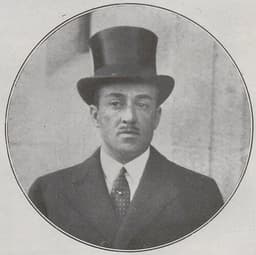
Darius I
Emperor · Ancient
74.8Total

Napoleon Bonaparte
General · Modern
70.9Total
Basic Information
Born
-550
1769
Died
-486
1821
Era
Ancient
Modern
Nationality
Persia
France
Occupation
Emperor
General
Civilization
Middle Eastern
Western
Score Comparison
Military (10%)
76.0
94.0
Political (20%)
75.0
72.0
Influence (20%)
88.0
40.0
Legacy (20%)
65.0
80.0
Leadership (15%)
72.0
78.0
Strategy (15%)
69.1
90.0
TOTAL
74.8
70.9
Darius I — Complete Timeline
522 BC
Suppression of revoltsWar◆ Major
Upon seizing the throne, Darius I suppressed widespread revolts across the empire, including in Babylon, Media, and Egypt. He recorded these victories on the Behistun Inscription, which also legitimized his rule.
RevoltEmpireBehistun Inscription
Impact: regionaldestructive
518 BC
Reorganization of the Persian EmpireReform
Darius I divided the Persian Empire into 20 provinces called satrapies, each governed by a satrap. He standardized coinage, weights, measures, and established a postal system, creating an efficient administrative structure.
AdministrationEmpireReform
Impact: globalconstructive
515 BC
Construction of PersepolisCultural◆ Major
Darius I began construction of Persepolis as the ceremonial capital of the Persian Empire. The city featured grand palaces and reliefs depicting tribute bearers from across the empire, symbolizing Achaemenid power.
ArchitectureCapitalPersia
Impact: regionalconstructive
500 BC
Construction of the Royal RoadOther◆ Major
Darius I built the Royal Road from Susa to Sardis, spanning 2,700 km. The road facilitated rapid communication and trade across the empire, with relay stations allowing messengers to travel in days.
InfrastructureRoadTrade
Impact: regionalconstructive
490 BC
Invasion of GreeceWar◆ Major
Darius I launched a punitive expedition against Greece, resulting in the Battle of Marathon. The Persian army was defeated by the Athenians, marking the first major Greek victory in the Greco-Persian Wars.
Greco-Persian WarsInvasionMarathon
Impact: global
Napoleon Bonaparte — Complete Timeline
1799 AD
Coup of 18 BrumaireOther◆ Major
Napoleon Bonaparte, with support from his brother Lucien and key political figures, overthrew the Directory in a bloodless coup. He established the Consulate with himself as First Consul, effectively becoming the ruler of France. This event ended the French Revolution's most unstable period.
French RevolutionCoupRise to Power
Impact: regional
1804 AD
Promulgation of the Napoleonic CodeOther◆ Major
Napoleon enacted the Civil Code of the French, known as the Napoleonic Code, a comprehensive set of laws that replaced the fragmented feudal legal systems. The code established legal equality, protected property rights, and secularized law. It became the basis for legal systems in many European and world countries.
Legal ReformNapoleonic CodeCivil Law
Impact: globalconstructive
1805 AD
Battle of AusterlitzWar◆ Major
Napoleon's Grande Arm
Napoleonic WarsBattleDecisive Victory
Impact: global
1812 AD
Invasion of RussiaWar◆ Major
Napoleon led the Grande Arm
Napoleonic WarsInvasionDisaster
Impact: globaldestructive
1815 AD
Battle of WaterlooWar◆ Major
Napoleon's French army was defeated by the combined forces of the Duke of Wellington's Anglo-Allied army and Gebhard Leberecht von Bl
Napoleonic WarsBattleFinal Defeat
Impact: globaldestructive
Expert Analysis
darius-i-vs-napoleon-bonaparte
# The Emperor’s Mirror: Napoleon and Darius I
On a June morning in 1815, Napoleon Bonaparte watched his Imperial Guard march for the last time across the muddy fields of Waterloo. Twenty-three centuries earlier, another ruler stood on the plains of Marathon, receiving reports that his invasion of Greece had been repelled by a ragtag coalition of city-states. Both men were empire-builders who sought to unite vast territories under a single vision. Both faced their greatest humiliation at the hands of smaller, more determined enemies. Yet one is remembered as a titan of history, the other as a competent administrator who failed in his most ambitious venture. What separates the Corsican artilleryman from the Persian king? The answer lies not merely in their achievements, but in the very nature of their ambitions and the worlds they sought to reshape.
Origins
Napoleon Bonaparte was born in 1769 on the island of Corsica, a territory only recently annexed by France. His family belonged to the minor nobility, but they were poor—and in the rigid hierarchy of pre-revolutionary France, that poverty marked him. He spoke French with a thick Italian accent, was mocked by his classmates at military school, and carried into adulthood a simmering resentment of the old aristocracy. This outsider’s perspective would fuel his relentless drive. He came of age during the French Revolution, a time when the entire social order was being torn down and rebuilt. For a young man of talent and ambition, the chaos was opportunity.
Darius I, born in 550 BCE, was the son of a Persian nobleman, but not of royal blood. When the usurper Gaumata seized the throne after the death of Cambyses II, Darius joined a conspiracy of seven nobles to assassinate him. In the aftermath, he claimed the crown—not through inheritance, but through a combination of political cunning and, according to Persian tradition, divine favor. Unlike Napoleon, who rose from the margins, Darius inherited a mature empire that had been built by Cyrus the Great and Cambyses. His task was not to create but to consolidate. His era was one of order, not revolution.
Rise to Power
Napoleon’s ascent was meteoric and improbable. In 1795, he was an artillery captain; by 1799, he was First Consul of France. He seized his moment during the Italian campaign of 1796, where his speed and audacity stunned the Austrian armies. At the Battle of Lodi, he led a charge across a narrow bridge under fire—an act of personal courage that won him the devotion of his men. He understood that in the chaos of the Revolution, the man who acted decisively would inherit the future. By 1804, he crowned himself Emperor of the French, taking the crown from the Pope’s hands and placing it on his own head—a gesture that perfectly captured his belief that power came from action, not from God or tradition.
Darius’s rise was equally dramatic but fundamentally different. In 522 BCE, upon seizing the throne, he faced revolts across the empire—in Babylon, Media, Egypt, and Persia itself. Within a single year, he suppressed nineteen rebellions. His famous inscription at Behistun records these victories in three languages, a monument not just to his military prowess but to his need to legitimize his rule. Unlike Napoleon, who thrived on instability, Darius needed order. His power came from restoring what had been broken, not from breaking what was old.
Leadership & Governance
Here the two rulers diverge most sharply. Napoleon was a military genius—his score of 94 for military prowess reflects a commander who revolutionized warfare. He perfected the use of massed artillery, rapid marches, and the corps system, which allowed his armies to live off the land and strike with devastating speed. At Austerlitz in 1805, he destroyed a larger Russian and Austrian army through a masterful feint and counterattack. But his political score of 75 reveals a man who could conquer but could not consolidate. The Napoleonic Code was a genuine achievement, standardizing French law and spreading ideals of equality and meritocracy across Europe. Yet Napoleon’s governance was ultimately personal and autocratic. He appointed his brothers and marshals as kings, creating a family empire that depended entirely on his own military success.
Darius I, with a military score of 75 and a political score of 69, was a less brilliant general but a more systematic ruler. In 518 BCE, he reorganized the empire into twenty provinces, or satrapies, each governed by a satrap who collected taxes and maintained order. He standardized coinage, built the Royal Road from Susa to Sardis—stretching 2,700 kilometers—and established a postal system that allowed messages to travel from one end of the empire to the other in days. He began construction of Persepolis, a ceremonial capital that symbolized the unity and majesty of his realm. Where Napoleon sought to command through personal presence, Darius built institutions that could outlast any single ruler.
Triumph & Tragedy
Napoleon’s greatest moment was his apogee in 1807, when he dictated terms to Prussia and Russia at Tilsit, and his empire stretched from Spain to Poland. His tragedy was the invasion of Russia in 1812—a catastrophic miscalculation born of overconfidence. He lost half a million men, not to battle, but to the Russian winter and his own refusal to adapt. Exiled to Elba, he returned for the Hundred Days, only to meet final defeat at Waterloo. His tragedy was that he could not stop—his ambition consumed him.
Darius’s triumph was the consolidation of the Persian Empire, a structure that would endure for two centuries after his death. His tragedy was the invasion of Greece in 490 BCE. At Marathon, his army was defeated by a smaller Athenian force, and the expedition ended in humiliation. He spent the remaining four years of his life planning a second invasion, but died before it could begin. Unlike Napoleon, Darius knew when to stop expanding—but he could not accept the one defeat that mattered.
Character & Destiny
Napoleon was a man of boundless energy, intelligence, and ego. He believed that he was the instrument of destiny, that his will could reshape the world. This conviction made him irresistible to his followers and insufferable to his rivals. He was ruthless, pragmatic, and ultimately self-destructive. His personality drove him to conquer, but it also drove him to overreach.
Darius was a man of order and legitimacy. He constantly emphasized his right to rule, his connection to the Achaemenid line, and his role as a restorer of stability. He was less charismatic than Napoleon, but more patient. His personality was that of a builder, not a destroyer. He could tolerate setbacks—but he could not tolerate chaos.
Legacy
Napoleon left behind a legend. The Napoleonic Code influenced legal systems across Europe and the world. His military campaigns are still studied in war colleges. He reshaped the map of Europe and inspired nationalist movements that would eventually destroy the very empires he sought to build. He is remembered as a genius and a tyrant, a liberator and a conqueror—a figure of endless fascination.
Darius left behind an empire. The administrative system he created allowed Persia to survive for two centuries. The Royal Road became the model for later communication networks. Persepolis, though later destroyed by Alexander, remains a symbol of Persian greatness. Yet Darius is far less known than Napoleon. His legacy is institutional, not personal. He did not write his name on history in the same indelible ink.
Conclusion
Standing on the fields of Waterloo, Napoleon might have looked back on a career of dizzying rise and catastrophic fall. Darius, receiving news of Marathon, might have felt a similar sting of humiliation. Both were great men who failed at their most ambitious moment. But their differences reveal something profound about the nature of power. Napoleon represents the modern ideal of the self-made man—the individual who bends history to his will. Darius represents the ancient ideal of the ruler who preserves and orders what has been given to him. One built a monument to himself; the other built a system. In the end, both were defeated—but the Persian king’s empire outlasted him, while the French emperor’s empire died with his exile. The lesson may be that the most lasting power is not the power to conquer, but the power to endure.
Rankings
🥇
Darius ILeader
Mil: 76.0Pol: 75.0Inf: 88.0
74.8
🥈
Napoleon Bonaparte
Mil: 94.0Pol: 72.0Inf: 40.0
70.9
+3.9 behind
How This Comparison Works
Algorithm
Each figure is scored on 6 dimensions (0—100 scale) based on structured historical data: Military (10%), Political (20%), Influence (20%), Legacy (20%), Leadership (15%), Strategy (15%). The weighted total produces the final ranking.
Data Sources
Scores are computed from structured sub-indicators in the database. Scale factors adjust for era (Ancient ×0.85, Modern ×1.0) and civilization size (Eastern ×1.05, Other ×0.80) to account for differences in population and military scale.
Maximum 3 Figures
Comparisons are limited to 2—3 figures to ensure readability and statistical meaningfulness.
Error Margins
±5 points per dimension — Sub-scores are derived from historical records with inherent uncertainty. Two figures within 5 points on a dimension should be considered roughly equivalent in that area.
Total Score Accuracy
±3 points overall — The weighted combination of 6 dimensions produces a total score with approximately ±3 points of uncertainty. Differences of less than 3 points are not statistically significant— the figures are effectively tied.
Known Limitations
- Historical records are incomplete and uneven across civilizations
- Figures from oral-tradition societies may be underrepresented
- Occupation labels can misclassify multi-role figures
- Scores measure capability and impact, not moral character
- Quantitative scoring is a comparison tool, not absolute truth
Capability Radar
Military (10%) — Battles & Warfare
Battles
75
95
Win Rate
70
90
Expansion
85
95
Political (20%) — Governance & Reform
Reform
95
95
Diplomacy
85
80
Economy
90
85
Influence (20%) — Cultural & Global Reach
Cultural
80
85
Global
85
90
Legacy (20%) — Historical Impact
Historical
85
95
Longevity
80
90
Leadership (15%) — Power & Stability
Tenure
90
85
Stability
80
70
Strategy (15%) — Tactics & Innovation
Strategy
80
95
Tactics
65
98
Reform
85
92
Similar Comparisons
Comments & Discussion
No comments yet. Be the first to share your thoughts!