Loading...
Darius I vs Philip II of Macedon
Darius I leads by 0.9 pts · 2 figures compared
…
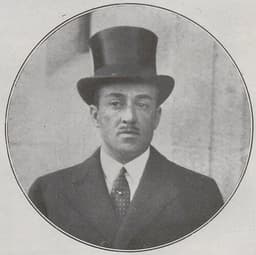
Darius I
Emperor · Ancient
74.8Total
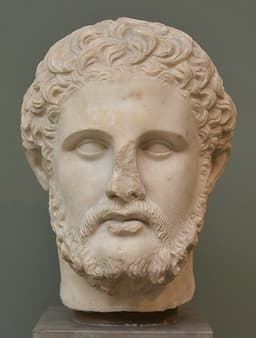
Philip II of Macedon
Emperor · Ancient
73.9Total
Basic Information
Born
-550
-382
Died
-486
-336
Era
Ancient
Ancient
Nationality
Persia
Macedon
Occupation
Emperor
Emperor
Civilization
Middle Eastern
Western
Score Comparison
Military (10%)
76.0
65.0
Political (20%)
75.0
76.0
Influence (20%)
88.0
75.0
Legacy (20%)
65.0
70.0
Leadership (15%)
72.0
78.0
Strategy (15%)
69.1
80.3
TOTAL
74.8
73.9
Darius I — Complete Timeline
522 BC
Suppression of revoltsWar◆ Major
Upon seizing the throne, Darius I suppressed widespread revolts across the empire, including in Babylon, Media, and Egypt. He recorded these victories on the Behistun Inscription, which also legitimized his rule.
RevoltEmpireBehistun Inscription
Impact: regionaldestructive
518 BC
Reorganization of the Persian EmpireReform
Darius I divided the Persian Empire into 20 provinces called satrapies, each governed by a satrap. He standardized coinage, weights, measures, and established a postal system, creating an efficient administrative structure.
AdministrationEmpireReform
Impact: globalconstructive
515 BC
Construction of PersepolisCultural◆ Major
Darius I began construction of Persepolis as the ceremonial capital of the Persian Empire. The city featured grand palaces and reliefs depicting tribute bearers from across the empire, symbolizing Achaemenid power.
ArchitectureCapitalPersia
Impact: regionalconstructive
500 BC
Construction of the Royal RoadOther◆ Major
Darius I built the Royal Road from Susa to Sardis, spanning 2,700 km. The road facilitated rapid communication and trade across the empire, with relay stations allowing messengers to travel in days.
InfrastructureRoadTrade
Impact: regionalconstructive
490 BC
Invasion of GreeceWar◆ Major
Darius I launched a punitive expedition against Greece, resulting in the Battle of Marathon. The Persian army was defeated by the Athenians, marking the first major Greek victory in the Greco-Persian Wars.
Greco-Persian WarsInvasionMarathon
Impact: global
Philip II of Macedon — Complete Timeline
359 BC
Reforms of the Macedonian ArmyReform◆ Major
Philip II reorganized the Macedonian army, introducing the sarissa (long pike) and the phalanx formation. He also improved cavalry tactics and logistics, creating a professional, disciplined force that was superior to Greek hoplite armies.
MacedonMilitary ReformPhalanx
Impact: regionalconstructive
338 BC
Battle of ChaeroneaWar
Philip II led the Macedonian army to a decisive victory over the combined forces of Athens and Thebes at Chaeronea. The battle ended Greek independence and established Macedonian hegemony over Greece. Philip's son Alexander commanded the cavalry on the left wing.
MacedonGreeceBattle
Impact: regionaldestructive
337 BC
Formation of the League of CorinthPolitical Action◆ Major
Philip II established the League of Corinth, a federation of Greek states under Macedonian leadership. The league declared war on Persia and appointed Philip as its commander-in-chief, laying the groundwork for Alexander's later invasion.
MacedonGreeceAlliance
Impact: regionalconstructive
336 BC
Assassination at AegaePolitical Action◆ Major
Philip II was assassinated by his bodyguard Pausanias at the wedding of his daughter Cleopatra in Aegae. The motive remains unclear, but his death led to the immediate succession of his son Alexander the Great, who continued his plans for the Persian invasion.
MacedonAssassinationSuccession
Impact: regionaltragic
Expert Analysis
Origins
**Darius I** (born 550 BCE) hailed from a collateral branch of the Achaemenid dynasty. His father Hystaspes was a satrap of Parthia. Darius claimed descent from Achaemenes, but his early life was relatively obscure until he rose to power by overthrowing the usurper Gaumata. He married Atossa, daughter of Cyrus the Great, to legitimize his rule.
**Philip II** (born 382 BCE) was the youngest son of King Amyntas III of Macedon. He spent his youth as a hostage in Thebes (367-364 BCE), where he studied under Epaminondas and learned Greek military tactics. This experience shaped his later reforms. Upon returning, he became regent for his nephew Amyntas IV and seized the throne in 359 BCE.
Rise to Power
**Darius I** gained the throne in 522 BCE after leading a conspiracy of seven nobles to kill Gaumata, who had seized power impersonating Bardiya, Cyrus's son. Darius then suppressed widespread revolts across the empire—Babylon, Media, Egypt, and others—within a year. He recorded these victories on the Behistun Inscription, solidifying his authority. His military score of 76.0 reflects his success in quelling rebellions.
**Philip II** became king in 359 BCE when Macedon was weak, facing invasions from Illyrians, Paeonians, and Thracians. He quickly defeated the Paeonians (359 BCE) and Illyrians (358 BCE), securing borders. He then turned to Greece, exploiting the Sacred War (355-346 BCE) to intervene in Phocis, gaining influence. The turning point was the Battle of Chaeronea (338 BCE), where he crushed the Athenian and Theban alliance, ending Greek independence. His military score of 65.0 is lower than Darius's, but his strategic score of 80.3 is higher.
Leadership & Governance
**Darius I** organized the Persian Empire into 20 satrapies, each with a satrap (governor) and a military commander, ensuring checks and balances. He standardized coinage (the daric), weights, and measures, and built the Royal Road (2,700 km) from Susa to Sardis, improving communication and trade. He also began construction of Persepolis as a ceremonial capital. His political score of 75.0 reflects these administrative reforms.
**Philip II** transformed Macedon from a peripheral kingdom into a dominant power. He reformed the army, introducing the sarissa (5-6 meter pike) and the phalanx formation, and improved cavalry tactics. He also used diplomacy and marriage alliances to secure peace with neighbors. He founded the League of Corinth in 337 BCE, a federation of Greek states under Macedonian hegemony, with himself as hegemon. His political score of 76.0 is slightly higher than Darius's.
Triumph & Tragedy
**Darius I**'s greatest triumph was consolidating and expanding the Persian Empire to its greatest extent, from the Indus Valley to Thrace. He built Persepolis and the Royal Road, leaving a lasting administrative legacy. His greatest failure was the invasion of Greece, culminating in the defeat at Marathon (490 BCE). The loss humiliated Persia and emboldened Greek resistance. His leadership score of 72.0 reflects mixed success.
**Philip II**'s greatest triumph was unifying Greece under Macedonian rule, a feat that enabled his son Alexander to conquer Persia. He reformed the army and created the League of Corinth. His greatest failure was his assassination in 336 BCE at his daughter's wedding, likely due to personal rivalries. This cut short his plans to invade Persia. His leadership score of 78.0 is higher than Darius's.
Character & Destiny
**Darius I** was a capable administrator and military leader, known for his justice and religious tolerance. He recorded his deeds extensively, showing a desire for legacy. His character was pragmatic: he consolidated power through marriage and suppression of revolts. His destiny was to be remembered as the organizer of the empire, but his invasion of Greece marred his record.
**Philip II** was a brilliant strategist and diplomat, often using marriage and bribery to achieve goals. He was ruthless but patient, building power gradually. His character was marked by ambition and cunning; he turned Macedon into a superpower. His assassination cut short a promising career, leaving his son to fulfill his dream of conquering Persia.
Legacy
**Darius I** left a durable administrative system that lasted until Alexander's conquest. The satrapy system, Royal Road, and Persepolis remained influential. His legacy score of 65.0 reflects the empire's survival but also its eventual fall.
**Philip II** created the military and political framework that allowed Alexander to conquer the known world. The Macedonian phalanx and League of Corinth were key. His legacy score of 70.0 is higher, as his reforms directly enabled Alexander's success.
Conclusion
While Darius I scored higher overall (74.8 vs 73.9), Philip II had a greater impact on world history. Darius's administrative achievements were impressive but largely sustained an existing empire. Philip II transformed Macedon, unified Greece, and set the stage for Alexander's conquests, which spread Hellenistic culture across the East. Philip's strategic innovations (score 80.3) and political unification of Greece were more consequential. Therefore, Philip II of Macedon had a greater impact than Darius I.
Rankings
🥇
Darius ILeader
Mil: 76.0Pol: 75.0Inf: 88.0
74.8
🥈
Philip II of Macedon
Mil: 65.0Pol: 76.0Inf: 75.0
73.9
+0.9 behind
How This Comparison Works
Algorithm
Each figure is scored on 6 dimensions (0—100 scale) based on structured historical data: Military (10%), Political (20%), Influence (20%), Legacy (20%), Leadership (15%), Strategy (15%). The weighted total produces the final ranking.
Data Sources
Scores are computed from structured sub-indicators in the database. Scale factors adjust for era (Ancient ×0.85, Modern ×1.0) and civilization size (Eastern ×1.05, Other ×0.80) to account for differences in population and military scale.
Maximum 3 Figures
Comparisons are limited to 2—3 figures to ensure readability and statistical meaningfulness.
Error Margins
±5 points per dimension — Sub-scores are derived from historical records with inherent uncertainty. Two figures within 5 points on a dimension should be considered roughly equivalent in that area.
Total Score Accuracy
±3 points overall — The weighted combination of 6 dimensions produces a total score with approximately ±3 points of uncertainty. Differences of less than 3 points are not statistically significant— the figures are effectively tied.
Known Limitations
- Historical records are incomplete and uneven across civilizations
- Figures from oral-tradition societies may be underrepresented
- Occupation labels can misclassify multi-role figures
- Scores measure capability and impact, not moral character
- Quantitative scoring is a comparison tool, not absolute truth
Capability Radar
Military (10%) — Battles & Warfare
Battles
75
85
Win Rate
70
90
Expansion
85
85
Political (20%) — Governance & Reform
Reform
95
90
Diplomacy
85
92
Economy
90
80
Influence (20%) — Cultural & Global Reach
Cultural
80
80
Global
85
80
Legacy (20%) — Historical Impact
Historical
85
85
Longevity
80
85
Leadership (15%) — Power & Stability
Tenure
90
75
Stability
80
70
Strategy (15%) — Tactics & Innovation
Strategy
80
92
Tactics
65
88
Reform
85
95
Similar Comparisons
Comments & Discussion
No comments yet. Be the first to share your thoughts!