Loading...
Darius I vs Zenobia of Palmyra
Darius I leads by 16.6 pts · 2 figures compared
…
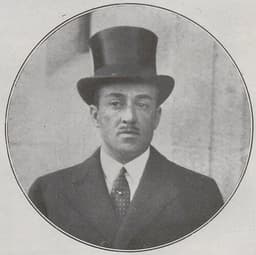
Darius I
Emperor · Ancient
74.8Total
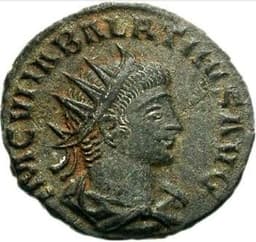
Zenobia of Palmyra
Emperor · Ancient
58.2Total
Basic Information
Born
-550
240
Died
-486
274
Era
Ancient
Ancient
Nationality
Persia
Palmyrene Empire
Occupation
Emperor
Emperor
Civilization
Middle Eastern
Middle Eastern
Score Comparison
Military (10%)
76.0
82.0
Political (20%)
75.0
54.7
Influence (20%)
88.0
60.0
Legacy (20%)
65.0
52.0
Leadership (15%)
72.0
55.3
Strategy (15%)
69.1
55.0
TOTAL
74.8
58.2
Darius I — Complete Timeline
522 BC
Suppression of revoltsWar◆ Major
Upon seizing the throne, Darius I suppressed widespread revolts across the empire, including in Babylon, Media, and Egypt. He recorded these victories on the Behistun Inscription, which also legitimized his rule.
RevoltEmpireBehistun Inscription
Impact: regionaldestructive
518 BC
Reorganization of the Persian EmpireReform
Darius I divided the Persian Empire into 20 provinces called satrapies, each governed by a satrap. He standardized coinage, weights, measures, and established a postal system, creating an efficient administrative structure.
AdministrationEmpireReform
Impact: globalconstructive
515 BC
Construction of PersepolisCultural◆ Major
Darius I began construction of Persepolis as the ceremonial capital of the Persian Empire. The city featured grand palaces and reliefs depicting tribute bearers from across the empire, symbolizing Achaemenid power.
ArchitectureCapitalPersia
Impact: regionalconstructive
500 BC
Construction of the Royal RoadOther◆ Major
Darius I built the Royal Road from Susa to Sardis, spanning 2,700 km. The road facilitated rapid communication and trade across the empire, with relay stations allowing messengers to travel in days.
InfrastructureRoadTrade
Impact: regionalconstructive
490 BC
Invasion of GreeceWar◆ Major
Darius I launched a punitive expedition against Greece, resulting in the Battle of Marathon. The Persian army was defeated by the Athenians, marking the first major Greek victory in the Greco-Persian Wars.
Greco-Persian WarsInvasionMarathon
Impact: global
Zenobia of Palmyra — Complete Timeline
270 AD
Conquest of EgyptWar◆ Major
Zenobia's general Zabdas led a Palmyrene army to conquer Egypt, defeating the Roman prefect Tenagino Probus. Egypt became part of the Palmyrene Empire, giving Zenobia control over the grain supply to Rome.
ConquestEgyptPalmyrene Empire
Impact: regionaldestructive
271 AD
Proclamation of Augustus for VaballathusPolitical Action◆ Major
Zenobia proclaimed her son Vaballathus as Augustus (emperor), effectively declaring independence from the Roman Empire. This was a direct challenge to Roman authority and marked the height of Palmyrene power.
ProclamationIndependencePalmyrene Empire
Impact: regionaldestructive
272 AD
Defeat by Aurelian at the Battle of ImmaeWar◆ Major
Roman Emperor Aurelian defeated Zenobia's forces at the Battle of Immae near Antioch. The Palmyrene army was routed, and Zenobia was forced to retreat to Palmyra.
BattleRoman-Persian WarAurelian
Impact: regionaldestructive
274 AD
Capture and Parade in RomePolitical Action◆ Major
After the fall of Palmyra, Zenobia was captured by Aurelian and brought to Rome. She was paraded in golden chains in Aurelian's triumph, a symbol of Roman victory over the Palmyrene rebellion.
CaptureTriumphRoman Empire
Impact: regionaltragic
Expert Analysis
Origins
Darius I (born 550 BCE) was a member of the Achaemenid dynasty, though not directly in the line of succession. His father Hystaspes was a satrap of Parthia. Darius rose to prominence as a spear-bearer for Cambyses II. He claimed descent from Achaemenes, the founder of the dynasty. His early life was spent in the Persian court, and he was educated in Zoroastrian traditions.
Zenobia (born c. 240 CE) was a queen of the Palmyrene Empire in Syria. Her origins are debated; she may have been of Arab, Aramean, or mixed descent. She was the second wife of Septimius Odaenathus, the Roman client king of Palmyra. She was well-educated, fluent in Greek, Aramaic, and Egyptian, and reportedly claimed descent from Cleopatra VII.
Rise to Power
Darius I seized the throne in 522 BCE after the death of Cambyses II and the brief reign of Bardiya. He claimed that Bardiya was an impostor (Gaumata the Magian) and, with six other Persian nobles, killed him. Darius then suppressed a series of revolts across the empire (Babylon, Media, Egypt, etc.) within a year. He recorded these victories on the Behistun Inscription, which became a key source of Achaemenid history. His political score of 75.0 reflects his ability to consolidate power.
Zenobia rose to power after the assassination of her husband Odaenathus in 267 CE. She became regent for her son Vaballathus, effectively ruling the Palmyrene kingdom. Taking advantage of Roman instability (the Crisis of the Third Century), she expanded Palmyrene control over Syria, Arabia, and parts of Asia Minor. In 269 CE, her general Zabdas conquered Egypt, defeating the Roman prefect Tenagino Probus. She then proclaimed Vaballathus as Augustus in 271 CE, directly challenging Rome. Her political score of 54.7 indicates less stable governance.
Leadership & Governance
Darius I reorganized the Persian Empire into 20 satrapies, each with a satrap (governor) and a military commander. He standardized coinage (the daric), weights, and measures, and implemented a tax system based on each satrapy's productivity. He built the Royal Road (2,700 km from Susa to Sardis) with relay stations for rapid communication. He also began construction of Persepolis as a ceremonial capital. His leadership score of 72.0 reflects his administrative skill.
Zenobia ruled Palmyra with a blend of Roman and eastern traditions. She maintained Roman administrative structures but also employed Palmyrene merchants and military elites. She minted coins bearing her son's image and later her own, asserting independence. She was known for her intellectual pursuits, hosting a court of scholars and philosophers. However, her political score of 54.7 indicates that her governance was less institutionalized and more dependent on personal authority.
Triumph & Tragedy
Darius I's greatest success was stabilizing and expanding the Persian Empire to its largest extent, integrating diverse peoples through satrapies and infrastructure. The Royal Road facilitated trade and communication, and the standardization of coinage boosted commerce. His tragedy was the failed invasion of Greece. At the Battle of Marathon in 490 BCE, his forces were defeated by a smaller Athenian army. This defeat emboldened Greek resistance and set the stage for later Greco-Persian conflicts. His military score of 76.0 is lowered by this strategic failure.
Zenobia's greatest success was the conquest of Egypt and the expansion of Palmyrene territory, creating a short-lived empire that rivaled Rome. She challenged Roman authority and was seen as a symbol of eastern autonomy. Her tragedy was her defeat by Emperor Aurelian. At the Battle of Immae (272 CE), her army was routed, and she was forced to retreat to Palmyra. After a siege, she was captured and paraded in golden chains in Rome. Her military score of 82.0 reflects her tactical prowess, but her low political and legacy scores (54.7 and 52.0) indicate the ephemeral nature of her empire.
Character & Destiny
Darius I was a strategic administrator who valued order and centralization. His decision to invade Greece was driven by a desire to punish Athens and Eretria for supporting the Ionian Revolt. His character was marked by a strong sense of divine mission, as seen in the Behistun Inscription, where he claims Ahura Mazda's support. His destiny was to create a lasting imperial system that influenced later empires.
Zenobia was ambitious and intellectually inclined, but her challenge to Rome was ultimately unsustainable. Her decision to declare Vaballathus as Augustus was a direct provocation that Aurelian could not ignore. Her character combined military boldness with cultural sophistication, but her overreach led to her downfall. Her destiny was to become a symbol of resistance and female power, but her empire collapsed within a few years.
Legacy
Darius I's legacy is immense. His administrative reforms, including the satrapy system and the Royal Road, influenced subsequent empires, including the Hellenistic and Roman. Persepolis remained a symbol of Persian grandeur. Zoroastrianism was promoted, and the empire's multiculturalism set a precedent. His legacy score of 65.0 reflects his lasting impact on governance and infrastructure.
Zenobia's legacy is more limited but vivid. She is remembered as a warrior queen who defied Rome, inspiring later figures like Cleopatra and female rulers. Palmyra's ruins, including its temples and colonnades, stand as a testament to her brief empire. However, her political and military achievements were reversed by Rome, and her influence score of 60.0 is lower due to the short duration of her rule.
Conclusion
Darius I had a greater and more lasting impact than Zenobia. His total score of 74.8 versus her 58.2 reflects his superior political organization and enduring legacy. While Zenobia's military prowess (82.0) exceeded Darius's (76.0), her inability to build a sustainable state or leave a long-term institutional legacy places her below him. Darius's reorganization of the Persian Empire created a model that lasted centuries, whereas Zenobia's empire vanished within a decade. Therefore, Darius I is the more significant historical figure.
Rankings
🥇
Darius ILeader
Mil: 76.0Pol: 75.0Inf: 88.0
74.8
🥈
Zenobia of Palmyra
Mil: 82.0Pol: 54.7Inf: 60.0
58.2
+16.6 behind
How This Comparison Works
Algorithm
Each figure is scored on 6 dimensions (0—100 scale) based on structured historical data: Military (10%), Political (20%), Influence (20%), Legacy (20%), Leadership (15%), Strategy (15%). The weighted total produces the final ranking.
Data Sources
Scores are computed from structured sub-indicators in the database. Scale factors adjust for era (Ancient ×0.85, Modern ×1.0) and civilization size (Eastern ×1.05, Other ×0.80) to account for differences in population and military scale.
Maximum 3 Figures
Comparisons are limited to 2—3 figures to ensure readability and statistical meaningfulness.
Error Margins
±5 points per dimension — Sub-scores are derived from historical records with inherent uncertainty. Two figures within 5 points on a dimension should be considered roughly equivalent in that area.
Total Score Accuracy
±3 points overall — The weighted combination of 6 dimensions produces a total score with approximately ±3 points of uncertainty. Differences of less than 3 points are not statistically significant— the figures are effectively tied.
Known Limitations
- Historical records are incomplete and uneven across civilizations
- Figures from oral-tradition societies may be underrepresented
- Occupation labels can misclassify multi-role figures
- Scores measure capability and impact, not moral character
- Quantitative scoring is a comparison tool, not absolute truth
Capability Radar
Military (10%) — Battles & Warfare
Battles
75
65
Win Rate
70
60
Expansion
85
70
Political (20%) — Governance & Reform
Reform
95
35
Diplomacy
85
60
Economy
90
45
Influence (20%) — Cultural & Global Reach
Cultural
80
55
Global
85
45
Legacy (20%) — Historical Impact
Historical
85
60
Longevity
80
50
Leadership (15%) — Power & Stability
Tenure
90
40
Stability
80
30
Strategy (15%) — Tactics & Innovation
Strategy
80
75
Tactics
65
70
Reform
85
30
Similar Comparisons
Comments & Discussion
No comments yet. Be the first to share your thoughts!