Loading...
Darius III vs Neferefre
Neferefre leads by 0.8 pts · 2 figures compared
…
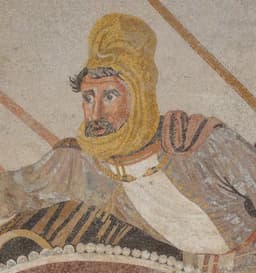
Darius III
Emperor · Ancient
40.8Total

Neferefre
Emperor · Ancient
41.6Total
Basic Information
Born
-380
-2430
Died
-330
-2425
Era
Ancient
Ancient
Nationality
Persia
Old Kingdom Egypt
Occupation
Emperor
Emperor
Civilization
Middle Eastern
Middle Eastern
Score Comparison
Military (10%)
50.0
36.8
Political (20%)
25.0
26.4
Influence (20%)
47.9
49.4
Legacy (20%)
43.3
31.7
Leadership (15%)
38.1
55.3
Strategy (15%)
35.7
53.6
TOTAL
40.8
41.6
Darius III — Complete Timeline
333 BC
Battle of IssusWar◆ Major
Darius III commanded the Persian army against Alexander the Great at Issus in Cilicia. Alexander's forces defeated the larger Persian army, and Darius fled the battlefield, leaving his family and baggage train to be captured.
Wars of AlexanderBattlePersian Empire
Impact: global
331 BC
Battle of GaugamelaWar
Darius III assembled a massive army from across the empire to confront Alexander near Arbela. Alexander's tactical brilliance led to a decisive Persian defeat, and Darius again fled the field, effectively ending Achaemenid resistance.
Wars of AlexanderBattlePersian Empire
Impact: global
330 BC
Loss of the Persian Capital PersepolisWar◆ Major
Alexander the Great captured and sacked Persepolis, the ceremonial capital of the Achaemenid Empire. The palace complex was burned, symbolizing the end of Persian imperial power and the transfer of hegemony to Macedonia.
Wars of AlexanderSackPersepolis
Impact: globaldestructive
Flight and Death of Darius IIIPolitical Action◆ Major
After Gaugamela, Darius fled eastward through Media and Parthia. He was deposed and imprisoned by his own satrap Bessus, then murdered by Bessus's followers near Hecatompylos. Alexander later gave Darius a royal burial at Persepolis.
DeathSuccessionAchaemenid Empire
Impact: globaltragic
Neferefre — Complete Timeline
2430 BC
Construction of the unfinished Pyramid of Neferefre at AbusirCultural◆ Major
Neferefre began building a pyramid at Abusir, but his reign was too short to complete it. The pyramid was left as a low, square mastaba-like structure, later finished in mudbrick by his successor Nyuserre Ini. The complex included a mortuary temple with fine reliefs.
ArchitecturePyramidUnfinished
Impact: national
Discovery of Neferefre's mummy in his pyramidOther
Excavations in the 20th century uncovered the mummy of Neferefre in his pyramid at Abusir. The mummy was found in a damaged state, but analysis indicated he died in his early 20s, confirming his short reign. This is one of the few royal mummies from the Old Kingdom.
ArchaeologyMummyAbusir
Impact: national
Expert Analysis
Origins
Darius III was born around 380 BCE as Codomannus, a member of the Achaemenid dynasty, but not directly in the royal line. He was the son of Arsames, a Persian noble, and Sisygambis, a daughter of Artaxerxes II. His early life was marked by the decline of the Achaemenid Empire under weak rulers. He rose from obscurity, serving as a satrap of Armenia before being elevated to the throne. Neferefre, also known as Raneferef, was a pharaoh of the Fifth Dynasty of Egypt, ruling for a brief period around 2460–2455 BCE. He was the son of Neferirkare Kakai and Queen Khentkaus II, and succeeded his older brother Shepseskare after a short interregnum. His reign was cut short by his early death, leaving his pyramid at Abusir unfinished.
Rise to Power
Darius III ascended to the Persian throne in 336 BCE after the death of Artaxerxes III and the brief reign of Arses. His rise was facilitated by the eunuch Bagoas, who had poisoned previous kings. Darius quickly asserted independence by forcing Bagoas to drink poison. He faced immediate challenges from revolts in Egypt and Babylon, which he suppressed. His greatest test came with the invasion of Alexander the Great in 334 BCE. Neferefre became pharaoh after the death of Shepseskare, whose reign may have been as short as a few months. The exact circumstances are unclear, but Neferefre's accession was likely smooth, as he was the legitimate heir. His reign is poorly documented, but he continued the construction of sun temples and the pyramid complex at Abusir.
Leadership & Governance
Darius III's leadership was characterized by indecision and reliance on subordinates. At the Battle of Issus (333 BCE), he commanded a large army but fled after his camp was captured, leaving his family behind. At Gaugamela (331 BCE), he assembled a massive force but failed to coordinate effectively, leading to Alexander's decisive victory. His political score of 25.0 reflects his inability to maintain loyalty, as satraps like Bessus betrayed him. Neferefre's leadership, despite his short reign, showed competence in continuing religious and building projects. His leadership score of 55.3 is higher than Darius's 38.1, suggesting he managed his court effectively. He completed a sun temple called 'Hotep-Re' and initiated his pyramid, though it remained a mastaba due to his death.
Triumph & Tragedy
Darius III's greatest triumph was his initial consolidation of power, but his defeats at Issus and Gaugamela were catastrophic. His flight from battle demoralized his troops, and his death at the hands of Bessus marked the end of the Achaemenid Empire. His military score of 50.0 reflects his army's size but poor performance. Neferefre's triumph was the continuation of the Fifth Dynasty's traditions, but his tragedy was his early death at around age 20, leaving his pyramid incomplete. His mummy, found in a damaged state, indicates he died young. His legacy score of 31.7 is lower than Darius's 43.3, partly due to the obscurity of his reign.
Character & Destiny
Darius III was cautious but lacked strategic vision. He repeatedly chose to fight Alexander in open battle rather than using guerrilla tactics or scorched earth. His character score (political 25.0) shows poor judgment. Neferefre's character is less known, but his decision to build a pyramid despite a likely short reign suggests ambition. His strategy score of 53.6 is higher than Darius's 35.7, indicating better planning within his constraints. Both were victims of circumstance: Darius faced a superior general, while Neferefre was cut down by fate.
Legacy
Darius III's legacy is primarily as the last Achaemenid king, remembered for his defeat by Alexander. The burning of Persepolis symbolized the end of an era. His influence score of 47.9 reflects his role in world history. Neferefre's legacy is minor, limited to Egyptology; his unfinished pyramid and mummy provide archaeological insights. His influence score of 49.4 is slightly higher, but this may reflect his unique position as a short-lived pharaoh. Neither figure left lasting institutions or reforms.
Conclusion
While Neferefre has a higher total score (41.6 vs. 40.8), the difference is minimal. Darius III had a greater impact on world history, as his defeat enabled Alexander's conquests and the Hellenistic era. His actions directly shaped the course of Western and Middle Eastern history. Neferefre's reign was too brief to leave a comparable mark. Therefore, Darius III, despite his failures, had more significant historical impact.
Rankings
🥇
NeferefreLeader
Mil: 36.8Pol: 26.4Inf: 49.4
41.6
🥈
Darius III
Mil: 50.0Pol: 25.0Inf: 47.9
40.8
+0.8 behind
How This Comparison Works
Algorithm
Each figure is scored on 6 dimensions (0—100 scale) based on structured historical data: Military (10%), Political (20%), Influence (20%), Legacy (20%), Leadership (15%), Strategy (15%). The weighted total produces the final ranking.
Data Sources
Scores are computed from structured sub-indicators in the database. Scale factors adjust for era (Ancient ×0.85, Modern ×1.0) and civilization size (Eastern ×1.05, Other ×0.80) to account for differences in population and military scale.
Maximum 3 Figures
Comparisons are limited to 2—3 figures to ensure readability and statistical meaningfulness.
Error Margins
±5 points per dimension — Sub-scores are derived from historical records with inherent uncertainty. Two figures within 5 points on a dimension should be considered roughly equivalent in that area.
Total Score Accuracy
±3 points overall — The weighted combination of 6 dimensions produces a total score with approximately ±3 points of uncertainty. Differences of less than 3 points are not statistically significant— the figures are effectively tied.
Known Limitations
- Historical records are incomplete and uneven across civilizations
- Figures from oral-tradition societies may be underrepresented
- Occupation labels can misclassify multi-role figures
- Scores measure capability and impact, not moral character
- Quantitative scoring is a comparison tool, not absolute truth
Capability Radar
Military (10%) — Battles & Warfare
Battles
15
36
Win Rate
10
42
Expansion
10
45
Political (20%) — Governance & Reform
Reform
10
0
Diplomacy
20
5
Economy
25
5
Influence (20%) — Cultural & Global Reach
Cultural
20
5
Global
25
0
Legacy (20%) — Historical Impact
Historical
40
5
Longevity
30
5
Leadership (15%) — Power & Stability
Tenure
30
5
Stability
15
5
Strategy (15%) — Tactics & Innovation
Strategy
15
47
Tactics
20
50
Reform
10
55
Similar Comparisons
Comments & Discussion
No comments yet. Be the first to share your thoughts!